


Ken Kawai’s latest cinematic offering, "The Chatterboxes," premiered at the prestigious Tokyo International Film Festival 2025, marking the director’s third feature film. The movie delves into the complex and often fraught territory of social miscommunications, exploring the profound difficulties that arise from simple ignorance and the enduring human struggle for an identity worth defending. The title itself, "The Chatterboxes," alludes to a multifaceted concept, encompassing the popular pyramid-shaped origami game that reveals colors or words, and significantly, speech and language therapy for children. This duality sets the stage for a narrative that is as much about the mechanics of communication as it is about the emotional and societal barriers that prevent genuine understanding.
A Family Divided by Language, United by Circumstance
At the heart of "The Chatterboxes" lies the Koga family, a unit navigating the complexities of their existence in the suburbs of Tokyo. The patriarch, Kazuhiko (portrayed by Kazuyoshi Kezuka), is a deaf man who presides over a modest appliance shop. His life is intricately connected to his CODA (Child of a Deaf Adult) daughter, Natsumi (Itsuki Nagasawa), who serves as a vital bridge, translating and facilitating communication within and outside the family. The family dynamic is further defined by Shun (Oki Fukuda), the deaf son, who, in a deliberate act of defiance or perhaps an expression of unique internal experience, eschews all conventional languages understood by his family, forging his own unique mode of expression. This intricate familial ecosystem, characterized by its own established rhythms of communication and understanding, is irrevocably disrupted by the arrival of a Kurdish family who relocate to the neighborhood.
The ensuing tension, amplified by a formidable language barrier—encompassing both spoken words and the nuances of sign language—ignites a cascade of misinterpretations. This cultural and linguistic collision, set against the backdrop of everyday life, serves as the primary catalyst for the film’s exploration of societal divides and the inherent challenges of integration. The narrative, steered by director Ken Kawai, himself a CODA, offers a profoundly empathetic perspective on these struggles.
Subtitles as a Narrative Device: Immersing the Audience in Uncertainty
Kawai employs a unique and powerful narrative technique by making subtitles an integral element of the viewing experience from the film’s inception. This deliberate choice is not merely a matter of translation; it serves to immerse the audience in the very same state of uncertainty and apprehension that the characters face. In the initial stages of the film, the dialogue spoken by the Kurdish family remains untranslated. This strategy effectively places the viewer in Kazuhiko’s shoes, forcing them to await interpretation. The initial layer of translation is handled by Hiwa (Yildrim Firat), who bridges the gap between Kurdish and Turkish and Japanese. Subsequently, Natsumi translates these messages into JSL (Japanese Sign Language).
This orchestrated delay in understanding creates a palpable sense of tension. The ambiguity surrounding what is precisely being communicated—especially as Natsumi occasionally opts for more diplomatic, rather than literal, translations to de-escalate potential conflicts—keeps the audience perpetually on edge. This artistic choice underscores the film’s central theme: the inherent fragility of communication and the significant consequences of even minor linguistic discrepancies. The film’s runtime, while not explicitly stated in the provided text, is often a crucial factor in how effectively such narrative devices can be deployed. However, the strategic use of untranslated dialogue suggests a carefully paced narrative designed to maximize emotional impact.
Beyond Words: The Power of Non-Verbal Communication
As the narrative progresses, Kawai takes a bolder step, discarding subtitles altogether at a pivotal juncture. This decision shifts the audience’s reliance entirely onto non-verbal cues—body language, facial expressions, and the unspoken emotional currents between characters. It is at this point that the film truly thickens, forcing viewers to engage with the characters on a more primal, intuitive level, mirroring the characters’ own struggles to decipher meaning in the absence of shared language.
The film masterfully constructs a compelling sense of misunderstanding and exclusion. This is depicted not only through the lens of a deaf individual navigating a hearing-dominated society but also through the experience of a Kurdish minority in Japan, facing their own set of prejudices and societal pressures. This pervasive sense of isolation is further amplified by the deliberate use of silence, punctuated by the persistent presence of individuals who remain unwilling or unable to comprehend the perspectives of those on the margins. The suffocating atmosphere is intensified by the film’s cinematography, which adopts an almost observational, reality-show-like quality, following the characters as if they are under constant scrutiny. This stylistic choice reinforces the feeling of vulnerability and the intense pressure of being perpetually misunderstood.
Performances of Authenticity and the Quest for Understanding
A significant aspect of "The Chatterboxes" is its casting, which predominantly features non-professional actors. This choice imbues the performances with a remarkable level of authenticity and raw emotional resonance. Kazuyoshi Kezuka, as Kazuhiko, delivers a nuanced portrayal of a man grappling with the limitations of his hearing in a world that often fails to acknowledge his presence. Equally compelling is Murat Cicek’s portrayal of Rifat, the patriarch of the Kurdish family. His character embodies the immigrant experience, marked by a deep-seated desire for belonging and the struggle against assimilationist pressures.
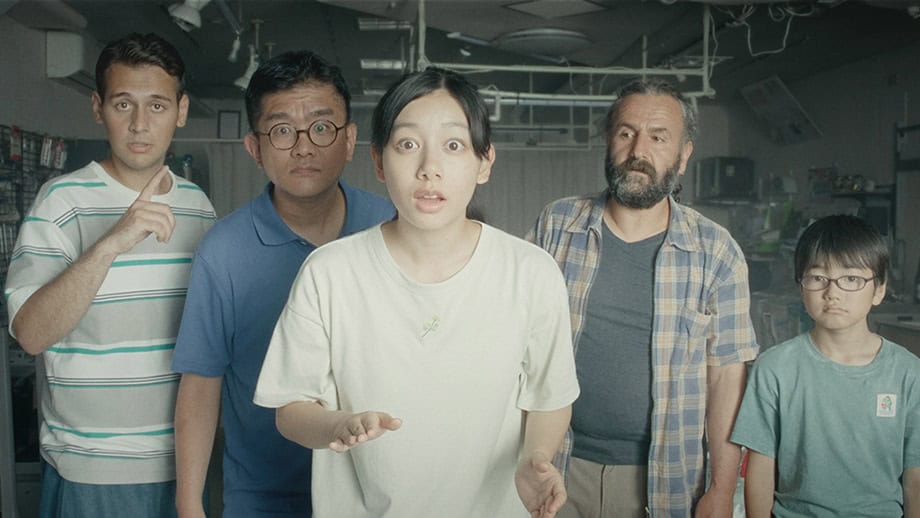
The relationship between Kazuhiko and Rifat, though fraught with tension throughout the film, gradually evolves towards a fragile, yet profound, understanding. Their shared desire—to speak their own language and be unequivocally understood, free from the expectations of assimilation or the pressure to conform to dominant societal norms—forms the emotional core of their connection. Despite their inability to communicate directly through conventional means and the absence of explicit verbal exchanges, the burgeoning understanding between them offers a rare and deeply moving sense of resolution. This underscores the film’s central argument: that genuine connection transcends linguistic barriers and can be forged through shared human experience and empathy.
Genre-Bending Narratives and the Universal Language of Connection
While "The Chatterboxes" meticulously addresses the serious socio-cultural issues of asserting one’s mode of communication and finding one’s place within society, it also distinguishes itself as a genre-bending piece. The film subtly weaves in elements of comedy, providing moments of levity amidst the dramatic tension, and even ventures into the realm of science fiction, adding an unexpected layer of speculative intrigue. This eclectic blend of genres serves to broaden the film’s appeal and further emphasize the director’s innovative storytelling approach.
With "The Chatterboxes," Ken Kawai crafts a narrative that powerfully argues for the existence of mutual understanding, even in the face of formidable language barriers and the absence of direct mediation. The film’s critical reception at the Tokyo International Film Festival 2025 has been largely positive, with many critics praising Kawai’s bold directorial choices and the film’s emotional depth. The festival, a significant platform for Asian cinema, provided "The Chatterboxes" with an international spotlight, potentially paving the way for wider distribution and critical engagement.
Broader Implications and Future Perspectives
The film’s exploration of communication challenges resonates deeply in an increasingly globalized yet often fragmented world. The experiences of the Koga family and the Kurdish newcomers mirror the struggles faced by numerous minority groups and individuals who find themselves on the periphery of dominant societal narratives. The film’s success in conveying complex emotional landscapes without relying solely on spoken dialogue offers a valuable lesson for filmmakers and storytellers aiming to bridge cultural divides.
The data surrounding language barriers and social integration in Japan, while not explicitly detailed in the article, consistently highlights the challenges faced by non-native speakers and individuals with disabilities. Reports from organizations like the Japan Foundation and various governmental agencies often point to a need for increased linguistic and cultural sensitivity training, as well as greater accessibility in public spaces and communication platforms. "The Chatterboxes" can be seen as a cinematic contribution to this ongoing dialogue, humanizing these statistics and presenting them through compelling character arcs.
Furthermore, the film’s portrayal of a CODA individual in a central role sheds light on the often-overlooked experiences of children raised in deaf households. These individuals frequently navigate the dual worlds of hearing and deaf cultures, acting as interpreters and cultural mediators. The film’s success in highlighting this unique perspective could foster greater understanding and appreciation for the CODA community.
The premiere at the Tokyo International Film Festival, a key event in the global film calendar, signifies a potential turning point for "The Chatterboxes." The festival’s reputation for championing independent and thought-provoking cinema suggests that the film’s themes and artistic merit have been recognized by industry professionals and critics alike. The reactions from festival attendees and early reviews indicate a strong audience connection to the film’s message of empathy and resilience. The filmmakers’ commitment to authenticity, particularly through the casting of non-professional actors, is a testament to their dedication to portraying these experiences with genuine emotional weight. This approach, while demanding, often yields performances that are more relatable and impactful than highly polished, conventional acting.
Looking ahead, "The Chatterboxes" is poised to spark important conversations about inclusivity, the nature of identity, and the universal human need for connection. Its artistic innovation, coupled with its profound thematic relevance, positions it as a significant work in contemporary Japanese cinema and a compelling narrative for global audiences. The film’s ability to transcend linguistic boundaries through its visual storytelling and emotional depth serves as a powerful reminder that understanding, in its most fundamental form, is a language that all can speak.