

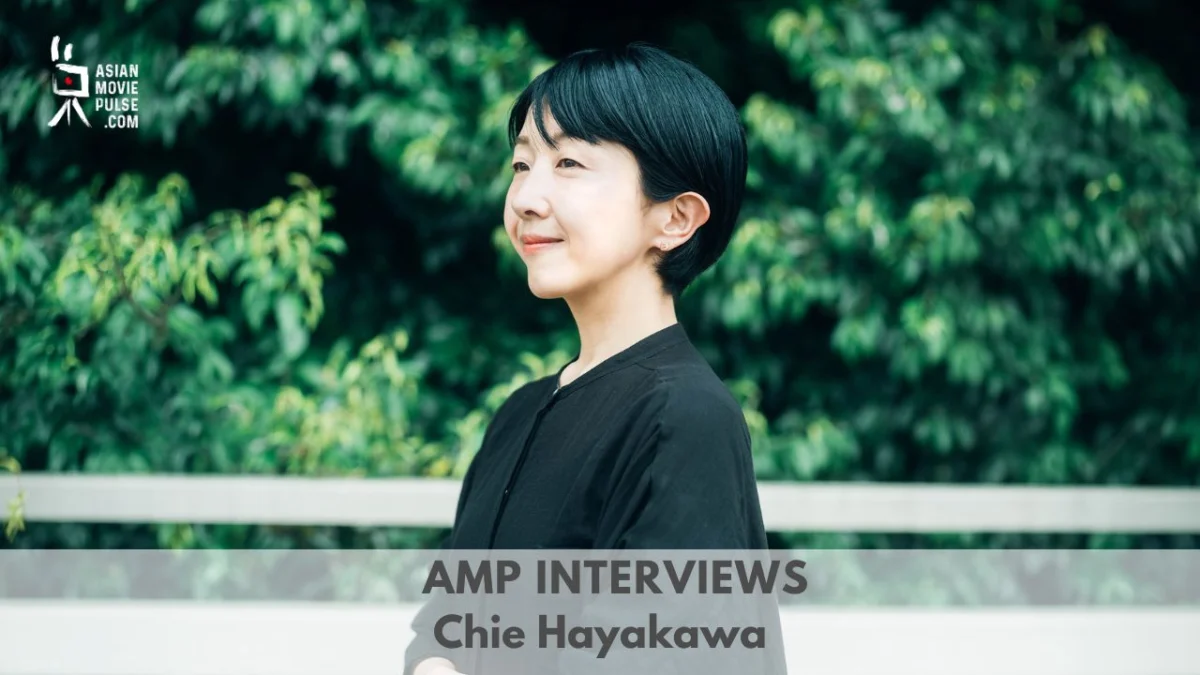
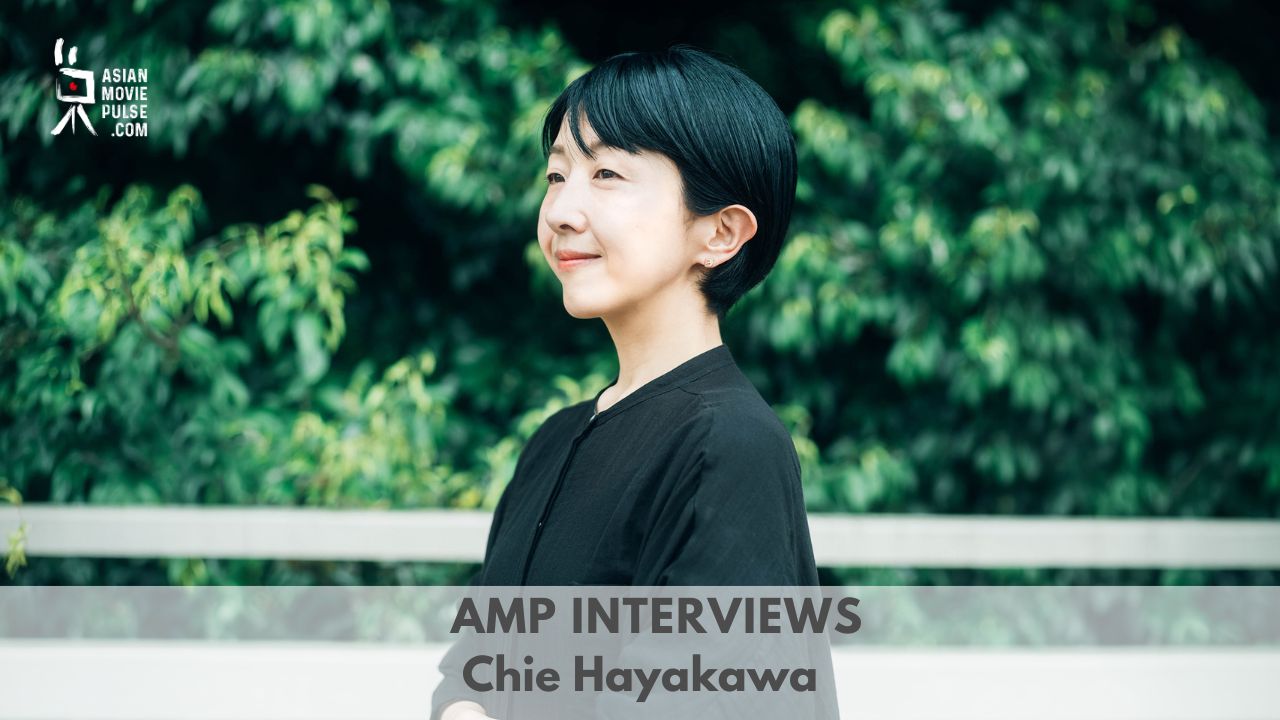
Following the significant international acclaim garnered by her dystopian feature "Plan 75," Japanese director Chie Hayakawa returns to the cinematic landscape with "Renoir," a deeply personal exploration of childhood, family dynamics, and the enduring impact of parental illness. The film, which made its world premiere in the Official Selection of the prestigious Cannes Film Festival, stars Yui Suzuki, Lily Franky, Hikari Ishida, Yuumi Kawai, Ayumu Nakajima, Ryota Bando, and Hana Hope. In an in-depth conversation with Asian Movie Pulse, Hayakawa elaborated on the international collaborative framework that underpinned "Renoir," the autobiographical wellsprings of its narrative, her synergistic partnerships with lead actors Yui Suzuki and Lily Franky, the intricate challenges of post-production editing, and her considered perspective on the current trajectory of Japanese cinema.
"Renoir" is slated for its theatrical release at the IFC Center on May 29th, distributed by Film Movement, signaling its anticipated arrival on the independent film circuit in North America.
The Global Tapestry of "Renoir": An International Coproduction Model
One of the foundational aspects Hayakawa addressed was the multinational coproduction strategy employed for "Renoir." This ambitious undertaking brought together creative and financial partners from a diverse array of nations, including France, Singapore, the Philippines, Indonesia, and Qatar. For Hayakawa, this collaborative approach was not an untested venture. Her critically lauded debut feature, "Plan 75," also benefited from a coproduction model involving France and the Philippines, an experience that profoundly shaped her strategic thinking for subsequent projects.
Hayakawa articulated the persistent financial hurdles faced by emerging directors in Japan who aim to realize original screenplays. Securing adequate funding for debut features, particularly those not adapted from existing literary works, remains a considerable challenge within the domestic industry. In contrast, European cinematic landscapes, she observed, tend to be more receptive and supportive of new voices and nascent directorial talent. This disparity motivated Hayakawa and her producing team to actively seek an international framework that could not only augment the project’s budget but also facilitate a higher caliber of artistic and technical execution. The demonstrable success of this strategy with "Plan 75" provided a clear blueprint for her approach to "Renoir."
From Dystopia to Intimate Memory: The Autobiographical Core of "Renoir"
While "Plan 75" delved into a near-future societal dystopia, "Renoir" pivots towards a more intimate and introspective terrain, drawing heavily from the director’s personal recollections. The narrative centers on Fuki, an 11-year-old girl navigating the complexities of her world in late 1980s Japan. Her childhood is profoundly shaped by the ongoing illness of her father and a palpable emotional distance emanating from her mother. Hayakawa revealed that her aspiration to become a filmmaker took root during her own childhood, specifically around the age of eleven. Over the ensuing years, she meticulously collected fragments of scenes and emotional resonances drawn from her personal history. The primary creative challenge, she explained, lay not in the act of recalling these memories – a process she found inherently fulfilling due to her long-held desire to explore them – but in the intricate task of weaving these disparate recollections into a cohesive and compelling fictional narrative. The architectural shaping of memory into a structured cinematic form presented a far more demanding endeavor than the recollection itself.
Echoes of the 1980s: Nostalgia, Technology, and Societal Contradictions
The deliberate choice to situate "Renoir" in 1987 was intrinsically linked to Hayakawa’s own formative years. Having been eleven years old during the 1980s, this era naturally infused the film’s atmosphere and thematic undercurrents. Initially, Hayakawa considered contemporary Japan as a setting, partly due to the perceived expense of accurately recreating the 1980s. However, certain narrative elements, particularly those involving pre-digital communication methods like telephones, felt integral to the specific emotional resonance and atmosphere she aimed to evoke. These details, she concluded, were indispensable to capturing the essence of the period and its unique human interactions.
Hayakawa was also acutely aware of the inherent contradictions embedded within Japan’s "bubble economy" of the 1980s. Superficially, the decade was characterized by widespread optimism, a burgeoning consumer culture, and an unwavering faith in future prosperity. Yet, beneath this veneer of affluence, Hayakawa perceived a subtle but significant erosion of genuine human connection. Her cinematic vision sought to capture this dissonance – the stark contrast between material abundance and a growing emotional void. The absence of ubiquitous internet access also played a crucial role in her thematic considerations. She posited that in the pre-internet era, individuals possessed a more limited and perhaps more curated access to the wider world, rendering the global landscape itself more distant. This perceived distance, she suggested, contributed to a certain carefree and playful quality in everyday life, an aspect that deeply captivated her artistic interest.
Stellar Performances: Yui Suzuki and Lily Franky Bring "Renoir" to Life
A pivotal element contributing to "Renoir"’s profound impact is the performance of Yui Suzuki as Fuki. Hayakawa candidly admitted that working with a child actor for the first time presented anticipated challenges. However, Suzuki’s natural talent and innate presence transcended these expectations, requiring remarkably little direction from the filmmaker. Hayakawa described the experience as Suzuki simply embodying the character with an astonishingly authentic presence before the camera, often needing minimal directorial intervention.
The casting for the remaining roles also proceeded with remarkable fluidity. Hayakawa harbored distinct visions for her principal actors, and upon extending offers, all expressed immediate willingness to participate. Lily Franky, in particular, held a central place in Hayakawa’s conceptualization of the father figure. She noted a profound resonance between Franky’s demeanor and that of her own father, a sentiment that guided her character development during the scriptwriting process. Franky’s acceptance of the role was a source of particular joy for the director.
Reflecting on her collaboration with Franky, Hayakawa recounted providing him with a concise, two-to-three-page background sketch of the father character, which proved to be ample material for him to inhabit the role fully. What most impressed Hayakawa was Franky’s innate ability to imbue even the simplest of physical actions, such as standing or sitting, with a captivating cinematic quality. In her own words, "the frame changes simply because of his presence."
The Visual Language of "Renoir": Collaboration with Hideho Urata
The distinctive visual aesthetic of "Renoir" was meticulously crafted in partnership with cinematographer Hideho Urata, who had previously collaborated with Hayakawa on "Plan 75." The director highlighted a significant alignment in their tastes and sensibilities, encompassing both their admired cinematic works and their preferred visual compositions. Hayakawa, having studied photography at university, maintains a particularly discerning eye for framing and image construction. However, with Urata, the need for extensive explanation was minimal, a testament to their shared artistic language.
The principal photography for "Renoir" took place in Gifu Prefecture, Urata’s home region. This familiarity proved to be a considerable asset, as Urata possessed an intimate understanding of the locale, the quality of light, and the diurnal movement of the sun across the chosen settings. Hayakawa expressed immense trust in Urata’s judgment regarding both location scouting and the utilization of natural light. More broadly, she characterized her directorial method as one deeply reliant on the synergy with her collaborators. For Hayakawa, "Renoir" emerged as a collective achievement, brought to fruition by a team of exceptionally talented individuals, with the actual filming process being the most straightforward phase of its creation.
The Crucible of Editing: Navigating Narrative Complexity
The most significant creative hurdles for "Renoir" emerged not on set, but within the editing suite. The film’s structure, comprised of a multitude of short scenes and episodic vignettes, presented an overwhelming array of potential narrative arrangements. Hayakawa described this phase as intensely stressful, particularly during the four months dedicated to meticulously sequencing these fragments into a coherent whole. She reiterated her collaboration with French editor Anne Klotz, who had also lent her expertise to "Plan 75," crediting Klotz’s crucial contributions in shaping the film’s final form.
The Evolving Landscape of Japanese Cinema: Challenges and Opportunities
Hayakawa also offered her insights into the contemporary state of the Japanese film industry. She perceives a positive momentum, characterized by the emergence of a new generation of highly talented directors. However, she also identified persistent labor-related issues as a significant impediment the industry has grappled with, though she noted with optimism that these concerns are beginning to receive overdue attention. The increasing presence of female directors, she believes, further contributes to a promising outlook for Japanese cinema.
Despite these encouraging developments, Hayakawa underscored the practical realities that underscore the necessity of international coproduction for projects like "Renoir." She firmly stated that realizing the film solely through domestic Japanese funding would have been exceptionally challenging. A primary reason for this difficulty, she explained, is the film’s central reliance on a child protagonist. Narratives that prioritize young characters are often perceived as commercially riskier by financiers. Furthermore, she suggested that a purely domestic financing structure might have imposed limitations on her creative autonomy, particularly in decisions concerning casting and narrative architecture. She anticipated facing pressure to simplify the story, potentially compromising its nuanced exploration of complex themes.
The reception of "Renoir" within Japan has also presented a different dynamic compared to "Plan 75." Hayakawa observed that "Plan 75," with its distinct conceptual premise and potent social commentary, resonated more readily with a broader audience. "Renoir," by contrast, is inherently more personal and, consequently, less immediately accessible. While some viewers reportedly struggled to grasp Hayakawa’s artistic intentions, particularly those anticipating a film akin to the thematic directness of "Plan 75," others found themselves profoundly moved by its deeply intimate and introspective narrative.
Future Horizons: Exploring Empathy Through Science Fiction
Looking ahead, Hayakawa disclosed that her next directorial endeavor will incorporate elements of science fiction. The project is slated to investigate the fundamental question of whether human beings are capable of truly comprehending the emotional suffering of others. While the full constellation of collaborators for this future project remains undetermined, Hayakawa confirmed her intention to maintain the international coproduction model that has proven so effective for her recent work. This strategic approach continues to be a cornerstone of her filmmaking philosophy, enabling her to realize ambitious and personal visions on a global scale.