


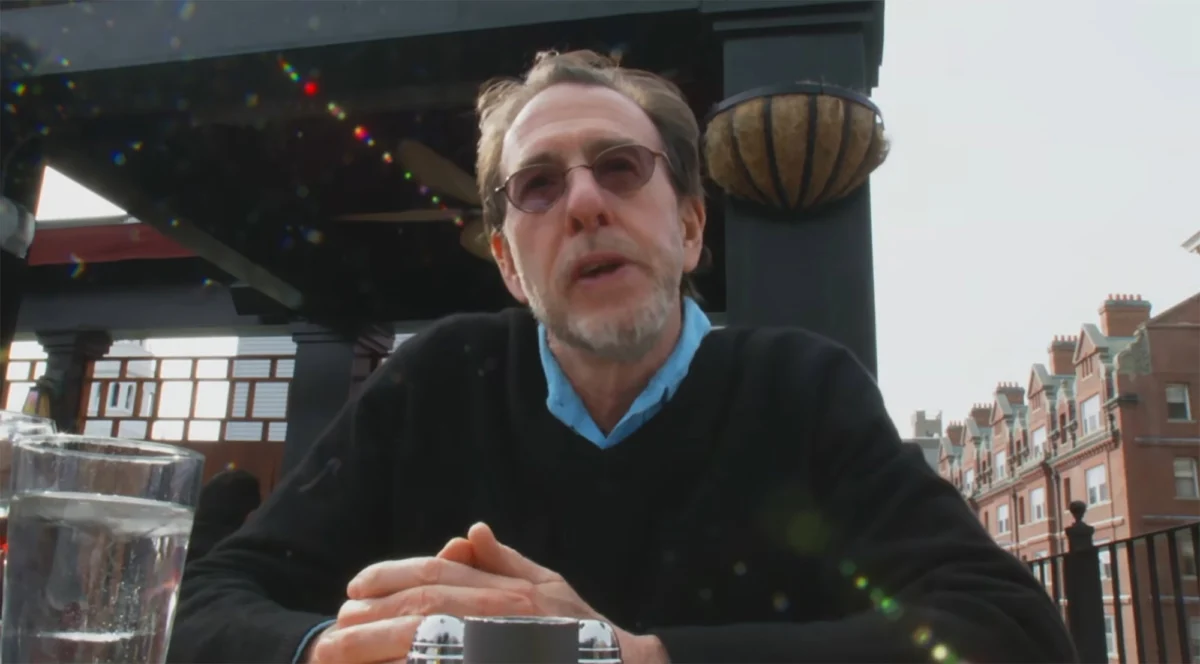
Music Box Films has officially unveiled the trailer for Remake, the latest documentary feature from acclaimed American filmmaker Ross McElwee, renowned for his seminal 1986 work, Sherman’s March. Premiering to critical anticipation at the 2025 Venice Film Festival and subsequently featured at the True/False Film Festival this year, Remake marks McElwee’s return to filmmaking after a 14-year hiatus, offering an intensely personal and emotionally resonant meditation on life, loss, and the enduring power of the moving image. Scheduled for a theatrical release in select U.S. cinemas on July 10th, 2026, the film weaves together decades of personal archives to confront the tragic death of his son, Adrian, from a fentanyl overdose, transforming a planned adaptation of his most famous work into an elegy for a lost child.
A Legacy of Observational Cinema Meets Unspeakable Grief
Ross McElwee has carved a distinctive niche in documentary filmmaking over a career spanning more than four decades. His signature style, often described as autobiographical or first-person documentary, seamlessly blends observational footage with reflective voiceover narration, positioning the filmmaker himself as a central character and explorer of the human condition. From Charleen to Sherman’s March, Time Indefinite, and Bright Leaves, McElwee’s filmography consistently examines the shifting landscapes of American society through the intimate lens of personal history, family dynamics, and self-discovery. His films are characterized by their thoughtful pacing, intellectual curiosity, and an unflinching willingness to expose his own vulnerabilities and uncertainties. This deeply personal approach has established him as a master of the form, influencing generations of documentarians to explore the intersections of the public and private spheres.
Remake continues this tradition but ventures into profoundly new emotional territory. The film initially positions itself around the intriguing premise of chronicling the process of adapting Sherman’s March—his acclaimed exploration of General William Tecumseh Sherman’s destructive march through the South during the Civil War, famously intertwined with McElwee’s own search for a romantic partner—into a fictional narrative. This meta-cinematic concept provides a structural framework, allowing McElwee to revisit themes that have permeated his entire body of work: family, love, death, legacy, and the relentless passage of time. However, this artistic endeavor takes an unforeseen and devastating turn, transforming the project into a heartfelt and profoundly moving love letter to his late son, Adrian, whose life was tragically cut short by mental illness and drug addiction.

The Son’s Story: Adrian McElwee and the Shadow of Fentanyl
Adrian McElwee grew up literally and figuratively within his father’s films. Decades of beautifully captured home movies and documentary footage mean that Adrian’s childhood and adolescence are documented with an intimacy rarely seen, even within the context of personal cinema. As he matured, Adrian himself began to experiment with a camera, following in his father’s footsteps and developing his own visual language. The acquisition of rights to adapt Sherman’s March into a fictional feature presented a unique opportunity, not just for Ross, but also for Adrian. It represented a chance for his father, whose critically lauded but often niche work had primarily resonated within arthouse circuits, to finally reach a wider, more mainstream audience. This shared aspiration underscored a profound bond and a hopeful future for their collaborative artistic pursuits.
However, as the adaptation process encountered creative and logistical hurdles, Adrian’s life spiraled into a deepening struggle with drug addiction. The film poignantly recounts Adrian’s battle, culminating in his untimely death from a fentanyl overdose. This devastating event not only shattered the McElwee family but also irrevocably altered the trajectory of Remake. Adrian’s death places the film squarely within the context of the ongoing and devastating fentanyl crisis that has gripped the United States, claiming hundreds of thousands of lives and leaving an indelible mark on communities nationwide.
According to data from the Centers for Disease Control and Prevention (CDC), synthetic opioids, primarily fentanyl, are the primary drivers of overdose deaths in the U.S. Provisional data indicates that overdose deaths involving synthetic opioids increased by over 16% in the 12-month period ending in March 2024, continuing a harrowing trend that has seen exponential growth over the past decade. Fentanyl, a synthetic opioid 50 to 100 times more potent than morphine, is frequently mixed with other illicit drugs, often unbeknownst to the user, significantly increasing the risk of fatal overdose. Adrian McElwee’s story, as told through his father’s lens, personalizes this national tragedy, giving a face and a deeply human dimension to the overwhelming statistics. His left-behind video footage, a poignant testament to his own artistic inclinations and inner world, becomes an integral, almost collaborative, element in his father’s final cut, transforming his unfinished narratives into a crucial part of Remake‘s fabric.
The Camera as Witness and Confidante: Reckoning with What Was Seen and Unseen

In Remake, Ross McElwee embarks on a profound and painful journey, retracing Adrian’s final years. He grapples with the ethical and emotional complexities inherent in his life’s work: what his ever-present camera captured, and perhaps more hauntingly, what remained out of frame. This self-reflexive inquiry has always been a hallmark of McElwee’s filmmaking, but here, it takes on an unprecedented weight. The familiar tension between the documentarian’s objective gaze and the subjective experience of living life is amplified by the ultimate tragedy of his son’s death. He reflects on his lifetime behind the camera, questioning the boundaries of observation and intervention, and the inherent limitations of even the most diligent chronicler when faced with the private struggles of a loved one.
The film evolves into an "ever-expanding hall of mirrors," built from decades of family footage that blurs the lines between memory, documentation, and the act of creation itself. McElwee’s effort to "remix and remake" the movie that Adrian never got to finish becomes a powerful metaphor for his own process of grieving and remembering. It is, simultaneously, an attempt to hold onto his son—to preserve his memory, his spirit, his artistic voice—and a courageous, agonizing effort to let him go. This duality forms the emotional core of Remake, inviting viewers into a universal experience of parental love and loss, filtered through the unique perspective of a filmmaker who has spent a lifetime documenting his world.
Critical Acclaim and Anticipated Impact
Upon its premiere at the 2025 Venice Film Festival, Remake immediately garnered significant attention, with early critical assessments describing it as a work of immense soulful depth and profound emotional resonance. Film critics and industry observers lauded its courageous honesty and its ability to transform personal tragedy into a universally relatable narrative about family, artistic integrity, and the human condition. The film’s subsequent showing at the True/False Film Festival further solidified its standing as a powerful and essential documentary of the year.
The anticipation surrounding Remake is also fueled by its significance as McElwee’s first new film in 14 years, following his 2010 documentary, Photographic Memory. Reviewers have noted that Remake "continues in the vein of the filmmaker’s best work, albeit with more emotional weight than ever before," suggesting a new pinnacle in his distinguished career. The film’s unflinching portrayal of Adrian’s struggles and death, coupled with McElwee’s signature introspective narrative, promises to provoke crucial conversations about mental health, addiction, and the role of art in processing grief. Its exploration of the tensions between commercial cinema and artistic integrity also adds another layer of intellectual engagement, reflecting on the challenges and compromises inherent in the creative process.

Production, Distribution, and Legacy
Remake is directed by Ross McElwee, with production credits including Giant Squid, Mark Meatto, and Ross McElwee himself, underscoring the deeply personal and independent nature of the project. Music Box Films, known for distributing critically acclaimed independent and international cinema, will handle the film’s theatrical release. The official trailer and poster, released on June 25, 2026, offer a poignant glimpse into the film’s emotional landscape, inviting audiences to witness a filmmaker’s most intimate and profound creation.
The release of Remake on July 10th, 2026, is expected to be a significant event in the documentary film calendar. It not only reasserts Ross McElwee’s enduring relevance as a vital voice in contemporary cinema but also contributes a powerful and timely narrative to the national discourse on the opioid crisis. By transforming his personal tragedy into a work of art, McElwee offers audiences a pathway to understanding, empathy, and perhaps, a measure of healing, demonstrating the profound capacity of film to bear witness, memorialize, and ultimately, to connect us all through shared human experience. The film stands as a testament to Adrian’s life, a father’s enduring love, and the indelible power of cinema to confront the most difficult truths.