The sixth annual Prismatic Ground festival, which took place in New York City from April 29 through May 3, 2024, reaffirmed its position as a primary venue for global voices in contemporary experimental and avant-garde cinema. Founded and programmed by Inney Prakash, the festival has evolved from its inception into a vital platform that resists the rote predictability of traditional film programming. By organizing the selection into four distinct "waves," Prakash encourages a viewing experience that mirrors the fluid nature of the medium itself, moving beyond rigid categorization to find thematic resonances across disparate cultures and formats. This year’s iteration highlighted the democratizing power of the moving image during a period of significant global and technological upheaval, focusing on filmmakers who utilize the lens to interrogate intimacy, history, and the digital landscape.
The Curatorial Philosophy of Prismatic Ground
Since its founding, Prismatic Ground has been defined by a commitment to the "democratization of the image." Unlike mainstream festivals that often prioritize commercial viability or star-driven narratives, this festival foregrounds the "contemporary avant-garde," a term that encompasses everything from traditional 16mm experimental shorts to cutting-edge desktop documentaries. Founder Inney Prakash describes his curatorial approach as akin to "conducting a piece of music or slaloming down a mountain," suggesting a process that is both rhythmic and reactive.
The 2024 festival continued its tradition of a hybrid format, utilizing physical venues across New York City—including the Museum of the Moving Image, Anthology Film Archives, and the Brooklyn Academy of Music (BAM)—while maintaining an accessible online presence. This dual-access model is central to the festival’s mission to provide a platform for filmmakers whose work might otherwise be marginalized by the commercial film industry. The "wave" structure of the festival allows for a non-linear engagement with the content, where threads of post-colonialism, feminist historiography, and the ethics of digital media are allowed to emerge organically.
Debut Features and the Exploration of Personal Narrative
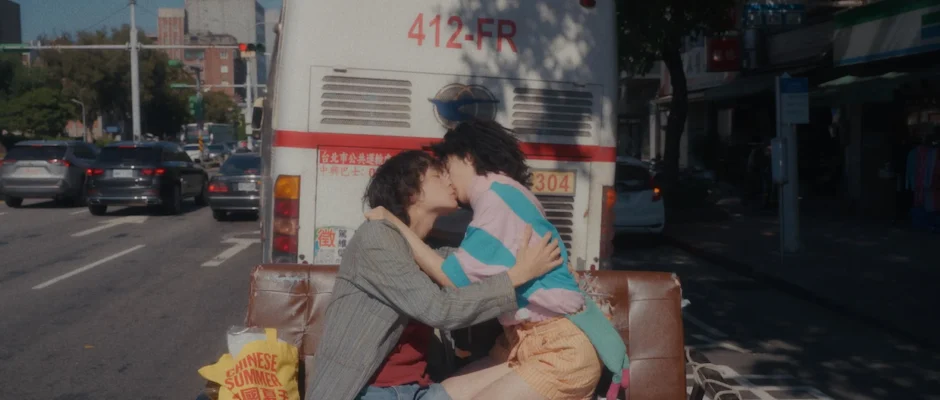
The festival opened with the feature debut of Hong Kong filmmaker Wong Ka Ki, titled I Heard That They Are Not Going to See Each Other Anymore. The film represents a significant maturation of Wong’s style, building upon the meta-textual experimentation seen in her earlier short work, such as A Shrimp’s Daily Rehearsal. The narrative structure follows two distinct pairs of lovers: Tao, a filmmaker whose volatile relationship with her boyfriend Shin is documented through a blurring of reality and recreation, and Mehli, a Turkish vendor whose internal melancholy finds a counterpart in Ping.
Wong’s methodology relies heavily on improvisation, a technique that gives the film a slippery, iterative momentum. By blending the signatures of neorealism with elements of silent comedy and the essay film, Wong creates a meditation on how the moving image can transfigure personal pain into artistic expression. While some critics noted that the film’s digressive nature—particularly regarding the cosmopolitan identity of Taipei—occasionally felt like an affectation rather than a thematic development, the work is widely regarded as a promising indicator of Wong’s future as a significant voice in Asian independent cinema.
In contrast to Wong’s improvisational style, Isabelle Kalandar’s feature debut, Another Birth, grounded the festival in a more conventional, yet equally ambitious, thematic framework. Set in a rural village in Tajikistan, the film tells the story of Parastu, a young girl attempting to save her grandfather from what she believes is a "broken heart" caused by the absence of his son. The narrative eventually pivots into a search for Parastu’s own father, who also abandoned her mother (played by Kalandar herself).
Another Birth is notable for its integration of the poetry of Forough Farrokhzad and the mythic figure of Pari, creating a feminist historiography that addresses the emotional violence of absent men. Kalandar avoids the pitfalls of "miserablism" through a keen eye for terrestrial beauty, positioning her characters against the Tajik landscape in a way that recalls the "terrestrial verses" of Iranian cinema. As the second installment in a planned trilogy, the film’s magical realist elements and its ambiguous denouement suggest a sophisticated grasp of narrative tension and cultural heritage.
Archival Discoveries and Counter-Hegemonic Narratives
A standout component of the 2024 Prismatic Ground slate was its repertory selections, which functioned as both historical time capsules and challenges to dominant cultural narratives. The festival featured a trilogy of shorts by Iraqi-Lebanese-American filmmaker Parine Jaddo, produced between the First and Second Gulf Wars. These films—Thirst (1995), Surviving (1998), and Astray (2002)—offer a profound look at the construction of female identity within and against the "Orientalist gaze."

- Thirst (1995): Set in post-war Lebanon, the film contrasts the sensationalism of Mohammed Mrabet’s literature with the mundane realities of daily life, questioning how trauma is processed through art.
- Surviving (1998): This film shifts the focus to the United States, examining the fetishization of Middle Eastern women through a pseudo-documentary lens.
- Astray (2002): Screening for the first time at Prismatic Ground, this final installment captures the claustrophobia and loss of belonging experienced by the diaspora following the September 11 attacks.
Jaddo’s work remains timely, particularly her refusal to "lose herself" in a world that seeks to define her through a reductive, Western lens. The rediscovery of these films provides essential context for contemporary discussions regarding Middle Eastern representation and the role of the filmmaker as a witness to geopolitical shifts.
The Ethics of Digital Media and Sectarian Violence
The festival also addressed the evolution of the moving image in the digital age, most notably through Kevin B. Lee’s Afterlives. Lee, a pioneer of the "desktop documentary" format, uses the medium to explore how images of violence circulate and mutate online. In Afterlives, he investigates the destruction of cultural artifacts by ISIS, interviewing scholars and archivists to understand the psychic weight of these images.
Lee’s film is a formal achievement, utilizing multiple onscreen windows to simulate the experience of modern information consumption. The inclusion of a Werner Herzog poster in the background of one interview serves as a nod to Herzog’s own clinical approach to the "ecstatic truth," yet Lee maintains a deeply personal positionality. He interrogates whether the cycle of sectarian violence and digital exploitation can ever truly be broken, offering a humane riposte to the atomization of society in the age of the algorithm.
Experimental Form and the Critique of Empire
The most formally aggressive entry in the festival was Isiah Medina’s Gangsterism. A Canadian-Filipino filmmaker known for his mathematically precise editing, Medina delivers a fragmented exploration of filmmaking, economics, and colonialism. The film documents conversations between filmmaker Mark Bacolcol and his crew, utilizing rapid cuts that challenge the viewer’s synaptic processing.
Gangsterism draws clear parallels to the work of Jean-Luc Godard (specifically La Chinoise) and Hollis Frampton, yet it avoids becoming a mere collection of citations. Medina’s fierce conviction in the relevance of cinema during a time of global decline gives the film a "trial by fire" quality. The film ends on a title card reading "Intermission," a cheeky suggestion that the audience—and the industry—needs a pause to take stock of how to salvage the medium from the "dying empire" of traditional cinematic structures.
Timeline of the 2024 Prismatic Ground Festival
- April 29: Festival Opening Night featuring I Heard That They Are Not Going to See Each Other Anymore by Wong Ka Ki.
- April 30 – May 1: Screenings of the "First and Second Waves," focusing on short-form experimental works and archival rediscoveries, including the Parine Jaddo trilogy.
- May 2: Premiere of Kevin B. Lee’s Afterlives and panel discussions regarding the ethics of the digital image.
- May 3: Closing Night featuring Isiah Medina’s Gangsterism and the announcement of the festival’s ongoing digital distribution partnerships.
Broader Implications for the Film Industry
The success of the sixth Prismatic Ground festival highlights a growing demand for "slow media" and challenging, non-commercial content. As major streaming platforms face criticism for the homogenization of content, festivals like Prismatic Ground serve as essential laboratories for the future of the medium.
Data from the festival organizers indicates a 15% increase in international submissions for the 2024 season, with a significant rise in entries from Central Asia and the Middle East. This trend suggests that the "democratization of the image" is not just a theoretical goal but a practical reality, as affordable digital technology allows filmmakers in historically underrepresented regions to produce high-quality, avant-garde work.
Furthermore, the festival’s emphasis on the "desktop documentary" and rapid-fire experimental editing reflects a shift in how audiences perceive truth and narrative. By foregrounding films that interrogate the very tools used to create them, Prismatic Ground encourages a more media-literate viewership. The 2024 edition proved that while the "empire" of traditional cinema may be in a state of flux, the vocation of filmmaking remains a vital tool for navigating the complexities of the modern world.