


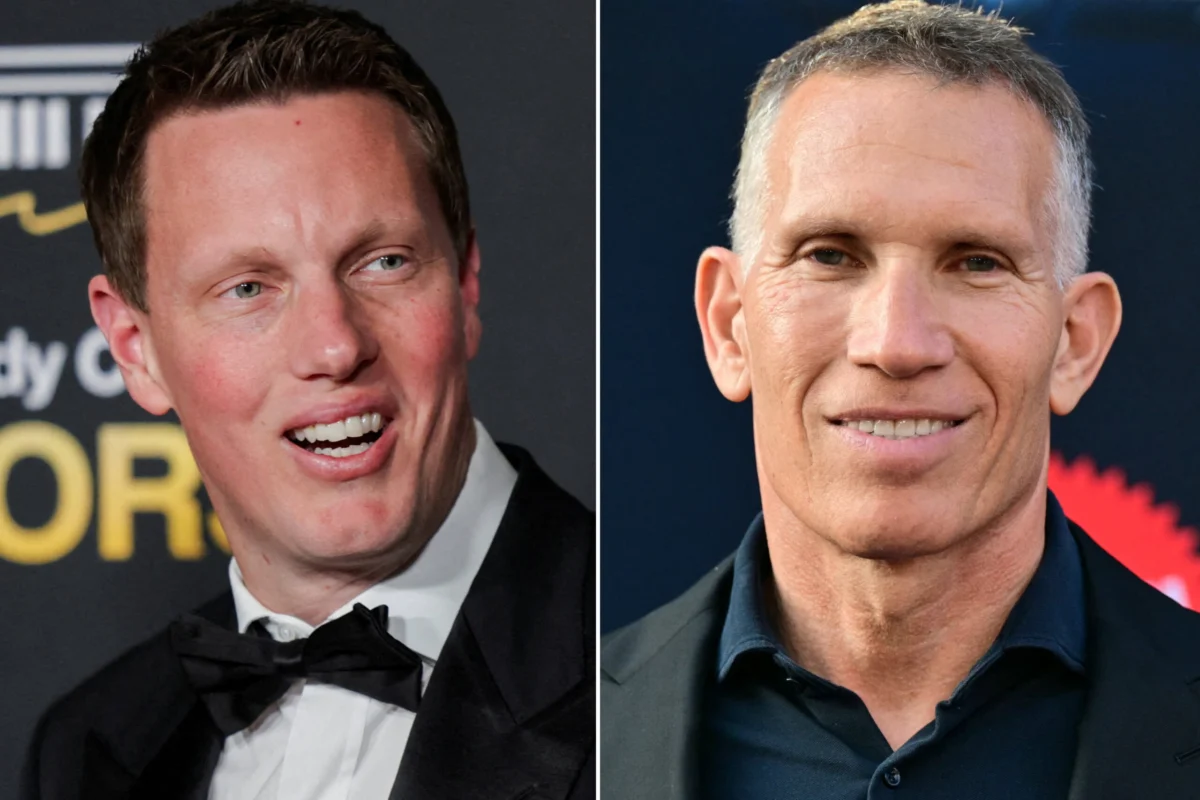
The long-anticipated consolidation of the global media landscape reaches a definitive conclusion this Tuesday as Paramount Skydance and Warner Bros. Discovery officially close their $110 billion merger agreement. Following a period of intense regulatory scrutiny and legal maneuvering, the newly integrated entity—operating under the Paramount Skydance banner—has unveiled a comprehensive leadership structure designed to steer the massive conglomerate through the complexities of the modern streaming and content landscape. Incoming co-CEOs David Ellison and Ynon Kreiz confirmed the executive roster on Monday, signaling a strategic pivot that blends legacy broadcasting expertise with modern digital-first content strategies.
A New Era for Global Media
The merger, which was first announced in February 2026, represents one of the most significant realignments in the history of the entertainment industry. By uniting the deep libraries and distribution networks of Paramount and Warner Bros. Discovery, the new organization aims to create a "next-generation global media and entertainment company." The leadership team announced this week is composed of high-profile executives from both legacy companies, signaling a deliberate effort to retain institutional knowledge while pivoting toward a centralized content strategy.
Key appointments include Casey Bloys, who will transition from his role as chairman and CEO of HBO and Max content to serve as co-chair and chief content officer of the company’s direct-to-consumer division. He will be joined by JB Perrette, the former CEO and President of global streaming and games for Warner Bros. Discovery, who will co-chair both the direct-to-consumer and television divisions. On the television front, former Paramount co-CEO George Cheeks will serve as co-chair and chief content officer for Skydance TV, a portfolio that now encompasses the company’s extensive global sports group.
Chronology of the Mega-Merger
The path to this week’s closing was fraught with significant hurdles. The timeline of the transaction highlights the increasing difficulty of executing large-scale media deals in an era of heightened antitrust oversight:
- February 2026: Paramount Skydance and Warner Bros. Discovery publicly announce their intent to merge in a deal valued at approximately $110 billion.
- Late 2026: A coalition of state attorneys general files a lawsuit challenging the merger on grounds of market concentration and potential harm to consumer pricing.
- September 2026: After weeks of negotiations, Paramount reaches a settlement with the plaintiffs, clearing the final major legal obstacle to the deal.
- October 2026: David Ellison and Ynon Kreiz are named co-CEOs, and the executive leadership team is finalized ahead of the official Tuesday close.
Strategic Integration of News Divisions
A notable aspect of the new corporate structure is the approach to the company’s journalism assets. Bari Weiss, who joined Paramount Skydance in October 2025 following the company’s acquisition of her digital platform, The Free Press, will continue to lead her division. Simultaneously, Mark Thompson will remain in his role as chairman and editor-in-chief of CNN Worldwide. By keeping these two distinct news leaders in place, the company appears to be betting on a strategy of editorial autonomy for its flagship news brands, a common tactic aimed at maintaining brand identity and viewer trust in a fractured media market.
Financial and Operational Implications
The financial scale of the merger is staggering. The combined entity now controls an immense intellectual property portfolio, including the HBO and Max streaming services, the Paramount+ platform, a vast library of motion pictures, and premier sports broadcasting rights.
Analysts suggest that the primary driver of this consolidation is the need for operational efficiency in a high-interest-rate environment. By centralizing streaming platforms—specifically the integration of HBO Max and Paramount+—the company hopes to reduce churn and increase the lifetime value of its subscribers. Andy Gordon, who transitions from his role as Paramount’s Chief Strategy Officer and Chief Operating Officer to President of the new organization, will be tasked with executing these cost synergies. Dennis Cinelli will remain the Chief Financial Officer, providing continuity as the company embarks on a massive balance sheet restructuring.
The Vision of the Co-CEOs
In a formal statement released Monday, David Ellison emphasized the human element behind the numbers. "The leaders joining me have built some of the most beloved franchises and businesses in the industry," Ellison stated. "They share a deep respect for the creative process and a belief that great stories have the power to entertain, unite and inspire audiences around the world."
The dual-CEO structure between Ellison and Kreiz is intended to balance the creative-led philosophy of Skydance with the operational rigor required to manage a global media conglomerate of this size. Kreiz, known for his success in managing brand licensing and content strategy, brings a background that suggests the new Paramount Skydance may lean heavily into franchise expansion—a strategy that has proven lucrative for companies that successfully bridge the gap between toy lines, digital games, and big-budget cinema.
Market Reaction and Competitive Landscape
The media industry has reacted with a mix of cautious optimism and skepticism. While the sheer scale of the merger allows the company to negotiate more favorable carriage deals and advertising rates, it also presents significant integration challenges. Integrating disparate tech stacks from Paramount+ and HBO Max remains a primary concern for investors, as past media mergers have often suffered from prolonged technical issues during platform migrations.
Furthermore, the new entity faces stiff competition from technology-first streamers like Netflix, Amazon, and Apple. Unlike the legacy studios, these competitors have built their business models on top of global cloud infrastructure and data-driven content commissioning. The success of the Paramount Skydance merger will likely be measured by how quickly the new leadership can consolidate its streaming technology into a singular, high-performance platform that can compete with these tech giants for viewer time and subscription dollars.
Broader Implications for the Media Sector
The consolidation of Paramount and Warner Bros. Discovery is widely viewed as a bellwether for the rest of the media industry. For years, traditional studios have struggled to transition their business models from profitable linear television and box office releases to the high-capital-expenditure world of direct-to-consumer streaming.
If this merger succeeds, it could trigger a "second wave" of media consolidation, where remaining independent studios look to pair up with larger partners to achieve the scale necessary to survive. Conversely, should the integration face significant regulatory or operational friction, it could serve as a cautionary tale for future deals, potentially signaling to regulators that the limit of media concentration has been reached.
As the company officially begins its new chapter on Tuesday, the eyes of Wall Street and Hollywood will be fixed on the first quarterly earnings report of the combined entity. The market will be looking for clear evidence of cost-cutting, a unified streaming roadmap, and a cohesive strategy for the company’s vast library of sports and news assets. While the corporate structure is now set, the real work of managing a $110 billion empire in an increasingly fragmented digital world has only just begun. The appointment of veteran leadership suggests that Ellison and Kreiz are prioritizing stability and proven success in the short term, even as they attempt to reinvent the company for a future that looks vastly different from the era that built these legacy brands.