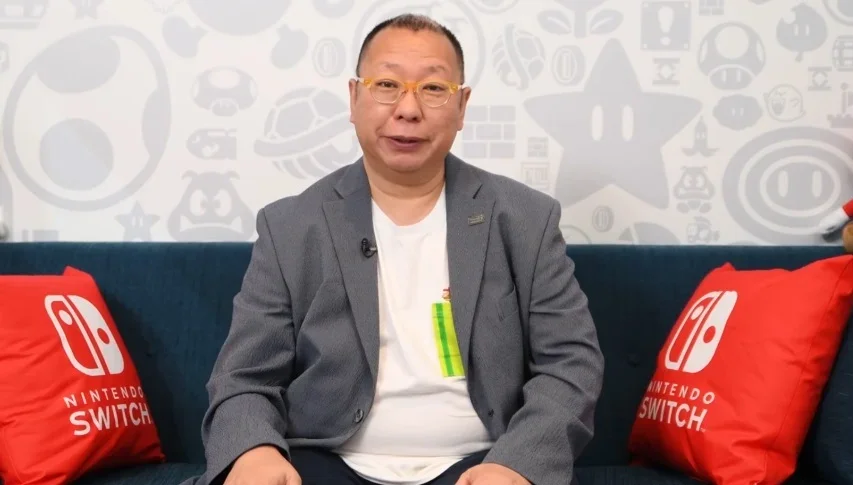
In a move that signals the end of a foundational era for the global interactive entertainment industry, Nintendo Co., Ltd. has officially announced that Takashi Tezuka, a veteran designer, director, and executive officer, will retire from the company on June 26, 2025. The announcement, disclosed within Nintendo’s latest fiscal year financial report, marks the departure of a creative force whose work has defined the visual and mechanical language of video games for over four decades. Tezuka, who will be 65 at the time of his departure, leaves a legacy that spans the entirety of Nintendo’s dominance in the home console market, having served as a primary architect for the Super Mario, The Legend of Zelda, and Yoshi franchises.
Tezuka’s retirement coincides with a broader leadership transition at the Kyoto-based company. Alongside Tezuka, Nintendo confirmed that three other long-standing directors—Katsuhiro Umeyama, Keiko Akashi, and Takuya Yoshimura—will also be stepping down from their roles in the coming months. This executive reshuffle comes at a pivotal moment for Nintendo as it prepares for the transition to its next generation of hardware, currently referred to by the public and investors as the "Switch 2."
A Four-Decade Journey: From Assistant to Architect
Takashi Tezuka’s career began in 1984 when he joined Nintendo as a part-time employee while still completing his university studies. His timing was fortuitous, placing him at the epicenter of a creative explosion that would rescue the North American video game industry from collapse and establish Nintendo as a household name. Within a year of joining, Tezuka was appointed as an assistant director and designer for the 1985 masterpiece Super Mario Bros. on the Nintendo Entertainment System (NES).
Working closely under the mentorship of Shigeru Miyamoto, Tezuka was instrumental in translating Miyamoto’s abstract concepts into functional level designs. While Miyamoto provided the overarching vision, Tezuka was often the one responsible for the meticulous placement of blocks, enemies, and power-ups that created the "Nintendo feel"—a specific standard of responsiveness and intuitive play that remains the industry benchmark.
By the late 1980s, Tezuka’s influence had expanded significantly. He served as the director for The Legend of Zelda (1986), contributing to the non-linear exploration and puzzle-solving mechanics that would define the action-adventure genre. His ability to balance whimsical charm with rigorous technical design became his trademark, leading him to direct some of the most critically acclaimed titles in history, including Super Mario World (1990) and The Legend of Zelda: A Link to the Past (1991) for the Super Famicom/SNES.
The Evolution of the "Tezuka Touch"
Throughout the 1990s and early 2000s, Tezuka’s role evolved from hands-on direction to broader creative supervision. He was the primary creative lead behind Yoshi’s Island (1995), a game praised for its unique hand-drawn aesthetic—a departure from the pre-rendered 3D trends of the time. This project highlighted Tezuka’s commitment to artistic distinctiveness and his willingness to subvert player expectations.
As Nintendo transitioned into the 3D era and eventually into the modern high-definition era, Tezuka remained a constant presence in the production credits of the company’s most successful titles. His portfolio expanded to include the Animal Crossing and Pikmin series, where he helped oversee the development of experimental gameplay loops focused on social simulation and real-time strategy.
In the last decade, Tezuka’s role as a production supervisor and executive officer allowed him to mentor a new generation of developers. He played a critical role in the success of Super Mario 3D World, Super Mario Maker, and the revolutionary The Legend of Zelda: Breath of the Wild. Most recently, he served as a producer on Super Mario Bros. Wonder (2023), a game that was widely seen as a "return to form" for 2D Mario, incorporating the surrealism and inventiveness that characterized Tezuka’s earliest work.
Corporate Restructuring and Executive Departures
The retirement of Takashi Tezuka is part of a standard administrative cycle at Nintendo, which typically adheres to a retirement age of 65 for its executive officers. While Shigeru Miyamoto remains an exception to this rule, continuing his work as a Representative Director and "Fellow" in his 70s, Tezuka has opted to follow the traditional corporate timeline.
The departure of Katsuhiro Umeyama, Keiko Akashi, and Takuya Yoshimura alongside Tezuka suggests a concerted effort by Nintendo to refresh its board and executive ranks. These departures represent a significant loss of institutional knowledge; however, analysts suggest that Nintendo has been preparing for this transition for several years by elevating younger directors like Shinya Takahashi and Yoshiaki Koizumi to prominent roles.
The financial report that confirmed these retirements also contained critical updates regarding Nintendo’s future hardware strategy. Most notably, the company announced a projected price increase for its upcoming successor to the Nintendo Switch in major markets, including the United States, Canada, Japan, and Europe. This pricing adjustment is attributed to rising manufacturing costs, global inflation, and the increased complexity of the new console’s internal components.
Quantitative Impact: A Legacy in Numbers
To understand the scale of Tezuka’s impact, one must look at the commercial performance of the franchises he helped build. As of early 2024, the Super Mario franchise has sold over 800 million units worldwide, making it the best-selling video game franchise of all time. The Legend of Zelda series has surpassed 160 million units, with Breath of the Wild alone accounting for over 30 million of those sales.
Tezuka’s involvement in Animal Crossing: New Horizons saw the title become a cultural phenomenon during the 2020 pandemic, selling over 43 million copies and becoming the second best-selling game on the Nintendo Switch platform. These figures underscore the immense economic value Tezuka brought to Nintendo over his 41-year tenure. His ability to consistently produce "evergreen" titles—games that continue to sell years after their initial release—has been the cornerstone of Nintendo’s financial stability.
Industry Implications and Future Outlook
The retirement of a figure as prominent as Takashi Tezuka inevitably raises questions about the future creative direction of Nintendo. Tezuka was known for a philosophy often described as "Kyoto-style craftsmanship," emphasizing polish, accessibility, and "play for play’s sake."
Industry analysts believe that while Tezuka’s personal touch will be missed, his influence is deeply embedded in the company’s culture. Nintendo’s internal development structure is famously collaborative, with "Development Group No. 1" and other divisions functioning as schools of thought rather than just production houses. Younger developers who worked under Tezuka, such as Super Mario Bros. Wonder director Shiro Mouri, are expected to carry forward the design principles established during the NES and SNES eras.
Furthermore, the timing of the retirement—just as the "Switch 2" era begins—allows for a clean break. The next console generation will likely be defined by a new cohort of creative leaders who will be tasked with maintaining Nintendo’s market share in an increasingly competitive environment dominated by cloud gaming, mobile integration, and high-fidelity graphics.
Official Responses and Market Reaction
While Nintendo’s official filing was characteristically brief and focused on the administrative necessity of the changes, the news has reverberated through the global gaming community. Internal sources at Nintendo suggest that Tezuka will likely remain in a "consultant" or "advisor" capacity for a period following his official retirement date in June, similar to the paths taken by other retired Japanese executives.
Market reaction to the financial report was mixed. While the retirement of key talent can sometimes cause investor jitters, Nintendo’s robust balance sheet and the anticipation surrounding the Switch 2 have largely offset concerns. The announced price increase for the new hardware was met with caution by retail analysts, though many agree that Nintendo’s brand loyalty is strong enough to withstand a higher entry price, provided the software library remains high-quality.
Conclusion: The End of an Era
Takashi Tezuka’s retirement marks the departure of one of the last remaining members of the "original guard" that transformed video games from a niche hobby into a dominant form of global media. From the pixelated landscapes of the Mushroom Kingdom to the sprawling vistas of Hyrule, Tezuka’s fingerprints are on nearly every major milestone in Nintendo’s history.
As he prepares to step down on June 26, 2025, the industry looks back on a career defined by innovation, consistency, and an unwavering commitment to the joy of play. For Nintendo, the challenge will be to maintain that spirit of "Wonder" in a post-Tezuka era, ensuring that the foundations laid forty years ago continue to support the innovations of tomorrow.