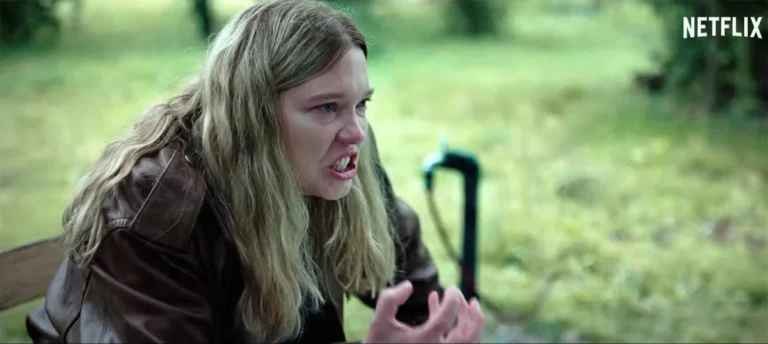


Finnish filmmaker Hanna Bergholm is set to captivate global audiences once again with her sophomore feature, Nightborn, a chilling exploration of maternal anxiety and supernatural dread, slated for streaming release on Shudder on July 31st, 2026. The film, which premiered to critical attention at the 2026 Berlin Film Festival and is scheduled for a subsequent screening at the Fantasia Film Festival later this month, follows the disturbing journey of new parents Saga and Jon as their joy is quickly overshadowed by a sinister truth about their newborn. Starring Seidi Haarla as Saga and Rupert Grint as Jon, Nightborn promises a visceral and unsettling experience, building on Bergholm’s distinctive genre vision established with her debut, Hatching.
A Descent into Familial Horror: The Premise of Nightborn
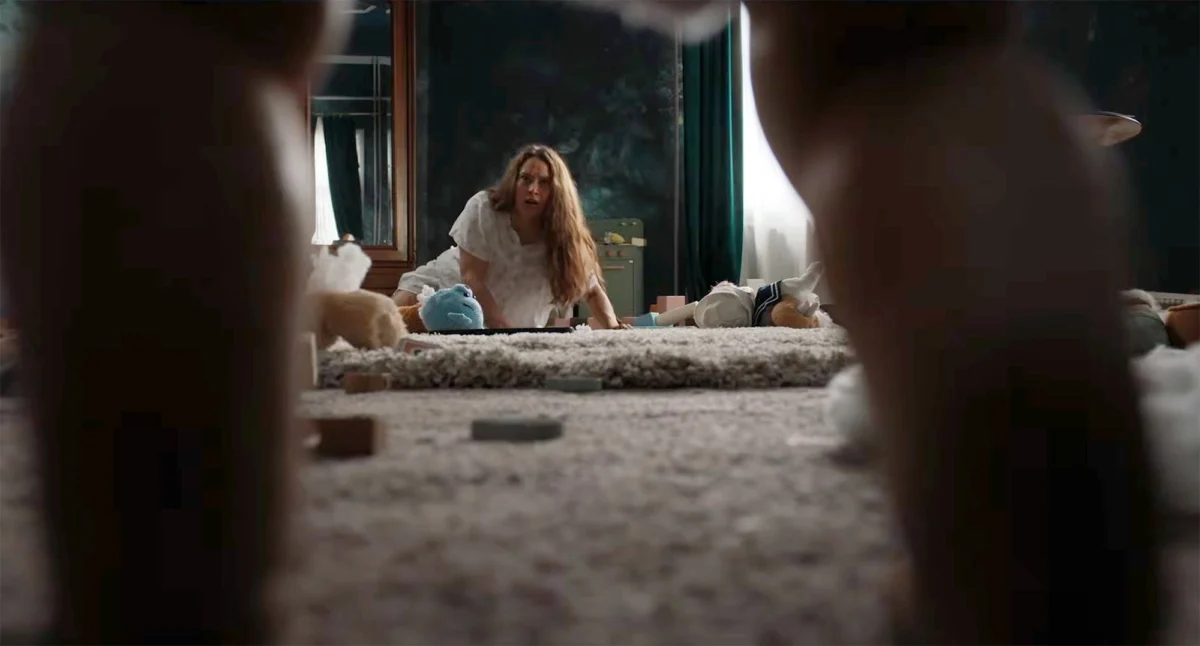
The narrative thrust of Nightborn, known as Yön Lapsi in its native Finland, centers on Saga and Jon, a couple embarking on the quintessential dream of starting a family. Their chosen sanctuary is an isolated house nestled deep within the Finnish forest, a place of personal significance for Saga, having spent much of her childhood there. This idyllic setting, however, quickly morphs into a crucible of psychological torment following the birth of their child. Saga, played by the compelling Seidi Haarla, is almost immediately assailed by a chilling intuition that something is profoundly amiss with their baby, a suspicion that clashes sharply with the reassurances from her husband, Jon (Rupert Grint), and their wider social circle. As the film progresses, Saga finds herself increasingly isolated, grappling alone with a disturbing truth about the newborn that threatens to fracture her marriage and sanity. The horror of Nightborn is not merely external; it is deeply rooted in the primal fears of parenthood, distorted through a lens of supernatural malevolence. The film eschews subtle implication for a more direct, yet terrifying, portrayal of an infant that defies natural explanation, leading to what early viewers have described as "full-on frightening, evil, unsettling newborn mania," characterized by particularly vicious screams that linger long after viewing.
Hanna Bergholm’s Distinctive Vision: From Hatching to Nightborn

Nightborn marks the highly anticipated second feature film from director Hanna Bergholm, whose debut, the 2022 creature feature Hatching (also known as Pahanhautoja), garnered significant international acclaim for its unique blend of body horror, psychological drama, and dark fairytale aesthetics. Hatching explored themes of maternal pressure, suppressed emotions, and the grotesque manifestation of inner turmoil through the story of a young gymnast who nurtures a strange egg that hatches into a monstrous doppelgänger. Bergholm’s signature style, characterized by meticulously crafted unsettling atmospheres, a focus on female protagonists navigating intense psychological distress, and a willingness to push genre boundaries, is evidently carried forward and intensified in Nightborn. Her directorial approach often involves practical effects and a tangible sense of dread, rather than relying solely on jump scares, creating a more enduring and deeply disturbing horror experience. This continuity positions Nightborn not merely as another horror film but as a significant work by an emerging auteur whose voice is rapidly defining a new subgenre within contemporary horror cinema, particularly from the Nordic region. The transition from the literal creature horror of Hatching to the more insidious, perhaps demonic, infant horror of Nightborn demonstrates Bergholm’s evolving exploration of the darker aspects of family and the human psyche.
Nordic Folklore and the Forest’s Embrace: Cultural Context
A crucial layer of enrichment for Nightborn comes from its deep roots in Nordic mythology and the cultural significance of its Finnish setting. Director Hanna Bergholm herself articulated this connection, stating, "In Nordic countries, there’s a long-standing mythology of trolls living in the forests. In ancient times, people truly believed that trolls inhabited the woods and had a kind of control over nature. And in Nightborn, the forest reflects Saga’s emotions and the animalistic, primitive physical side of humankind." This statement highlights a profound integration of setting and theme. The Finnish forest is not merely a backdrop but an active participant, mirroring the protagonist’s internal turmoil and embodying ancient, untamed forces.
Finnish folklore is replete with tales of forest spirits, nature’s hidden inhabitants, and creatures that blur the lines between human and wild, often imbued with both benevolent and malevolent characteristics. Trolls, specifically, are ancient, powerful beings often associated with wild, untamed nature, capable of both wonder and terror. By invoking this mythology, Bergholm taps into a collective cultural unconscious, suggesting that the horror in Nightborn is not an isolated incident but perhaps a manifestation of these deep-seated fears and primeval energies. This approach elevates the film beyond a simple "demon baby" trope, grounding it in a rich tapestry of cultural belief where the natural world holds sway over human destiny and emotion. The isolation of Saga and Jon’s forest home further amplifies this connection, stripping away the modern world’s veneer and exposing them to elemental forces and ancient terrors, making the psychological horror resonate with a primal, almost inescapable dread. This cultural depth provides a unique flavor to the horror, distinguishing it from more conventional Western horror narratives and adding an intellectual weight to its visceral frights.
The Ensemble: Seidi Haarla, Rupert Grint, and Supporting Cast

The casting of Nightborn brings together a compelling mix of established and rising talent, crucial for delivering the film’s intense emotional and horrific beats. Seidi Haarla, in the central role of Saga, is a Finnish actress who gained international recognition for her powerful performance in Juho Kuosmanen’s Compartment No. 6 (2021), a critically acclaimed drama that won the Grand Prix at the Cannes Film Festival. Her ability to convey complex inner states, vulnerability, and growing desperation makes her an ideal choice for Saga, whose sanity is systematically eroded by the events unfolding around her. Her portrayal is expected to be a cornerstone of the film’s psychological impact, drawing viewers into Saga’s terrifying subjective reality.
Joining her as the bewildered husband Jon is British actor Rupert Grint, widely known for his iconic role as Ron Weasley in the Harry Potter film series. Grint has steadily built a diverse career post-Potter, including significant roles in M. Night Shyamalan’s psychological thriller series Servant and various independent films and stage productions, demonstrating a keen interest in darker, more nuanced material. His casting in Nightborn is particularly intriguing, as he often embodies characters with a relatable, everyman quality, which will likely serve to heighten the contrast with the escalating horror. His character, Jon, initially dismissive of Saga’s fears, will embody the audience’s initial skepticism, only to be gradually confronted with the horrifying truth alongside his wife. This dynamic between Haarla and Grint is central to the film’s exploration of a crumbling marriage under unimaginable stress.
The supporting cast further strengthens the film’s dramatic fabric, featuring Finnish talents like Pamela Tola and Pirkko Saisio, alongside British actors Rebecca Lacey and John Thomson. While their specific roles are not detailed, their presence ensures a strong ensemble capable of contributing to the film’s oppressive atmosphere and the escalating sense of isolation felt by the protagonists. The international composition of the cast also reflects the film’s ambition to resonate with a global audience while retaining its distinct Finnish identity.
Festival Circuit Acclaim: Berlin and Fantasia Premieres
Nightborn‘s journey to the screen has been marked by a notable presence on the international film festival circuit, a testament to its artistic merit and genre appeal. The film made its world premiere at the prestigious 2026 Berlin Film Festival earlier this year, an important platform for showcasing independent and art-house cinema. Its selection for Berlin, often celebrated for its diverse and challenging programming, immediately signaled Nightborn‘s potential as a significant cinematic event, garnering "mostly good reviews" that highlighted its distinctive terror and Bergholm’s masterful direction. Critics at Berlin likely praised its unique take on the horror genre, its psychological depth, and the compelling performances from its lead actors.

Following its European debut, Nightborn is scheduled to play at the Fantasia Film Festival later this month. Fantasia, held annually in Montreal, Canada, is renowned globally as one of the premier festivals for genre cinema, attracting a passionate audience and influential critics specializing in horror, fantasy, and cult films. Its inclusion in Fantasia’s lineup further solidifies Nightborn‘s reputation as a must-see for horror aficionados, positioning it among the year’s most anticipated genre releases. Festivals like Berlin and Fantasia are crucial for independent films, providing critical early exposure, building buzz, and securing distribution deals, all of which contribute to a film’s eventual commercial and critical success. The positive reception from these festivals indicates that Nightborn successfully navigates the delicate balance between arthouse sensibility and visceral genre thrills.
Shudder’s Strategic Acquisition and the Streaming Landscape
The acquisition of Nightborn by Shudder for its streaming debut on July 31st, 2026, is a strategic move that underscores the platform’s commitment to delivering high-quality, diverse horror content to its dedicated subscriber base. Shudder, an AMC Networks service, has firmly established itself as the leading specialized streaming service for horror, thriller, and supernatural content, curating a robust library of original films, exclusive titles, and classic genre works. For a film like Nightborn, with its distinct European flavor and auteur-driven vision, Shudder provides the ideal home, connecting it directly with an audience that actively seeks out innovative and challenging horror narratives.
This partnership highlights a broader trend in the film industry where specialized streaming platforms are becoming crucial distribution channels for genre films that might otherwise struggle to find broad theatrical releases. Shudder’s brand recognition within the horror community ensures that Nightborn will be marketed effectively to its target demographic, maximizing its reach and impact. The platform has a proven track record of elevating international horror, bringing films like Hatching and numerous other critically acclaimed foreign-language genre titles to a wider English-speaking audience. The release on Shudder is not merely a distribution decision but an endorsement of Nightborn‘s quality and its alignment with the evolving tastes of modern horror enthusiasts, who increasingly value unique storytelling and atmospheric dread over conventional scare tactics.
The Ascendance of Finnish and Nordic Genre Cinema

The international success of films like Hatching and the anticipated impact of Nightborn are indicative of a burgeoning golden age for Finnish and, more broadly, Nordic genre cinema. For decades, Nordic cinema has been celebrated for its poignant dramas, stark realism, and unique aesthetic sensibilities. However, in recent years, a wave of filmmakers has begun to inject these qualities into horror and thriller genres, creating a distinctive brand of "Nordic horror." This subgenre often utilizes the region’s vast, isolated landscapes, long dark winters, and rich folklore to create atmospheric, psychologically resonant, and often unsettling narratives.
Hanna Bergholm is at the forefront of this movement, but she is not alone. Other recent Nordic horror successes have showcased the region’s diverse talent, contributing to a global appreciation for its unique contributions to the genre. This includes films that explore psychological terror, folk horror, and socially conscious narratives disguised as genre fare. The increased visibility on international festival circuits and the strategic partnerships with platforms like Shudder are crucial factors in this ascendance, allowing these distinct cinematic voices to reach global audiences and influence the broader landscape of contemporary horror. Nightborn is poised to further solidify Finland’s reputation as a significant contributor to cutting-edge genre filmmaking, demonstrating that compelling horror can emerge from any cultural context, enriched by its unique heritage and artistic vision.
Production Insights and Anticipation
The screenplay for Nightborn was co-written by Hanna Bergholm and Ilja Rautsi, the same writing team behind Hatching, ensuring a consistent creative vision and thematic depth. Rautsi’s contributions to Hatching‘s intricate narrative and character development suggest that Nightborn will benefit from a similarly nuanced and intelligent script. The film was produced by Daniel Kuitunen and Noémie Devide, experienced producers in the European film circuit, whose involvement ensures the project’s high production values and international appeal. Their expertise in navigating co-productions and festival strategies has been instrumental in bringing Bergholm’s vision to the global stage.
As the release date approaches, anticipation for Nightborn continues to build, especially among fans of Bergholm’s previous work and those seeking sophisticated, unsettling horror experiences. The combination of a strong directorial voice, compelling lead performances, a culturally rich narrative, and a strategic streaming release positions Nightborn as one of the standout horror films of 2026. Viewers preparing for its Shudder debut are advised to brace themselves for a film that delves deep into the anxieties of parenthood, twisted into a genuinely terrifying supernatural ordeal that promises to be both visually striking and profoundly disturbing. The film’s commitment to a raw, visceral portrayal of an evil infant, as suggested by early reviews, promises a horror experience that is far from subtle and intensely memorable.