The National Football League and Paramount Global’s Skydance-led leadership have entered the advanced stages of negotiations to renew their long-standing media rights agreement, a move that signals a significant escalation in the cost of premium live sports content. According to sources familiar with the private discussions, the two entities are converging on a deal that would see CBS retain its coveted Sunday afternoon game package in exchange for a substantial price increase, likely falling between 50% and 60% above current rates. With CBS currently paying an average of $2.1 billion annually under the existing 11-year agreement, a 50% surge would elevate the annual commitment to more than $3 billion. This renegotiation is not merely a routine adjustment but a strategic recalibration triggered by corporate restructuring and a shifting media ecosystem where live sports remain the final bastion of mass-audience linear television.
In exchange for this multi-billion-dollar revenue boost, the NFL has reportedly agreed to a significant concession: the elimination of a critical opt-out clause originally scheduled for the 2029-30 season. Under the terms of the initial 11-year deal signed in 2021, which technically runs through the 2033-34 season, the league maintained the right to terminate the contract early. By removing this clause, the NFL provides Paramount and its new Skydance owners with long-term stability and guaranteed programming through the next decade. If finalized, the new payment structure is expected to take effect as early as next season, locking in an eight-year horizon of certainty for both the league and the broadcaster.
The Skydance Catalyst and the Change-of-Control Provision
The urgency surrounding the CBS negotiations stems from a specific legal mechanism within the NFL’s media contracts known as a "change-of-control" provision. When Skydance Media, led by David Ellison, moved to acquire Paramount Global in an $8 billion deal, it triggered the NFL’s right to potentially exit its contract by 2027. This provision acts as a safeguard for the league, ensuring that it is not forced to partner with an owner or a corporate structure it deems unsuitable or financially unstable.
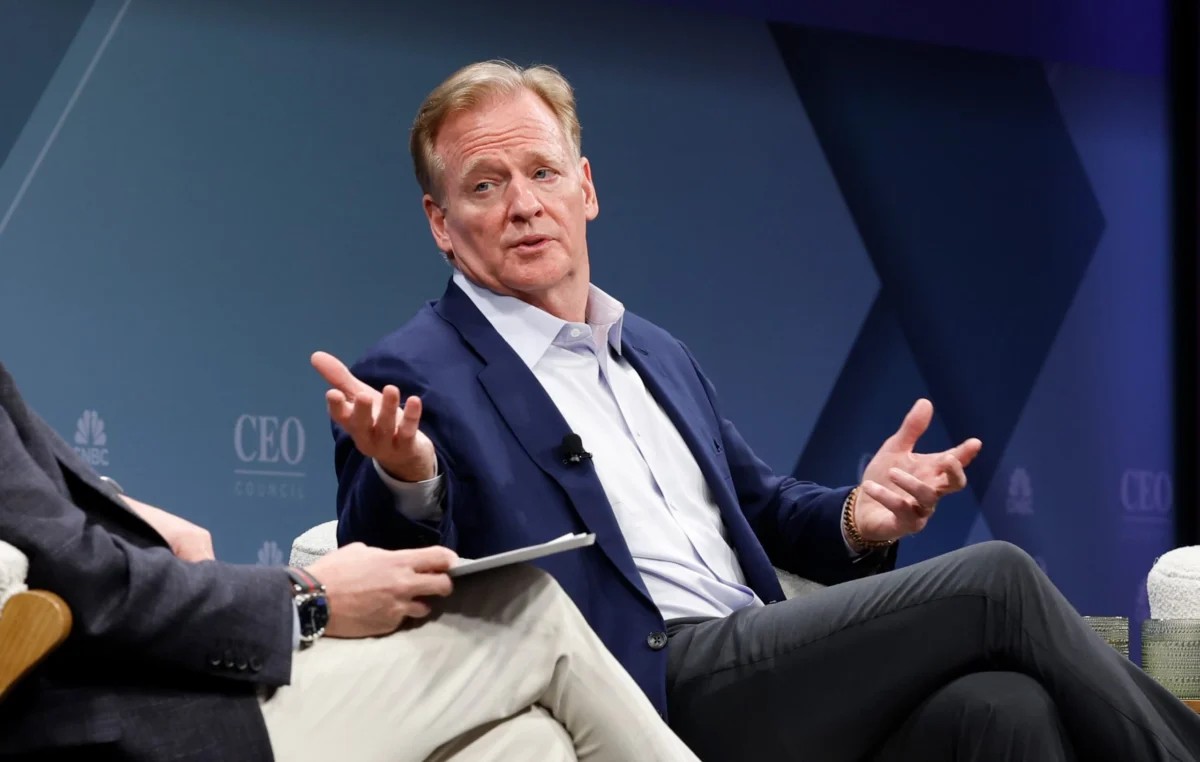
Recognizing the existential threat of losing NFL Sunday afternoon games—a cornerstone of the CBS identity and a primary driver of its Paramount+ streaming subscriptions—David Ellison and his executive team have prioritized the solidification of the NFL partnership. During a recent appearance at the CNBC CEO Council in Arizona, NFL Commissioner Roger Goodell signaled a collaborative atmosphere, while Ellison himself described the NFL as one of the company’s "most important partners." This sentiment was echoed in financial projections shared by Paramount Chief Financial Officer Dennis Cinelli, who noted that if the proposed merger between Paramount and Warner Bros. Discovery (WBD) receives regulatory approval, the combined entity would boast an adjusted EBITDA of approximately $18 billion. This massive balance sheet is intended to reassure the NFL that the new Paramount-WBD-Skydance conglomerate possesses the liquidity necessary to service escalating rights fees.
A Chronology of NFL Media Rights and the 2029 Pivot Point
To understand the magnitude of the current negotiations, it is essential to look at the timeline of the NFL’s current media cycle. The existing framework was established in March 2021, representing a historic nearly $110 billion investment from various media partners.
- March 2021: The NFL signs 11-year deals with CBS, NBC, Fox, ESPN/ABC, and Amazon. The deals were designed to nearly double the league’s previous media revenue.
- 2023 Season: The new deals officially commence, with Amazon Prime Video becoming the exclusive home of Thursday Night Football, marking the league’s first major pivot to a digital-only primary package.
- July 2025: The FCC approves the $8 billion Paramount-Skydance merger, triggering the change-of-control window.
- May 2025 – Present: Negotiations accelerate between Commissioner Goodell and David Ellison to waive the opt-out and increase fees.
- 2029-2030: The original "opt-out" window for NBC, Fox, and Amazon.
- 2031: The opt-out window for Disney’s ESPN and ABC.
The NFL’s decision to engage with CBS first is tactical. Beyond the change-of-control necessity, the CBS deal sets a market floor for the other "legacy" broadcasters. Once the 50% to 60% increase is codified with CBS, the league is expected to turn its attention to Fox. Because Fox and CBS share similar Sunday afternoon packages, the terms established with Paramount will likely serve as the blueprint for Fox CEO Lachlan Murdoch.
The Financial Strain on Broadcasters and the Content Tug-of-War
While the NFL remains the most valuable property in American media, the projected 50% price hike is causing internal friction among some of the league’s partners. Executives at NBCUniversal (owned by Versant) and Disney have reportedly expressed concerns regarding the "dilution" of their respective packages. For years, NBC’s Sunday Night Football was the undisputed crown jewel of the weekly schedule, while Disney’s Monday Night Football held significant cultural prestige. However, the NFL’s aggressive push to bolster Amazon Prime Video’s Thursday Night Football has led to a perceived shift in game quality.
The math for Disney is particularly daunting. ESPN currently pays an industry-leading $2.7 billion annually for its Monday night rights. If the league demands a 50% increase in line with the CBS negotiations, Disney would be looking at an annual bill exceeding $4 billion. Industry analysts suggest that Disney might "balk" at such a figure, especially as the company navigates its own transition from linear cable to a direct-to-consumer future.
Conversely, Fox has signaled a more pragmatic approach. During the Morgan Stanley Technology, Media & Telecom Conference, Lachlan Murdoch acknowledged the necessity of the NFL while hinting at the trade-offs required to afford it. Murdoch noted that Fox would likely have to "rebalance" its sports portfolio, implying that the network might let go of secondary sports rights to ensure it can cover the rising costs of the NFL.
Downstream Implications for the NHL and MLB
The "NFL Tax" is expected to have a cooling effect on the rights valuations of other professional sports leagues. As broadcasters like Fox and CBS commit larger portions of their programming budgets to professional football, there is less capital available for mid-tier or seasonal sports.
The National Hockey League (NHL) is currently the most prominent league in the "waiting room." The NHL’s current domestic TV deals with Disney and Warner Bros. Discovery are set to expire following the 2028 season. NHL Commissioner Gary Bettman has reportedly sought early renewal talks, but industry insiders suggest he is caught in a holding pattern. Broadcasters are hesitant to commit to the NHL until the final price tag for the NFL is settled and the Paramount-WBD merger is fully integrated.
This sentiment was reinforced by Mark Lazarus, CEO of Versant (the parent company of CNBC and NBCUniversal). Lazarus indicated that Versant is preparing for a "shifting" sports landscape. If legacy broadcasters are forced to drop sports like the NHL or Major League Baseball (MLB) due to NFL-related budget constraints, cable-heavy entities like Versant’s USA Network may find opportunities to pick up those rights at more favorable valuations.
Analysis: Why the NFL Continues to Defy Economic Gravity
The willingness of Paramount Skydance to accept a $3 billion annual price tag—even amidst a turbulent merger and a declining linear TV market—highlights a fundamental truth of the modern media economy: the NFL is the only "must-have" product for survival. In 2023, NFL games accounted for 93 of the top 100 most-watched television broadcasts in the United States. For a streaming service like Paramount+, the NFL is the single largest driver of subscriber acquisition and, perhaps more importantly, subscriber retention.
By eliminating the 2029-30 opt-out clause, the NFL is effectively "de-risking" its future revenue streams. The league is betting that even if the traditional cable bundle continues to collapse, the sheer gravity of its content will force tech giants and merged media conglomerates to pay a premium. For Paramount Skydance, the deal is an expensive but necessary insurance policy. Without the NFL, the value of the CBS network and the Paramount+ platform would diminish overnight, potentially devaluing the very merger that David Ellison has fought to finalize.
Future Outlook and Strategic Maneuvers
As the CBS deal moves toward a formal announcement, the focus will shift to the remaining partners. Amazon, currently paying roughly $1 billion a year, may be more amenable to a 50% increase given its massive market capitalization and the strategic value of using the NFL to drive Prime memberships. The real tension lies with NBC and Disney, who must weigh the prestige of the NFL against the harsh realities of their balance sheets.
The outcome of these negotiations will define the media landscape for the next decade. If the NFL successfully secures 50% increases across the board, it will move closer to Commissioner Goodell’s stated goal of $25 billion in annual revenue by 2027. However, the "rebalancing" mentioned by Lachlan Murdoch suggests that the cost of NFL dominance may be a leaner, more consolidated sports world for fans of other leagues, as the "Big Four" networks consolidate their resources around the one product that guaranteed an audience.
As the 2026 Super Bowl at Levi’s Stadium approaches, the league appears to be in its strongest financial position in history, successfully navigating corporate mergers and the transition to digital streaming while maintaining a vice-grip on the American viewing public’s attention. The Paramount Skydance renewal is the first major domino to fall in a sequence that will reshape the economics of entertainment.