
The entertainment industry has undergone a significant shift in its seasonal programming strategy, with the traditional spring "lull" being replaced by a surge of high-profile releases across major streaming platforms. As April 2026 begins, Netflix, Prime Video, Disney+, and specialized services like Shudder have debuted a slate of content that leans heavily into psychological horror, social commentary, and the revival of classic cinematic intellectual properties. This shift reflects a broader trend in the streaming landscape where data-driven scheduling aims to capture audiences during the transition from winter to spring, often utilizing "spooky" or dark themes once reserved exclusively for the autumn months.
The Resurrection of Post-Apocalyptic Cinema
The most anticipated release of the month is 28 Years Later: The Bone Temple, now streaming on Netflix. This film serves as the fourth installment in the franchise that began with Danny Boyle’s 2002 seminal work, 28 Days Later. Directed by Nia DaCosta, the film marks a narrative departure from the traditional "rage zombie" tropes, focusing instead on the breakdown of human morality in the vacuum of a collapsed society.
The story follows Spike, portrayed by Alfie Williams, a survivor from the initial outbreak who finds himself trapped within a fortified encampment. The primary antagonist, "Sir Lord" Jimmy Crystal (Jack O’Connell), represents a chilling parallel to real-world historical figures. Specifically, the character is modeled after the late British television presenter Jimmy Savile, whose extensive history of abuse was only revealed posthumously. By setting the character in a world where the initial 2002 outbreak prevented his public exposure, the film explores the terrifying potential of a predator operating with absolute authority in a lawless wasteland.
Supporting the narrative is Ralph Fiennes as Dr. Ian Kelson, a scientist attempting to reverse the infection in "alpha zombies." Industry analysts suggest that DaCosta’s decision to integrate cultural history with genre horror is an attempt to elevate the franchise beyond its action roots. The production also received notable attention for its soundtrack, which features a high-fidelity integration of Iron Maiden’s "Number of the Beast," a choice that reinforces the film’s grim, heavy-metal aesthetic.
Investigative Journalism and the Digital Frontier
In a shift from fiction to stark reality, Netflix has also released Louis Theroux: Inside the Manosphere. This project marks Theroux’s first feature-length documentary film produced specifically for the streaming giant. Theroux, known for his "passive-interrogation" technique, spends the film’s duration embedded within the "manosphere"—an online subculture defined by hyper-masculinity, misogyny, and the promotion of "alpha" lifestyles.
The documentary provides a chronological look at how these influencers transitioned from niche internet forums to mainstream digital platforms, generating significant revenue through subscription models and "self-help" seminars. Theroux’s investigation highlights a recurring theme: the performative nature of these movements. Through interviews with key figures, the film posits that much of the toxic rhetoric is a calculated "grift" designed to exploit the insecurities of young men for financial gain.
Sociologists interviewed in conjunction with the film’s release note that the timing is critical, as the influence of such figures on global social media algorithms has reached an all-time high. Theroux’s ability to let subjects speak until they inadvertently expose the contradictions in their own logic remains the documentary’s strongest asset.
The Return of the Mid-Budget Crime Thriller
Prime Video has countered the horror trend with Crime 101, a modern noir set in Los Angeles. Directed by Bart Layton, known for the critically acclaimed The Imposter, the film is a high-stakes heist drama that reunites several actors from the Marvel Cinematic Universe, including Chris Hemsworth, Mark Ruffalo, and Halle Berry, alongside Barry Keoghan.
The plot centers on a meticulous jewel thief named Mike (Hemsworth) and his pursuit by LAPD Detective Lou Lubesnick (Ruffalo). The narrative complexity is heightened by the inclusion of Sharon (Berry), an insurance executive who uses her insider knowledge to facilitate an $11 million diamond heist. The film represents a growing trend of "prestige crime" content on streaming services, filling a gap left by the decline of mid-budget theatrical releases.
Data from the first week of release suggests Crime 101 is performing exceptionally well among adult demographics, a segment often underserved by the current emphasis on franchise-led blockbusters. Layton’s direction is noted for its grounded realism, eschewing CGI-heavy action for practical stunts and character-driven tension.
Psychological Horror and Narrative Innovation
On the horror front, director Zach Cregger follows up his 2022 hit Barbarian with Weapons. The film, available on Prime Video, utilizes a non-linear storytelling structure to unravel the mystery of a mass disappearance at an elementary school.
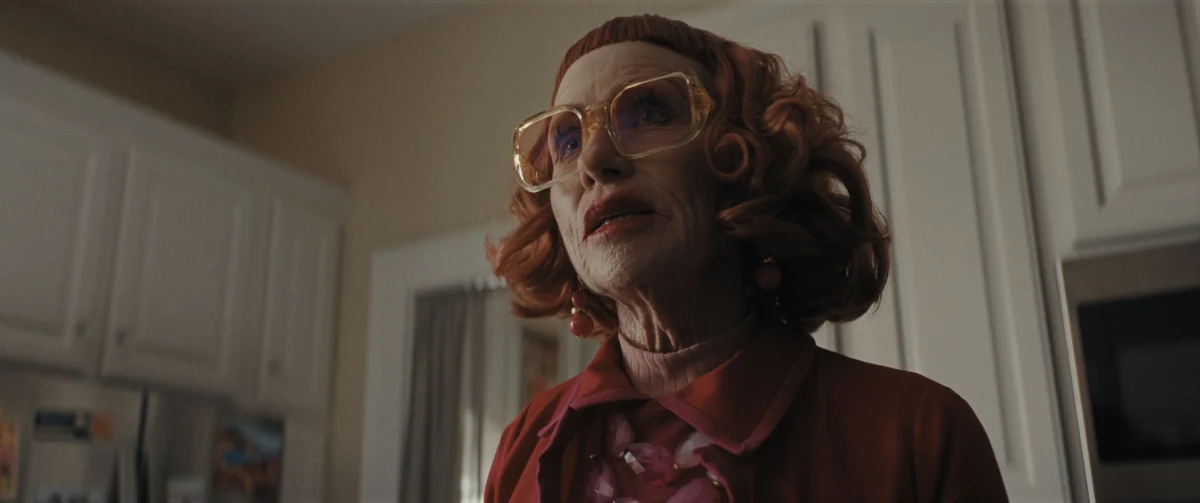
The cast is led by Josh Brolin and Julia Garner, but the critical focus has centered on Amy Madigan’s performance as Aunt Gladys. Madigan, an Academy Award winner, delivers a performance that many critics are already hailing as a landmark in contemporary horror. The film’s structure requires viewers to piece together the chronology of events, a tactic Cregger uses to maintain a sense of disorientation and dread.
The production of Weapons was marked by a high degree of secrecy, a strategy that appears to have paid off in the form of strong word-of-mouth engagement. The film’s exploration of generational trauma and the supernatural has positioned it as a frontrunner for genre awards in the coming year.
Dystopian Satire and Literary Fidelity
Edgar Wright’s The Running Man (2025) has arrived as a stark contrast to the 1987 Arnold Schwarzenegger vehicle. Wright’s adaptation is significantly more faithful to the original 1982 novel written by Stephen King under the pseudonym Richard Bachman.
The film stars Glen Powell as Ben Richards, a man forced into a lethal reality show to pay for his daughter’s medical bills. Unlike the campy action of the 1980s version, Wright’s film is a grim satire of modern media, disinformation, and economic inequality. The setting—a near-future America where the population is pacified by violent entertainment—serves as a critique of current social media and broadcast trends.
The film’s production design emphasizes a "lo-fi" dystopian aesthetic, focusing on the decay of urban infrastructure rather than futuristic technology. This grounded approach has resonated with audiences seeking a more thoughtful take on King’s work.
Cult Revivals and the Evolution of Found Footage
The streaming landscape this month also features a nod to niche cult cinema and digital-native creators. Shudder has released a reboot of Deathstalker, the 1980s sword-and-sorcery series. Produced by Steven Kostanski and the musician Slash, the film prioritizes practical effects and prosthetics over digital manipulation. The project has been praised for its commitment to "B-movie" aesthetics while providing a high level of technical craftsmanship.
Meanwhile, Hulu has debuted Shelby Oaks, the directorial debut of prominent YouTube film critic Chris Stuckmann. The film is a hybrid of traditional cinematography and found footage, centered on a fictional YouTuber who disappears while exploring a ghost town.
A notable technical detail in Shelby Oaks is its use of historically accurate digital resolutions. Stuckmann utilized early 2000s-era video formats, such as 320 x 240, to simulate authentic early YouTube footage. This attention to detail has been highlighted by industry technicians as a masterclass in using "low-quality" visuals to enhance atmospheric horror.
Animated Allegory and Social Commentary
Disney+ has rounded out the month’s major releases with Zootopia 2. While the original 2016 film dealt with themes of prejudice and systemic bias, the sequel expands this allegory to include issues of exclusion and segregation.
The plot involves Judy Hopps (Ginnifer Goodwin) and Nick Wilde (Jason Bateman) investigating a mysterious serpent (voiced by Ke Huy Quan). The film’s central conflict arises from the revelation that reptiles are excluded from the city of Zootopia, prompting a dialogue about citizenship and rights within the film’s universe.
Disney’s decision to tackle complex social issues within a family-friendly format continues to be a hallmark of the Zootopia franchise. The film also features a new original track by Shakira, aimed at replicating the viral success of the first film’s "Try Everything." Early streaming data indicates that Zootopia 2 is on track to become one of the most-watched animated titles in Disney+ history.
Broader Impact and Industry Implications
The diverse range of content released in April 2026 underscores a maturing streaming market. Platforms are no longer relying on a single "tentpole" release but are instead curating varied portfolios that cater to specific sub-cultures, from horror enthusiasts and documentary followers to families and action fans.
Economic analysts observe that the high production values of films like The Running Man and Crime 101 indicate that streaming services are increasingly willing to invest in projects that would have previously been considered "too risky" for traditional theatrical distribution. Furthermore, the integration of social commentary into mainstream entertainment—seen in Zootopia 2 and Louis Theroux: Inside the Manosphere—suggests that audiences are demanding content that reflects contemporary societal anxieties.
As the industry moves toward the summer season, the success of this April slate will likely influence how platforms schedule their "off-peak" content in the future. The current trend suggests that the distinction between "theatrical quality" and "streaming quality" has largely vanished, with digital platforms now serving as the primary home for innovative and challenging cinema.