
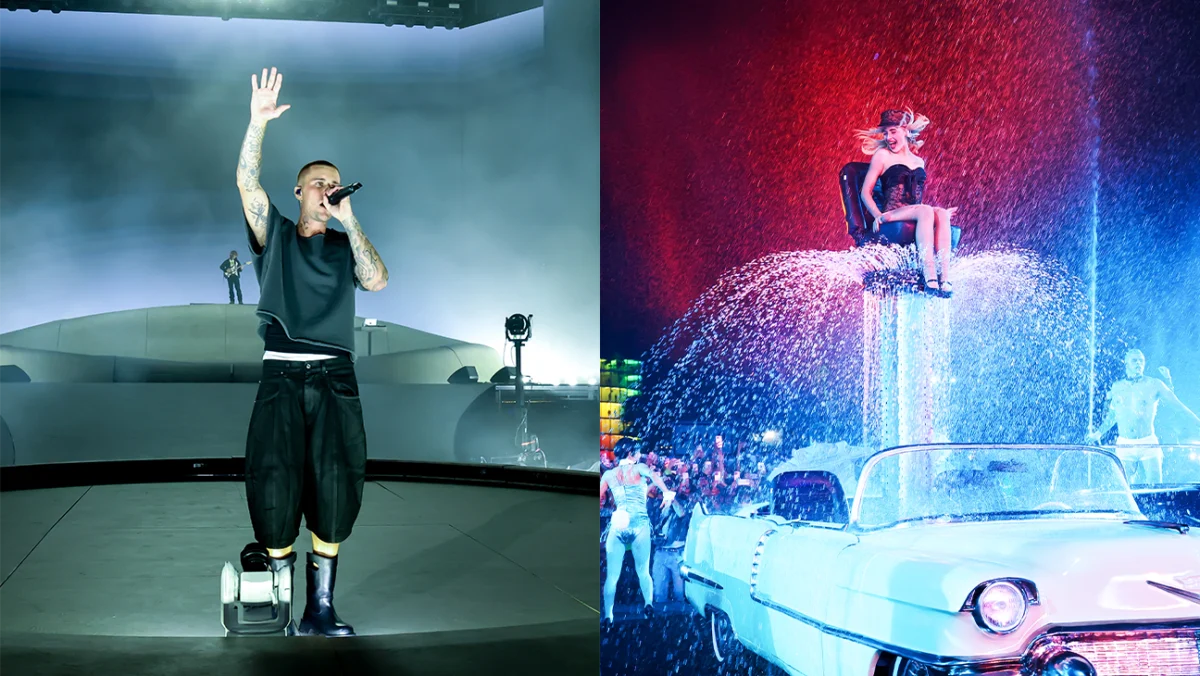
The recent Coachella Valley Music and Arts Festival witnessed a performance by global superstar Justin Bieber that has sparked a fervent social media debate, questioning whether a male artist is afforded a different standard of expectation compared to their female counterparts when headlining such a prestigious event. Bieber’s Saturday night set, described by many as "stripped back" and "intimate," stood in stark contrast to the preceding evening’s elaborate spectacle delivered by rising pop sensation Sabrina Carpenter, intensifying discussions around gender parity, artistic authenticity, and the very definition of a headlining act in contemporary music.
The Performances Under Scrutiny: Spectacle vs. Intimacy
Justin Bieber’s much-anticipated return to the Coachella stage on Saturday evening was notably understated. Taking to the main stage, the artist, known for his global hits and massive fan base, opted for a minimalist approach. His performance featured minimal stage design, a distinct lack of backup dancers, and, perhaps most controversially, a segment where he reportedly sat down for approximately 30 minutes. During this period, Bieber engaged in a nostalgic journey, playing snippets of his older classics, such as "Baby" and "Never Say Never," directly from YouTube on his laptop. This unconventional choice, particularly for a headliner reportedly commanding a substantial fee, quickly became the focal point of criticism.
The immediate comparison drawn by many attendees and online commentators was to Sabrina Carpenter’s headlining performance on Friday night. Carpenter, whose star has been rapidly ascending, delivered a theatrical extravaganza designed to captivate. Her set was a masterclass in high-production value, featuring multiple elaborate set changes, numerous costume alterations, a full troupe of backup dancers, and even unexpected acting cameos from Hollywood veterans like Sam Elliott, Susan Sarandon, and Will Ferrell. The performance culminated in a dramatic flourish, with Carpenter ascending from a car adorned with a water fountain – a spectacle meticulously crafted to leave a lasting impression. The stark difference in these two artistic presentations laid the groundwork for the ensuing public discourse.
Social Media Erupts: A Polarized Public Opinion
Following Bieber’s set, social media platforms, particularly X (formerly Twitter), became a battleground for contrasting opinions. Critics swiftly lambasted Bieber’s performance, branding it as "lazy," "underwhelming," and "unprofessional" given his stature and the reported high compensation for the gig. The perceived lack of effort, especially in comparison to Carpenter’s meticulously planned show, fueled accusations of a double standard.
One widely circulated post on X encapsulated this sentiment, stating, "Female artists give full effort: flying, high notes, fireworks, outfits. meanwhile justin bieber, the most expensive coachella performer, just sits in a plain tee, plays youtube, no makeup, and still gets a pass? switch the roles and a woman would get dragged immediately." This comment highlights the core of the debate: the perception that male artists are granted a wider berth for unconventional or stripped-back performances, while female artists are often expected to deliver an all-encompassing, high-octane show to justify their headliner status.
Another user drew a parallel to Lady Gaga’s acclaimed 2017 Coachella headlining performance, noting, "Fans defending justin bieber’s mediocre coachella performance, saying he’s 32 and it’s normal not to have the same energy anymore. meanwhile lady gaga at 36," accompanying the text with a clip of Gaga’s energetic and elaborate set from that year. This comparison further underscored the argument that age or career longevity does not necessarily dictate a lower production standard for female artists. Lady Gaga’s "Gagachella" performance, widely regarded as one of the festival’s most iconic, featured intense choreography, pyrotechnics, and multiple costume changes, setting a benchmark for theatricality.
Conversely, a significant segment of Bieber’s long-standing fanbase, often referred to as "Beliebers," rallied to his defense. These fans embraced the intimate nature of his performance, interpreting it not as laziness, but as a courageous and authentic expression of his personal journey. Many commended the singer for delivering a "healing" and "nostalgia-packed" concert, viewing the stripped-back approach as a deliberate choice reflecting growth and prioritizing well-being over commercial spectacle.
One X user eloquently articulated this perspective: "A lot of people are calling it low energy or underwhelming. But for me it felt like the healthiest kind of comeback for Justino. He did not force a high-production machine that could burn him out again. Instead he sat with his past, scrolling through old YouTube videos, dueting with his younger self, and mixing nostalgia with new chapters." The user continued, "That takes real courage when fame once broke so many pieces of you. It is a quiet reminder that healing is not always loud or flashy. Sometimes it is choosing peace, family, and honest storytelling over what the crowd expects. I am happy for Justin."
Another supporter echoed this sentiment, writing, "Justin’s performance at Coachella was so much more than just music it was a full circle moment of healing. Watching him embrace his past and acknowledge that he finally has everything he ever wished for moved me to tears. I am so incredibly proud of his journey and the person." These reactions suggest that for a dedicated portion of his audience, the emotional resonance and perceived authenticity of Bieber’s performance transcended the need for elaborate production.
A Tale of Two Expectations: Gendered Standards in Live Music
The core of this debate delves into a long-standing issue within the entertainment industry: the perceived double standards applied to male and female artists. For decades, female performers, particularly in pop and R&B, have often been compelled to present highly choreographed, visually stunning, and physically demanding shows to achieve and maintain their status. From Madonna’s theatrical tours to Beyoncé’s legendary "Beychella" in 2018, which was a masterclass in performance art, female artists have frequently pushed the boundaries of live spectacle. This often involves immense physical training, intricate costume changes, and rigorous rehearsals, contributing to a narrative that their success is tied not just to their vocal talent but also to their ability to deliver an unparalleled show.
Conversely, while male artists certainly engage in high-production shows, there appears to be a greater acceptance, and sometimes even praise, for a more "raw" or "authentic" performance style. A male artist sitting with a guitar, or simply commanding the stage with their presence and voice, is often celebrated for their artistry, whereas a female artist adopting a similar approach might face accusations of lacking effort or not delivering value for money. This gendered expectation suggests a fundamental inequality in how artistic labor and performance value are perceived.
Historical Precedents and Coachella’s Demanding Stage
Coachella, held annually in Indio, California, has grown into one of the world’s most prominent music festivals since its inception in 1999. Headlining the festival is considered a pinnacle achievement in an artist’s career, placing them alongside legendary acts. The festival’s reputation for grand-scale productions and unforgettable moments, exemplified by performances like Daft Punk’s pyramid in 2006 or Beyoncé’s historic 2018 set, has cultivated an audience expectation for monumental spectacles.
However, Coachella’s history is also dotted with controversial headlining sets, proving that male artists are not immune to backlash. Frank Ocean’s highly anticipated 2023 weekend one performance serves as a stark reminder. Ocean’s set was plagued by delays, a last-minute stage design change, and was cut short due to curfew, leading to widespread disappointment and criticism from fans and critics alike. The controversy surrounding his performance was so significant that he ultimately pulled out of the second weekend. This incident demonstrates that while the nature of the criticism might differ, male headliners can indeed face severe repercussions for performances deemed subpar.
The debate around Bieber’s set also brings into focus his recent personal and health struggles. Bieber has been open about his battles with depression, anxiety, and his diagnosis with Ramsay Hunt syndrome, which caused facial paralysis and led to a hiatus from touring. For his loyal fans, his willingness to return to the stage, even in a subdued manner, was seen as a testament to his resilience and healing journey. This context is crucial for understanding why his fans viewed the performance through a lens of empathy and appreciation for his vulnerability.
The Business of Spectacle vs. Authenticity: Implications for the Industry
The economics of a Coachella headlining slot are immense. Artists are typically compensated handsomely, often in the multi-million dollar range, reflecting not just their drawing power but also the significant investment required for stage production, crew, and logistics. A typical headlining stage at Coachella can involve hundreds of crew members, elaborate lighting rigs, complex video screens, pyrotechnics, and bespoke set pieces, costing millions of dollars to produce.
Bieber’s reportedly high paycheck for a performance that eschewed much of this traditional spectacle raises questions about value proposition. For festival organizers, the draw of a headliner like Bieber is undeniable, regardless of production. His global appeal guarantees ticket sales and media attention. However, for an audience paying premium prices for a festival experience, the expectation often leans towards a grand show commensurate with the investment.
The debate also highlights a tension between two prevailing trends in contemporary music: the demand for hyper-produced, visually stunning live experiences and a growing appreciation for raw, authentic, and intimate performances. While some artists consistently deliver stadium-filling spectacles, others, like Billie Eilish or Phoebe Bridgers, have cultivated massive followings with more stripped-down, emotionally resonant shows. The challenge for a festival like Coachella is balancing these diverse artistic approaches with audience expectations for a "headliner" experience.
The Evolving Role of the Festival Headliner
The discussion around Justin Bieber’s Coachella performance and the comparisons to Sabrina Carpenter’s set underscores a critical juncture in how we define a "headliner" at major music festivals. Is the role primarily to deliver an unparalleled visual and auditory spectacle, a "show" in the grandest sense? Or can it also encompass a more introspective, intimate, and perhaps vulnerable artistic statement, particularly from an artist who has publicly navigated personal challenges?
The differing reactions to Bieber’s performance suggest that the audience itself is divided, reflecting a broader shift in how live music is consumed and valued. Social media acts as an immediate, unfiltered barometer of public sentiment, amplifying both adoration and criticism instantaneously. This creates a dynamic environment where artists are constantly scrutinized, and their choices are subjected to intense public discourse.
Ultimately, until a top-charting female artist booked as a Coachella headliner delivers a performance widely deemed "lackluster" in a similar vein to Bieber’s stripped-back approach, the true reception and gendered implications will remain largely speculative. However, the current debate serves as a powerful reminder of the persistent gendered expectations within the music industry and the complex interplay between artistic expression, audience demands, and the pressures of performing on one of the world’s most visible stages. The conversation continues, shaping not only how artists approach their craft but also how audiences perceive and critique the very essence of a live performance.