

Netflix, the world’s leading streaming entertainment service, is navigating a significant turning point in its corporate evolution as it moves from a strict philosophy of organic growth to a more aggressive, albeit disciplined, posture toward mergers and acquisitions. During its first-quarter earnings call for 2026, the company’s leadership addressed the fallout of its high-profile, $72 billion bid for Warner Bros. Discovery (WBD), a move that signaled a departure from its long-held "builders, not buyers" mantra. While the deal ultimately collapsed in favor of a superior bid from Paramount Skydance, the exercise has left Netflix with what Co-CEO Ted Sarandos describes as a "developed M&A muscle," suggesting that the company is no longer ruling out massive consolidations to maintain its dominance in an increasingly crowded market.
The quarterly report arrived at a precarious time for the streaming giant. Despite beating revenue expectations for the first quarter and boasting a global subscriber base that reached 325 million earlier this year, Netflix saw its stock tumble by approximately 10% in extended trading. The decline was largely attributed to the company’s decision to maintain its full-year margin guidance despite the termination of the WBD deal and the subsequent reclamation of a $2.8 billion breakup fee. Investors, who had braced for the volatility of a massive integration, appeared disappointed that the windfall from the failed deal did not translate into more optimistic forward-looking projections.
The $72 Billion Gambit: A Strategic Pivot
For nearly two decades, Netflix focused on building its own infrastructure, developing its own content slate, and expanding its global footprint without the aid of major acquisitions. This strategy allowed the company to remain lean and tech-focused compared to legacy media rivals burdened by declining linear television assets. However, the announcement in December 2025 that Netflix had reached a definitive agreement to acquire the film studio and streaming assets of Warner Bros. Discovery for $72 billion shocked the industry.
The logic behind the pivot was rooted in the need for "IP depth." While Netflix has successfully launched original franchises like Stranger Things and Squid Game, it lacks the century-old library of intellectual property held by legacy titans like Disney or Warner Bros. By pursuing WBD, Netflix sought to bring iconic brands—including the DC Universe, Harry Potter, and HBO’s prestigious catalog—under its umbrella. This move was intended to solidify its position as the "must-have" service in a market where consumers are increasingly rotating through subscriptions based on specific content availability.
The deal faced immediate scrutiny from Wall Street. Between the announcement in December and the deal’s collapse in February, Netflix shares fell 15%, reflecting investor anxiety over the debt load and the complexities of integrating a traditional Hollywood studio into a Silicon Valley-born tech culture. However, the narrative shifted again when Paramount Skydance entered the fray with a bid that WBD’s board deemed superior, leading Netflix to retreat from the negotiation table.
Chronology of a Failed Consolidation
The timeline of the Netflix-WBD saga illustrates the rapid pace of consolidation currently defining the media landscape:
- Late 2025: Rumors begin to circulate regarding Netflix’s interest in distressed legacy media assets as Warner Bros. Discovery explores strategic alternatives to manage its debt and stock performance.
- December 2025: Netflix officially announces a $72 billion deal to acquire WBD’s film and streaming segments. The move is hailed as the end of the "Streaming Wars" and the beginning of a consolidation era.
- January 2026: Netflix reports hitting a milestone of 325 million paid global members, proving the strength of its core business even as it prepares for the WBD acquisition.
- February 2026: Paramount Skydance submits a counter-proposal for WBD. Netflix declines to enter a bidding war, citing its commitment to "investment discipline."
- February 26, 2026: The WBD deal with Paramount Skydance is finalized. Netflix collects a $2.8 billion breakup fee.
- April 2026: Netflix reports Q1 earnings. The stock drops 10% on conservative guidance, and leadership defends the WBD pursuit as a learning exercise.
Financial Performance and Market Reaction
Netflix’s financial health remains robust, yet the market’s reaction to the Q1 earnings report highlights a growing "show me" attitude among investors. The company reported a revenue beat, driven in part by its successful crackdown on password sharing and the steady growth of its ad-supported tier. However, the decision to leave full-year margin guidance unchanged was a point of contention.
Robert Fishman, an analyst at MoffettNathanson, noted in a research briefing that the "unchanged full-year margin guidance despite walking away from the Warner Bros. deal" was the biggest surprise of the quarter. Investors had expected that the $2.8 billion breakup fee and the avoidance of massive M&A-related integration costs would allow Netflix to raise its profit forecasts. Instead, the company signaled a cautious approach, perhaps anticipating higher content production costs or a more aggressive competitive response from the newly formed Paramount-WBD entity.
Since the collapse of the deal, Netflix shares have risen approximately 26% from their lows, suggesting that while the "megadeal" was intriguing, many investors are relieved to see the company return to its high-margin, core streaming operations. The stock’s 10% dip following the earnings call reflects a recalibration of expectations as the company navigates a post-deal world.
Developing the ‘M&A Muscle’
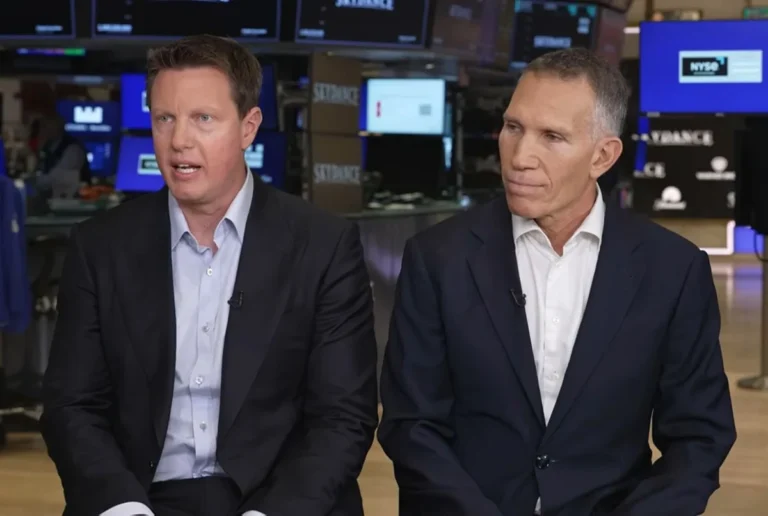
During the earnings call, Co-CEO Ted Sarandos was remarkably candid about the company’s internal growth through the failed acquisition process. He emphasized that the bid was not a sign of weakness in the core business, but rather a calculated attempt to accelerate growth.
"What we did learn, though, was that our teams were more than up to the task," Sarandos said. "We’ve learned so much about deal execution, about early integration… we really built our M&A muscle."

This language is significant for a company that has historically shunned the deal-making culture of Hollywood. By framing the WBD bid as a successful test of "investment discipline," Sarandos signaled to the market that Netflix is now a credible player for future assets. The company demonstrated it could walk away from a deal when the price or terms no longer made sense—a trait often lacking in high-stakes media consolidation.
The Competitive Threat of a Consolidated Rival
The media landscape Netflix now faces is fundamentally different than it was a year ago. If the Paramount takeover of Warner Bros. Discovery is approved by regulators, it will create a behemoth that combines CBS, Paramount+, HBO Max (Max), CNN, and the Warner Bros. film studio. This entity would possess a combined content library and a suite of live sports rights that could challenge Netflix’s dominance in engagement hours.
Mike Proulx, Vice President and Research Director at Forrester, highlighted that a combination of Paramount+ and HBO Max "changes the streaming landscape in ways Netflix hasn’t really had to contend with before." While Netflix has the largest subscriber base, the new competitor would have a massive advantage in "bundling" potential, offering everything from prestige dramas and blockbuster movies to local news and NFL games.
Netflix management, however, remains steadfast. Sarandos reiterated that the WBD deal was a "nice to have, not a need to have," asserting that the company’s Q1 results prove it did not lose focus on its primary mission during the months of negotiations.
Advertising and Content: The Core Playbook
As the prospect of a massive merger fades into the background, Netflix is refocusing on its "tried-and-true playbook." This includes three primary pillars: user engagement, advertising revenue, and content efficiency.
The company’s advertising business is becoming a central component of its growth strategy. Netflix is on track to double its ad revenue this year, benefiting from a tiered pricing model that attracts budget-conscious consumers while generating high-margin revenue from brands. Analysts believe this diversification is essential as the domestic streaming market reaches saturation.
On the content front, Netflix continues to spend heavily—approximately $17 billion annually—but with an increasing focus on retention. By leveraging its data-driven approach to production, the company aims to justify periodic price hikes. Recent increases across all streaming plans have seen minimal churn, a testament to the "stickiness" of the platform.
Strategic Analysis and Broader Implications
The shift in Netflix’s attitude toward M&A suggests that the company is preparing for a "Phase 2" of the streaming era. In Phase 1, the goal was subscriber acquisition at any cost. In Phase 2, the goal is total entertainment dominance through diversified revenue streams and high-value IP.
While the WBD deal did not come to fruition, Netflix’s willingness to spend $72 billion indicates that other targets could be on the horizon. Industry observers have pointed to gaming companies, sports leagues, or smaller "boutique" studios like A24 or AMC Networks as potential targets that would fit Netflix’s "disciplined" investment criteria.
Furthermore, the $2.8 billion breakup fee provides Netflix with a significant cash cushion. This capital could be deployed for further stock buybacks, reducing debt, or investing in emerging technologies like generative AI for production and personalized discovery algorithms.
In conclusion, Netflix emerges from the WBD saga as a more mature and versatile corporate entity. While its stock faces short-term pressure due to conservative guidance, the company has proven it can play at the highest levels of global M&A without losing its operational edge. As the market consolidates around it, Netflix’s bet is that its superior technology, global scale, and newly flexed "M&A muscle" will allow it to remain the definitive leader of the digital entertainment age. The "builders" have officially become "potential buyers," and the rest of the media world is watching closely to see where they might strike next.