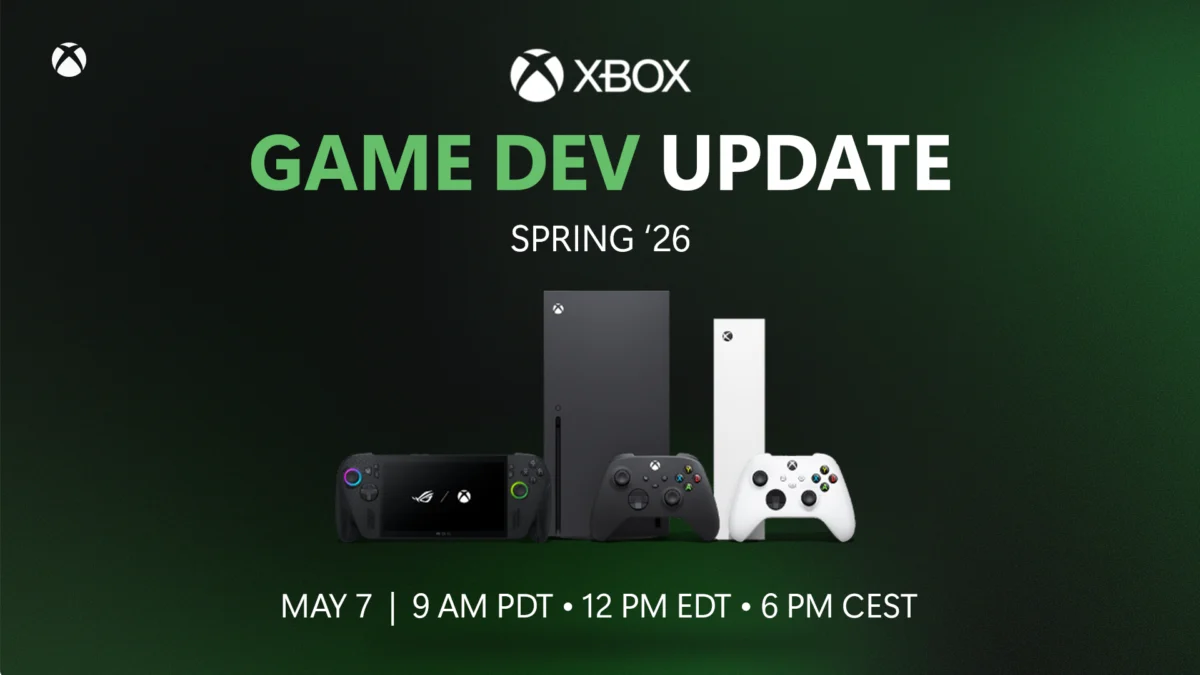
Microsoft Corporation has officially launched its first-ever Xbox Game Dev Update, a digital broadcast event designed to provide technical transparency and strategic clarity regarding the company’s future hardware ambitions. The showcase, which aired today at 12:00 PM ET, marks the first significant public deep-dive into "Project Helix," the codename for Microsoft’s next-generation console ecosystem. Hosted by Chris Charla, General Manager of Portfolio and Programs, and Jason Ronald, Vice President of Next Generation, the event moved beyond the cryptic teasers of the past several months to outline a vision for a unified gaming architecture that bridges the gap between dedicated console hardware and high-performance PC environments.
The presentation follows a period of significant transition within Microsoft’s gaming division. In February 2026, the company announced a major leadership restructuring, with Asha Sharma assuming the role of CEO of Gaming, succeeding Phil Spencer. This leadership change coincided with the departure of Sarah Bond, the former President of Xbox, signaling a definitive pivot in the brand’s operational philosophy. Today’s Game Dev Update serves as Sharma’s first major technical manifesto, positioning Project Helix as a "performance leader" intended to redefine the boundaries of rendering and simulation.
Technical Architecture and the AMD Partnership
At the core of Project Helix is a bespoke System-on-a-Chip (SoC) developed in close collaboration with AMD. While the specific transistor counts and clock speeds remain under wraps, Jason Ronald confirmed that the silicon is being co-designed alongside the next iteration of the DirectX API. This vertical integration is intended to allow developers to access low-level hardware features with unprecedented efficiency.
"Project Helix is not merely a hardware refresh; it is a fundamental redesign of how we handle compute-heavy tasks like real-time physics and complex lighting," Ronald stated during the broadcast. The partnership with AMD focuses on a custom architecture that leverages advanced AI-driven upscaling and frame generation at the hardware level, rather than relying solely on software-based solutions. This "Next-Gen DirectX" framework is expected to introduce "Dynamic Micro-Architectures," allowing the GPU to reallocate resources in real-time based on the specific demands of the game engine, whether that be ray-traced global illumination or massive-scale crowd simulation.
The focus on "DirectX Next" suggests that Microsoft is doubling down on its "Windows-centric" gaming strategy. By ensuring that Project Helix hardware and PC hardware share a common API foundation, Microsoft aims to drastically reduce the friction of cross-platform development. This move is seen by industry analysts as a direct response to the increasing costs of AAA game development, where optimizing for multiple disparate hardware configurations has become a primary financial bottleneck.
A Chronology of Project Helix
The journey to today’s announcement began in March 2026 at the Game Developers Conference (GDC) in San Francisco. During a session titled "Building for the Future with Xbox," Jason Ronald first introduced the name Project Helix, describing it as a vessel designed to accommodate both the traditional console experience and the expanding PC gaming market. At that time, the details were scarce, with Ronald focusing on the philosophical goals of the hardware rather than technical specifics.
The narrative around the project was further shaped by Asha Sharma’s debut social media posts as CEO, where she promised that the next generation of Xbox would "lead in performance." This statement was interpreted as a corrective measure following the mid-generation challenges faced by the Xbox Series X, which, despite its theoretical power advantage, often saw parity with its primary competitor, the PlayStation 5.
However, the rollout has not been without its logistical caveats. During the GDC briefing, Microsoft confirmed that development kits for Project Helix would not be distributed to third-party partners until 2027. This timeline suggests a projected consumer launch in late 2028 or 2029, placing Microsoft on a trajectory to potentially launch ahead of or alongside the anticipated "10th generation" of home consoles.
Strategic Shift Under Asha Sharma
The transition from Phil Spencer to Asha Sharma represents more than just a change in personnel; it reflects a shift toward a more hardware-centric and efficiency-driven approach. Under Spencer, the Xbox brand was defined by aggressive acquisitions—most notably Activision Blizzard and ZeniMax—and the expansion of the Game Pass subscription service. While these remain pillars of the business, Sharma’s early moves indicate a renewed focus on technical superiority and developer relations.
The decision to host a "Game Dev Update" rather than a consumer-focused "Xbox Showcase" highlights this new direction. By speaking directly to the technical community, Microsoft is attempting to win the "hearts and minds" of the people who build the software that sells hardware. Chris Charla’s involvement is particularly noteworthy; as a long-time advocate for independent developers through the ID@Xbox program, his presence suggests that Project Helix will offer robust tools not just for massive publishers, but for smaller studios as well.
The departure of Sarah Bond, who was instrumental in the growth of the Xbox ecosystem and creator relations, initially sparked concerns about a potential brain drain at the company. However, the cohesive technical vision presented today by Ronald and Charla appears designed to stabilize those concerns and present a united front for the future of the platform.
Implications for Developers and the Industry
For the development community, the promise of Project Helix lies in the optimization of build workflows. Microsoft claims that the new architecture will allow for "instantaneous iteration," where changes made in the development environment can be reflected on the hardware in seconds rather than minutes or hours. This is achieved through a new high-speed data fabric that connects the SoC directly to the development workstation via a proprietary cloud-hybrid interface.
The "PC-Console Hybrid" nature of the machine is perhaps its most disruptive feature. By designing a console that natively understands PC code and vice-versa, Microsoft is effectively removing the concept of a "port." This could lead to a future where "Xbox" is no longer just a box under the TV, but a standardized set of hardware and software specifications that exist across multiple form factors.
Industry data suggests that this move is timely. According to recent market reports, the "premium console" segment is facing pressure from high-end PC gaming and the rise of handheld gaming PCs like the Steam Deck. By positioning Project Helix as a bridge between these worlds, Microsoft is attempting to capture the high-end enthusiast market while maintaining the accessibility of a console ecosystem.
Market Analysis and Future Outlook
While today’s update provided much-needed technical context, many questions remain regarding the consumer-facing aspects of Project Helix. Microsoft has yet to discuss pricing, physical design, or specific launch titles. However, the focus on "rendering and simulation" suggests that Microsoft is preparing for a future where games are significantly more complex than the current generation allows.
The 2027 date for dev kits is a critical data point for industry observers. It indicates that the hardware is currently in the "final silicon" stage, where the architecture is locked, but the physical manufacturing processes are still being refined. This long lead time is necessary for developers to build games that truly take advantage of a new generation’s capabilities, rather than simply releasing "up-rezzed" versions of older titles.
The broader implications for the gaming industry are significant. If Microsoft succeeds in creating a machine that truly leads in performance and developer ease-of-use, it could shift the competitive landscape back in its favor. However, the company must also navigate the challenge of maintaining its current user base on the Xbox Series X and S. Microsoft has committed to a "no player left behind" policy for the foreseeable future, ensuring that titles remain cross-compatible across the ecosystem, but the sheer power gap promised by Project Helix may eventually necessitate a clean break from legacy hardware.
Today’s Game Dev Update has set the stage for what Microsoft calls "the next journey" in gaming. By centering the conversation on technical innovation and developer empowerment, the company is attempting to move past the "console wars" of the previous decade and define a new category of interactive entertainment hardware. Whether Project Helix can deliver on its promise of performance leadership will be the defining question of Asha Sharma’s tenure as CEO. For now, the industry looks toward 2027, when the first developers will finally get their hands on the silicon that Microsoft hopes will shape the next decade of play.