


The Digital Archeology of Marcus Batto
Marcus Batto’s trajectory as a filmmaker is inextricably linked to the first decade of YouTube. Coming of age during the platform’s formative years, Batto witnessed the transition of the internet from a niche playground for experimentation to a dominant cultural force. He describes his work as sitting at the intersection of film, music video, and archival art. Prior to his first feature, Batto gained recognition for his "Certain Moments To Remember" series (2020–present), which explores subcultures and shared social phenomena through curated digital artifacts.
One notable entry in this series, RANDOM WEBCAM DANCE @ DA IMAC STORE (2023), compiles footage of shoppers dancing in front of Apple Store display computers in 2011. Set to a 1978 country ballad, the piece highlights what Batto calls "technological determinism"—the way new hardware, such as the then-novel front-facing camera, dictates human behavior. This theme carries over into There’ll Likely Be Michael Jackson Vigils Throughout the Night, where the sudden availability of webcams and mobile recording devices allowed individuals to broadcast their grief, skepticism, or indifference to a global audience in real-time.
Batto’s previous short documentary, Honeycomb (2024), further informs his approach to Michael Jackson Vigils. Honeycomb utilized found footage to track the 2020–2022 surge in catalytic converter thefts across the United States. The film draws a parallel between the "looters" who strip precious metals like rhodium and palladium from car exhaust systems and the "archivists" who strip valuable content from the depths of the internet. In both cases, Batto identifies an obsession with finding untapped value in overlooked places.
Reconstructing June 25, 2009: A Chronology of Chaos
The film’s narrative is driven by the timeline of June 25, 2009, a day that began as a typical Thursday and ended as a milestone in the history of internet traffic. The chronology presented in the film mirrors the real-world escalation of news:
- The Initial Report: At approximately 12:21 p.m. PDT, a 911 call was placed from Jackson’s Holmby Hills estate. Shortly after, the celebrity news outlet TMZ broke the story that Jackson had suffered cardiac arrest.
- The Surge of Skepticism: As the news spread, the internet experienced unprecedented strain. Batto captures the confusion of users who initially believed the reports were a hoax. This is exemplified by footage of individuals reacting to blogger Perez Hilton, who infamously suggested the news was a publicity stunt for Jackson’s upcoming "This Is It" concert residency.
- The Official Confirmation: By 2:26 p.m. PDT, the Los Angeles County Coroner’s office confirmed Jackson’s death. This moment triggered a global wave of digital activity.
- The Double Bereavement: The film also notes the death of actress Farrah Fawcett earlier that same day. Batto includes clips of amateur film reviewers and vloggers attempting to process the loss of two icons simultaneously, with one reviewer poignantly noting that "one of Charlie’s Angels just became an angel herself."
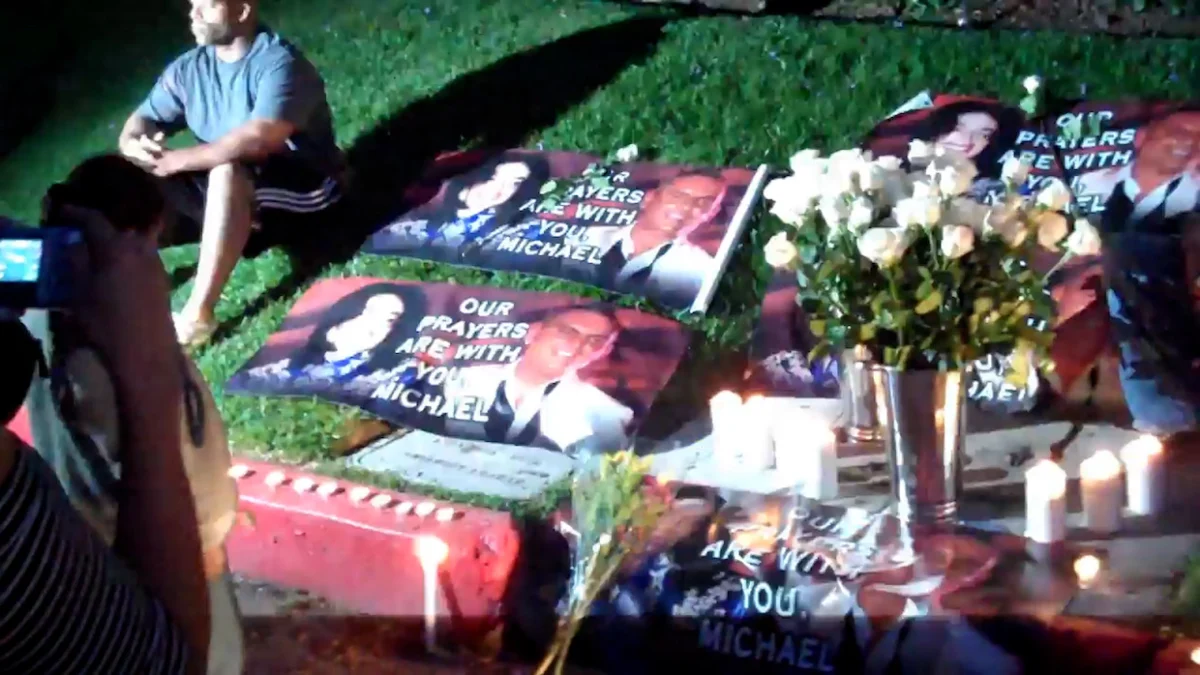
- The Evening Vigils: As night fell, the focus shifted from digital screens to physical spaces. The film documents crowds gathering at the Apollo Theater in Harlem, outside the UCLA Medical Center, and at Jackson’s star on the Hollywood Walk of Fame.
Visual Language and Technical Execution
To convey the sense of "information overwhelm" that characterized the day, Batto employs a distinctive visual device: a rotating prism. Each face of the prism displays a five-by-four grid, allowing twenty different videos to play simultaneously. This technique reflects the fractured nature of the internet, where a viewer’s attention is constantly pulled in multiple directions.
The footage Batto selected is deliberately diverse. In one sequence, the film cuts rapidly from a swinging incense burner in a Spanish cathedral to ultrasound footage, followed by a shot of refugees on a lifeboat. By positioning these clips atop digital renderings of a rotating Earth, Batto emphasizes the global scale of the event. He spent years curating a playlist of over 800 videos, a process he describes as becoming "an issue" because the archive of that day is seemingly bottomless.
The film’s aesthetic is defined by the limitations of 2009 technology. The videos are often pixelated, poorly lit, and framed by the awkward angles of early laptop webcams. Batto argues that this lack of polish represents a "through-line of innocence." At the time, social media users were not yet preoccupied with curated "personal brands" or professional-grade production values; they were simply experimenting with new tools for self-expression.
Data and Context: The Day the Internet Broke
The events of June 25, 2009, provide a case study in the vulnerability and power of digital infrastructure. Supporting data from the period highlights the magnitude of the reaction:
- Google Search: The volume of searches for "Michael Jackson" was so high that Google News initially flagged the surge as a potential automated DDoS (Distributed Denial of Service) attack, leading to the temporary blockage of searches related to the singer.
- Twitter: The platform reported a record-breaking 5,000 tweets per minute at the peak of the news, causing significant lag and frequent "Fail Whale" error messages.
- Wikipedia: The site saw nearly one million visitors to Jackson’s biography page within a single hour, leading to multiple edit wars as users struggled to confirm the facts of his passing.
- Overall Traffic: Akamai, a major content delivery network, reported that global internet traffic was 11% higher than normal during the hours following the announcement—a massive spike for the era.
Batto’s film captures the human side of these statistics. He shows "emo" teenagers sarcastically weeping into their cameras, fans huddling around desktop computers, and mourners mistakenly gathering at the Walk of Fame star of a British radio DJ also named Michael Jackson (the singer’s star was inaccessible due to a film premiere for Sacha Baron Cohen’s Bruno).
Cultural Implications and the Loss of "Holdable" Moments
The title, There’ll Likely Be Michael Jackson Vigils Throughout the Night, is more than a reference to the news cycles of 2009; it is a commentary on the changing nature of collective memory. Batto draws a historical parallel between his work and that of Mitchell and Kenyon, the early 20th-century filmmakers who produced "local films for local people." Just as Mitchell and Kenyon captured the soot-streaked faces of factory workers encountering a camera for the first time, Batto captures the webcam-lit faces of a generation encountering a new form of global grief.
In an era of hyper-curated content and algorithmic silos, Batto suggests that the "shared experience" documented in his film is becoming a relic of the past. When asked if a similar film could be made for a modern celebrity, Batto expressed skepticism. He noted that today’s internet is too fleeting and fragmented to produce a single, discernible "moment" that the entire world can hold onto simultaneously.
The film’s premiere further emphasized its nostalgic and archival themes. Attendees were given refurbished third-generation iPod Touches preloaded with the film and a curated playlist—a tribute to the hardware that dominated the 2009 landscape. Even the presence of a Michael Jackson impersonator, who reportedly fell asleep during the screening, added to the surreal atmosphere of a double memorial: one for a pop icon and one for a bygone era of the internet.
Conclusion: The Archival Legacy
There’ll Likely Be Michael Jackson Vigils Throughout the Night serves as a reminder of the fragility of our digital past. As search engines become increasingly cluttered with AI-generated content and advertisements, the "blurriness" of our online history grows. Batto’s work acts as a preservative, rescuing low-view-count videos from the "overpopulated graveyard of lost media" and elevating them into a cohesive narrative.
By spanning the gap between 2009 and 2026, Batto highlights the acceleration of audiovisual history. He positions himself as both a mourner for lost digital innocence and a scavenger of its remains. As the film concludes, it leaves the audience with a profound sense of the distance between the "single chorus" of the 2009 internet and the fractured cacophony of the present day. Through Batto’s lens, the vigils for Michael Jackson never truly ended; they simply moved into the permanent, flickering archive of the digital void.