

The Digital Architecture of a Global Event
The premise of Batto’s work is rooted in the impossibility of truly reconstructing the "internet of the past." As search engines become increasingly dominated by advertisements, search engine optimization (SEO), and AI-generated content, the authentic digital artifacts of the late 2000s are becoming harder to find. Batto, who identifies as an artist, programmer, and "YouTube ethnographer," spent years scouring the platform for videos with low view counts—raw, unedited uploads that escaped the algorithmic curation of the modern era.
June 25, 2009, was chosen not out of a specific fandom for Jackson, but because it represents perhaps the last time the global population experienced a singular event with such unified intensity. In 2009, the internet was in a state of transition; it was no longer a niche tool, but it had not yet become the fragmented, hyper-personalized ecosystem it is today. When news of Jackson’s cardiac arrest broke, the surge in traffic was so immense that it nearly paralyzed the global infrastructure. Google engineers initially feared the search engine was under a distributed denial-of-service (DDoS) attack because millions of people were simultaneously searching for the same name.
Chronology of a Digital Breakdown: June 25, 2009
To understand the scope of Batto’s film, one must look at the timeline of that day, which remains a benchmark for how the internet processes breaking news.
- 12:21 PM (PST): A 911 call is placed from Michael Jackson’s rented mansion in Holmby Hills, Los Angeles.
- 1:20 PM (PST): The celebrity news website TMZ breaks the story, reporting that Jackson has suffered a cardiac arrest. The sheer volume of traffic causes TMZ’s servers to crash intermittently.
- 2:26 PM (PST): The Los Angeles Times confirms the death, followed shortly by major news networks.
- 3:00 PM – 6:00 PM (PST): Global internet traffic reaches unprecedented levels. Twitter reports a doubling of its usual tweet-per-second rate, leading to several hours of downtime. Wikipedia editors engage in a frantic "edit war" as they struggle to verify the news, with the page being updated hundreds of times in a single hour.
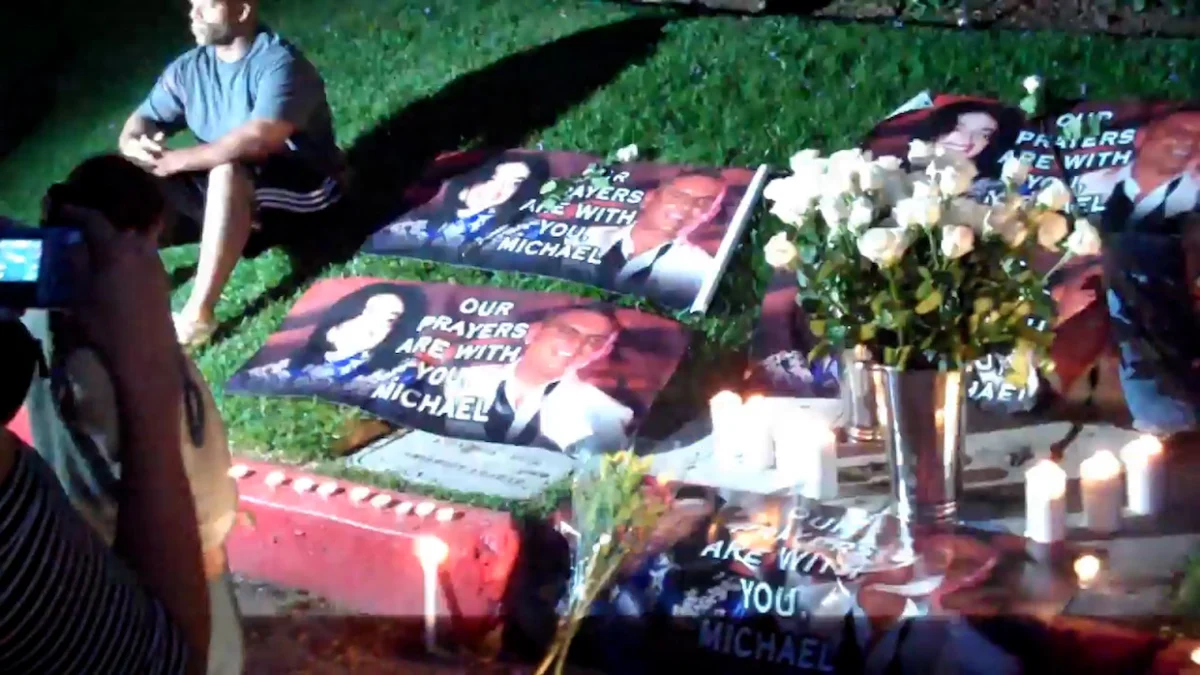
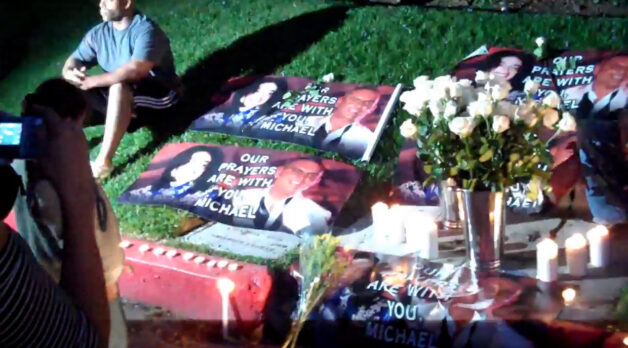
- Overnight: Fans across the globe begin organizing vigils, both in physical spaces—like the Apollo Theater in New York and the Hollywood Walk of Fame—and in virtual spaces, uploading their reactions to a nascent YouTube.
Batto’s film focuses on the latter, capturing the immediate, unpolished reactions of individuals who turned to their webcams to process the news.
Supporting Data: The Scale of the "Jackson Spike"
The data surrounding June 25, 2009, supports Batto’s assertion that this was a unique cultural phenomenon. According to Akamai, a leading content delivery network, global news traffic was 33% higher than usual that day. At its peak, the story accounted for approximately 22% of all news-related web traffic.
In 2009, YouTube was only four years old. The concept of "vlogging" was still in its infancy, and the front-facing "selfie" camera had not yet become a standard feature on most mobile devices. Most of the videos Batto unearthed were filmed using desktop webcams or early-model digital cameras. This lack of sophisticated technology contributed to what Batto describes as a "sense of innocence." Users were not yet performing for an algorithm; they were simply using the internet as a digital diary. The film captures this raw emotionality, showing teenagers in their bedrooms, amateur film reviewers, and grief-stricken fans, many of whom had no expectation of reaching an audience larger than their immediate social circle.
The Art of the "Found-Footage Thing"
Batto’s background as an archivist and programmer heavily influences the aesthetic of the film. Before There’ll Likely Be Michael Jackson Vigils Throughout the Night, he produced the Certain Moments To Remember series, which curated specific internet subcultures. One notable entry, RANDOM WEBCAM DANCE @ DA IMAC STORE (2023), compiled footage of people dancing in front of Mac computers at Apple Stores in 2011.
His 2024 short documentary, Honeycomb, further refined his methodology. That film focused on the 2020–22 phenomenon of catalytic converter theft in the United States. Batto drew a parallel between the looters who "archived" precious metals like rhodium and platinum from the undersides of cars and his own work as a digital archivist. Both processes involve finding value in what is overlooked or discarded. In the case of the Jackson vigils, the "precious metal" is the authentic human experience buried under millions of hours of forgotten YouTube content.
In Michael Jackson Vigils, Batto employs a visual device of a rotating prism. Each side of the prism features a grid of twenty videos playing simultaneously, creating a sense of sensory overload. This reflects the chaotic nature of the internet on the day of Jackson’s death—a cacophony of voices all trying to speak at once.
Cultural Implications and Official Context
The film also documents the confusion and "noise" of the day. One segment follows mourners who gathered around a star on the Hollywood Walk of Fame, only to realize they were standing over the star of a British radio DJ also named Michael Jackson. The pop star’s actual star was inaccessible at the time, covered by a red carpet for the premiere of the film Bruno.
This incident serves as a metaphor for the film’s broader themes: the difficulty of finding truth in a crowded digital landscape and the way technology can both connect and confuse. Batto’s work suggests that 2009 was a turning point. It was the beginning of the "front-facing camera boom" and the start of a culture where every major event is immediately processed and mediated through a screen.
The reactions captured in the film vary from genuine grief to cynical performance. Batto includes footage of individuals making threats against blogger Perez Hilton, who had initially claimed Jackson’s death was a publicity stunt. He also captures the overlap of Jackson’s death with that of actress Farrah Fawcett, who died on the same day but was largely overshadowed in the digital discourse.
Broader Impact and the Loss of Digital Shared Experience
When asked if a similar film could be made about a more recent event, Batto expressed skepticism. He argues that the modern internet is too fleeting and too fragmented. Today, events are "processed" by algorithms within seconds, and the resulting content is often tailored to specific user bubbles. The "single chorus" that Batto found in 2009 has been replaced by a million separate echoes.
The film’s premiere in 2026 was accompanied by a unique piece of performance art: the giveaway of refurbished third-generation iPod Touches, preloaded with the film. This served as a reminder of the hardware that defined the era, emphasizing that the way we consume media is as much a part of history as the media itself.
There’ll Likely Be Michael Jackson Vigils Throughout the Night stands as a memorial to two things: a legendary entertainer and a specific era of human interaction. By treating YouTube as a historical site, Batto has created a work that functions as a digital time capsule. It forces the viewer to confront how much the digital world has changed in less than two decades—moving from a space of experimentation and "innocence" to one of optimization and transience.
As an archivist, Batto’s work highlights the fragility of our digital history. Without deliberate efforts to preserve "low-value" content—the videos with ten views and grainy resolution—the true social history of the 21st century may be lost to the "blur" of evolving search engines and dead links. Batto’s film is a reminder that the most profound insights into human behavior often lie in the footage that no one was meant to see.