
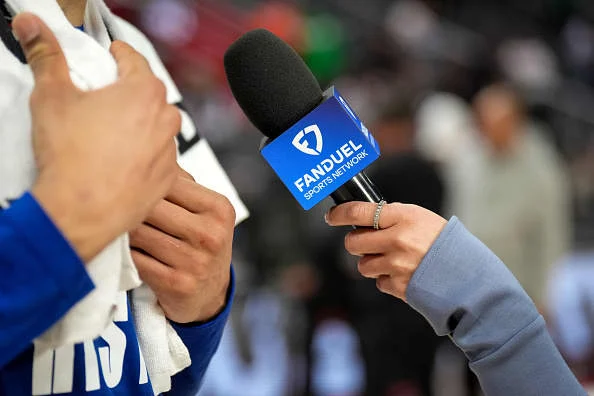
Main Street Sports, the operator formerly known as Diamond Sports Group and a central player in the regional sports network (RSN) industry, has initiated formal litigation against Comcast and Charter Communications, the nation’s two largest pay-TV distributors. The lawsuits, filed on Monday in Delaware Superior Court, allege that these cable giants breached their carriage contracts by failing to remit full licensing fees during the early months of 2026. This legal action marks a final, contentious chapter for the entity—once branded as FanDuel Sports Network—as it undergoes a systematic winddown of its broadcast operations.
The core of the dispute centers on the calculation and payment of carriage fees during a period when the network was still delivering high-value content, including National Basketball Association (NBA) and National Hockey League (NHL) games, to local markets. While the specific monetary damages sought in the filings were not immediately disclosed, the magnitude of the contracts involved suggests the amounts in question are substantial, potentially reaching into the tens of millions of dollars when aggregated across the network’s former footprint.
A Turbulent History of Ownership and Identity
To understand the current litigation, one must examine the precarious path the company has traveled since its inception as the Fox Sports regional network portfolio. Following its divestiture by 21st Century Fox, the entity changed hands and underwent several high-profile rebranding efforts. The most significant shift occurred after the company filed for Chapter 11 bankruptcy protection in early 2023 to address a staggering debt load incurred during the acquisition of the networks.
Emerging from bankruptcy in early 2025, the company rebranded as FanDuel Sports Network, aiming to leverage the growing intersection of broadcast media and sports wagering. At its post-bankruptcy peak, the network held rights to approximately 30 professional teams across the MLB, NBA, and NHL. Despite this robust content catalog, the company struggled to reconcile its massive debt service requirements with a rapidly deteriorating subscriber base, ultimately leading to the decision earlier this year to initiate a winddown of its operations.
Chronology of the Decline
The trajectory of Main Street Sports reflects the broader systemic pressures facing the cable television ecosystem:
- 2019: The regional sports networks are acquired from Fox, saddling the new entity with significant leverage.
- March 2023: The company officially files for bankruptcy protection, citing an inability to meet interest payments and a sharp decline in cable subscribers.
- Early 2025: The company emerges from bankruptcy, rebrands as FanDuel Sports Network, and secures bridge financing to continue operations.
- Late 2025: The network ceases its Major League Baseball broadcasts, signaling the beginning of the end for its regional coverage model.
- Early 2026: Main Street Sports continues to broadcast the remainder of the NBA and NHL regular seasons while initiating the formal winddown of its corporate structure.
- July 2026: The current lawsuits against Comcast and Charter are filed, alleging contract breaches related to the final months of the networks’ active operations.
Market Dynamics and Subscriber Erosion
The legal battle serves as a bellwether for the "cord-cutting" phenomenon that has fundamentally altered the economics of sports broadcasting. For decades, the RSN model relied on a lucrative carriage fee structure, where cable providers paid a fixed, per-subscriber rate to carry the channels, regardless of whether the customer watched the games. This fee was passed on to consumers as part of the monthly cable bill, creating a reliable revenue stream for both the networks and the teams they covered.
However, as households migrated toward over-the-top (OTT) streaming platforms and away from traditional linear cable, the "bundle" has lost its efficacy. Data from industry analysts suggests that pay-TV providers have lost millions of subscribers annually over the past five years. As the subscriber pool shrinks, cable distributors have become increasingly aggressive in renegotiating, or outright cancelling, agreements with regional sports networks, arguing that the cost-to-viewer ratio no longer justifies the high licensing fees.
Analysis of the Legal Stakes
Legal experts note that the Delaware Superior Court filings will likely hinge on the interpretation of specific "force majeure" or "market disruption" clauses within the carriage agreements. Comcast and Charter may argue that the diminution of the network’s value—due to the loss of team rights and the general decline in viewership—warranted a downward adjustment of fees. Conversely, Main Street Sports is positioned to argue that the contracts were firm, and that the distributors were legally obligated to pay the agreed-upon rates for the duration of the term, regardless of the network’s internal financial health.
Given the size of the defendants, the litigation is expected to be protracted. Representatives for both Comcast and Charter have remained largely silent, providing no immediate comment on the specific allegations. This silence is typical in complex commercial litigation, as both parties prepare to mount defenses centered on the contractual obligations and the performance metrics of the network during the contested period.
Broader Industry Implications
The collapse of the Main Street Sports model has sent shockwaves through professional sports leagues. Teams that relied on RSN rights fees for a significant portion of their annual revenue are now forced to explore alternative distribution methods, including direct-to-consumer (DTC) apps, over-the-air (OTA) broadcast partnerships, and league-run streaming services.
The shift is already visible elsewhere in the market. Recently, New York-based regional sports networks opted to abandon their own proprietary streaming applications in favor of a distribution deal with DAZN, a global sports streaming platform. This trend indicates that the future of regional sports is not in standalone apps, but in integration with larger, established streaming ecosystems that can aggregate content and offset the high costs of acquisition.
Furthermore, the failure of the FanDuel Sports Network experiment highlights the limitations of the "sports betting integration" strategy. While the partnership was intended to drive revenue through increased engagement and wagering, it proved insufficient to overcome the fundamental structural challenges of the linear television business. The decline of the RSN model suggests that the next generation of sports media will likely be characterized by lower-cost distribution, higher levels of fragmentation, and a departure from the universal, "all-you-can-eat" cable bundle that defined the previous three decades.
Conclusion: The End of an Era
As the legal proceedings against Comcast and Charter unfold, the industry remains focused on the broader implications of the RSN decline. For the leagues and teams, the priority is maintaining visibility and revenue as the traditional broadcast model recedes. For the distributors, the goal is to manage the transition away from high-cost, underperforming content while retaining their remaining subscriber base.
Main Street Sports’ attempt to recover these licensing fees represents more than just a standard collection effort; it is a final attempt to square the ledger before the company exits the market entirely. The outcome of these cases will likely influence how future sports rights contracts are structured, with a move toward more flexible, performance-based payment models that can better withstand the volatility of the modern media landscape. As the dust settles on this chapter, one thing remains clear: the era of the high-cost, regional cable sports empire has effectively come to an end, giving way to a more complex and uncertain digital future.