


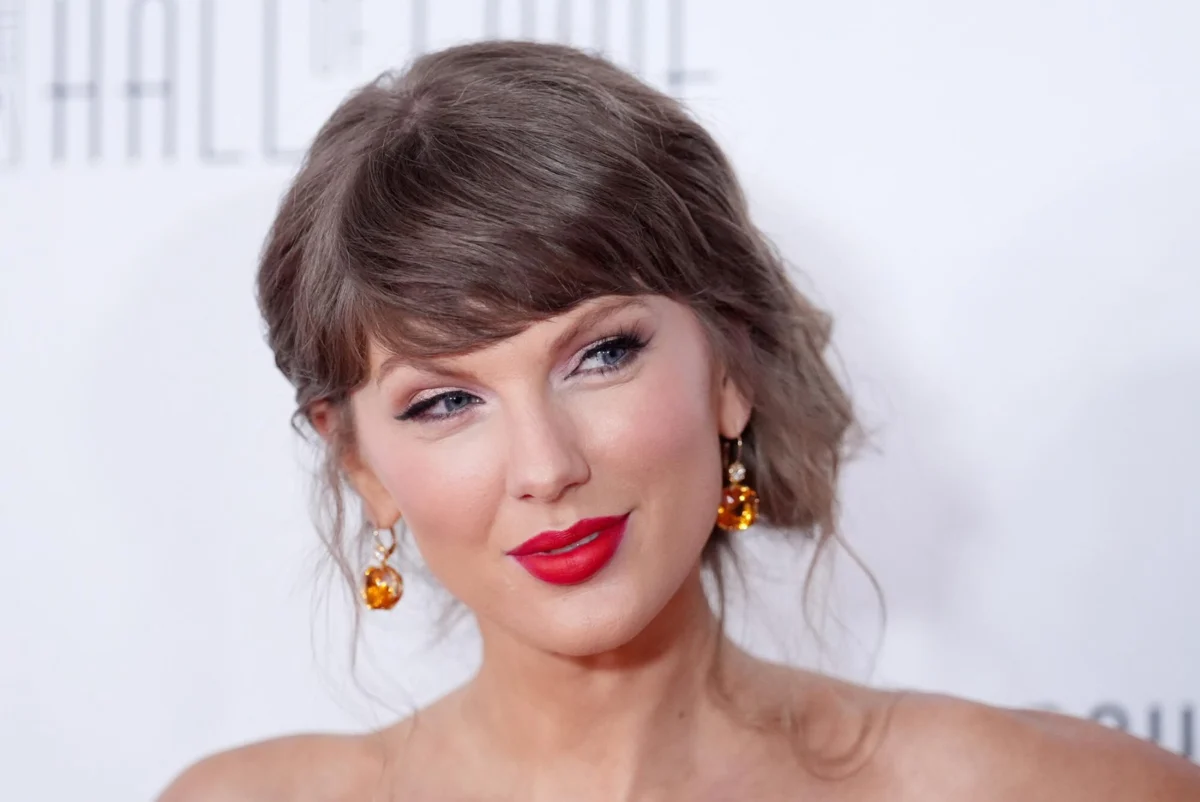
Veteran musician and acclaimed producer Todd Rundgren has reignited a longstanding debate within the contemporary music industry following a candid and controversial interview with Vulture, during which he branded Taylor Swift the "apotheosis of mediocrity" and asserted that the global superstar has "ruined music." Rundgren’s remarks, which quickly circulated across major entertainment networks, add to a growing corpus of critical commentary from older generations of rock and pop architects regarding the modern monopolization of cultural capital by streaming-era behemoths. The comments surface as Swift continues to shatter historical commercial benchmarks, most recently with the rollout of her expanded studio project, cementing an ongoing ideological friction between traditionalist studio craftsmen and the new paradigm of digital-age pop dominance.
The Genesis of the Controversy and the Vulture Interview
The friction began during a feature interview with Vulture, wherein Rundgren—widely celebrated for his production work on seminal records including Meat Loaf’s 1977 rock masterwork Bat Out of Hell—was asked which modern musical figure he would target if he were to construct a parody album today. Referencing his historical work in the late 1970s, where he deliberately framed Meat Loaf’s theatrical style as an affectionate send-up of Bruce Springsteen’s expansive songcraft, the producer did not hesitate to pivot toward the world’s most visible pop export.
"Taylor Swift, of course. There’s an argument to be made that she ruined music," Rundgren stated to the publication. He further elaborated on his philosophical distaste for the singer-songwriter’s omnipresence by labeling her stylistic output as "the apotheosis of mediocrity."
Rather than softening his critique, the producer intensified his assessment when discussing the mechanics of musical talent. "Taylor Swift doesn’t do anything particularly great except grow hair," Rundgren remarked, continuing his dissection by asserting, "She’s not a great singer. She’s not a great songwriter. She’s not a great dancer."
In contrast to his assessment of Swift, Rundgren elevated Lady Gaga as an example of a "real musician" who possesses formal artistic credentials, highlighting her background as a "classically trained piano player." Furthermore, the veteran producer offered an overarching sociological theory regarding the demographic shifts within the music marketplace. He suggested that the absolute dominance of female pop stars in the contemporary landscape was catalyzed by a fundamental generational pivot in the 1990s, during which young male consumers redirected their disposable income and recreational attention away from physical music consumption and toward the burgeoning video game industry.
A Pattern of Public Skepticism
Rundgren’s recent declarations are far from an isolated incident of artistic critique directed at the billionaire pop icon. The musician previously voiced similar skepticism during a 2022 appearance on Rick Rubin’s widely followed Broken Record podcast. During that discussion, Rundgren expressed frustration over the modern listener’s willingness to embrace commercially hyper-curated, mass-marketed output over gritty, structurally complex musicianship. His ongoing refusal to align with the critical consensus surrounding Swift highlights a generational schism within the professional music community, where artists formed in the analogue and early digital studio eras frequently clash with the metrics-driven reality of contemporary streaming supremacy.
Chronology of Swift’s Recent Commercial Milestones and Releases

The timing of Rundgren’s remarks coincides with a historically active period for Swift, who continues to dominate global charts and cultural conversations.
In late 2025, Swift unveiled her twelfth studio album, The Life of a Showgirl. The record instantly pulverized commercial ceilings, debuting at No. 1 on the Billboard 200 and securing a staggering 4.002 million equivalent album units within the United States during its first tracking week alone. The project maintained a formidable stranglehold on the top position of the charts for 12 consecutive weeks, reinforcing her unprecedented commercial resilience.
Despite its commercial triumph, The Life of a Showgirl initially encountered a mixed critical reception from select high-brow music critics who questioned the album’s lyrical themes and sonic experimentation. Swift addressed this critical pushback directly on Apple Music’s The Zane Lowe Show, displaying a pragmatic and unflappable perspective on artistic subjectivity.
"I have a lot of respect for people’s subjective opinions on art. I’m not the art police," Swift stated during the broadcast. "Everybody is allowed to feel exactly how they want."
Most recently, the pop superstar expanded her creative footprint with the release of The Life of a Showgirl: The Encore, a deluxe repackaging of the album containing four previously unreleased or newly recorded tracks. Among these additions is the single "Patient Zero," the music video for which made its global premiere during the broadcast of the 2026 MTV Video Music Awards. The deluxe edition also incorporates newly introduced tracks such as "Babylon," "Pink Clouding," and "Cleveland!," ensuring that her commercial momentum remains unimpeded by external critical headwinds.
Broader Implications for the Music Industry
The public back-and-forth between a foundational 1970s architect of rock and the defining pop superstar of the twenty-first century illuminates deeper structural debates currently animating the music industry. As the entertainment ecosystem becomes increasingly reliant on algorithm-driven streaming platforms, massive stadium tours, and mega-franchise artist branding, traditionalist producers often feel alienated from the criteria used to evaluate musical worth.
Critics of Swift’s catalog frequently argue that her immense cultural footprint outstrips her technical execution in vocal performance and instrumental arrangement. Conversely, legions of fans, musicologists, and commercial analysts point to her prolific narrative depth, vulnerability, and uncanny ability to articulate the emotional interiority of millions as a masterclass in modern songwriting.
While Todd Rundgren’s assessment represents a stark rejection of contemporary pop validation, Taylor Swift’s historical commercial output demonstrates that external critiques have virtually zero impact on her enduring connection with the global listening public. As the industry continues to evolve through shifting technological and aesthetic landscapes, the dialogue surrounding what constitutes true artistic excellence remains as contentious and polarized as ever.