


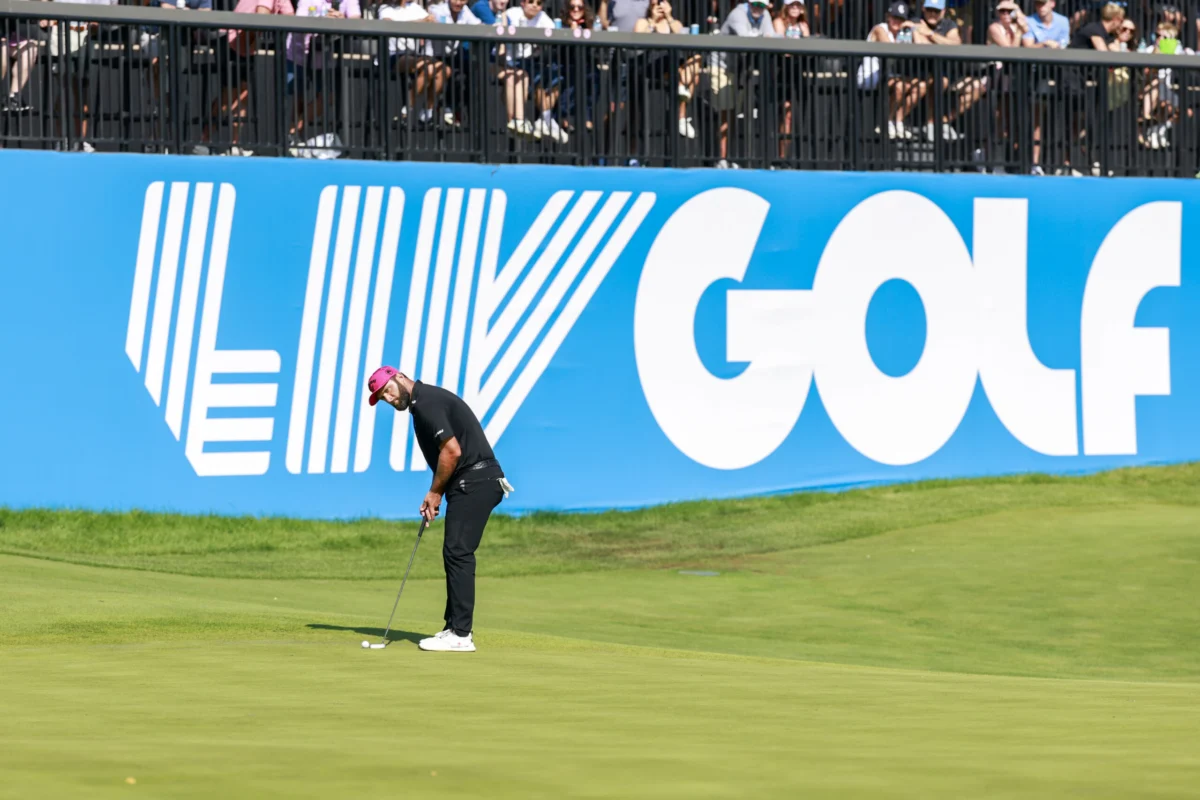
The landscape of professional golf underwent a seismic shift on Tuesday as LIV Golf, the Saudi-backed circuit that challenged the hegemony of the PGA Tour, officially filed for Chapter 11 bankruptcy protection in the U.S. Bankruptcy Court for the District of New Jersey. This move follows months of escalating fiscal uncertainty and represents a fundamental pivot in the league’s business model, transitioning from a state-funded entity to a private enterprise with a proposed "player-first" ownership structure.
The restructuring, formalized through a support agreement with BC Partners Credit, marks the beginning of a complex legal process designed to stabilize the organization as it navigates a critical funding transition. The filing confirms long-standing industry speculation regarding the sustainability of the league’s original financial architecture, which relied almost exclusively on the deep pockets of Saudi Arabia’s Public Investment Fund (PIF).
A Chronology of Financial Volatility
The journey to bankruptcy began long before Tuesday’s court filings. LIV Golf burst onto the global stage in 2022, fueled by an estimated $2 billion initial investment from the PIF. By offering unprecedented signing bonuses and guaranteed purses, the league successfully poached high-profile stars, including Dustin Johnson, Brooks Koepka, and Jon Rahm, fundamentally altering the economics of professional golf.
However, the rapid expansion of the league was met with intense scrutiny regarding the source of its capital and its impact on the sport’s ecosystem. The following timeline outlines the key moments leading to the current restructuring:
- June 2022: LIV Golf holds its inaugural event at the Centurion Club, signaling the start of a direct confrontation with the PGA Tour.
- June 2023: In a stunning reversal of their public feud, the PGA Tour and the PIF announce a "framework agreement" to merge their commercial operations, sending shockwaves through the sports world.
- April 2026: CNBC reports that the PIF, under pressure to diversify its investments and reconcile with domestic priorities, intends to end its direct funding of LIV Golf at the conclusion of the 2026 season.
- May 2026: LIV Golf launches a desperate investor roadshow, aiming to secure $350 million in private capital to bridge the gap left by the impending withdrawal of Saudi sovereign wealth.
- June 2026: CEO Scott O’Neil publicly attempts to calm internal fears regarding a "funding cliff," maintaining that the PIF would honor its commitments through the end of the year.
- August 2026: Facing a terminal funding deadline, the organization files for bankruptcy to facilitate a debt-for-equity swap and transition to a player-owned model.
The Mechanics of the Restructuring
Under the terms of the agreement filed in New Jersey, LIV Golf will receive $49.6 million in debtor-in-possession (DIP) financing provided directly by the PIF. This capital is intended to serve as a bridge, ensuring that the league can complete its 2026 schedule and meet ongoing operational obligations while the court reviews the reorganization plan.
The most significant aspect of the proposed plan is the dilution of external equity in favor of the athletes themselves. Under the reorganization, the players are expected to become the majority owners of the venture. This structure is intended to align the long-term financial incentives of the golfers with the commercial health of the league—a stark contrast to the traditional model where players are independent contractors or tour members rather than stakeholders.
BC Partners Credit, as the primary restructuring partner, will likely play a role in the post-bankruptcy capital stack, with other minority stakeholders expected to provide the liquidity necessary for the 2027 season and beyond.
Financial Realities and Market Context
The move toward bankruptcy highlights the stark realities of the "sports-washing" model when it faces the discipline of the open market. While LIV Golf successfully generated high-quality content and significant social media engagement, it struggled to build the traditional revenue pillars—such as long-term broadcasting rights and title sponsorship agreements—at a pace required to offset its massive operating costs.
Data from independent sports analysts suggest that LIV Golf’s overhead, including player contracts and global logistics, far exceeded its annual revenue. By mid-2026, the league’s inability to secure a lucrative, multi-year domestic television deal in the United States left it exposed to the whims of its sole benefactor. When the PIF’s internal priorities shifted, the league’s business model proved too fragile to survive without external intervention.
Official Responses and Corporate Strategy
In a prepared statement issued Tuesday, LIV Golf CEO Scott O’Neil characterized the filing not as an end, but as a strategic evolution. "This process gives us the structure and time to pursue a landmark transaction and begin the next chapter of LIV Golf—one built around the fans, an innovative, player-first ownership model, and a part of the global golf ecosystem," O’Neil stated.
Industry observers suggest the mention of "the global golf ecosystem" is a tactical signal to the PGA Tour. The failure of the 2023 merger agreement to result in a final, binding contract has left the sport in a state of suspended animation. By filing for bankruptcy, LIV Golf may be attempting to clean up its balance sheet to make itself a more attractive—or less toxic—partner for a future consolidation with the PGA Tour.
Broader Implications for Professional Sports
The bankruptcy of LIV Golf serves as a cautionary tale for other "upstart" leagues backed by sovereign wealth. While state funding can provide an immediate competitive advantage, it does not substitute for a sustainable business model. The transition to player ownership is a unique experiment; if successful, it could provide a blueprint for other leagues where athletes seek greater control over their intellectual property and commercial future.
However, the immediate impact remains one of uncertainty for the athletes who signed long-term, guaranteed contracts. Bankruptcy law allows for the renegotiation or rejection of "executory contracts," meaning that the lucrative deals originally signed by the stars of LIV Golf could be subject to adjustment. Legal experts note that while players are being courted for majority ownership, they may also face a reduction in their guaranteed payouts as part of the sacrifice required to keep the league solvent.
As the case proceeds through the District of New Jersey, the focus will shift to the approval of the reorganization plan by the court and the reaction of the remaining stakeholders. For now, the future of the league hangs in the balance, caught between the legacy of its Saudi-backed inception and the necessity of finding a commercially viable path forward in a fractured golf world. The 2026 season will conclude under the watchful eye of the court, representing a period of transition that will determine whether the LIV Golf experiment survives or becomes a historical footnote in the evolution of professional sports.