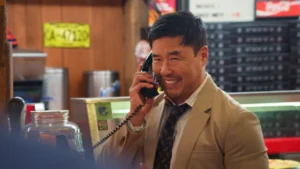
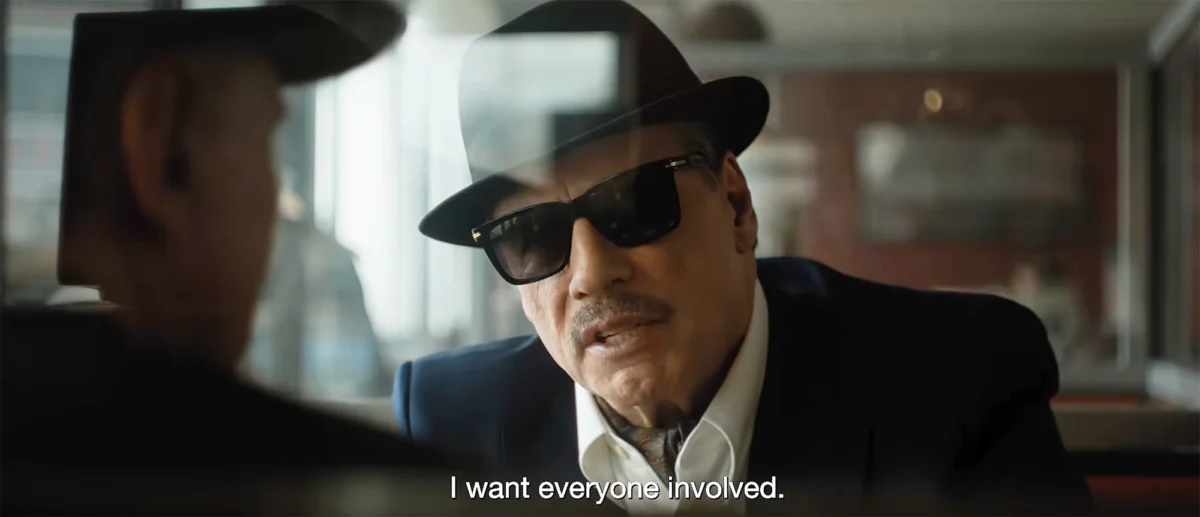
Ketchup Entertainment has officially released the high-stakes first trailer and poster for November 1963, a gritty conspiracy thriller that shifts the cinematic lens away from standard government-centric theories and toward the American underworld. Directed by Academy Award nominee Roland Joffé, the film chronicles the tense, 48-hour window surrounding the assassination of President John F. Kennedy on November 22, 1963. Boasting an impressive ensemble cast featuring John Travolta, Robert Carlyle, Dermot Mulroney, Mandy Patinkin, and Jefferson White, the feature film promises to explore the dark intersections of presidential politics and organized crime.
The project marks a notable return for Joffé, the acclaimed English filmmaker renowned for historical and dramatic masterpieces such as The Killing Fields and The Mission. Written by Nicholas Celozzi—the nephew of infamous Chicago crime boss Sam Giancana—from a story developed by Joseph Giancana and Nicholas Celozzi, November 1963 is scheduled to hit select United States theaters on November 20, 2026. Rather than focusing on the well-trodden paths of intelligence agency cover-ups or lone-gunman narratives, this production leans heavily into firsthand accounts and familial testimonies from the Giancana family, examining an alleged pact that helped secure the presidency for JFK, followed by the catastrophic betrayal that sealed his fate.
Main Facts and Narrative Premise
At its core, November 1963 dramatizes a controversial alternative theory regarding the events in Dallas, Texas. The promotional material sets a grim, calculating tone with dialogue echoing through the trailer: "Do you vouch for him? What if he misses?" and "One president. Two shooters. One conspiracy that changed history."

According to the production notes, the film explores a complex web involving a secret operational plan, a second shooter stationed away from the main vantage points, and a designated "patsy" engineered to take the ultimate fall. The storyline specifically probes the alleged transactional relationship between Joseph P. Kennedy Sr. and the Chicago Outfit, suggesting that the organized crime syndicate played a pivotal role in securing crucial labor union votes and political backing to put JFK in the White House in 1960. When the Kennedy administration subsequently launched an aggressive federal crackdown on organized crime led by Attorney General Robert F. Kennedy, the alliance reportedly fractured into a lethal vendetta.
The film stars John Travolta alongside Robert Carlyle, Dermot Mulroney, Mandy Patinkin, and Jefferson White. Production duties are handled by Kevin DeWalt, Carrie Wilkins, and Nicholas Celozzi. By leveraging insider perspectives passed down through the Giancana family, the filmmakers aim to present an unauthorized, unflinching look at power, political ambition, and retributive violence.
Historical Chronology of the November 1963 Events
To understand the contextual framework of Joffé’s feature, it is necessary to review the established chronology of the historic weekend it dramatizes:
- November 20–21, 1963: President John F. Kennedy embarks on a political trip to Texas alongside First Lady Jacqueline Kennedy to mend internal fractures within the state’s Democratic Party ahead of the 1964 reelection campaign.
- Morning of November 22, 1963: Air Force One lands at Love Field in Dallas. The presidential motorcade sets off on a planned route through downtown Dallas, designed to maximize public exposure.
- 12:30 PM CST, November 22, 1963: Gunshots ring out as the motorcade passes through Dealey Plaza. President Kennedy is struck twice—once in the neck and a fatal shot to the head—while Texas Governor John Connally is seriously wounded.
- 1:00 PM CST: President Kennedy is officially pronounced dead at Parkland Memorial Hospital.
- Afternoon of November 22, 1963: Lee Harvey Oswald is arrested following the fatal shooting of Dallas police officer J.D. Tippit. Oswald is subsequently charged with the assassination of the President.
- November 24, 1963: While being transferred from police headquarters to the county jail, Oswald is shot and killed by Dallas nightclub owner Jack Ruby, a figure with well-documented ties to organized crime figures in both Chicago and Dallas.
- Late November 1963 – September 1964: The Warren Commission is established by President Lyndon B. Johnson to investigate the assassination, ultimately concluding that Lee Harvey Oswald acted alone and that Jack Ruby also acted independently.
November 1963 dramatizes the alleged forces moving behind the scenes during the immediate 48 hours leading up to and immediately following the Dealey Plaza shooting, injecting the Chicago Outfit directly into the narrative framework.

Supporting Data and Production Background
The production of November 1963 relies heavily on anecdotal and biographical claims put forward by the Giancana family. Sam Giancana, the head of the Chicago Outfit from 1957 to 1966, has long been a subject of speculation among true-crime authors and conspiracy researchers regarding deep-state and mob connections. While mainstream historians and official government investigations—such as the aforementioned Warren Commission and the later House Select Committee on Assassinations (HSCA)—have found no conclusive evidence linking the Chicago Outfit directly to the assassination, the persistent folklore surrounding mob involvement remains a fixture of American counter-history.
Roland Joffé brings significant cinematic pedigree to the project. Over his career, Joffé has earned two Academy Award nominations for Best Director (The Killing Fields in 1984 and The Mission in 1986). His filmography spans gritty historical dramas, romantic epics, and psychological thrillers, including Fat Man & Little Boy, City of Joy, and The Scarlet Letter. The addition of a director with a history of handling complex moral dilemmas and large-scale historical conflicts lends the production a degree of gravitas that elevates it above standard direct-to-video true-crime fare.
Furthermore, the involvement of screenwriter Nicholas Celozzi ensures that the narrative voice remains closely aligned with the oral histories and internal lore preserved by relatives of the Chicago crime syndicate. Cast members such as John Travolta and Mandy Patinkin bring decades of star power to the project, positioning the film for notable visibility upon its theatrical release by Ketchup Entertainment.
Industry Implications and Cultural Reception
The release of November 1963 arrives at a time when public fascination with historical conspiracy theories remains high, though audience tastes have evolved toward greater skepticism of unverified historical assertions. For decades, popular culture has gravitated toward Oliver Stone’s 1991 masterpiece JFK, which popularized the narrative of a sprawling government and intelligence agency conspiracy. By pivoting the antagonist forces from the Central Intelligence Agency and the military-industrial complex to organized crime, Joffé and his writers are tapping into an older, equally persistent strain of American folklore: the alliance between political dynasties and the mafia.

Film industry analysts note that independent releases tackling historical revisionism face a delicate balancing act. They must satisfy cinephiles drawn to high-caliber casts and veteran directors while navigating the sensitivities surrounding an event that remains a profound national trauma. The choice of a specialized theatrical release strategy via Ketchup Entertainment on November 20, 2026, allows the film to test the commercial waters ahead of broader digital and home entertainment distribution.
As the release date approaches, public discourse surrounding November 1963 will likely center on the ethical boundaries of dramatizing real-world historical tragedies through the lens of unproven familial testimonies. Whether the film succeeds in offering a compelling dramatic reinterpretation of a defining American moment or simply adds another layer to the mountain of conspiracy lore, it guarantees that the ghosts of November 1963 will continue to haunt the cultural imagination well into the twenty-first century.