
The Karlovy Vary International Film Festival (KVIFF) stands not merely as a celebration of Czech cinema but as a vibrant global nexus for filmmakers and audiences alike. Nestled in the historic Czech spa town, KVIFF consistently opens its doors, cinemas, and the hearts of its attendees to cinematic works from every corner of the world. This year’s landmark 60th edition, occurring in the festival’s 80th year of existence, underscores this international commitment. Artistic director Karel Och highlighted the extraordinary geographical diversity of the main program, featuring nearly 40 titles. He emphasized this inclusivity by noting the "exclusive presence of Myanmar and Colombia in the Crystal Globe competition," drawing a direct line to the progressive vision of one of the festival’s founders, A. M. Brousil, who six decades prior championed the then-young and undiscovered non-European cinemas.
This rich tapestry of global storytelling, however, relies on a crucial, often unsung, element: the ability to transcend language barriers. Facilitating discussions between international stars, filmmakers, and an eager audience demands specialized expertise. This is where the festival’s team of interpreters plays an indispensable role, ensuring that voices are heard and stories are understood, fostering a truly global dialogue.
Helena Koutná: The Unseen Architect of Festival Dialogue
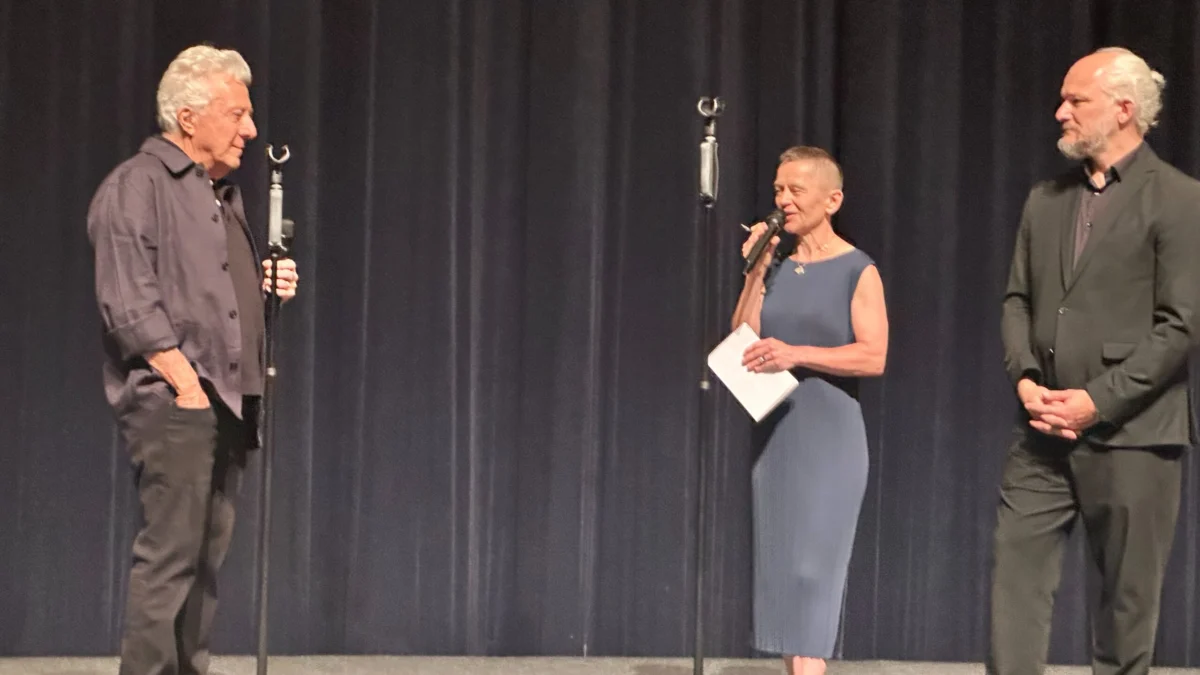
Among the dedicated professionals, one figure consistently stands out to regular KVIFF attendees: Helena Koutná. Her poised presence and ever-present smile have become synonymous with the festival’s public events, from honors ceremonies to post-screening Q&As. Whether seamlessly translating the comments of Czech festival leaders into English for international guests or conveying the insights of English-speaking filmmakers into Czech for the local audience, Koutná operates with remarkable aplomb, making complex linguistic bridges appear effortless.

Koutná’s deep involvement with KVIFF spans over a quarter-century, commencing in 1997. Her journey began through Artlingua, an agency she freelanced for, which extended an invitation to join the festival’s interpreting team – an offer she describes as one that "certainly didn’t have to think about twice before accepting!" This longevity underscores her integral role in KVIFF’s evolution as a global platform, having been present for many significant milestones and celebrity appearances.
Evolution of Festival Interpretation: From Booths to Centre Stage
The landscape of interpreting at KVIFF has undergone significant transformation since Koutná’s early days. In 1997, the interpreting team was substantially larger, sometimes numbering up to 30 professionals. This was primarily due to a different screening model: films were often shown without subtitles, requiring simultaneous interpretation booths in cinemas. Audiences would listen via headphones to translations from and into various languages, including English, German, French, Spanish, and Russian. This period demanded intense preparation, often without the benefit of extensive reference materials like screeners or scripts. Interpreters were not only confined to booths but also meticulously prepared for assignments, transforming the festival into a vibrant professional gathering for linguists.
With the advent and widespread adoption of film subtitles, the need for extensive simultaneous interpretation in cinemas diminished. Consequently, the core interpreting team for KVIFF has streamlined to approximately eight individuals, whose primary focus now lies in live public engagements such as film introductions, Q&As, and occasional press conferences and interviews. Koutná is a pivotal member of this elite team, directly engaging with filmmakers and celebrities on stage. This shift highlights a move towards more interactive, direct communication between creators and their audiences, where the interpreter acts as a vital conduit for immediate understanding and emotional connection.
The Art and Science of Live Interpretation: Beyond Mere Words
The ease with which Koutná navigates complex linguistic exchanges often leaves audience members marveling at her speed and precision. As one attendee reportedly pondered, "How does this lady do this and do it so quickly? And I thought: she is smiling too!" Koutná clarifies that there is "no magic or tricks, just some techniques all interpreters learn."

She elaborates on the two fundamental modes of interpreting: simultaneous and consecutive. Simultaneous interpretation involves the interpreter listening to the speaker via headphones and simultaneously rendering their words into another language. Consecutive interpreting, more common in Q&As, requires the interpreter to take meticulous notes while the speaker talks, then interpret the message once the speaker pauses. Note-taking, a skill rigorously taught in interpreting courses, involves a sophisticated system of symbols, pictograms, lines, arrows, and abbreviations. These range from standard symbols used across the profession to personalized shorthand tailored for specific assignments—for instance, "F" for "film" at a festival, or a heart for positive sentiment. The objective is to capture key information, figures, and the essence of the "story" rather than every single word, enabling rapid and accurate recall. This intricate blend of linguistic prowess, cognitive agility, and specialized note-taking is the true secret behind the seemingly effortless performance.
A Linguist’s Spectrum: From Film Festivals to European Institutions
Koutná’s professional language combination is focused yet robust: English and Russian. She also possesses the unique ability to work from Slovak into English, a skill cultivated from growing up in Czechoslovakia where Slovak was a common broadcast language. Her expertise extends far beyond the Karlovy Vary red carpet, showcasing the diverse applications of high-level interpretation.
Throughout the year, Koutná remains deeply embedded in the cinematic world, contributing her skills to other notable film festivals such as the One World human rights documentary film festival in Prague and the Ji.hlava International Documentary Film Festival, where simultaneous interpretation remains a core component. She was also involved in the organization of the now-paused ÙRÙN:CI, a festival dedicated to Iranian films in Prague. Her voice has become a familiar presence during major awards ceremonies, interpreting the live broadcasts of the Oscars for Czech Television for several years, and playing a similar role at the equivalent national event, the Czech Lion Awards.
However, the bulk of Koutná’s work lies within the high-stakes environment of the European Union institutions, including the Council, the Commission, the European Parliament, and the European Court of Justice in Brussels, Strasbourg, and Luxembourg. This demanding work involves an extraordinarily diverse range of topics, from intricate policy debates to complex legal proceedings. Such assignments necessitate exhaustive research and continuous vocabulary building, often requiring interpreters to develop specializations. Koutná’s areas of expertise notably include legal negotiations and arbitration hearings, highlighting the rigorous intellectual demands of her profession and her capacity to master highly technical subject matter. This breadth of experience underscores the versatility and intellectual rigor required of a top-tier interpreter, seamlessly transitioning from the glamour of cinema to the gravity of international law.

Connecting with Cinematic Greats: Personal Reflections and Mutual Respect
When asked about her most memorable encounters with Hollywood film stars and directors, Koutná offers a response that is both "easy as well as a difficult question to answer." She explains that the highly accomplished professionals she has met tend to be "hard-working, modest and humble people," whose mission is to enrich the world through their art. This professionalism, she notes, extends to their interactions with audiences and, crucially, their appreciation and respect for the work of other professionals, including interpreters.
Koutná expresses immense satisfaction in sharing the stage with individuals whose work she admires. A Q&A session with Susan Sarandon stands out, not only because Thelma & Louise is a favorite film for which Koutná had translated the subtitles years prior, but also due to Sarandon’s "most refreshing" conversation with the audience. Similarly, having translated the subtitles for Rain Man, she found it particularly gratifying to be on stage with its director, Barry Levinson, and this year, with star Dustin Hoffman. Other cherished experiences include working with documentary filmmaker Vitaly Mansky, whose work she finds "amazing," and Alexander Payne, who "clearly enjoyed meeting the audience." The list of notable figures is extensive, including Antonio Banderas, Zdeněk Svěrák, Patricia Clarkson, Johnny Depp, Ewan McGregor and his daughter Clara McGregor, and Stellan Skarsgård, among many others, reflecting the global caliber of talent that KVIFF attracts. These encounters highlight not just the glamour but the genuine human connection that interpreters facilitate, enabling shared moments between creators and their admirers.
Clarifying the Craft: Interpreting Versus Translating
A common point of confusion for the public lies in the distinction between "interpreting" and "translating." Koutná unequivocally clarifies that they are "two separate professions," albeit both requiring profound knowledge of source and target languages. The key difference lies in the medium and immediacy: "Translators deal with written text; they have more time for their work as well as access to external sources. Interpreters deal with spoken words in real time."
To vividly illustrate this, Koutná shares a colleague’s analogy: "Imagine an ice-hockey player and a figure skater. They both need to master the skill of ice-skating, but their performance on ice could not be more different. You certainly wouldn’t expect an ice-hockey player to land a triple axel!" This analogy perfectly encapsulates the specialized skill sets demanded by each profession. While some individuals, like Koutná herself, engage in both translating and interpreting, most professionals tend to specialize in one, underscoring the unique challenges and requirements inherent in each discipline.

The Human Touch in an AI Era: A Pragmatic Perspective
In an era increasingly shaped by Artificial Intelligence, the question of AI’s impact on human interpreting is inevitable. Koutná acknowledges the "astonishing" pace of AI development, noting its current ability to provide "perfectly usable" translations for certain purposes. However, she remains pragmatic about its limitations. AI translations, she observes, are "still not fully reliable," requiring human verification, and often suffer from being "clumsy," lacking "depth and variety."
The challenges for AI in live interpreting are even more pronounced. Beyond mere linguistic conversion, interpreting demands an understanding of "cultural nuances, context and references which are often merely hinted at," all processed "instantly." Accents, particularly in English—which has become a global lingua franca spoken with countless non-native variations—pose a significant hurdle for AI, even proving challenging for experienced human interpreters. Koutná suggests that while AI interpreting may find acceptable applications in the future, particularly for less critical scenarios, "there will still be situations where human interpreting will be preferable, either due to the nature of the topic, the mood it helps create or even security reasons." This perspective underscores the irreplaceable value of human intuition, empathy, and cultural understanding in high-stakes, nuanced communication.
The Unsung Role and Enduring Value of Professional Interpretation
Helena Koutná’s career at KVIFF and beyond stands as a testament to the profound impact interpreters have on human interaction. Their work, she asserts, "can enhance an experience, make work more efficient, and sometimes even save lives." This truth holds across a spectrum of environments—from business negotiations and technical productions to medical treatments, cultural events, and even armed conflicts.
A critical element underpinning an interpreter’s ability to deliver exceptional service is thorough preparation. Koutná emphasizes the importance of clients providing comprehensive reference materials, including speeches, drafts, names of participants, product specifications, patient histories, event programs, and for film festivals, guest lists, film titles, screeners, or scripts. Discussing technical arrangements with interpreters is equally vital to determine the most suitable mode of interpretation. By providing these resources, clients enable interpreters to leverage their extensive experience, ensuring "relaxed, smooth and efficient" communication. Ultimately, the goal of a professional interpreter, as Koutná eloquently concludes, is to facilitate understanding and, "if the circumstances permit, to bring smiles to the faces of all those involved," thereby reinforcing the human connections that lie at the heart of global exchange.