It has been a very good year for Japanese cinema – and Cannes is where the country has come to prove it. The 79th annual Cannes Film Festival, a prestigious global platform for cinematic excellence, is witnessing an unprecedented and formidable presence from Japan, underscoring a period of remarkable artistic vitality and commercial success for its film industry. This robust showing is not merely a testament to individual talents but reflects a broader resurgence, with both established masters and emerging voices contributing to a vibrant cinematic landscape that is capturing international attention.
A Triumvirate of Masters in the Main Competition
At the heart of Japan’s impressive presence in Cannes are three of its most acclaimed directors, all previous festival laureates, vying for the coveted Palme d’Or in the main competition. Their participation signals a strong vote of confidence from the festival organizers and immense anticipation from critics and audiences alike. These filmmakers, renowned for their distinct narrative styles and profound explorations of the human condition, collectively represent the diverse artistic spectrum of contemporary Japanese cinema.
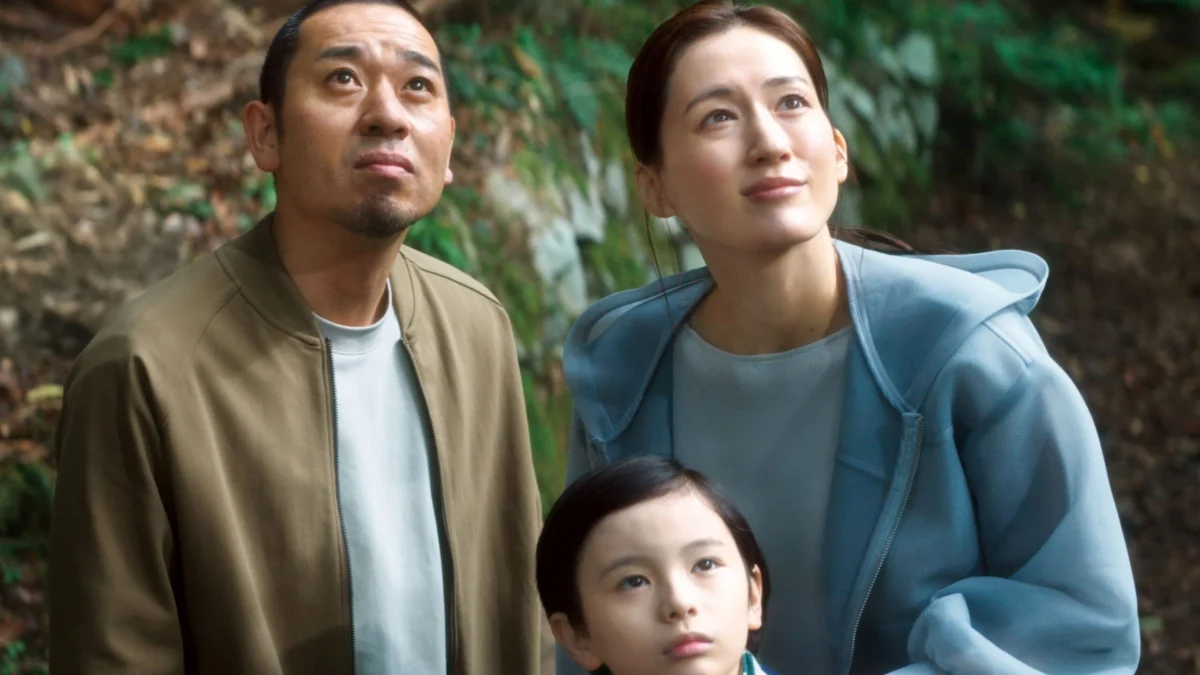
Leading this charge is Hirokazu Kore-eda, a director whose name has become synonymous with sensitive, humanistic storytelling. A Palme d’Or winner in 2018 for his poignant family drama Shoplifters, Kore-eda returns with his latest offering, Sheep in the Box. Known for his observational style and ability to elicit deeply moving performances, particularly from child actors, Kore-eda consistently delves into themes of family, memory, and the intricate bonds that define human relationships. His films often explore unconventional families and the quiet struggles of everyday life, presenting narratives that resonate universally while remaining distinctly Japanese in their cultural texture. Sheep in the Box is highly anticipated to continue this tradition, with early buzz suggesting another nuanced exploration of familial dynamics.
Joining him is Ryûsuke Hamaguchi, who cemented his international reputation with his 2021 Cannes win for Best Screenplay for Drive My Car. That film went on to achieve global acclaim, earning an Academy Award for Best International Feature Film and an Oscar nomination for Best Director. Hamaguchi’s cinematic language is characterized by its meticulous pacing, profound dialogue, and complex character studies, often exploring themes of grief, communication, and self-discovery. His new film, All of a Sudden, is notable as a French co-production, highlighting the increasing cross-border collaborations that are enriching global cinema. This collaboration further underscores Hamaguchi’s growing international appeal and his willingness to transcend geographical boundaries in his storytelling. The narrative is expected to showcase his signature introspective style, likely dissecting the nuances of personal relationships with his characteristic depth.
Rounding out this formidable trio is Koji Fukada, whose work often presents unsettling examinations of moral ambiguity and societal pressures. Fukada earned the Un Certain Regard Jury Prize in 2016 for Harmonium, a tense psychological drama that left a lasting impression on critics. His latest, Nagi Notes, is expected to continue his exploration of complex human interactions and the ripple effects of choices made under duress or in moments of crisis. Fukada’s films frequently challenge conventional notions of family and friendship, exposing the fragile underpinnings of these relationships. The collective presence of Kore-eda, Hamaguchi, and Fukada in the main competition, all exploring questions of family and friendship, underscores a shared thematic thread running through some of Japan’s most significant contemporary cinematic voices, albeit through vastly different lenses.

"Japan Goes to Cannes": Showcasing Future Horizons
Beyond the main competition’s spotlight on established masters, Japan is also actively shaping its cinematic future through the "Japan Goes to Cannes" night at the Marché du Film. Held on May 15, this vital industry event serves as a crucial platform for presenting in-production projects to international buyers, distributors, and co-production partners. It’s an opportunity to demonstrate the breadth, strength, and diversity of contemporary Japanese cinema, fostering global connections and paving the way for future international collaborations. The Marché du Film, an integral part of the Cannes Film Festival, is the world’s largest film market, where thousands of industry professionals converge to buy, sell, and develop film projects. Participation in "Goes to Cannes" initiatives can significantly boost a project’s visibility and secure vital funding and distribution deals.
Among the five projects presented, one of the most anticipated is Kore-eda’s next film, Look Back, currently in post-production. This project marks a significant departure for the director, as it is his first adaptation of a manga. The film traces the 13-year friendship between two girls who bond over a shared love of manga. Producer Daiju Koide shared insights into Kore-eda’s profound connection to the source material. "He picked it up on impulse and read the entire manga in one sitting that night," Koide told THR. "Although manga and film are different mediums, he felt a raw, urgent sense of determination from the work as a creator. He told me he could feel, almost painfully, that the author, Tatsuki Fujimoto, must have felt he couldn’t move forward without creating this piece." This deeply personal connection to the original work suggests a nuanced and respectful adaptation, characteristic of Kore-eda’s approach to storytelling. Given the source material’s immense popularity and the commercial success of its anime adaptation – which scooped an estimated $13 million from the Japanese box office – expectations for Look Back are exceptionally high, particularly regarding the casting of the two central characters, Fujino and Kyomoto. Fans are eagerly hoping for casting announcements during the Cannes event. Koide also highlighted the rigorous casting process: "One of the most daunting tasks was finding the right children to portray the two leads… Before the auditions began, I was genuinely anxious, wondering if children who could embody such captivating characters even existed in the real world. Yet, sitting right next to me, director Kore-eda was all smiles. As it turned out, the two we found through the auditions were truly extraordinary." This meticulous approach bodes well for the film’s authenticity and emotional impact.
Another project garnering attention is The Gate of Murder, a thriller from Ko Kanai, known for his popular TV dramas such as Naomi & Kanako (2016). Produced by Yoshikazu Tsubaki and Kadokawa Corporation, the film delves into the dark psyche of a man haunted by a childhood acquaintance, whom he blames for all his misfortunes. The narrative explores his descent into plotting the man’s death, promising a suspenseful and psychologically charged experience. This venture into the thriller genre by a director primarily known for television dramas showcases the versatility within Japanese filmmaking.
Animation’s Enduring Global Appeal
The "Goes to Cannes" lineup also strongly reflects the global momentum of Japanese animation. You, Fireworks, and Our Promise (working title), an animated film from Shin-Ei Animation and SynergySP, directed by Suzuki Kei and produced by Michihiko Umezawa, exemplifies the genre’s unique blend of the ordinary and the fantastical. The story follows a high school boy who discovers a drawing of fireworks bearing his name and a future date. The girl carrying it then vanishes, only to be replaced by her identical-looking great-grandmother from the past. Producer Michihiko Umezawa articulated the core philosophy behind the project: "What has always been important to us is the idea that even the smallest moments can carry a sense of warmth, humor, and sometimes a quiet sense of wonder." He emphasized the film’s universal themes despite its local origin: "While the storyline begins with something very local, the Nagaoka Fireworks Festival, the film speaks about universal ideas of memory, time, and the way emotions can be shared across generations. At its heart, this is also a coming-of-age love story."
Shin-Ei Animation boasts a storied history and a global fan base, particularly for long-running animated series like Doraemon and Crayon Shinchan. Umezawa elaborated on the power of animation to connect with diverse audiences: "I think one of the strengths of anime is that it allows the ordinary and the imaginative to exist naturally side by side." He further added, "We have always been interested in how ordinary everyday life can feel vivid when you look at it from a slightly different perspective. A simple passing moment between family members or friends can sometimes stay with you for a lifetime. Animation gives us the freedom to express those feelings in a more direct and sometimes more poetic way. It does not need to rely only on realism to feel true to life. Because of that, anime stories can travel across cultures while still feeling authentic and personal. That sense of emotional recognition across different cultures and backgrounds is one of the reasons anime continues to resonate with global audiences." This insightful perspective highlights why Japanese animation continues to be a formidable cultural export, capable of transcending linguistic and cultural barriers.

Diverse Genres and Socially Conscious Narratives
The market lineup also features All That Exists (working title), a mystery-drama from veteran director Takahisa Zeze, known for his compelling and often gritty narratives like 64: Part I and 64: Part II. Produced by Takahashi Naoya with sales through Toei Company, the film follows a journalist haunted by an unresolved twin kidnapping case who is drawn back into the mystery three decades later, following the death of the detective who worked it. His investigation leads him into the orbit of a strange realist painter, suggesting a narrative rich with psychological intrigue and a complex layering of past and present. Zeze’s reputation for crafting intricate plots and exploring the darker facets of human nature ensures that this project will be a captivating watch for fans of the genre.
Finally, Lives at Right Angles, from Syoutarou Kobayashi (director of Kaasan Mom’s Life), rounds out the selection. Produced by Sato Gen through Toei Video Company with Hakuhodo DY Music & Pictures handling sales, this film tackles a poignant social theme. It follows Daiki, a janitor who has managed his life with autism spectrum disorder with the crucial support of his sister. However, when she decides to get married, Daiki faces the daunting prospect of an uncertain future alone. This project promises a sensitive and insightful portrayal of an individual navigating personal challenges and the complexities of family support, reflecting a growing trend in Japanese cinema to address diverse social issues with empathy and realism.
A Thriving Domestic Market Fueling International Ambitions
The bullishness surrounding Japanese cinema at Cannes is well-founded, underpinned by an exceptionally robust domestic market. Back home, the world’s third-largest film market has demonstrated remarkable resilience and growth. In 2025, annual revenues soared an impressive 32 percent to $1.79 billion, comfortably surpassing the pre-pandemic record of $1.70 billion set in 2019. This significant financial rebound underscores the enduring popularity of cinema among Japanese audiences and the industry’s effective adaptation to evolving market conditions.
Moreover, production numbers are also at an all-time high, indicating a fertile creative environment. A staggering 694 Japanese films were released in 2025, beating the previous record of 689 (set in 2019), and building on the 685 films released in 2024. This consistent increase in output reflects a thriving industry capable of producing a vast array of content across genres, catering to diverse tastes.
Local titles have been the primary drivers of this phenomenal box office success, demonstrating a strong preference for domestic content. The anime monster hit Demon Slayer: Infinity Castle – Part 1 led the charge with an astounding $255 million, solidifying anime’s status as a dominant force in the Japanese market and a global phenomenon. This was followed by the kabuki epic Kokuho, which grossed $127 million, making it the highest-grossing domestic live-action film of all time. The success of Kokuho is particularly noteworthy as it showcases the commercial viability of culturally rich and artistically ambitious live-action productions. Other strong performers included Detective Conan: One-Eyed Flashback ($95.8 million) and Chainsaw Man – The Movie: Reze Arc ($67.8 million), further illustrating the continued strength of established franchises and successful manga/anime adaptations. This blend of anime blockbusters, historical epics, and popular animated detective stories highlights the dynamic and diverse appeal of Japanese cinema within its own borders.

Implications and Future Outlook
The convergence of critical acclaim at Cannes and a booming domestic market positions Japanese cinema at a pivotal moment. The "Goes to Cannes" lineup, with its blend of established names and promising new projects, reflects this potent momentum, demonstrating a strategic effort to leverage domestic success into greater international visibility and collaboration.
For all involved, the opportunity presented by Cannes carries significant weight. As Michihiko Umezawa articulated, it’s crucial "not only in terms of exposure, but also in how we connect with the international film community." This sentiment encapsulates the collective ambition of Japanese filmmakers and producers attending the festival. The exposure gained at Cannes can lead to vital distribution deals, secure co-production partners, and attract international talent, further enriching Japanese cinematic output.
The implications for the broader Japanese film industry are profound. This strong showing is likely to foster increased international investment and collaboration, allowing Japanese filmmakers to access larger budgets and broader audiences. It also cements Japan’s position as a major player in world cinema, moving beyond niche perceptions to be recognized for its diverse storytelling, technical prowess, and cultural resonance. The consistent success of Japanese animation, coupled with the critical recognition of its live-action dramas, demonstrates a multifaceted strength that is poised for continued global expansion. As Japan continues to prove its cinematic strength on the global stage, this year’s Cannes Film Festival stands as a powerful testament to its enduring creativity and commercial viability.