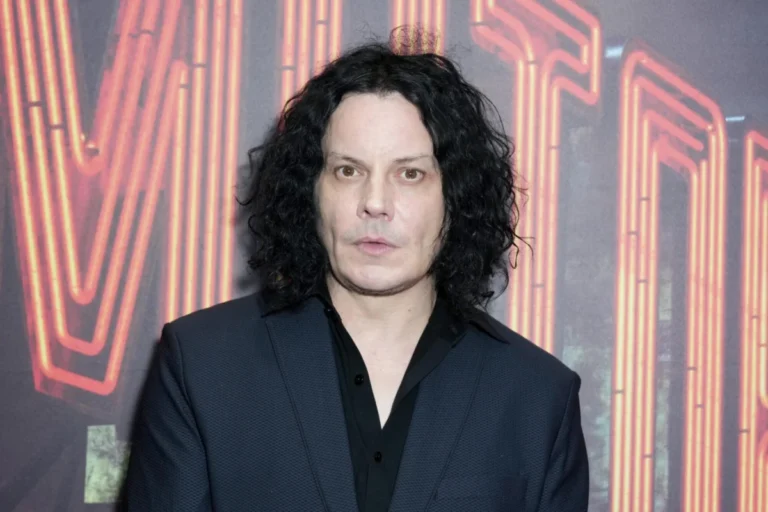



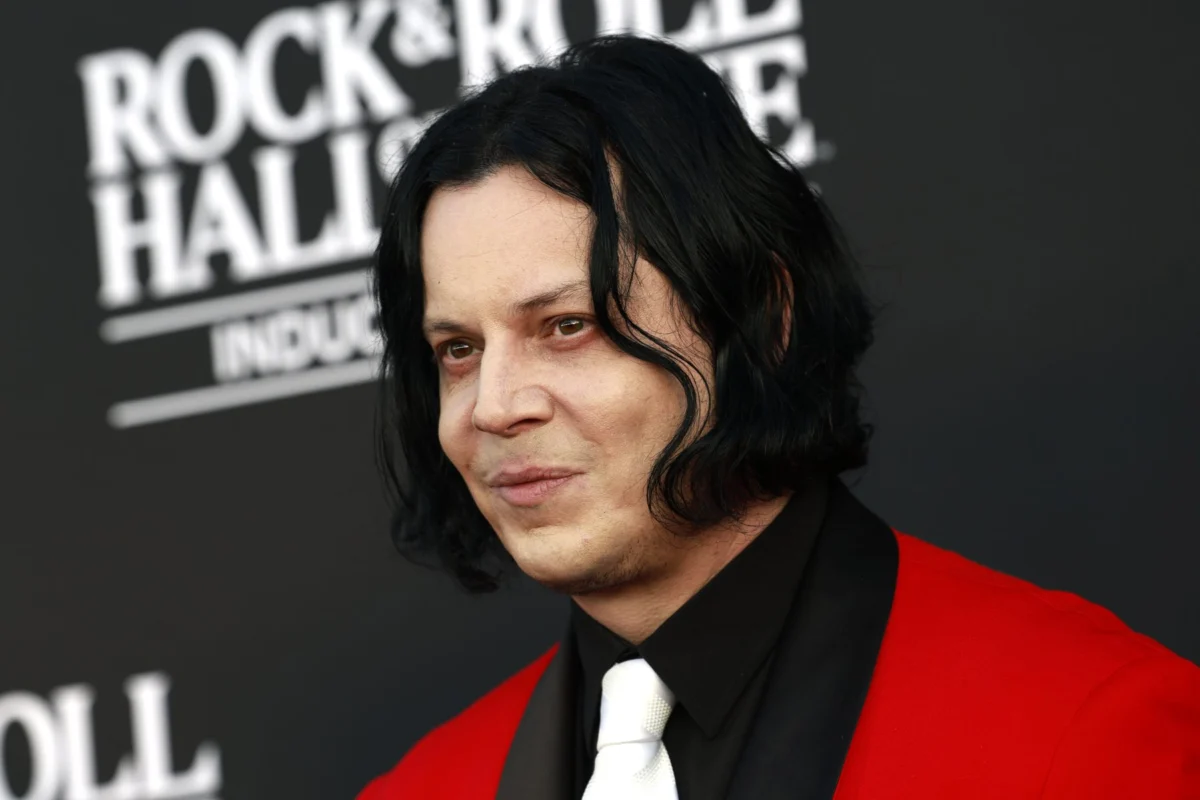
Rock icon Jack White has voiced strong condemnation over the conclusion of Stephen Colbert’s tenure as host of "The Late Show," labeling the development a "ridiculous" act of political censorship by a president’s ego. White’s impassioned statement, shared across social media platforms, directly criticizes the perceived interference that he believes led to the premature end of the critically acclaimed talk show, which aired its final episode on Thursday, May 21.
The musician, a prominent critic of former President Donald Trump, expressed solidarity with Colbert, calling for a "standing ovation" for the satirist. "God Bless Stephen," White wrote, "it is absolutely ridiculous that we live in a country where a President’s ego can vindictively censor network television…..and nobody stops him." He urged Colbert to continue his impactful work, stating, "Carry on down your new paths with your head held high sir. You’ve told the truth and given us so much to laugh at, and we’re expecting even more in the future. Thank you."
Colbert’s departure marks the end of an 11-year run that cemented his status as a leading voice in late-night television, particularly for his sharp political commentary and his unflinching critiques of the Trump administration and the MAGA movement. The final broadcast featured a star-studded lineup, including legendary musician Paul McCartney, underscoring the show’s significant cultural impact. However, the sentiment shared by White is echoed by other notable figures, including political commentator Robert Reich, Senator Elizabeth Warren, and Wednesday night’s guest, Bruce Springsteen, who also contend that "The Late Show" was effectively canceled under a shadow of political pressure rather than solely for financial reasons.
The Unfolding Narrative: A Timeline of Allegations and Departures
The narrative surrounding the conclusion of "The Late Show" has been building for some time, with mounting accusations of political interference. While CBS officially cited financial losses as the reason for the show’s cancellation in 2025, many progressive commentators and observers have pointed to the timing of the decision as highly suspect.
The critical juncture appears to have been Colbert’s pointed criticism of CBS’s parent company, Paramount, and its $16 million legal settlement with Donald Trump. This settlement occurred at a particularly sensitive moment for Paramount, which was navigating a potential merger deal that faced scrutiny from U.S. authorities. Colbert’s public stance on the settlement, which he viewed as a capitulation to political pressure, is believed by many to have placed him in direct conflict with powerful interests.
In late 2025, Donald Trump himself launched a series of public attacks on Colbert via his Truth Social platform. In these posts, Trump called on CBS to "put him to sleep" and labeled Colbert a "pathetic trainwreck" and a "dead man walking." These strong, personal attacks from a sitting president against a television host are unprecedented and have fueled the allegations of a politically motivated silencing.
Bruce Springsteen, who appeared on the second-to-last episode of "The Late Show," directly addressed this perceived censorship. "I am here tonight to support Stephen," Springsteen remarked, "because you’re the first guy in America who lost his show because we’ve got a president who can’t take a joke." His statement directly links Colbert’s ouster to the former president’s perceived intolerance for criticism.
Beyond the Headlines: Context and Supporting Evidence
The debate over "The Late Show’s" cancellation is not merely about a single television program but touches upon broader concerns about freedom of the press, the influence of political power on media, and the role of satire in a democratic society.
Stephen Colbert’s "The Late Show" had, for years, become a significant platform for political commentary and critique. His monologues frequently dissected political events, challenged policy decisions, and offered a satirical lens through which to view the often tumultuous landscape of American politics. His willingness to directly confront and criticize powerful figures, including the former president, earned him a dedicated audience and widespread acclaim from those who valued his candor.

The financial performance of late-night shows, while always a factor, has historically been subject to the broader economic health of the broadcast networks and their parent companies. Allegations of cancellation due to financial losses, when juxtaposed with the intense political scrutiny Colbert faced, raise questions about whether financial performance was the sole or primary driver of the decision. In a competitive media landscape, networks often absorb short-term financial fluctuations to maintain popular and influential programming.
The timing of the cancellation, following Colbert’s critical stance on the Paramount settlement and amidst direct attacks from the former president, provides a compelling circumstantial case for political motivation. The argument suggests that the threat of continued political fallout, or the desire to avoid further entanglement in politically charged controversies, may have led CBS and Paramount to sever ties with Colbert, irrespective of the show’s financial viability.
Reactions and Perspectives: A Chorus of Concern
The sentiments expressed by Jack White and Bruce Springsteen are not isolated incidents. Many within the entertainment and political spheres have voiced similar concerns. Robert Reich, a former Secretary of Labor and a prominent progressive commentator, has consistently argued that Colbert’s show was a casualty of political retaliation. Senator Elizabeth Warren, a vocal critic of Trump’s administration, has also been a public supporter of Colbert and has expressed dismay at the circumstances surrounding the show’s conclusion.
The impact of "The Late Show" extended beyond entertainment. For many, Colbert’s show served as a vital source of information and a space for processing complex political events through humor and critical analysis. Its cancellation, therefore, represents a perceived loss for public discourse and a chilling effect on journalistic and comedic expression.
Broader Implications: The Future of Satire and Media Independence
The controversy surrounding "The Late Show’s" conclusion raises critical questions about the future of political satire and the independence of media outlets in the face of political pressure.
Freedom of Speech and Press: The core of the debate lies in the principle of freedom of speech and the press. If a prominent television host can be effectively silenced due to criticism of powerful political figures or their associated entities, it sets a dangerous precedent for the future of open discourse. The ability of media to hold power accountable, even through satire, is a cornerstone of a healthy democracy.
Media Ownership and Accountability: The influence of large media conglomerates and their financial interests can intersect with political power. The alleged pressure on CBS and Paramount highlights the vulnerability of media outlets to external forces that may prioritize political expediency or financial stability over journalistic integrity or the continuation of impactful programming.
The Role of Satire: Political satire has a long and storied history in shaping public opinion and challenging authority. Shows like "The Late Show" provide a valuable service by distilling complex issues into accessible and often humorous formats, encouraging critical thinking and engagement among viewers. The perceived silencing of such a prominent voice could lead to a less robust and less critical public sphere.
The conclusion of Stephen Colbert’s "The Late Show" is more than just the end of a popular television program; it is a focal point in an ongoing conversation about the delicate balance between media independence, political influence, and the vital role of critical commentary in contemporary society. As Jack White’s statement powerfully articulates, the question remains whether such instances of perceived "vindictive censorship" will be effectively challenged and prevented in the future. The enduring legacy of Colbert’s show, and the controversy surrounding its end, will likely continue to be debated as a significant moment in the intersection of media, politics, and public discourse.