

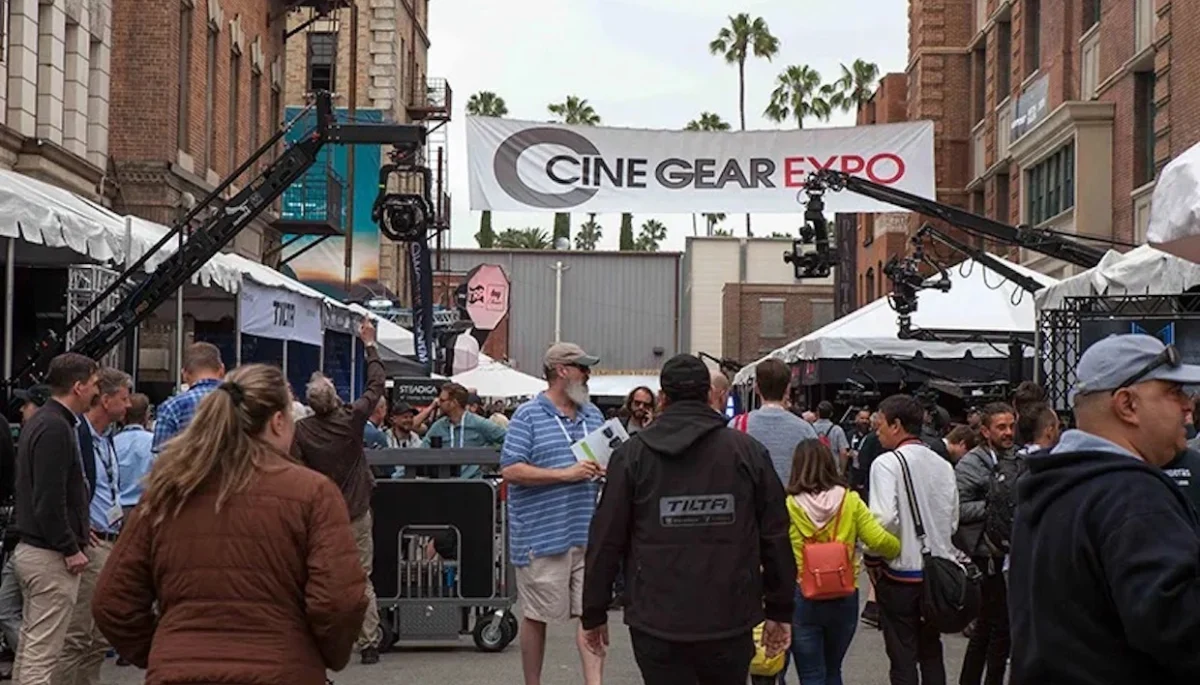
The modern entertainment technology landscape is often defined by rapid digitization, cloud-based workflows, and the steady encroachment of virtual production systems. Yet, against this backdrop of shifting industry standards, the annual Cine Gear Expo continues to serve as a vital anchor for the traditional filmmaking community. Held over two sun-drenched days on the expansive Universal Studios Lot, the 2026 edition of the event drew thousands of cinematographers, gaffers, lighting technicians, and equipment manufacturers. Unlike the sprawling, multi-industry scope of events like the NAB Show—which frequently inspire existential debates regarding cinema’s diminishing footprint relative to other video sectors—Cine Gear maintains an unyielding focus on the craft of feature filmmaking. The event blends technical exhibitions with the distinct camaraderie of the Los Angeles freelance and union production community, offering a comprehensive snapshot of where the motion picture industry stands today.
Background and Historical Context of Cine Gear Expo
Founded over 25 years ago, Cine Gear Expo has evolved from a modest Los Angeles gathering into the premier annual trade show for the art and technology of professional cinematography and lighting. Originally established to bridge the gap between emerging technology developers and working film professionals, the expo has historically rotated through legendary studio backlots, including previous stints at the Warner Bros. lot in Burbank. This studio-centric environment differentiates Cine Gear from conventional convention centers, allowing attendees to test high-end optics and lighting arrays directly within authentic production environments.
Over the past decade, the event has navigated monumental shifts in the industry, including the transition from physical celluloid to digital sensors, the explosive growth of LED lighting technology, and the recent post-strike economic recovery of Hollywood’s production ecosystem. As the industry faces ongoing financial restructuring and evolving distribution models, Cine Gear 2026 underscored an overarching theme: the simultaneous pursuit of cutting-edge digital capabilities and a fervent revival of analog workflows.
The Opening Day Landscape: Emerging Talent and Industry Demographics
Opening morning on the Universal Studios Lot revealed an energetic demographic mix. While the early-bird crowd heavily featured film school undergraduates and early-career freelancers—buoyed by the independent success of recent breakout projects—the weekend schedule steadily drew seasoned union professionals, including card-carrying members of International Alliance of Theatrical Stage Employees (IATSE) Local 728 and Local 600.
Independent filmmaker Alec Moeller, reflecting a sentiment shared by many attendees who prioritize simplicity, approached the exhibition floor from an ethnographic perspective. Rather than searching for the latest computational stabilization tools or high-output digital fixtures, many independent creators spent Friday examining the practical applications of vintage glass and naturalistic lighting systems. This generational juxtaposition highlighted a dual track within contemporary filmmaking: a younger generation inspired by tactile, narrative-driven aesthetics operating alongside veteran crews managing massive, highly technical studio productions.
ASC Panels and the Theoretical Underpinnings of Cinematography
A central fixture of the expo is its high-profile educational programming, highlighted by the annual American Society of Cinematographers (ASC) panel. The 2026 panel featured a massive roster of 15 ASC members—including industry luminaries Jeff Cronenweth, Rachel Morrison, Karl Walter Lindenlaub, and Natasha Braier—who offered insights into the philosophy and execution of modern cinematography.
The session opened with a retrospective montage celebrating more than a century of ASC contributions to visual storytelling, featuring landmark works such as John Toll’s Oscar-nominated cinematography on The Thin Red Line (1998). Given the size of the panel, individual speaking times were brief, yet the collective statements provided profound conceptual insights. Panelist Steven Fierberg emphasized the importance of physical intuition on set, stating that a camera’s placement should often be dictated by physical presence rather than rigid intellectualization. Meanwhile, Natasha Braier discussed how her upbringing under a military dictatorship in Argentina, combined with a family background in psychoanalysis, informs her ability to translate unconscious subtext into visual language.
Lighting Innovations: Evolution of LED Systems and Console Control
On the hardware and grip front, technological advancements continue to accelerate at a pace unseen during the decades-long dominance of tungsten, HMI, and fluorescent lighting. Drew Moe and Jeffrey Taylor, gaffers and co-founders of the boutique rental house Canary Yellow, spent the expo evaluating new products to expand their rental fleet. According to Moe, the annual iteration of LED chipsets and proprietary color engines—such as Aputure’s Blair CG color engine—has fundamentally transformed on-set lighting design, offering unprecedented color fidelity and thermal efficiency.
Workflow integration also took a major leap forward in the lighting control sector. Ian Peterson showcased the upcoming V3 update to the Blackout Lighting Console. Representing a significant departure from traditional numerical-value programming, V3 introduces intuitive visual control components operated via iPad interfaces. Industry analysts note that this shift toward graphical, fluid lighting management could redefine console standards upon its commercial release later in the year.
The Renaissance of Analog: Cinelux Sixteen and Hybrid Capture
Perhaps the most talked-about hardware development on the Universal backlot was the ongoing prototype development of the Cinelux Sixteen. Developed over the past two and a half years by a small engineering team at Cinelux Cinema Tools and exhibited at the CSLA rental house booth, the camera represents the first new 16mm film camera designed in years.
Chief Engineer Caz Voorhees outlined the unique hybrid capabilities of the camera, which is engineered to shoot film and digital simultaneously, recording 3.2K digital files to an SD card alongside the physical celluloid capture. The digital files output proxies paired with custom film-emulation LUTs designed to closely mirror the physical footage, an innovation aimed at alleviating producer anxieties regarding processing turnaround times for dailies.
While the digital capture elements—utilizing an existing Sony sensor—proved straightforward to integrate, Voorhees noted that the primary engineering challenge has been the film magazine. Designing a mechanism capable of transporting film smoothly from one side to the other within a tight, friction-free margin of one to two inches has required extensive iterative prototyping. The team plans to release the current third-generation prototype in mid-2027 following two additional design cycles. Furthermore, in an unprecedented move for proprietary camera manufacturing, Cinelux intends to open-source the magazine schematics, allowing users to 3D-print replacement parts in the field.
Optics and the Rebirth of Vintage Glass
The market for high-end cinema lenses remains heavily influenced by the marriage of historical optics and modern digital sensors. Zero Optik, a prominent lens rehousing firm, demonstrated how photography glass relegated to storage for decades has found a lucrative second life in digital cinema. Operations Manager Alex Baxter noted that lenses originally designed without mirror-shutter clearance—such as 1930s and 40s Bausch & Lomb Ultra Baltars, famously utilized by Ed Lachman on El Conde (2023) and Maria (2024)—now serve as premier options for cinematographers seeking organic aberrations and unique character.
Furthermore, Zero Optik’s recent collaboration with the ASC to restore a rare set of 1950s Todd-AO 65mm prime lenses—originally used on Hollywood classics like Oklahoma! (1955) and The Sound of Music (1965)—highlights a broader industry trend toward archival preservation. Rehoused in consultation with cinematographer Greig Fraser to ensure visual consistency, these historic lenses are now available exclusively through Keslow Camera.
Simultaneously, Atlas Lens Co. showcased the ongoing maturation of its anamorphic lens lines. Co-founder Dan Kanes, who transitioned from lighting technician and DIT to pioneering wireless HD video transmitters via Paralinx before establishing Atlas, discussed the engineering philosophy behind the Orion, Mercury, and newly shipping Kaizen series. Designed for large-format sensors such as the Fujifilm GFX Eterna 55, ARRI Alexa 265, and Blackmagic Design URSA Cine 17K, the Kaizen lenses address a historical limitation of vintage anamorphic glass by reducing extreme field curvature, allowing multiple actors to remain in sharp focus across wide frames without peripheral fall-off.
Broader Industry Impact and Implications
Cine Gear Expo 2026 concluded with educational seminars, including an in-depth technical breakdown of complex tracking shots from The Marvelous Mrs. Maisel led by cinematographer M. David Mullen, followed by the traditional industry barbecue at the ASC Clubhouse in Hollywood.
Beyond the immediate networking and equipment demonstrations, the 2026 expo illustrated a mature, bifurcated industry. On one side, software solutions like Blackout V3 and advanced LED color engines demonstrate that digital efficiency and wireless control continue to streamline high-end set operations. On the other side, the heavy investments in vintage lens rehousing, open-source film camera prototyping like the Cinelux Sixteen, and high-format anamorphic glass prove that the market retains a fierce appetite for tactile, analog aesthetics. As production budgets stabilize and technological options multiply, events like Cine Gear remain indispensable barometers for the technical and artistic trajectory of global cinema.