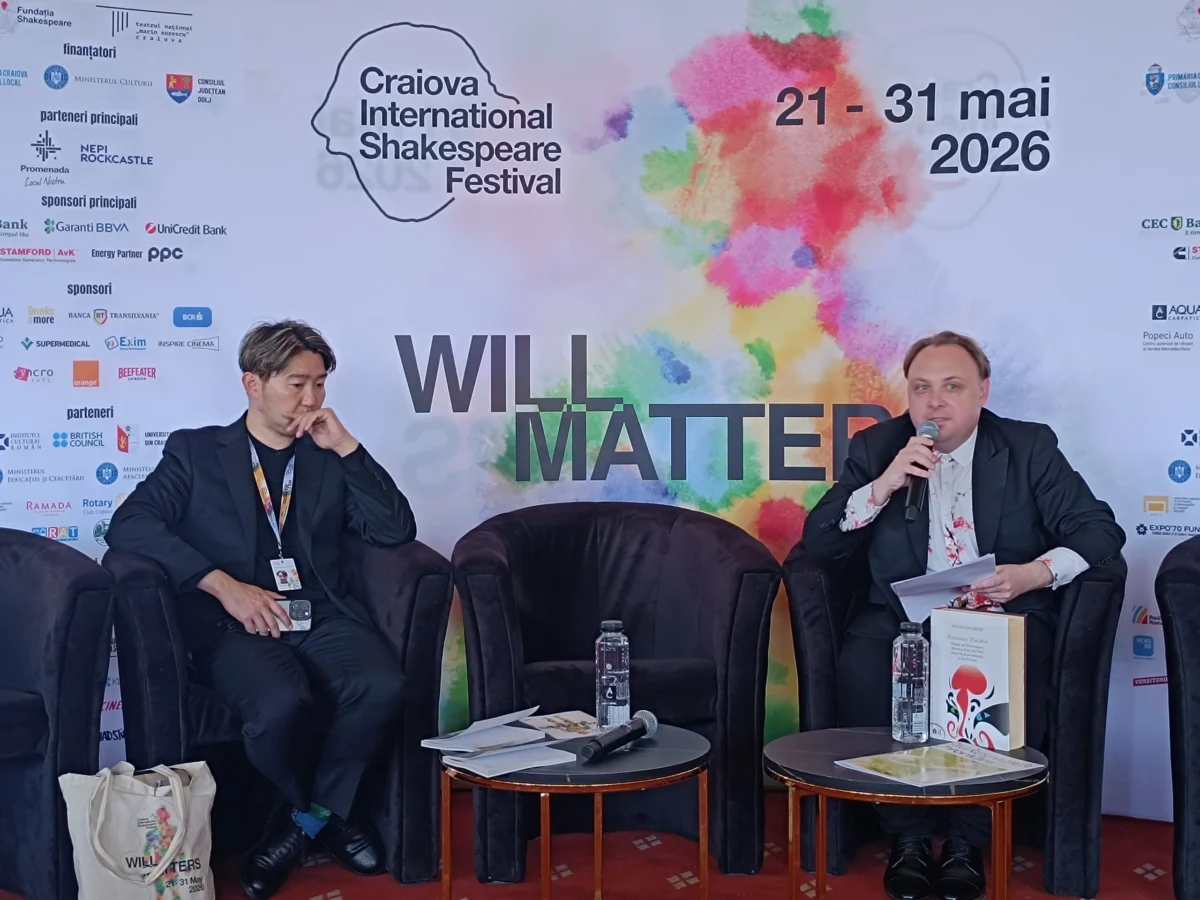
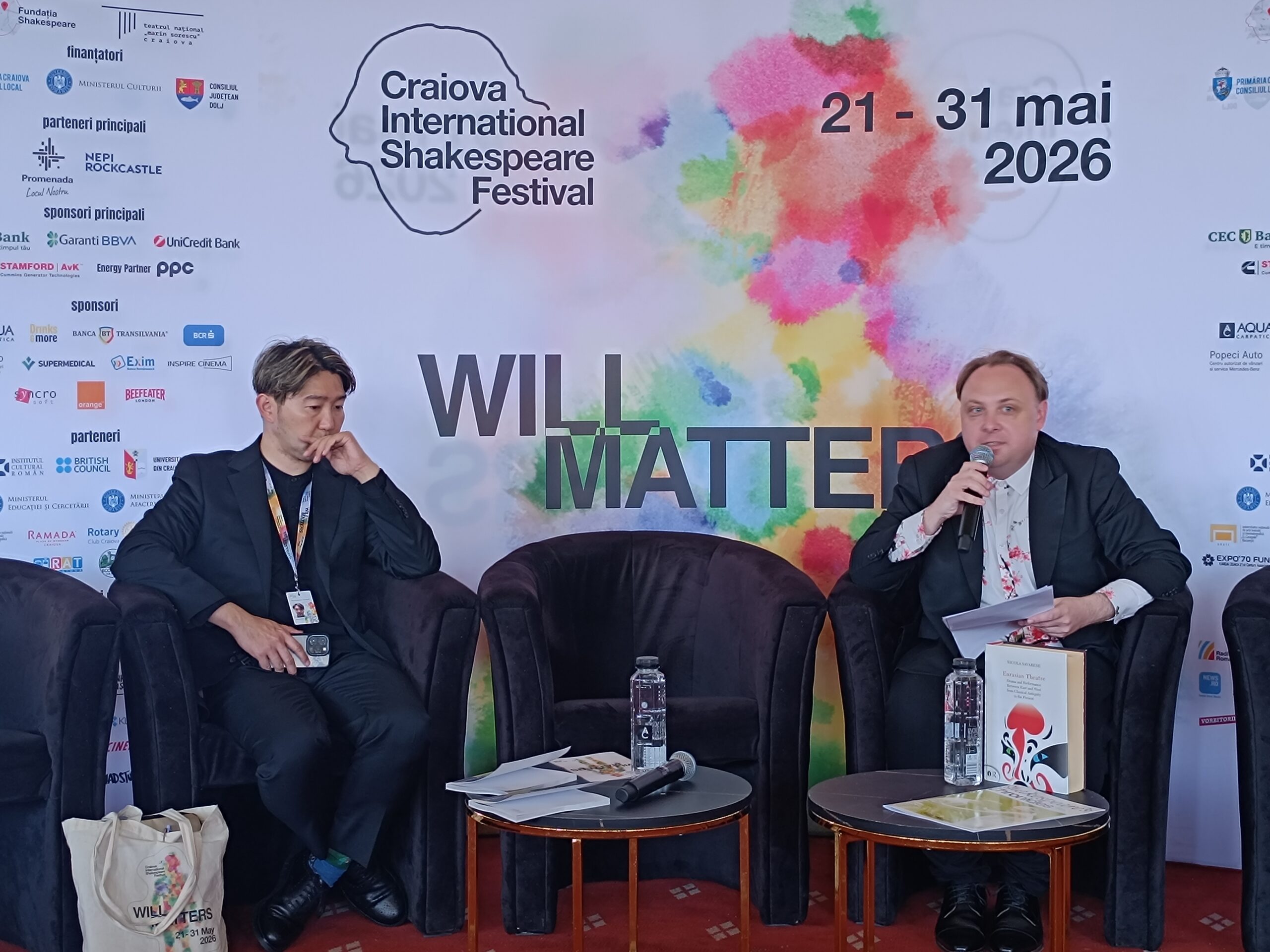
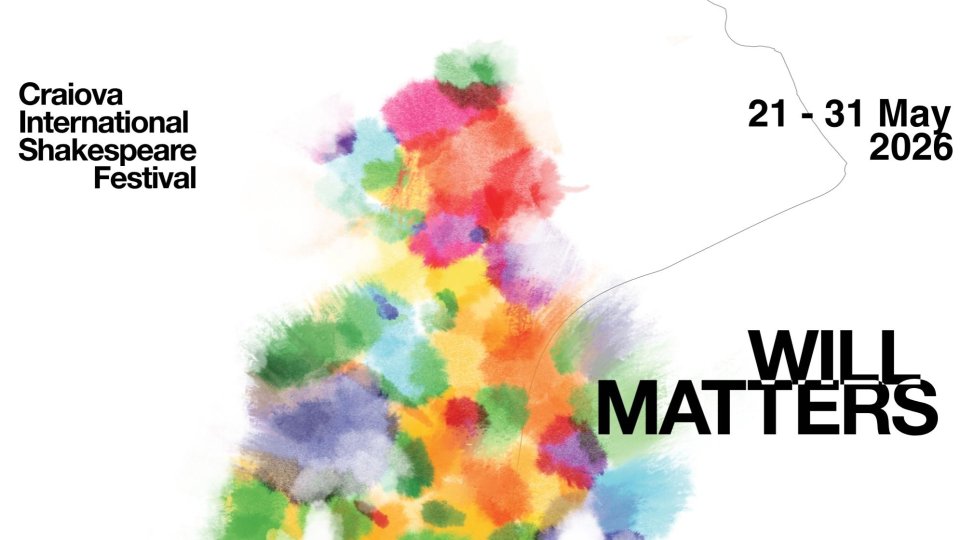
During the prestigious Craiova International Shakespeare Festival, a significant cultural dialogue unfolded as Nikodem Karolak, a prominent cultural mediator with extensive experience bridging Japan and Europe, shared insights into his long-term endeavors with the Inland Dimensions International Arts Network. His address, delivered as part of the festival’s dedicated Japanese contemporary focus – a groundbreaking initiative marking the first time the event’s opening days were devoted to a single nation’s artistic landscape – offered a profound exploration of the intricate processes involved in bringing Japanese stage works to international audiences. This focus, a testament to the festival’s evolving commitment to global cultural exchange, provided an ideal platform for Karolak to articulate the vision and operational philosophy behind Inland Dimensions.
The invitation to present at the Craiova International Shakespeare Festival was described by Karolak as a profound honor, particularly given the festival’s discerning understanding of theatre not merely as a performance or a literary text staged, but as a "living field of encounter." This perspective underscores the dynamic interplay between artists, institutions, historical narratives, linguistic nuances, and diverse systems of imagination that theatre cultivates. His presentation, meticulously titled "InlanDimensions International Arts Network: Arts Management in Japan from a European Perspective and Towards the Eurasian Theatre," meticulously traced the evolution of Inland Dimensions from its origins as a festival held in Poland between 2019 and 2023 to its current standing as a comprehensive international network.
From Polish Festival to Global Network: The Genesis of Inland Dimensions
Karolak, who has been based in Tokyo for the past eight years and possesses fluency in the Japanese language, elaborated on the pivotal role Inland Dimensions now plays as a "pontoon bridge" connecting Japan with other Eurasian cultures. The network’s remit extends far beyond theatre, encompassing a vibrant spectrum of artistic disciplines including cinema, music, literature, dance, visual arts, academic conferences, and collaborative international projects. More than a conventional agency or production company, Karolak characterized Inland Dimensions as a sophisticated curatorial and production platform whose fundamental purpose is rooted in the art of mediation. This distinction highlights a strategic approach that prioritizes fostering understanding and connection over mere logistical facilitation.
Navigating the Nuances of Cross-Cultural Artistic Collaboration
A central theme of Karolak’s discourse revolved around the inherent complexities of engaging with Japanese artists from a European vantage point. He emphasized that the primary obstacle is not linguistic, but rather the subtler, yet more profound, divergences in cognitive processes, social assimilation patterns, institutional cultures, and deeply ingrained expectations. The role of an overseas producer for a Japanese theatre troupe, musical ensemble, or filmmaker, Karolak explained, transcends the responsibilities of a simple booking agent. It necessitates an unwavering commitment, comprehensive language support, adept organizational assistance, significant emotional labor, and the crucial ability to cultivate trust among individuals who may operate within vastly different linguistic frameworks and cultural paradigms. This multifaceted approach underscores the demanding yet rewarding nature of his work.
The foundational experiences that propelled Karolak into this specialized field date back to 2016. While still a student, he played a supportive role in bringing Tadashi Suzuki’s seminal production of "The Trojan Women" to the Theatre Olympics in Wroclaw, hosted at the esteemed Grotowski Institute. This transformative encounter served as a bedrock for the subsequent establishment of InlanDimensions. The network’s evocative name, Karolak explained, directly reflects his personal journey and ongoing engagement within what he terms "Eurasian theatre," a concept that acknowledges the fluid and interconnected nature of artistic traditions across the vast continental expanse.
Deconstructing "Asia": A Call for Specificity in Cultural Dialogue
One of the most intellectually stimulating assertions presented by Karolak was his provocative statement that "Asia does not exist." He clarified that this declaration was not a denial of the tangible reality of Asian cultures, but rather a critical challenge to the often vague, monolithic, and occasionally Orientalist conceptualizations that characterize discussions about the continent. Karolak posited that when engaging in discourse about Asian theatre, a commitment to specificity is paramount. He argued that distinct forms such as Japanese Noh theatre, traditional Korean performance, the work of contemporary Japanese directors like Ryunosuke Kimura, the vibrant underground theatre scene, or localized regional traditions each operate according to unique historical trajectories and distinct systemic frameworks. To aggregate these diverse practices under a single, generalized label, he contended, serves to obscure rather than illuminate their individual richness and complexity. This call for specificity is crucial for fostering genuine understanding and avoiding the perpetuation of stereotypes.
Echoes of Antiquity: Ancient Exchange in the Modern Era
Karolak adeptly connected the contemporary landscape of international theatre to the historical currents of cultural exchange that have long traversed the Eurasian continent. He referenced the ancient routes through which performance techniques, sacred rituals, and artistic languages migrated across vast distances, citing the historical movement of Greek theatrical elements eastward towards India as a salient example. For Karolak, the mechanisms of today’s global artistic landscape – including international festivals, artist residencies, digital communication platforms, complex funding structures, and co-production agreements – represent a continuation of this ancient principle of artistic migration, albeit facilitated by vastly different technological and logistical means. This historical perspective adds significant depth to his understanding of contemporary cultural diplomacy.
Personal Journeys: Resilience in the Face of Catastrophe
The narrative of Karolak’s involvement in Japanese arts took a deeply personal turn as he recounted his initial arrival in Japan on March 11, 2011, the very day the Great East Japan Earthquake struck. His first experience entering a Japanese family home coincided with the onset of this devastating natural disaster, a profoundly formative event that shaped his nascent relationship with the country. He later returned to Japan to pursue his studies, initially driven by a fervent fascination with Japanese cinema, before theatre ultimately emerged as the central focus of his professional life. This personal connection imbues his work with a unique sense of purpose and empathy.
The Legacy of Avant-Garde: Terayama, Kantor, and Transnational Influence
Karolak’s immersion into the world of Japanese underground theatre was significantly influenced by the visionary director Shuji Terayama. During his student years, Karolak visited Terayama’s grave on the anniversary of his passing, where he serendipitously encountered members of the director’s family and surviving collaborators. Following his exposure to the work of the Ban’yū Inryoku Laboratory Theatre, Karolak made a solemn promise: should he ever assume a curatorial or directorial role, he would endeavor to bring the company to Poland. This commitment was realized when their impactful production served as the opening act of the Inland Dimensions Festival in 2019, a poignant fulfillment of a decade-old pledge.
Furthermore, Karolak illuminated the profound historical ties between Japanese and Polish avant-garde theatre, specifically highlighting the influential connection between Terayama and the renowned Polish theatre director Tadeusz Kantor. According to Karolak, Kantor became an artist of immense significance not only for Japanese theatre practitioners but also for influential dancers and creators such as Saburo Teshigawara. Concurrently, the celebrated Polish filmmaker Andrzej Wajda holds a similarly pivotal position within Japanese discussions concerning cinema, underscoring a rich, bidirectional artistic dialogue.
The Art of Translation: Beyond Linguistic Barriers
Karolak employed these historical and personal examples to elucidate the overarching mission of InlanDimensions. The network’s objective extends far beyond the mere presentation of Japanese artists in Europe or their European counterparts in Asia. Instead, InlanDimensions actively endeavors to translate not only between languages but also between differing institutional cultures, production methodologies, aesthetic expectations, technical assumptions, and artistic sensibilities. In this nuanced understanding, translation transcends its purely linguistic definition to encompass psychological, structural, and temporal dimensions, fostering a more holistic form of cross-cultural comprehension.
Practical Realities: The Producer as Architect of Artistic Possibility
The practical challenges inherent in such cross-cultural endeavors are substantial. Karolak candidly discussed the arduous process of cultivating mutual trust within the Japanese context, a task that can often require years of dedicated effort. He cited his protracted relationship with Ryunosuke Kimura and the considerable obstacles encountered in bringing a complex production like "Titus Andronicus" to Romania, particularly in the wake of pandemic-related disruptions that had previously impacted versions of the production. The freelance nature of employment for many Japanese actors, rather than their permanent affiliation with specific theatre institutions, introduces significant fragility into scheduling, funding acquisition, and international touring logistics.
Consequently, Karolak articulated a redefined understanding of the producer’s role. For him, a producer is not solely an individual responsible for financial management or logistical coordination. Rather, the producer acts as the architect of the conditions under which artistic creation can flourish. This comprehensive role involves conceptualizing projects, assembling production teams, securing vital funding, negotiating complex agreements with venues and institutions, meticulously managing schedules, orchestrating publicity campaigns, overseeing intricate technical processes, adeptly navigating crises, and, crucially, forging pathways between the artistic work and its intended audience. This holistic perspective elevates the producer to a central figure in the realization of artistic visions.
Adapting to a New Landscape: Post-Pandemic Production Strategies
Karolak also observed that the global pandemic has instigated a fundamental shift in the operational paradigms of many Japanese artists and producers. Previously, there was often an implicit assumption that a project’s trajectory was linear and singular. However, Karolak believes that there is now a heightened awareness of the necessity to maintain multiple strategic pathways and an imperative to adapt to diverse technical, financial, and institutional realities. This adaptive approach is crucial for ensuring the resilience and viability of artistic projects in an increasingly unpredictable global environment.
The Essence of Japanese Theatre: Beyond Words and Towards Embodiment
The discussion also delved into the fundamental divergences between Japanese and European theatrical philosophies. Drawing parallels with Noh, Kabuki, the work of Tadashi Suzuki, and Jerzy Grotowski, Karolak argued that Japanese theatre places a profound emphasis not only on verbal expression but also on the potent semiotics of signs, gestures, masks, physical presence, and what Grotowski termed "wokeness" over mere walking. This deep engagement with the physical and symbolic dimensions of performance, Karolak suggested, is indispensable for a comprehensive understanding of many Japanese stage works. This focus on embodied performance offers a rich avenue for cross-cultural interpretation and appreciation.
Conclusion: Inland Dimensions as a Catalyst for Enduring Connection
Ultimately, Karolak’s insightful presentation framed the endeavors of Inland Dimensions as a sustained act of profound cultural mediation. Its participation in the Craiova International Shakespeare Festival was not merely an exhibition of Japanese artistic talent but a deliberate effort to construct robust bridges between artists, audiences, historical traditions, and working systems that frequently experience challenges in mutual comprehension. In this regard, the festival’s dedicated Japanese focus served as a powerful exemplar of the very kind of meaningful cultural encounter that Inland Dimensions was established to facilitate, underscoring its vital role in fostering a more interconnected and understanding global artistic community. The network’s continued work promises to further enrich the international cultural landscape by championing nuanced cross-cultural dialogue and collaborative artistic exploration.