


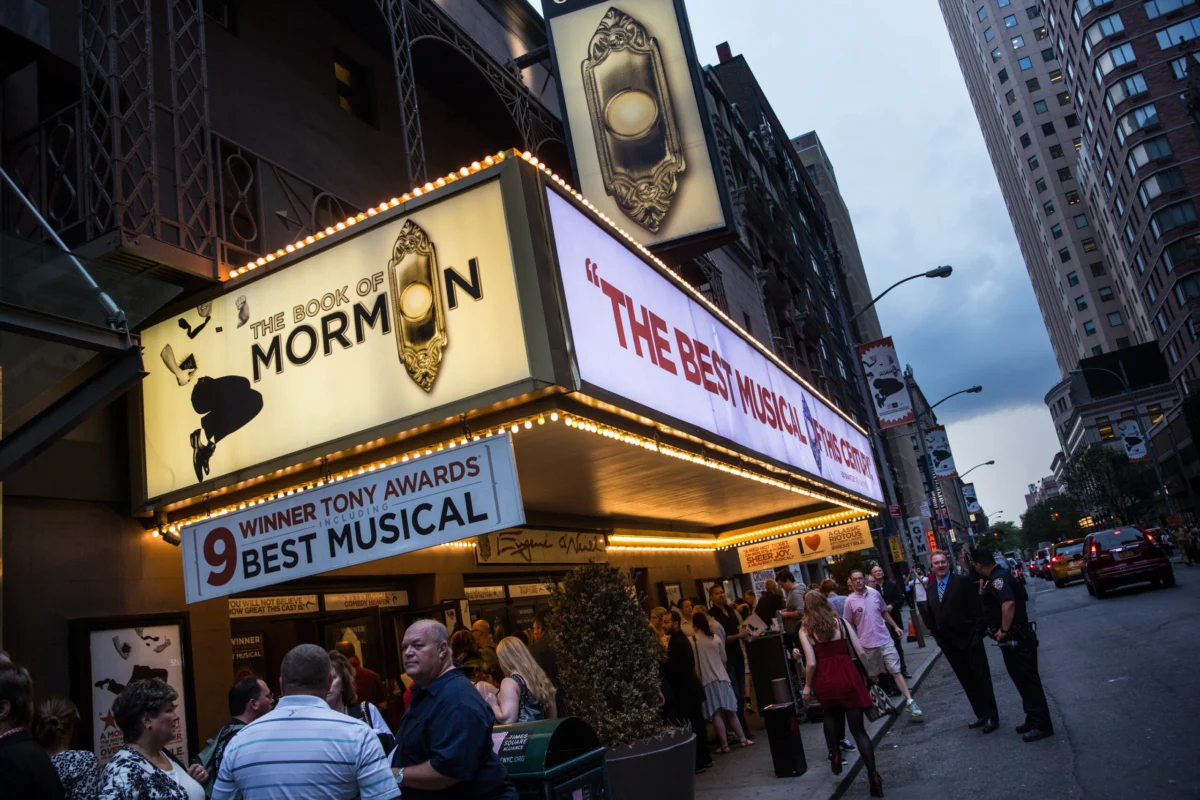
Broadway’s long-running hit, The Book of Mormon, has announced the cancellation of all performances through May 17 after a significant fire erupted at the historic Eugene O’Neill Theater in the early morning hours of May 4. The incident prompted a substantial response from the New York Fire Department (FDNY) and has cast a temporary shadow over one of Broadway’s most enduring productions. While the immediate disruption is considerable, the production has expressed optimism, stating that performances are "anticipated to resume" at the Eugene O’Neill Theater "in the coming weeks," signaling a concerted effort to restore the beloved show to its stage as quickly and safely as possible. This optimistic outlook comes despite initial reports from the FDNY indicating "substantial" damage to the fourth-floor electrical room.
The Incident Unfolds: A Morning Blaze on Broadway
The alarm was first raised at approximately 10:03 a.m. on Monday, May 4, when the New York Fire Department received a report of a fire at 230 West 49th Street, the address of the Eugene O’Neill Theater. The rapid response saw an overwhelming deployment of resources, with 63 FDNY units, comprising 192 firefighters and EMS workers, converging on the scene. Their immediate priority was to ensure the safety of any personnel present within the building. Fortunately, the production confirmed that the building was cleared safely of all personnel, averting a potentially far more serious situation. However, the dangerous nature of firefighting was underscored by the fact that one firefighter sustained injuries while battling the blaze, a stark reminder of the risks involved in emergency response.
Initial assessments by fire department officials, shared at a press conference shortly after the incident, indicated that the primary fire was located in an electrical room situated between the fourth and fifth floors of the theater. This initial conflagration was successfully brought under control. However, firefighters then had to contend with a secondary outbreak of fire, this one between the fifth floor and the roof of the building, which reportedly involved a considerable amount of electrical equipment. The presence of multiple ignition points, particularly involving electrical systems, often complicates firefighting efforts due to the potential for re-ignition and the inherent hazards of live currents. The specific cause of the fire remains under investigation, a standard procedure for incidents of this magnitude, to determine whether it was accidental, electrical fault-related, or stemmed from other factors.
Damage Assessment and Operational Impact
While the FDNY initially described the damage as "substantial" to the fourth-floor electrical room, subsequent clarification from the production on Wednesday offered a more precise scope of the direct impact. According to the production’s statement, the fire was primarily limited to the follow spot booth. This crucial area houses the powerful, specialized lights that are meticulously operated to follow performers across the stage, illuminating them for the audience. The containment of the fire to this specific, albeit vital, operational area, rather than spreading throughout the entire theater structure, suggests that the damage, while significant for immediate operations, may be localized enough to allow for a swifter recovery than initially feared. The follow spot booth, with its intricate electrical wiring and specialized equipment, is naturally a high-energy environment, and any malfunction within such a system can lead to rapid ignition.
The immediate consequence of the fire was the cancellation of performances scheduled for May 5 and 6. This was swiftly followed by the broader announcement extending cancellations through May 17. For a major Broadway production like The Book of Mormon, such a disruption carries substantial logistical and financial implications. Each canceled performance represents a direct loss of revenue from ticket sales, which for a top-tier show can run into hundreds of thousands of dollars per night. Beyond ticket sales, there are also the salaries of the cast, crew, and orchestral members, as well as the numerous administrative and support staff whose livelihoods are tied to the continuous operation of the show.
A Legacy on Broadway: The Show and the Theater
The Book of Mormon is not merely another Broadway show; it is a cultural phenomenon. It officially opened on Broadway on March 24, 2011, quickly establishing itself as a critical and commercial juggernaut. Created by Trey Parker and Matt Stone, the minds behind the animated hit South Park, along with Robert Lopez, co-creator of Avenue Q and co-writer of songs for Disney’s Frozen and Coco, the musical is a satirical yet surprisingly heartfelt exploration of faith, friendship, and cultural differences. Its irreverent humor, sharp wit, and surprisingly traditional musical theater structure earned it widespread acclaim, culminating in nine Tony Awards in 2011, including the coveted Best Musical. Its longevity, having run for over a decade, places it among the pantheon of Broadway’s most successful and enduring productions, consistently drawing packed houses and remaining a significant economic driver for the theater district.
The Eugene O’Neill Theater itself holds a distinguished place in Broadway history. Located in the heart of the Theater District at 230 West 49th Street, it was originally built in 1925 and designed by Herbert J. Krapp, a prolific architect responsible for many of Broadway’s iconic venues. Initially known as the Forrest Theater, it has undergone several name changes and renovations throughout its nearly century-long existence, eventually being renamed in honor of the legendary American playwright Eugene O’Neill in 1959. Owned by Jujamcyn Theaters, one of Broadway’s leading theater owners and operators, the O’Neill has hosted a diverse array of plays and musicals, including notable productions like Spring Awakening, Fela!, and Caroline, or Change, before becoming the long-term home of The Book of Mormon. The building’s age and historical significance mean that maintenance and upgrades to its infrastructure, particularly electrical systems, are ongoing and subject to stringent safety codes.
Broader Implications for the Theater District
The temporary closure of The Book of Mormon extends beyond the immediate confines of the Eugene O’Neill Theater and its production team. Broadway is a cornerstone of New York City’s tourism industry, attracting millions of visitors annually and generating billions in economic activity. A single major show closure, even temporary, creates a ripple effect throughout the surrounding ecosystem. Local restaurants, bars, souvenir shops, hotels, and parking garages all rely heavily on the consistent flow of theatergoers. While The Book of Mormon is just one of dozens of active productions, its high profile and consistent draw mean its absence, however brief, will be felt by these auxiliary businesses.
Furthermore, the incident raises important questions regarding fire safety protocols and infrastructure in historic Broadway theaters. Many of these venues, while meticulously maintained, are decades old, some even over a century. While modern fire suppression systems, alarms, and strict evacuation procedures are mandated and regularly inspected, an electrical fire in an older building serves as a potent reminder of the ongoing challenges in maintaining safety standards. The FDNY’s investigation will not only pinpoint the cause but could also lead to recommendations or reviews of safety measures across other Broadway venues, ensuring the continued safety of audiences and performers alike. The Broadway League, the national trade association for the Broadway industry, consistently emphasizes the paramount importance of safety, working closely with city officials and theater owners to uphold rigorous standards.
Logistical Challenges and Path to Resumption
The path to resuming performances for The Book of Mormon involves navigating a complex web of logistical challenges. First and foremost is the assessment and repair of the damaged follow spot booth and the broader electrical systems affected by the fire. This will require specialized engineers, electricians, and construction teams working in close coordination with theater management and the production. Given the specialized nature of theater equipment and the historic building’s structure, these repairs must be conducted meticulously, not only to restore functionality but also to ensure compliance with all relevant building codes and safety regulations. This process can be time-consuming, requiring permits, inspections, and quality checks at every stage.
Beyond the physical repairs, the production team faces the challenge of rescheduling. Ticket holders for canceled performances will need to be contacted, offered refunds or exchanges, and potentially accommodated for future dates. This involves significant customer service efforts. The cast and crew, who are typically employed on a performance-by-performance basis or under specific contracts, will also need to be managed during the hiatus, with considerations for their pay and readiness for resumption. Rehearsals may be necessary to ensure the show is performance-ready after the break, particularly if any technical elements have been significantly altered or replaced.
The statement that performances are "anticipated to resume in the coming weeks" suggests that the damage, while disruptive, is not catastrophic and that a clear plan for repair and reopening is already being formulated. This rapid assessment and communication are crucial for managing expectations among patrons and stakeholders. The theater industry has shown remarkable resilience, particularly in the wake of the extensive closures during the global pandemic, and there is a collective commitment to overcoming such setbacks. The return of The Book of Mormon will not only signify the resilience of its production but also reaffirm the vibrant, continuous spirit of Broadway.
As investigations continue into the exact cause of the electrical fire at the Eugene O’Neill Theater, the Broadway community watches closely. The priority remains the safety of all involved and the swift, secure return of The Book of Mormon to its rightful place on the New York stage, continuing its celebrated run for many more years to come.