



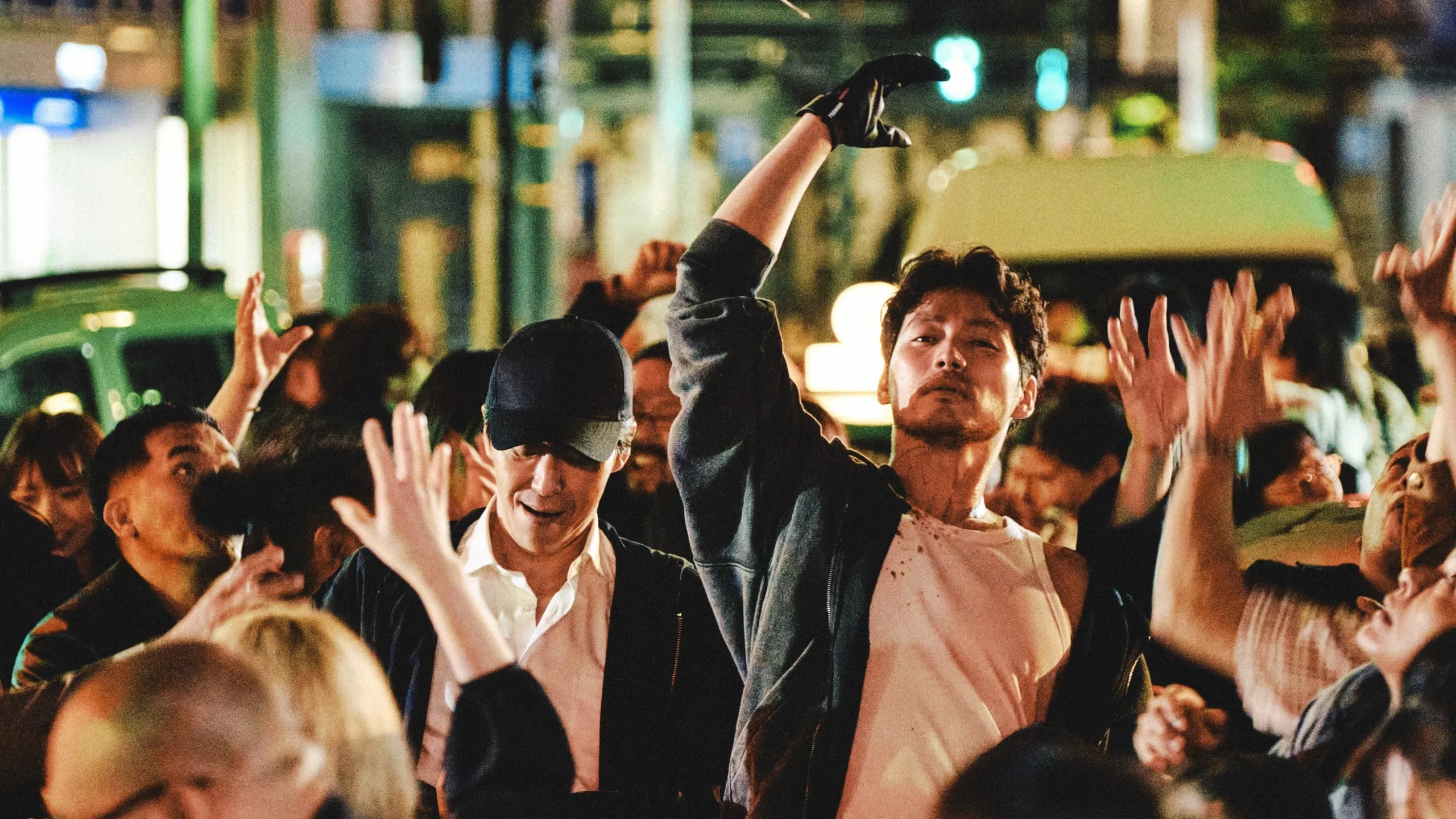
Tokyo, Japan – A gritty new crime thriller, poised to plunge audiences into the neon-drenched underbelly of Shinjuku, has announced its summer 2026 release. Titled The Outlaws, this highly anticipated remake of the acclaimed 2017 South Korean film of the same name, promises to deliver a high-octane blend of law enforcement grit and organized crime warfare. The production is set to explore the volatile landscape of Kabukicho, Tokyo’s infamous entertainment district, where a clash between local yakuza, a powerful host club empire, and a dangerous international syndicate threatens to engulf the city in violence.
At the heart of this brewing storm is rookie detective Shiro Aiba, portrayed by Koshi Mizukami. Aiba, a native of Kabukicho, carries the scars and swagger of his past life as a bosozoku gang leader. This background imbues him with a formidable physical presence and a notoriously quick temper, traits that frequently land him at odds with protocol and his superiors at the Shinjuku Central Police Station. His street-hardened instincts, however, are precisely what make him an unconventional but potentially invaluable asset in the precinct’s fight against escalating crime.
The narrative takes a significant turn with the arrival of Detective Choi Si-woo, played by U-Know, from the Korean National Police. Detective Choi is in Japan on a critical mission: to apprehend a dangerous international crime syndicate operating beyond national borders. The initial encounters between the disciplined, by-the-book Korean detective and the impulsive, street-wise Japanese rookie are fraught with friction. Their differing methodologies and cultural approaches create an immediate and palpable tension, making their forced partnership a central dramatic engine of the film.
However, the looming threat of the international criminals establishing a foothold within Kabukicho’s labyrinthine streets compels Aiba and Choi to set aside their personal animosities. The potential presence of such a formidable transnational organization within the district, known for its complex web of local power structures, necessitates a joint investigation. This uneasy alliance marks the beginning of a precarious collaboration, where the survival of their mission, and potentially the stability of Shinjuku, hinges on their ability to bridge their differences.
Escalating Violence and a Shinjuku Under Siege
The simmering tensions within Kabukicho are ignited by a brazen gang robbery. This violent act triggers a brutal conflict, escalating into an all-out war between a prominent yakuza faction and the district’s most influential host club organization. The rivalry, already volatile, is further complicated by the insidious involvement of the international criminals, who appear to be manipulating the local power struggles for their own nefarious purposes.
As the localized gang war spills into the streets, the scale of the violence rapidly expands. Shinjuku, a district renowned for its dazzling nightlife and bustling commercial activity, transforms into a chaotic battlefield. The narrative hints at a much larger, insidious conspiracy, suggesting that the immediate conflict is merely a symptom of deeper machinations. Powerful figures, operating in the shadows, are implicated, raising questions about the extent of corruption and influence that extends beyond the visible criminal elements. The film is poised to explore the intricate connections between organized crime, the entertainment industry, and potentially even elements within the legitimate business world and government.
The Original "The Outlaws": A Foundation of Success
The 2026 Japanese remake draws its narrative DNA from the critically acclaimed 2017 South Korean film, The Outlaws. Directed by Kang Yoon-sung, the original film was a box office sensation in South Korea, grossing over $56 million USD and becoming the seventh highest-grossing film of the year. It garnered significant critical praise for its raw, unflinching portrayal of crime and its compelling performances, particularly from Ma Dong-seok as the formidable detective Ma Seok-do, whose character serves as the inspiration for Shiro Aiba.
The Outlaws was lauded for its visceral action sequences, dark humor, and its ability to balance intense violence with moments of unexpected levity. The film was inspired by real-life events that occurred in Seoul’s Garibong district in 2007, where a territorial dispute between two Chinese-Korean gangs, the Heuksa and the Paekryun, erupted into widespread violence. The police’s efforts to restore order and apprehend the key figures involved formed the basis of the original film’s compelling narrative. This real-world inspiration lends a layer of authenticity and gravity to the story, suggesting that the Japanese remake will also aim for a grounded, albeit heightened, portrayal of criminal conflict.
Kabukicho: A District of Contrasts and Crime
Kabukicho, often referred to as "Sleepless Town," is Japan’s largest and most notorious entertainment and red-light district. Located in Shinjuku, it boasts a vibrant and complex ecosystem of bars, restaurants, clubs, hotels, and host clubs, alongside a significant presence of organized crime, including the yakuza. The district’s unique character, a blend of dazzling allure and hidden dangers, provides a fertile ground for a crime thriller.
Historically, Kabukicho has been a battleground for various criminal organizations vying for control of its lucrative illicit activities, which range from extortion and gambling to human trafficking and drug distribution. The presence of host clubs, with their often wealthy clientele and substantial cash flow, makes them prime targets for both legitimate and illegitimate business interests. The district’s intricate social dynamics and the blurred lines between legitimate entertainment and criminal enterprises are elements the remake is expected to explore in depth.
The film’s setting in Kabukicho is not merely a backdrop but an integral character in itself. The dense urban environment, with its narrow alleys, brightly lit streets, and hidden establishments, offers a wealth of narrative possibilities for both thrilling action sequences and tense investigative procedurals. The proximity to other major commercial and residential areas in Shinjuku also raises the stakes, as any widespread violence has the potential to disrupt the lives of millions.
Supporting Data and Context
The portrayal of organized crime in Japan, particularly the yakuza, is a well-documented phenomenon. While the yakuza’s influence has seen a decline in recent decades due to stricter anti-organized crime laws and societal shifts, they remain a significant force in certain sectors of the Japanese economy and society. Statistics from the National Police Agency (NPA) have indicated a steady decrease in yakuza membership over the past decade, with figures falling from over 80,000 in the early 2000s to below 25,000 in recent years.
However, this decline in membership does not necessarily equate to a reduction in their operational capacity or influence. The yakuza have shown a remarkable ability to adapt, often shifting their focus to more sophisticated and less visible criminal enterprises, including financial fraud, cybercrime, and the exploitation of legitimate businesses. The international dimension of the crime syndicate in The Outlaws also reflects a growing trend of transnational organized crime, where criminal networks operate across borders, leveraging globalization to their advantage.
The presence of a Korean National Police detective underscores the increasing need for international cooperation in combating modern criminal threats. The shared challenges posed by organized crime, drug trafficking, and terrorism necessitate cross-border collaboration between law enforcement agencies. This aspect of the narrative highlights the evolving nature of law enforcement in the 21st century, where national boundaries are increasingly irrelevant to the operations of criminal enterprises.
Official Responses and Inferred Reactions
While no official statements have been released by the production company regarding specific plot points or casting decisions beyond what is publicly known, the announcement of a summer 2026 release suggests a significant production schedule is underway. Based on the original film’s success and the inherent dramatic potential of the premise, it is reasonable to infer that the filmmakers are aiming for a high-quality production that respects the source material while offering a fresh perspective for a Japanese audience.
One can anticipate that the Shinjuku Central Police Station, as a fictional entity within the film, will be depicted as a hardworking but often overwhelmed law enforcement body grappling with the complexities of modern crime. Detective Aiba’s superiors are likely to be portrayed as individuals who recognize his raw talent but are constantly frustrated by his unconventional methods and his tendency to operate outside the lines.
Similarly, the host club organizations and yakuza groups, while fictionalized, will likely draw upon the well-established tropes and realities of these entities within Kabukicho. The film’s portrayal of these groups will be crucial in shaping audience perception, and it is expected that the production will aim for a balance between sensationalism and a degree of realism, acknowledging their deep-rooted influence in the district.
Broader Impact and Implications
The release of The Outlaws in summer 2026 is likely to generate considerable interest among fans of crime thrillers and action cinema, both domestically and internationally. The remake’s success could pave the way for further cross-cultural collaborations in the film industry, building on the precedent set by the original South Korean film and other successful Asian productions.
From a narrative perspective, the film has the potential to shed light on the persistent challenges of organized crime in urban Japan and the complex dynamics of districts like Kabukicho. By exploring the intersection of local power struggles and international criminal networks, The Outlaws can offer a compelling commentary on the evolving landscape of crime and law enforcement.
The success of the original film suggests that audiences are drawn to gritty, action-packed narratives that feature relatable, albeit flawed, protagonists facing overwhelming odds. The Japanese remake, with its unique cultural setting and its blend of seasoned detective work and raw, street-level action, is well-positioned to capture a significant audience. The film’s exploration of a turbulent summer in Shinjuku, where the fight for control threatens to consume the city, promises a thrilling and thought-provoking cinematic experience. The anticipation for its summer 2026 debut is already building, with expectations high for a powerful and memorable addition to the crime thriller genre.