


The cinematic landscape of 2008 saw the release of a powerful drama that resonated deeply with critics and audiences alike: John Patrick Shanley’s adaptation of his own Pulitzer Prize-winning and Tony Award-winning play, "Doubt: A Parable." Titled simply "Doubt," the film starred an ensemble cast of esteemed actors, including Meryl Streep, Philip Seymour Hoffman, Amy Adams, and Viola Davis. Each delivered Oscar-nominated performances, anchoring a gripping narrative that delved into the complexities of faith, suspicion, and moral authority within the confines of a Catholic school in the Bronx. This retrospective analysis, presented in a spoiler-filled review format, aims to explore the film’s significant contributions to the cinematic year, its critical reception, and its lasting impact.
A Masterclass in Adaptation and Performance
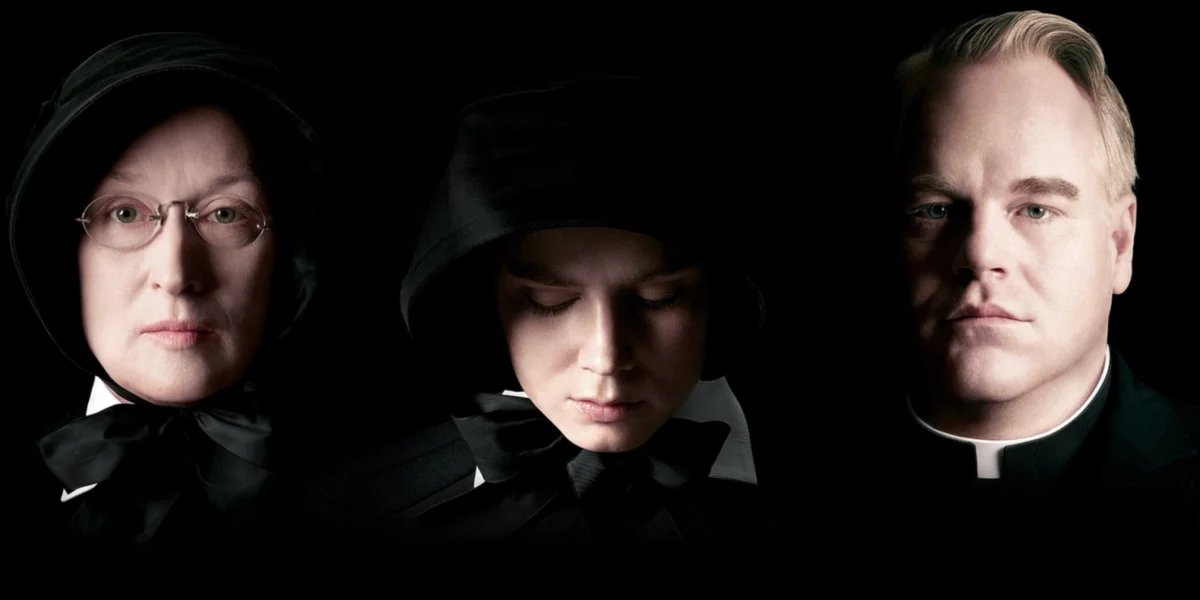
John Patrick Shanley’s directorial debut, "Doubt," marked a significant moment in his career, translating the intense dramatic tension of his 2004 stage play to the screen with remarkable fidelity and cinematic flair. The film’s narrative centers on Sister Aloysius Beauvier (Meryl Streep), a stern nun and principal of St. Nicholas School, who becomes convinced that Father Brendan Flynn (Philip Seymour Hoffman), a charismatic and progressive priest, has engaged in an inappropriate relationship with the school’s first Black student. Her suspicion is fueled by fragments of information and the hushed whispers of other faculty members, most notably Sister James (Amy Adams), a young and impressionable nun, and the victim’s mother, Mrs. Miller (Viola Davis), whose quiet pain and unspoken anxieties become central to the film’s emotional core.
The film’s strength lies in its unwavering focus on the psychological and moral ambiguities at play. Shanley masterfully crafts scenes that are less about definitive proof and more about the corrosive nature of doubt itself. The screenplay, also penned by Shanley, retains the play’s sharp dialogue and carefully constructed dramatic confrontations, allowing the actors ample room to explore the nuances of their characters’ motivations and internal struggles.
The four Academy Award nominations for Best Actress (Streep), Best Supporting Actor (Hoffman), Best Supporting Actress (Adams), and Best Supporting Actress (Davis) underscore the caliber of performances that defined "Doubt." Meryl Streep embodies Sister Aloysius with a formidable presence, portraying her as a woman driven by conviction, yet perhaps blinded by her own rigid adherence to tradition and an unyielding certainty. Philip Seymour Hoffman brings a complex humanity to Father Flynn, imbuing him with both charm and a subtle vulnerability that makes the audience question his guilt or innocence. Amy Adams, in an early career-defining role, captures the youthful idealism and internal conflict of Sister James, a character caught between her admiration for Father Flynn and her respect for Sister Aloysius’s authority. Viola Davis delivers a scene-stealing, albeit brief, performance as Mrs. Miller, her quiet dignity and devastating emotional honesty in a single monologue leaving an indelible mark. This scene alone earned her an Oscar nomination and is widely considered one of the most powerful moments in the film.
Thematic Depth and Critical Acclaim
"Doubt" tackles profound themes that continue to resonate in contemporary society. The central conflict explores the precarious balance between certainty and suspicion, highlighting how deeply held beliefs can lead to both righteous action and devastating misjudgment. The film also delves into the complexities of moral responsibility, particularly within institutional structures that can shield individuals from accountability. The clash between tradition and change is evident in the contrasting philosophies of Sister Aloysius and Father Flynn, representing an older, more austere form of religious observance versus a more compassionate, modern approach.
Upon its release, "Doubt" garnered widespread critical acclaim. The film currently holds an impressive 83% approval rating on Rotten Tomatoes, with critics praising its intelligent screenplay, masterful direction, and, most notably, its exceptional performances. The New York Times hailed it as "a profoundly unsettling film," while Variety commended Shanley for crafting "a potent moral drama." The film’s critical success was further evidenced by its significant presence during the 2008 awards season.
Awards Season Recognition and Impact
The 2008 Academy Awards saw "Doubt" emerge as a strong contender. The film secured six Golden Globe nominations and five BAFTA nominations, in addition to its four Oscar nods. While the film did not take home any Oscars, its nominations were a testament to its artistic merit and the powerful impact of its performances. Meryl Streep’s nomination for Best Actress marked her then-record 15th Academy Award nomination, a remarkable achievement that further solidified her status as one of cinema’s most celebrated actresses. Philip Seymour Hoffman’s nomination for Best Supporting Actor was his third Oscar nomination, and Viola Davis and Amy Adams’s nominations for Best Supporting Actress highlighted their burgeoning talent and the film’s ability to showcase emerging and established stars.

The film’s awards season run, while not resulting in wins, amplified its cultural conversation. It sparked discussions about the nature of accusation, the burden of proof, and the fallibility of human judgment. The ambiguity of the film’s ending, intentionally leaving the audience to grapple with Father Flynn’s guilt, was a deliberate choice by Shanley, designed to provoke thought and underscore the film’s central theme of doubt.
Technical Brilliance and Cinematography
Beyond its performances and thematic depth, "Doubt" also benefited from exceptional technical craftsmanship. The cinematography, overseen by the legendary Roger Deakins, plays a crucial role in establishing the film’s oppressive atmosphere. Deakins’s use of stark lighting and claustrophobic framing within the school’s interiors creates a sense of unease and heightens the psychological tension. The visual language of the film subtly reinforces the characters’ internal states and the moral confines of their world. The production design, by David Gropman, meticulously recreated the period setting, immersing the audience in the early 1960s.
A Legacy of Unanswered Questions
"Doubt" stands as a significant film of the late 2000s, not for its explosive action or grand spectacle, but for its quiet intensity and its willingness to confront uncomfortable truths about human nature and institutional power. The film’s enduring legacy lies in its ability to provoke ongoing debate and introspection. The questions it raises about trust, authority, and the subjective nature of truth remain relevant.
The podcast discussion, featuring hosts and contributors like Aaron Isenstein, Dan Bayer, Cody Dericks, and Tom O’Brien, delves deeply into these elements. Their spoiler-filled review likely dissects the intricate writing, Shanley’s assured direction, the nuanced performances, the evocative cinematography of Roger Deakins, and the film’s journey through the awards circuit. Such detailed analysis is crucial for understanding the film’s intricate construction and its place within the cinematic canon.
The film’s commercial performance, while not reaching blockbuster status, was respectable. "Doubt" grossed over $50 million worldwide against a production budget of approximately $20 million, indicating a solid return and a strong audience appreciation for its mature thematic content and stellar acting.
Broader Impact and Implications
The film’s exploration of allegations within an educational and religious institution carries particular weight. In a post-Me Too era, the themes of unchecked power, the silencing of victims, and the struggle for accountability within hierarchical structures have become even more poignant. "Doubt" serves as a stark reminder of the potential for abuse of power and the importance of due process and the courage to speak out.
The film’s success in translating a stage play to the screen also highlights the enduring power of theatrical storytelling. Shanley’s ability to maintain the intimate, character-driven nature of his play while adapting it for a visual medium is a testament to his skill as both a playwright and a filmmaker.
In conclusion, John Patrick Shanley’s "Doubt" is a masterful cinematic achievement that, fifteen years after its release, continues to provoke thought and discussion. Its exploration of complex moral and ethical questions, anchored by unforgettable performances and expert filmmaking, cements its status as a significant and enduring work of American cinema. The film’s legacy is not in providing easy answers, but in compelling its audience to confront the pervasive and often uncomfortable nature of doubt itself.