


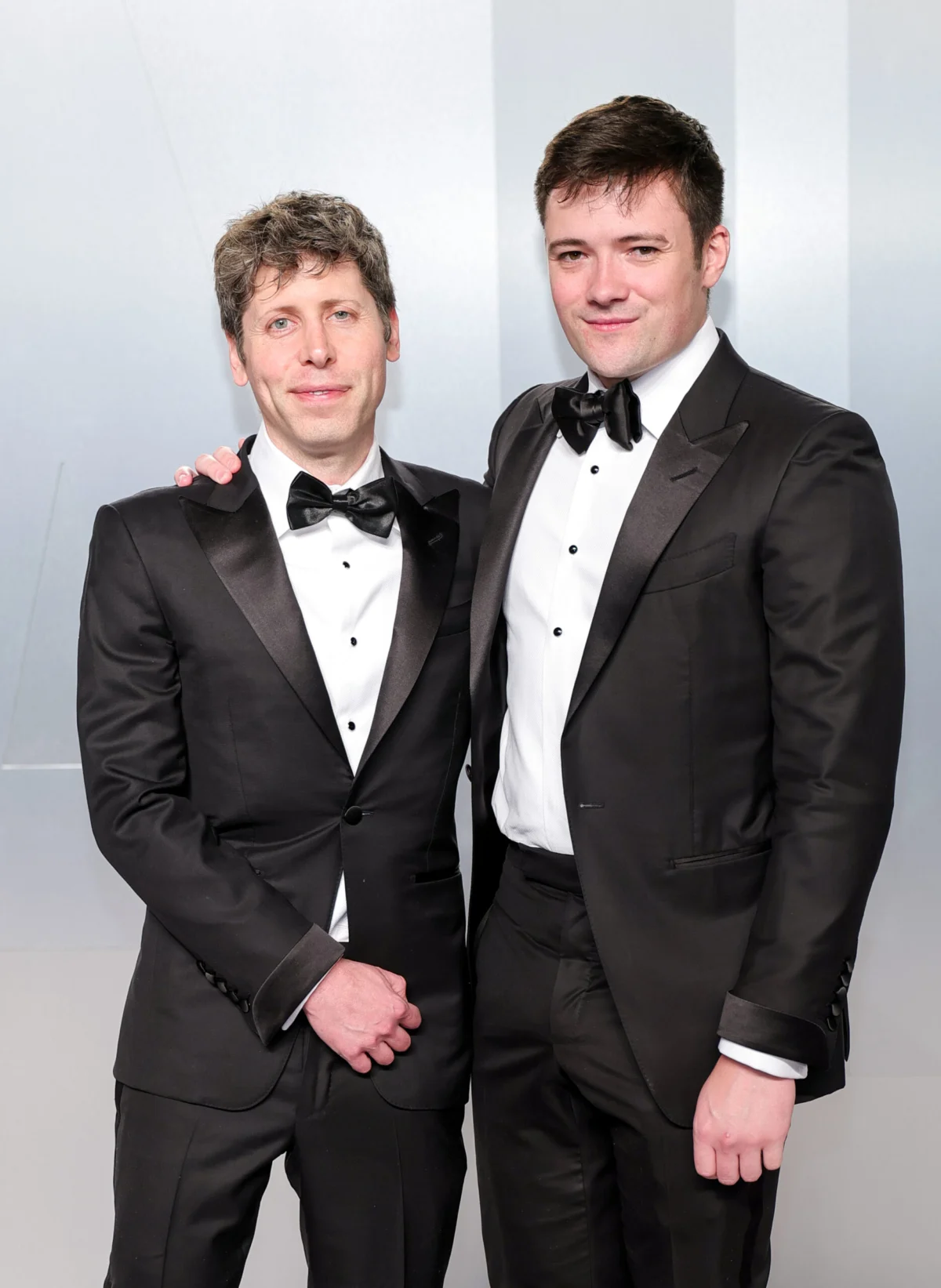
San Francisco law enforcement authorities apprehended an individual on Friday, April 10, 2026, following a disturbing incident involving a Molotov cocktail thrown at the residence of Sam Altman, the high-profile CEO of OpenAI. The arrest came after the suspect allegedly also made threats outside the headquarters of the artificial intelligence pioneering company. The events have sent ripples through the tech community, highlighting the escalating scrutiny and potential dangers faced by leaders at the forefront of transformative technologies.
The Incidents and Immediate Law Enforcement Response
The attack on Altman’s home occurred in the early morning hours, around 3:45 AM, on Friday, April 10. According to Altman’s own account, the incendiary device fortunately bounced off his North Beach residence, preventing any significant damage or injuries. Simultaneously, or in close temporal proximity, the same individual reportedly engaged in threatening behavior outside OpenAI’s corporate offices in San Francisco.
OpenAI swiftly confirmed the incidents in a statement, emphasizing that no injuries were reported. The company expressed profound gratitude for the rapid and effective response from the San Francisco Police Department (SFPD) and the broader support from the city in safeguarding its employees. "The individual is in custody, and we’re assisting law enforcement with their investigation," OpenAI stated, underscoring its cooperation with authorities. The SFPD corroborated these details, releasing a statement via social media confirming an arrest had been made and that no injuries resulted from the incidents. The swift apprehension of the suspect underscores the seriousness with which such threats against prominent public figures and corporate entities are treated.
Sam Altman’s Personal Reflections and Public Statement
Hours after the attack, Sam Altman took to his personal blog to address the unsettling events, coupling his immediate shock with broader reflections on his work and the state of the AI industry. The blog post, titled "2279512" (likely a timestamp or internal reference), opened with a striking personal image of his husband, Oliver Mulherin, and their child, a deliberate choice aimed at deterring future attacks. "Images have power, I hope. Normally we try to be pretty private, but in this case I am sharing a photo in the hopes that it might dissuade the next person from throwing a Molotov cocktail at our house, no matter what they think about me," Altman wrote, revealing the deeply personal impact of the incident. He reiterated that the device bounced off his home and that no one was harmed.
Altman then pivoted to the power of words, directly linking the attack to a recent "incendiary" investigation published in The New Yorker magazine. "Words have power too," he continued. "There was an incendiary article about me a few days ago. Someone said to me yesterday they thought it was coming at a time of great anxiety about AI and that it made things more dangerous for me. I brushed it aside. Now I am awake in the middle of the night and pissed, and thinking that I have underestimated the power of words and narratives." This candid admission revealed a raw vulnerability and a realization of the real-world consequences that intense media scrutiny and public discourse can sometimes precipitate, particularly in a climate of heightened societal anxiety.
However, Altman later walked back his characterization of The New Yorker article on X (formerly Twitter), acknowledging that "incendiary" was a poor word choice. He explained, "That was a bad word choice and i wish i hadn’t used it. It has been a tough day and I am not thinking the most clearly that I ever have." This public retraction, made under evident stress, highlighted the intense pressure he was under and his attempt to manage public perception even amidst a personal crisis. His initial reaction, though, underscored a perceived connection between critical media narratives and potential real-world threats, a concern increasingly voiced by public figures across various sectors.
The Context: The New Yorker Investigation and AI’s Tumultuous Landscape
The "incendiary article" Altman referred to was a comprehensive and critical investigation penned by acclaimed journalists Ronan Farrow and Andrew Marantz, published in The New Yorker just days before the incident. Titled "Sam Altman May Control Our Future. Can He Be Trusted?", the piece delved into Altman’s past business dealings, his leadership style, and the profound implications of OpenAI’s rapidly advancing artificial intelligence technologies. The article reportedly raised questions about the concentration of power within the AI industry, Altman’s personal ambition, and the governance structures designed to ensure AI’s safe and ethical development.

For many, The New Yorker‘s investigation served as a significant journalistic examination of a figure increasingly seen as one of the most influential individuals shaping the future. The article’s critical tone, juxtaposed with the immense public interest and anxiety surrounding AI, created a potent narrative environment. While there is no direct evidence linking the article to the individual’s motivation for the attack, Altman’s immediate personal connection between the two events speaks volumes about the perceived pressure and potential for misinterpretation or extreme reactions from a segment of the public.
This incident unfolds against a backdrop of unprecedented public attention on artificial intelligence. OpenAI’s flagship product, ChatGPT, launched in late 2022, rapidly brought advanced AI capabilities into the mainstream, garnering over 100 million users within months. This widespread adoption ignited both fervent excitement about AI’s potential and deep-seated fears about its risks. Concerns range from job displacement and algorithmic bias to the spread of misinformation and, in the most extreme scenarios, existential threats posed by artificial general intelligence (AGI). The rapid pace of AI development, coupled with its profound societal implications, has fostered an environment where emotions run high, and debates often become highly charged.
Altman’s Broader Vision for AI and OpenAI
In his extensive blog post, Altman used the opportunity to articulate his core beliefs regarding AI, its future, and the mission of OpenAI. He acknowledged the validity of widespread concerns, writing, "the fear and anxiety about AI is justified; we are in the process of witnessing the largest change to society in a long time, and perhaps ever." He stressed the paramount importance of getting AI safety right, which he argued goes beyond mere model alignment, necessitating a "society-wide response to be resilient to new threats." This includes developing new policies to navigate the "difficult economic transition" towards what he envisions as a "much better future."
A central tenet of his philosophy, as reiterated in the post, is the democratization of AI. Altman asserted that "AI has to be democratized; power cannot be concentrated," pushing back against the notion that only a handful of AI labs should dictate "the most consequential decisions about the shape of our future." This stance reflects ongoing debates within the AI community about open-source development versus proprietary control, and the role of government and international bodies in AI governance.
Altman also addressed his tumultuous relationship with the OpenAI board, which famously led to his brief ousting and subsequent reinstatement in late 2023. He expressed regret, stating, "I am not proud of handling myself badly in a conflict with our previous board that led to a huge mess for the company. I have made many other mistakes throughout the insane trajectory of OpenAI; I am a flawed person in the center of an exceptionally complex situation, trying to get a little better each year, always working for the mission." This admission of fallibility, combined with an apology to those he had hurt, provided a rare glimpse into the personal toll of leading a company at the epicenter of a technological revolution.
Despite these challenges, Altman expressed immense pride in OpenAI’s achievements. "Against all odds, we figured out how to build very powerful AI, figured out how to amass enough capital to build the infrastructure to deliver it, figured out how to build a product company and business, figured out how to deliver reasonably safe and robust services at a massive scale, and much more," he wrote. He concluded with a bold claim: "A lot of companies say they are going to change the world; we actually did." This statement, while confident, encapsulates the ambition and perceived impact of OpenAI under his leadership.
Implications for Executive Security and Public Discourse
The Molotov cocktail attack on Sam Altman’s home serves as a stark and unsettling reminder of the growing security challenges faced by high-profile executives, particularly those leading companies at the cutting edge of controversial or transformative technologies. In an era of increasing polarization and intense public scrutiny, the line between strong opinions and dangerous actions can sometimes blur. This incident underscores the need for robust security protocols for leaders whose work often places them in the public eye and at the center of heated debates.
This event also highlights the complex interplay between media reporting, public perception, and individual actions. While journalists have a crucial role in scrutinizing powerful figures and institutions, the heightened emotional climate surrounding AI, combined with the potential for misinterpretation or radicalization of individuals, adds another layer of responsibility to the discourse. The incident forces a reflection on how society can foster critical discussion without inadvertently fueling extremism. The digital age, with its rapid dissemination of information and often anonymous platforms, amplifies both legitimate concerns and unfounded anxieties, making it harder to control narratives and their potential real-world repercussions.
The incident is likely to prompt a re-evaluation of security measures for tech leaders across Silicon Valley and beyond. As AI continues to evolve and integrate more deeply into daily life, the stakes will only grow higher, and with them, potentially the intensity of public reactions. Ensuring the safety of innovators while upholding principles of open dialogue and accountability remains a critical challenge for both law enforcement and the broader societal ecosystem navigating the future of artificial intelligence.