The Archival Challenge: Reconstructing a Fragmented History
The production of the film was necessitated by a significant void in Lebanon’s institutional infrastructure. Unlike many sovereign nations, Lebanon does not possess a centralized, comprehensive national archive or a unified history textbook utilized in its educational system. The National Archives of Lebanon, established in 1978, have long suffered from limited funding, political instability, and the physical ravages of the 15-year civil war. This absence of a formal record has forced artists and historians to rely on private collections and international repositories to piece together the country’s mid-to-late 20th-century narrative.
Daher, a Beirut-based multidisciplinary artist, approached the project not merely as a filmmaker but as a researcher engaging in what she describes as a "hunt" for visual evidence. The lack of a national repository meant that the source material for the film had to be sourced from 106 different fiction and documentary features produced between 1958 and the present day. This extensive search resulted in the acquisition of over 20,000 audiovisual fragments, including rare home videos dating as far back as 1928.
Technical Production and Data-Driven Research
The scale of the archival research for the film was immense, reflecting the complexities of Lebanese property and intellectual rights. The production team cleared approximately 400 separate rights contracts to secure the footage used in the final cut. Despite the vast amount of material collected—occupying multiple hard drives and spanning various formats from 16mm film to digital broadcasts—only roughly seven percent of the researched material was included in the final 76-minute edit.
The film’s sonic landscape is equally researched, transitioning from traditional Middle Eastern compositions to contemporary hip-hop and the pop music of the Bendaly Family, a popular Lebanese band from the 1970s. The title of the film itself is a direct reference to a song by the Bendaly Family, highlighting the role of music as a vehicle for memory and a constant presence during times of conflict.
Collaborative Vision and Editing Philosophy
A critical component of the film’s development was the collaboration between Daher and the Paris-based Syrian editor Qutaiba Barhamji. Barhamji, known for his work on high-profile documentaries such as the Oscar-nominated The Voice of Hind Rajab (2025) and Kaouther Ben Hania’s Four Daughters (2023), brought an external perspective to the project. This distance was intentional; Daher sought an editor who was not emotionally tethered to the specific traumas of Lebanese history, ensuring that the final edit resonated on a universal level rather than solely as a local testimonial.
The editing process, which spanned several years, was guided by a set of rigorous creative constraints:
- No Linear Chronology: The film rejects a traditional timeline, mirroring the disorienting nature of trauma and the cyclical pattern of Lebanese history.
- Exclusion of Politicians: In a departure from conventional political documentaries, no Lebanese politicians are featured on screen or in the audio track. This choice centers the narrative on the experiences of civilians, intellectuals, and artists.
- Deconstruction of Scenes: The filmmakers avoided using full, uninterrupted scenes from existing works, instead opting to fragment and recombine shots to create new thematic associations.
Historical and Political Underpinnings
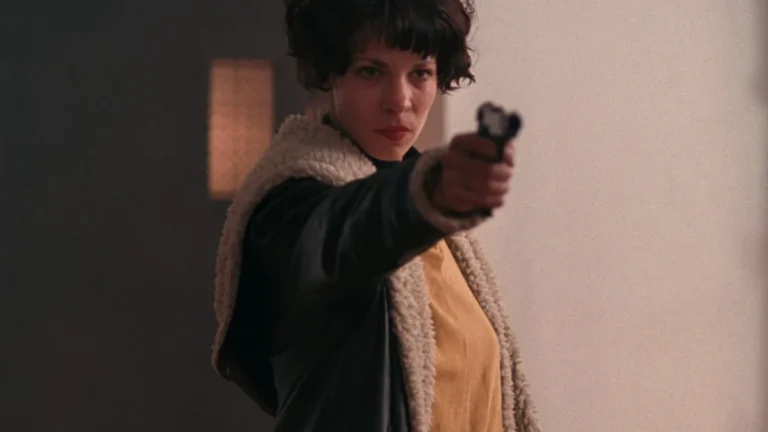
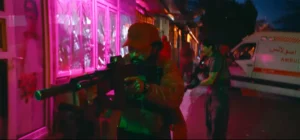
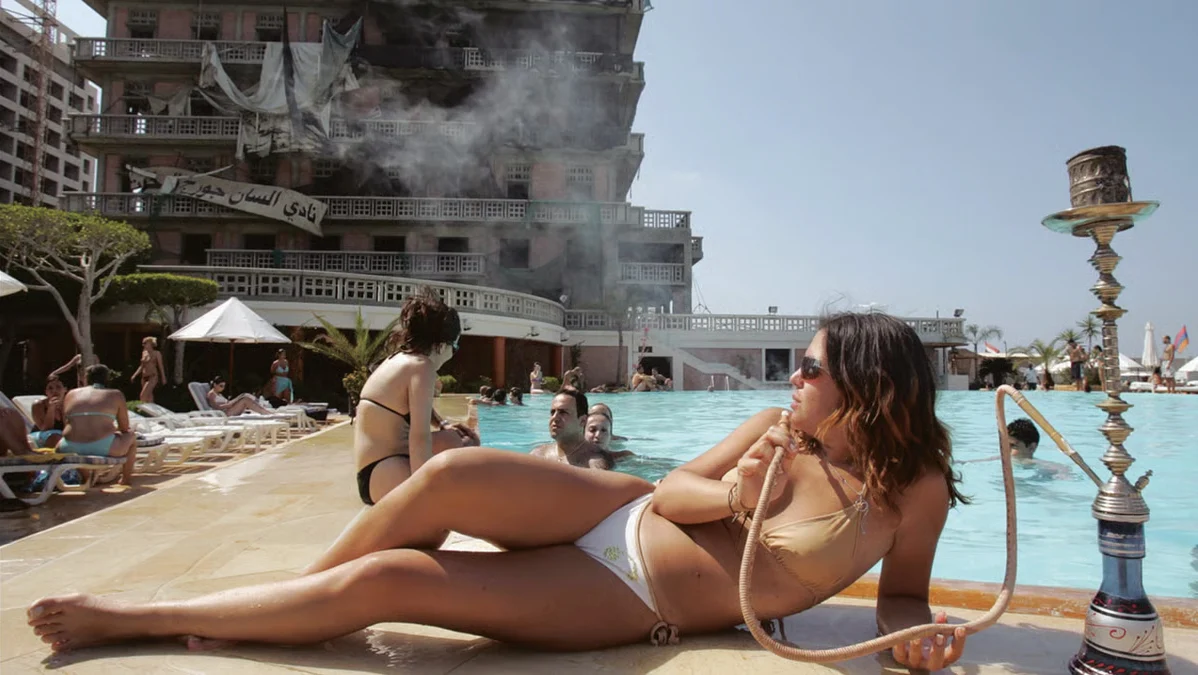
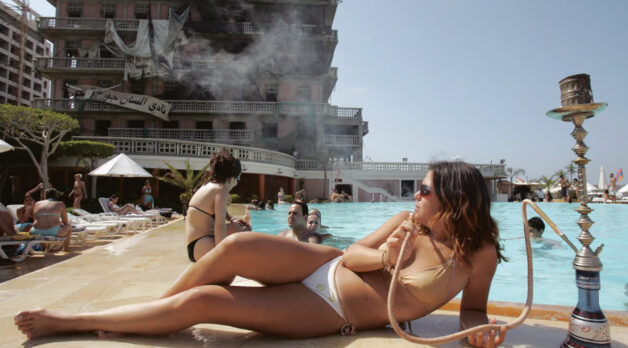
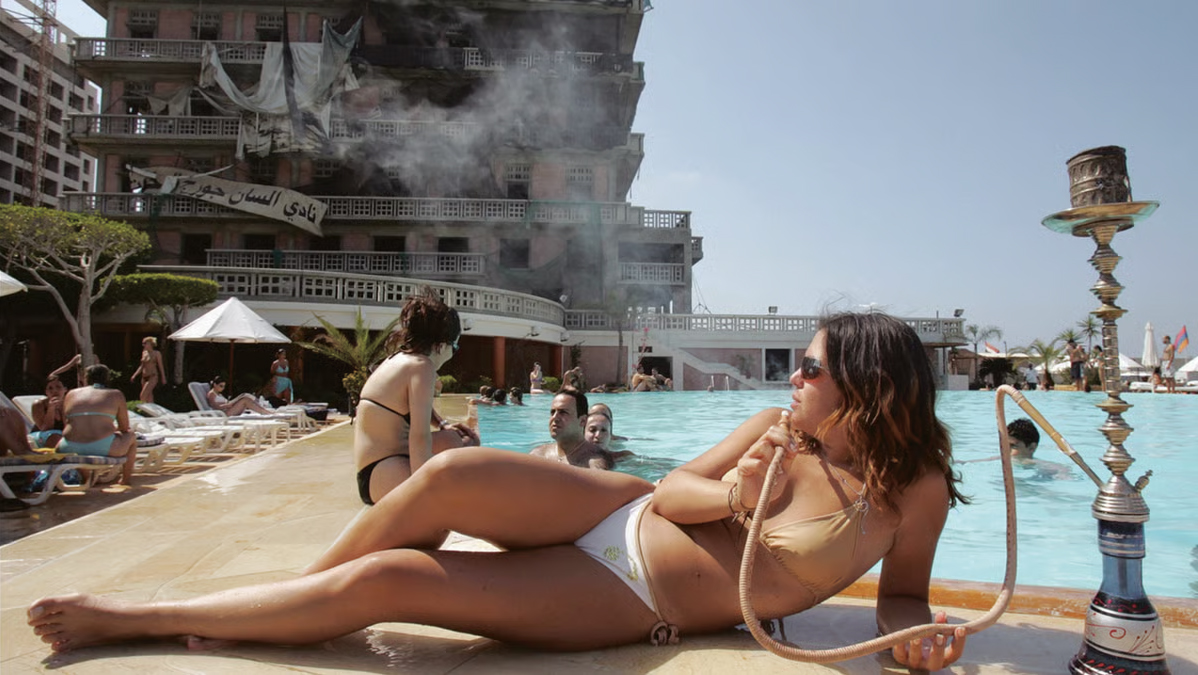
The film operates against the backdrop of the Lebanese Civil War (1975–1990), a conflict defined by sectarian divisions, foreign interventions, and a complex system of political confessionalism. By toggling between scenes from 1970s action movies and actual newsreel footage of street violence in Beirut, the film interrogates the blurring of reality and artifice. It highlights how the aesthetics of violence have permeated Lebanese media, often making it difficult to distinguish between staged cinema and documented history.
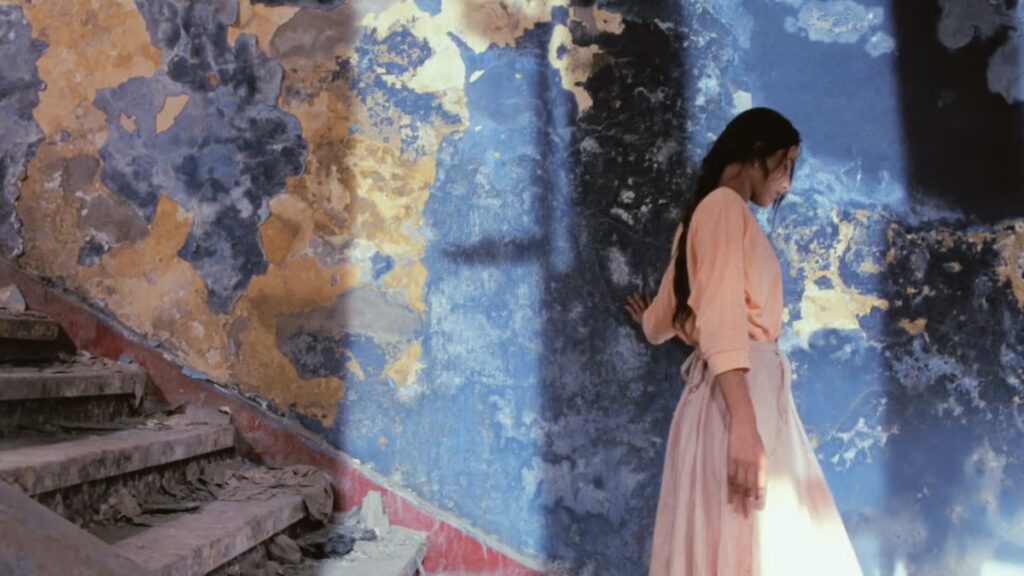
A significant thematic pillar of the work is the influence of pioneering female filmmakers, most notably Jocelyne Saab. Saab, a journalist and filmmaker who documented the Lebanese Civil War as it unfolded, is featured in the film through excerpts from her own documentaries, such as Lebanon in Turmoil (1975). These clips show Saab reporting from the ruins of her own home following Israeli bombardments, providing a stark look at the personal toll of geopolitical conflict.
The film’s release coincides with a period of renewed instability in Lebanon. As of late 2024 and early 2025, the country has seen a significant escalation in hostilities between Israel and Hezbollah, resulting in widespread displacement and destruction, particularly in southern Lebanon. Daher has noted that during recent screenings in Beirut, the sound of active military drones overhead frequently blended with the film’s soundtrack, effectively collapsing the boundary between the archival past and the volatile present.
The Female Perspective in Archival Memory
A central thesis of the film is the importance of the female gaze in preserving Lebanese history. Daher argues that while men were often the primary combatants in the country’s various conflicts, women were frequently the primary custodians of domestic and social memory. Much of the surviving "informal" record—home videos, family photographs, and personal collections—was maintained and passed down by women.
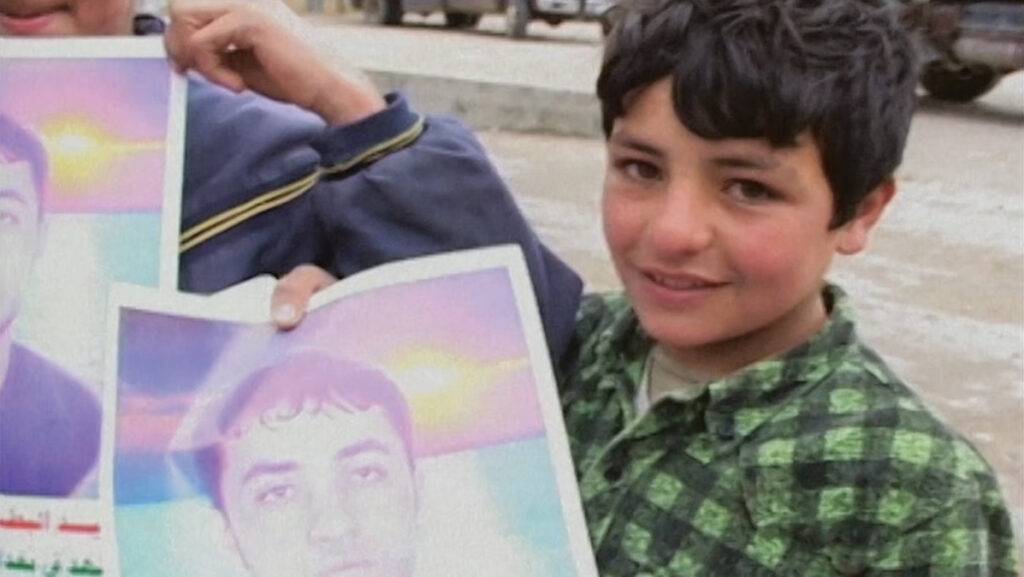
By centering these materials, the film provides an alternative to the male-dominated military and political narratives that typically define Lebanese historiography. This focus on the "witness" rather than the "actor" allows for a more nuanced exploration of how families searched for missing loved ones, celebrated birthdays amidst shelling, and maintained the fabric of daily life during decades of crisis.
Chronology of Development
The journey of the film reflects a shift from academic research to personal artistic expression:
- 2018: Research begins with a focus on the relationship between war and music in Lebanon, specifically the Bendaly Family’s discography.
- 2018–2022: Daher conducts extensive archival "hunts," collecting over 20,000 fragments and developing a four-hour rough cut.
- 2023: Collaboration begins with editor Qutaiba Barhamji. The project is restructured to move away from a traditional music documentary toward a more experimental, kaleidoscopic portrait of the nation.
- 2024: The film premieres at Venice Days (Giornate degli Autori) to critical acclaim.
- Early 2025: The film is screened at CPH:DOX and enters a theatrical run at the Metrograph in New York, accompanied by a retrospective of Jocelyne Saab’s work.
- Current Context: The film is screened in Beirut during active conflict, serving as a site for collective emotional processing for local audiences.
Broader Impact and Cultural Implications
The film serves as a surrogate national archive, offering a space for the "unresolved complexity" of the Lebanese identity. In a country where trauma is often inherited through silence, the film’s use of sound and image provides a visceral medium for historical reckoning. It challenges the international perception of Lebanon as a mere "war-torn" statistic, emphasizing instead the humanity, humor, and resilience of its population.
From a cinematic perspective, the work contributes to the growing genre of "essay films" that utilize found footage to critique national narratives. By recontextualizing 70 years of media, Daher does not just present history; she questions how history is constructed, who is allowed to tell it, and what is lost when a nation lacks a formal record of its own existence. The film ultimately suggests that while the physical city of Beirut may be subject to constant erasure and rebuilding, its cultural memory can be preserved through the radical act of assembly.