



Lana Daher’s debut feature documentary, Do You Love Me, presents a kaleidoscopic and visceral exploration of Lebanon’s turbulent cultural memory. Spanning 76 minutes, the film premiered at Venice Days before making its way to the Metrograph in New York City. The Beirut-based multidisciplinary artist constructed this cinematic portrait by drawing from 70 years of found footage and archival material. By stitching together excerpts from independent Lebanese cinema, historical newsreels, home movies, and audio fragments, Daher creates an environment where the past and present collide, continually recontextualizing one another.
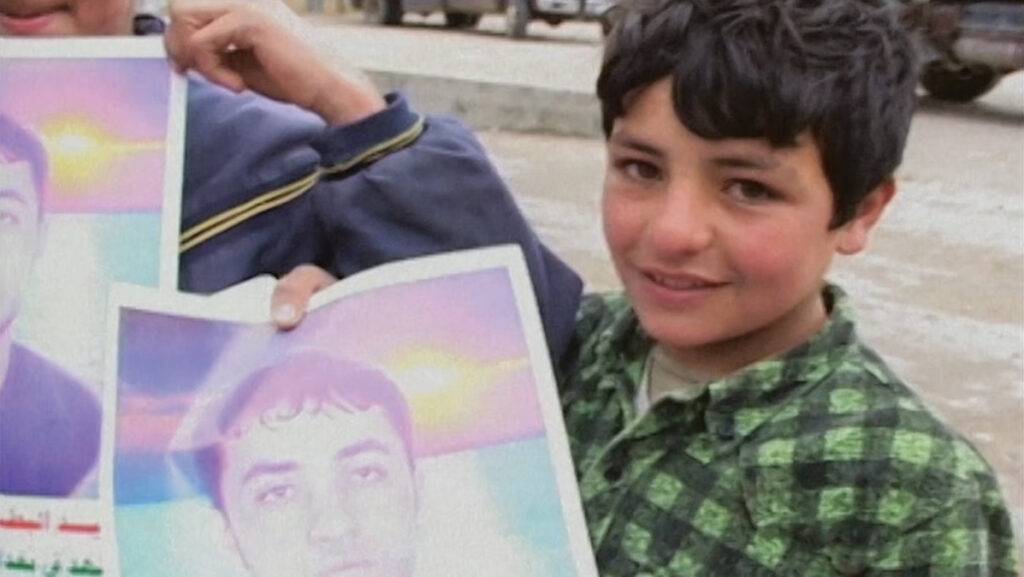
The documentary avoids conventional narrative structures, choosing instead to toggle fluidly across decades. Viewers are confronted with jarring cuts that transition from dramatized action sequences to harrowing newsreel footage of street violence in Beirut, deliberately blurring the lines between reality and staging. The sonic and visual landscape captures everyday civilians and intellectuals discussing the Lebanese Civil War and political confessionalism in both Arabic and French. The archival tapestry incorporates scenes of celebratory life—such as newlyweds dancing and children celebrating birthdays—alongside heartbreaking documentation of families searching for missing loved ones. The soundtrack mirrors this oscillation, shifting effortlessly from traditional Middle Eastern compositions to contemporary hip-hop.

The Archival Hunt and Methodological Approach
The creation of Do You Love Me required an exhaustive retrieval process, largely due to systemic institutional gaps. Lebanon lacks both a unified national archive and a standardized, universally accepted history textbook. Consequently, gathering source material functioned less like a traditional research project and more like an archaeological hunt.
Daher’s production team sourced more than half of the film’s visual material from independent Lebanese cinema, utilizing excerpts from approximately 106 fiction and documentary features produced between 1958 and the present day. Alongside these cinematic references, the project incorporated journalistic broadcasts, personal photographs, podcasts, music videos, radio broadcasts, and abandoned archives. The oldest piece of media included in the final cut is a home video dating back to 1928.
Out of more than 20,000 audiovisual fragments collected across multiple hard drives, roughly seven percent made it into the final film. Furthermore, the production successfully cleared nearly 400 rights contracts. Much like many Lebanese families who lost their personal archives amid successive waves of migration and armed conflict, Daher had limited access to her own family history growing up. This pervasive absence motivated her to construct a narrative from the inside out, allowing Lebanese citizens to speak about themselves in their own voices and perspectives.

Chronology and the Editing Process
The structural framework of Do You Love Me was forged over a five-year editing process. Daher initially worked independently, compiling a four-hour rough cut before partnering with Paris-based Syrian editor Qutaiba Barhamji, whose previous credits include Kaouther Ben Hania’s Four Daughters (2023) and The Voice of Hind Rajab (2025).
Rather than refining the existing rough cut, Daher and Barhamji chose to start from scratch. Bringing in an editor outside of Lebanon introduced a vital outside perspective, ensuring that individual scenes resonated on a universal level rather than relying solely on localized emotional shorthand. The collaborators established strict editorial parameters early on: no complete scenes were lifted directly from existing films, and Lebanese politicians were entirely excluded from both the screen and the soundtrack.
The decision to reject a linear chronology was intentional. As Daher notes, neither memory nor trauma moves in a straight line. Instead, the film relies on an emotional logic governed by rhythm and associative editing. By fragmenting and recombining isolated shots, the documentary embodies its foundational thesis: that disorientation is an inherent part of understanding a nation marked by perpetual crisis.
Centering the Female Gaze and Historical Influences
A prominent element of Do You Love Me is its deliberate centering of the female perspective. Daher acknowledges the profound influence of pioneering Lebanese filmmaker and journalist Jocelyne Saab, whose seminal 1975 documentary Lebanon in Turmoil serves as a touchstone for understanding the root causes of the nation’s contemporary fractures. In conjunction with the film’s theatrical run, institutions like the Metrograph have highlighted Saab’s legacy through screening programs such as Jocelyne Saab: Letters from Lebanon.
Beyond individual filmmakers, Daher’s work highlights the underrepresented role of women as the primary custodians of domestic archives. Even when women were not behind the camera, they were frequently the ones who shot, maintained, and preserved family photographs, home videos, and personal collections that institutional bodies failed to capture. By utilizing these materials, Daher’s film champions a female gaze that acts as a witness to history, preserving the social fabric of a country repeatedly subjected to devastation.
Broader Impact, Context, and Societal Implications
The release of Do You Love Me coincides with renewed devastation in Lebanon, prompting critical discussions about the ongoing cycle of conflict involving Israel, Hezbollah, and various domestic factions. Daher has pushed back against simplistic media framings that reduce the current crisis to a localized crossfire, emphasizing instead a multi-decade history of military interventions and occupations that began long before the founding of Hezbollah.

Screening the film in Beirut during active hostilities produced profound reactions among audiences. In some instances, external sounds—such as the whir of surveillance drones—blended with the theater’s sound design, underscoring the grim continuity between historical archives and present-day reality. Viewer responses have varied from deep melancholy over generational exposure to war to a renewed appreciation for the resilience, humor, and humanity of the Lebanese populace.
Ultimately, Do You Love Me functions as a living, breathing counter-archive. By resisting official state narratives and prioritizing emotional truth over objective chronology, Daher has created a cinematic space that honors those who live, create, and endure in a society perpetually navigating the aftermath of crisis.