

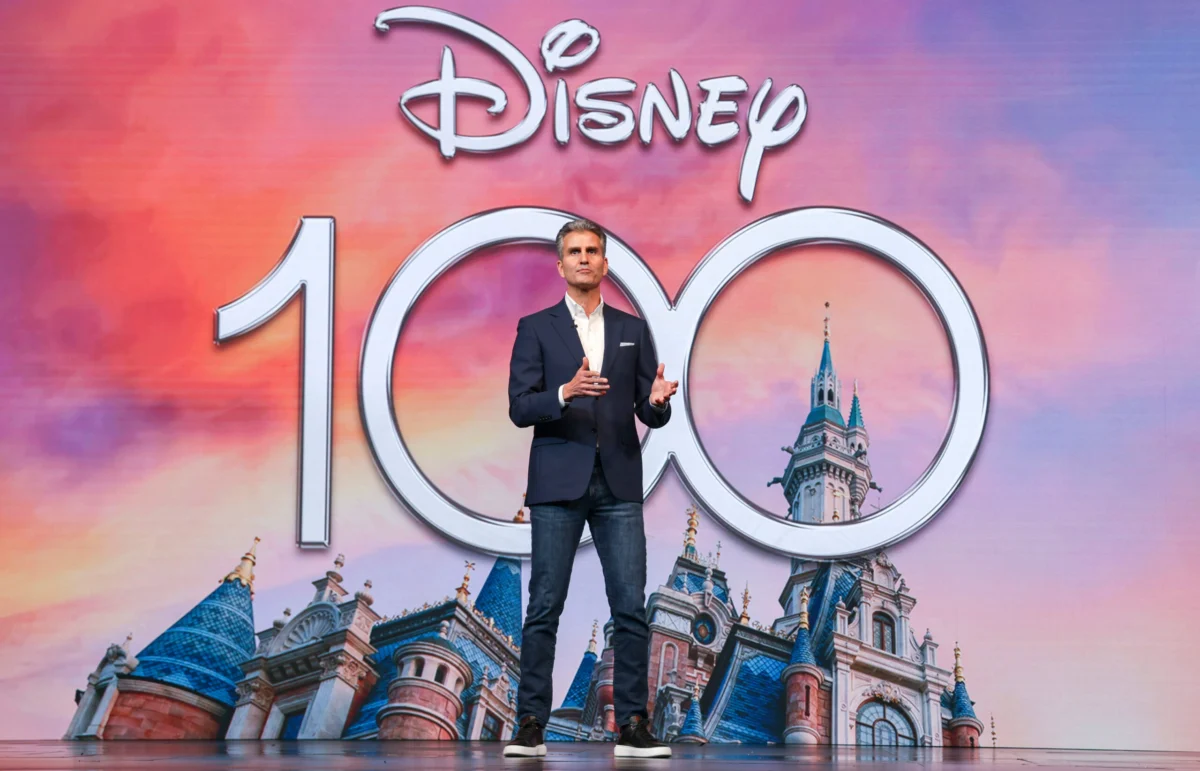
The Walt Disney Company is currently navigating a period of significant structural and strategic evolution under the leadership of CEO Josh D’Amaro, who assumed the top post in March 2026. Following a high-stakes leadership succession that saw the departure of industry titan Bob Iger, D’Amaro has spent his first six months stabilizing the media conglomerate’s core pillars—specifically its theme parks and its streaming ecosystem. In a wide-ranging interview with CNBC’s Julia Boorstin on Friday, D’Amaro addressed the company’s recent quarterly performance, the persistent pressure on its stock price, and the long-term vision for integrating the brand’s disparate business units into a cohesive, consumer-centric machine.
Despite a 12-month period that has seen Disney shares decline by more than 8%, D’Amaro projected a tone of tempered optimism. He highlighted the "big surprise" delivered by the parks division in the most recent quarter, noting that the segment continues to demonstrate resilience even amidst macroeconomic headwinds that have caused consumers to tighten their discretionary spending. However, the CEO acknowledged the dissatisfaction among shareholders, emphasizing that the company is currently focused on long-term value creation rather than short-term market fluctuations.
A Chronology of the Transition
The appointment of Josh D’Amaro marked the end of a long-running and highly scrutinized search for a successor to Bob Iger. D’Amaro, who previously served as the chairman of Disney Experiences, inherited a company that was already in the midst of a multi-year turnaround effort. His tenure has been defined by a series of decisive, albeit difficult, administrative actions:
- February 2026: The official announcement of the leadership transition occurs, setting the stage for D’Amaro to step into the CEO role.
- March 2026: D’Amaro officially assumes the CEO position, immediately tasked with reconciling the company’s massive debt load with the need for continued investment in its streaming and theme park portfolios.
- April 2026: The first wave of corporate restructuring begins, with approximately 1,000 employees laid off as part of a broader mandate to streamline operations.
- May 2026: Disney formally challenges an early, unexpected review of its broadcast licenses initiated by the Federal Communications Commission (FCC), framing the move as an overreach.
- July 2026: The company conducts further reductions in force, impacting divisions including Pixar, National Geographic, and ESPN.
- August 2026: Disney releases its Q3 earnings, which demonstrate continued strength in parks and streaming, though the stock market remains tepid.
Operational Strategy: The ‘One Disney’ Philosophy
Central to D’Amaro’s management philosophy is the concept of "One Disney," an initiative designed to break down the silos between the company’s various divisions. Historically, the parks, the film studios, and the streaming services have operated with a degree of autonomy. D’Amaro’s vision seeks to integrate these segments, particularly by leveraging the company’s deep intellectual property (IP) library across multiple touchpoints.
During his address on Friday, D’Amaro hinted at a future where streaming platforms function as a "front porch" for the entire Disney ecosystem. By considering a free, ad-supported tier, the company aims to lower the barrier to entry for potential subscribers. Once inside the Disney ecosystem, the strategy involves a seamless transition from viewership to commerce. "Why wouldn’t we have all of the elements of Disney come to life right there in front of you?" D’Amaro posited. By creating an environment where consumers can watch content and interact with products simultaneously, the company hopes to increase the lifetime value of its customers.
The ESPN Question and Sports Rights Economics
One of the most persistent rumors surrounding Disney has been the potential spinoff of its sports network, ESPN. As traditional cable bundles continue to erode, the economics of sports broadcasting—which relies heavily on linear carriage fees—have come under intense pressure. Rising costs for exclusive rights to leagues like the NFL and NBA have led some analysts to suggest that spinning off ESPN would unlock shareholder value.
D’Amaro firmly rejected this narrative. He argued that the power of sports, combined with the massive, dedicated fandom surrounding ESPN’s live programming, remains a unique competitive advantage. "I’m not interested in spinning off ESPN," he stated, noting that the network’s ratings remain "through the roof." By maintaining ESPN within the Disney portfolio, the company keeps a vital anchor for its live content strategy, which is increasingly essential as viewers migrate away from traditional scripted cable television.

Navigating Regulatory and Political Headwinds
Disney’s leadership transition has occurred against a backdrop of heightened political scrutiny. The company has found itself in the crosshairs of the current administration, particularly regarding the editorial direction of its broadcast arm, ABC. High-profile programs such as "The View" and "Jimmy Kimmel Live!" have been the targets of criticism from federal officials, including FCC Chairman Brendan Carr.
The FCC’s decision to initiate an early review of Disney’s broadcast station licenses has been perceived by many industry experts as a move aimed at pressuring the network’s editorial independence. Disney has been vocal in its opposition, labeling the FCC’s order as "unlawful, arbitrary, and unconstitutional." D’Amaro reaffirmed this position on Friday, emphasizing that the company is "very principled" regarding its commitment to journalistic integrity. He indicated that Disney would continue to defend its autonomy, stating, "We’re not going to be told how to run that side of our business."
Broader Media Industry Context
The challenges facing Disney are not unique in a rapidly consolidating and volatile media landscape. Peer companies are currently executing their own radical shifts. Warner Bros. Discovery and Paramount Global have engaged in complex merger discussions, while Comcast has signaled its intent to spin out its NBCUniversal cable assets. These moves reflect a widespread acknowledgment that the legacy business model of television—reliant on the declining "bundle"—is no longer sustainable.
However, D’Amaro stated that he is not pursuing similar large-scale mergers or structural divestitures at this time. His strategy relies on internal optimization rather than external acquisition. By focusing on the strength of the company’s existing IP and the continued expansion of its international streaming reach, D’Amaro believes Disney is positioned to thrive.
Financial Outlook and Investor Sentiment
The disconnect between Disney’s operational performance and its stock market valuation remains a primary point of friction for the CEO. While the theme parks division reported stronger-than-expected results in the most recent quarter, the broader market remains cautious about the company’s ability to manage its high capital expenditures while simultaneously navigating the transition to a profitable streaming business.
D’Amaro’s reluctance to confirm future price increases at the theme parks suggests that the company is sensitive to the current economic environment. Instead, he pointed to continued investments in "destinations" as the primary driver for future growth. By upgrading the physical experience of its resorts, Disney aims to justify premium pricing and maintain high attendance levels despite the softening consumer environment.
In conclusion, Josh D’Amaro’s first six months have been characterized by a drive for stability and a focus on core profitability. By balancing the demands of Wall Street with the creative imperatives of the entertainment industry, he is attempting to steer Disney through a fundamental shift in how media is consumed. Whether his strategy of "One Disney" integration can restore investor confidence and counter the systemic declines in traditional media will be the defining metric of his tenure. For now, the CEO remains committed to a path of aggressive adaptation, prioritizing internal cohesion as the primary mechanism for overcoming the pressures of a changing marketplace.