
The Evolution of a Digital Legend: From 4chan to the Silver Screen
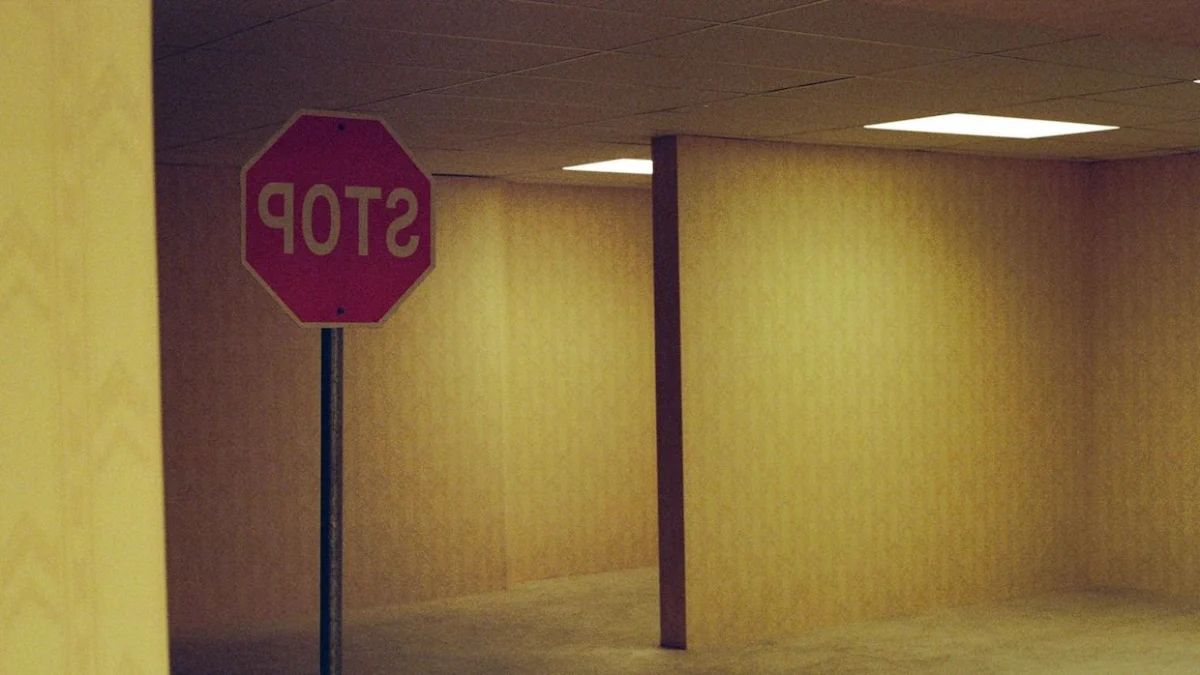
The genesis of the Backrooms phenomenon is a quintessential example of hypermodern digital creativity. The concept originated from a single, nondescript photograph of a former furniture store in Oshkosh, Wisconsin, taken in 2003 during renovations. This image, characterized by its sickly yellow wallpaper, fluorescent lighting, and damp carpets, was uploaded to a "cringe" or "unsettling" thread on 4chan in 2019. The image struck a chord with users, prompting an anonymous poster to write a brief description of a place one might "noclip" into—a video game term for passing through solid boundaries—resulting in an endless maze of empty rooms.
This initial spark ignited a Lovecraftian latticework of anonymous mythmaking. The lore migrated to Reddit, where communities split into "originalists," who preferred the mystery of empty spaces, and "revisionists," who added monsters and complex "levels" to the environment. Kane Parsons, who was only seventeen when he began his YouTube series, effectively codified this lore through a series of found-footage videos that garnered hundreds of millions of views. His ability to translate the "liminal space" aesthetic into a cohesive visual language eventually caught the attention of major studios, leading to the 2026 feature film produced by A24, Atomic Monster, and 21 Laps.
Narrative Structure and Character Dynamics
The film shifts the perspective from the nameless explorers of the YouTube series to a grounded, character-driven narrative set in Santa Clara, California, in June 1990. The setting is a deliberate choice, capturing a world on the precipice of the internet revolution. The sky is a static blue, and the suburban sprawl is depicted through vast, low-slung strip malls and cracked, empty streets.
The story follows Clarke, portrayed by Chiwetel Ejiofor, the owner of a failing furniture store named "Ottoman Empire." Clarke is a man physically and financially buckling under the weight of his own inventory; his wares are cheap, prone to breaking, and represent a retail model that is rapidly becoming obsolete. Parallel to Clarke is his therapist, Mary, played by Renate Reinsve. Mary is haunted by the literal destruction of her past, as her childhood home is demolished to make way for prefabricated condos.
The intersection of these two characters occurs against the backdrop of the "Backrooms"—an interdimensional lacuna that begins to bleed into their reality. Unlike the YouTube series, which focused primarily on the "found footage" of those trapped inside, the film uses the Backrooms as a metaphor for the characters’ internal "loops" of anxiety and trauma. As Mary observes to her patients, "We all have our loops," suggesting that the repetitive, nonsensical architecture of the Backrooms is a physical manifestation of stagnant psychological patterns.
The Chronology of the Backrooms Phenomenon
To understand the impact of the 2026 film, one must look at the timeline of its development:
- 2003: An original photograph of a furniture store in Wisconsin is taken, capturing the "liminal" aesthetic before the term enters common parlance.
- May 2019: The photo is posted to 4chan, accompanied by the original "creepypasta" text that defines the Backrooms.
- 2020-2021: The concept explodes in popularity during the COVID-19 pandemic, as global lockdowns heighten the public’s sensitivity to empty public spaces.
- January 2022: Kane Parsons uploads "The Backrooms (Found Footage)" to his YouTube channel, Kane Pixels, revolutionizing the lore with high-quality CGI.
- 2023: A24 announces a feature film adaptation with Parsons attached to direct and Will Soodik set to write the screenplay.
- 2026: The feature film is released, marking a milestone in the transition of "user-generated lore" to prestige cinema.
Socio-Digital Context: Nostalgiacore and Liminality
The film’s aesthetic success relies heavily on its mastery of "liminalcore" and "nostalgiacore," hashtags that have seen a massive surge in popularity on platforms like TikTok and Instagram. These trends reflect a generational yearning for the "unplugged" past, often viewed through a lens of curdled nostalgia. For Gen Z and late Millennials, the imagery of drop ceilings, sodium-vapor fluorescents, and cheap linoleum tile evokes a sense of "anemoia"—nostalgia for a time one never actually lived through.
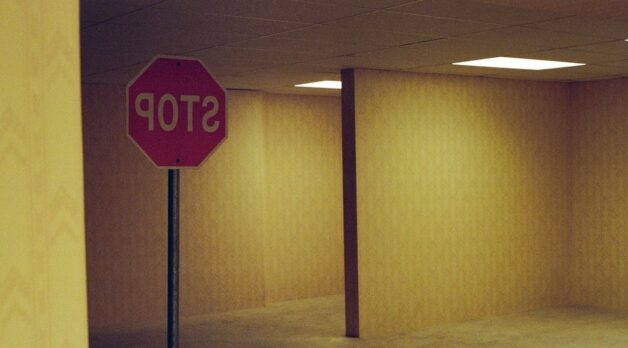
The film critiques this "retrobait" culture. While social media users often respond to liminal space videos with "I want to go there," Parsons presents the past as a decaying, non-viable environment. The 1990 setting features "Blair Witch"-style DV-cam footage, clunky computer monitors, and hardware ads that mock the transition from paper folders to digital storage. By highlighting the instability of the past, the film suggests that the "simpler times" sought by modern internet users were fraught with their own versions of technological and social displacement.
Technical Execution and Visual Language
Writer Will Soodik, known for his work on Westworld and Ash vs Evil Dead, brings a calibrated ambiguity to the script. The film avoids explaining the "why" of the Backrooms, instead focusing on the "how" of their iteration. The visual language of the film mimics predictive models and generative AI. Characters describe the environment as "describing a dog to someone who’s never seen a dog and then asking them to draw it." This results in a distorted "memory" of architecture—staircases that lead nowhere and rooms that repeat with slight, uncanny variations.
The production design utilizes the contrast between the vibrant, sun-drenched exterior of California and the sickly, monochromatic interior of the Backrooms. This duality emphasizes the "entropic solipsism" of the digital age, where individuals are increasingly isolated within their own algorithmic bubbles. The use of outdated technology—floppy disks, self-help cassettes, and chunky MRI machines—serves as a reminder of the physical waste generated by rapid technological progress.
Official Responses and Industry Implications
The release of Backrooms has prompted discussions among film critics and digital historians regarding the future of intellectual property. Unlike traditional adaptations based on novels or comic books, Backrooms is an adaptation of a "vibe" or a collective internet consciousness. Industry analysts suggest that this marks a shift in how studios source content, moving away from established authors toward viral creators who have already demonstrated an ability to capture the "zeitgeist" of digital native audiences.
In a statement following the film’s premiere, production representatives noted that the goal was to "preserve the communal nature of the lore while providing a definitive cinematic anchor." Critics have largely praised the film for avoiding the "trauma-plotting" tropes of modern horror, instead leaning into a "meta-hauntological tone-poem" that reflects the current state of the internet.
Broader Impact and Theoretical Analysis
The film operates within the framework of "hauntology," a term popularized by theorist Mark Fisher to describe the persistence of elements from the past in the present. The Backrooms are the ultimate hauntological space—a physical manifestation of "lost futures." By turning the 1990s into a labyrinthine horror, Parsons suggests that the current technological regime was inevitable, born from the failures and instabilities of the analog era.
Furthermore, the film serves as a critique of the "accelerationist instability" of the present. As Clarke succumbs to the "false comfort" of his personal AI-like hallucinations within the Backrooms, he becomes a metaphor for the modern user lost in "doomscrolling" and digital loops. The film’s sharpest insight is its ambivalence; it acknowledges that while the digital present is dystopian, the analog past was equally unviable.
In conclusion, Backrooms (2026) is more than a horror film; it is a cultural artifact that maps the transition from physical memory to digital iteration. It validates the anxieties of a generation raised in the "uncanny valley" of the internet, providing a nuanced understanding of why we are so drawn to the empty, yellow hallways of our collective imagination. As the credits roll, the viewer is left with the unsettling realization that we may all already be "nocliping" into our own versions of the Backrooms, lost in a labyrinth that is constantly remaking itself in the image of a past that never truly existed.