Red Hook Studios has officially announced a significant expansion for the original Darkest Dungeon, titled The Fire’s Edge, marking a surprising return to the 2016 gothic roguelike that defined a subgenre of turn-based RPGs. Scheduled for release on August 18, the downloadable content (DLC) acts as a bridge between the first game and its 2023 sequel, Darkest Dungeon 2, by porting prominent heroes and combat mechanics into the classic Hamlet-based structure. This announcement comes as the studio prepares to celebrate the 10th anniversary of the franchise’s debut, signaling a strategy of long-term support for "legacy" titles that continue to maintain robust player bases nearly a decade after their initial launch.
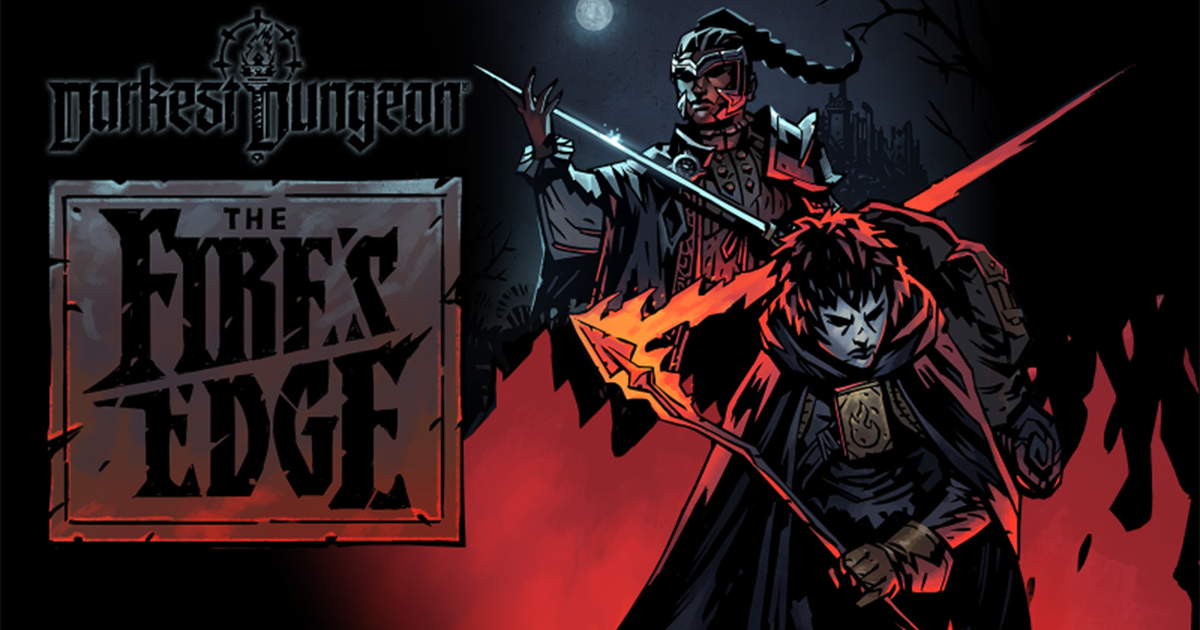
The Fire’s Edge represents a departure from standard industry practice, where developers typically move resources exclusively to sequels. Instead, Red Hook is retroactively updating the first Darkest Dungeon with two fan-favorite characters introduced in the sequel: the Duelist and the Runaway. Along with these heroes, the expansion introduces a fundamental shift in the game’s combat ecosystem through the integration of the "Burn" status effect, a mechanic previously exclusive to the second installment.
New Hero Classes and Combat Integration
The Duelist and the Runaway are designed to offer tactical variety that differs significantly from the original roster of fifteen heroes. The Duelist is described as a high-complexity damage dealer characterized by her ability to "dance" between ranks. Unlike static heroes, her effectiveness relies on movement-based skills that shift her position within the party lineup. Her primary mechanic involves toggling between aggressive and defensive stances, allowing players to adapt to the shifting tides of battle in real-time. In the context of the original game’s rigid four-position combat system, the Duelist’s mobility provides a counter-point to the more stationary "wall" compositions typically favored by players in high-difficulty runs.
The Runaway serves a different strategic purpose, acting as a position-flexible damage dealer who specializes in the newly introduced Burn mechanic. In the original Darkest Dungeon, damage-over-time (DoT) effects were largely split between Bleed (effective against organic enemies) and Blight (effective against armored or undead foes). The introduction of Burn adds a third pillar to this system, providing players with new ways to bypass the high Protection (PROT) stats of certain enemies. The Runaway’s inclusion is expected to shift the meta-game for several of the game’s core regions, particularly the Weald and the Cove, where traditional DoT effects often struggle against high resistance ceilings.
Expanding the Hamlet: New Districts and Infrastructure
Beyond the addition of heroes, The Fire’s Edge introduces three new Hamlet districts. Districts, which were originally added in the Crimson Court expansion, function as permanent, high-cost upgrades that provide passive buffs to specific hero classes or town functions. The new districts are:
- Academie Duello: Likely focused on enhancing the Duelist’s capabilities or providing global bonuses to accuracy and riposte damage.
- Craftworks: Expected to interact with the game’s equipment or trinket systems, potentially reducing the cost of weapon and armor upgrades.
- Archaeological Base Camp: A thematic addition that may offer bonuses to loot acquisition or reduce the stress penalties associated with specific dungeon types.
In tandem with these new structures, Red Hook Studios has confirmed a comprehensive rework of the game’s trinket system. Trinkets—equippable items that provide stat modifiers—are being updated with new mechanics to align with the expanded combat system. This overhaul aims to revitalize the endgame equipment hunt, providing veteran players with new incentives to engage with the game’s "Stygian" and "Bloodmoon" difficulty modes.
Historical Context and Series Evolution
The announcement of The Fire’s Edge serves as a milestone in the history of Red Hook Studios. The original Darkest Dungeon began as a Kickstarter project in 2014, raising over $313,000 from more than 10,000 backers. Upon its full release on January 19, 2016, it received critical acclaim for its oppressive atmosphere, punishing difficulty, and the "Affliction System," which modeled the psychological toll of adventuring.
By 2022, the original game had sold over 6 million copies, establishing it as one of the most successful indie RPGs of the decade. Its sequel, Darkest Dungeon 2, took a different approach, moving away from the town-management aspects of the first game in favor of a carriage-based "road trip" roguelite structure. While the sequel received generally positive reviews and currently holds a "Mostly Positive" rating on Steam, a vocal segment of the community expressed a preference for the original game’s management loops and persistence.
Industry analysts suggest that the decision to release a major DLC for a ten-year-old game is a response to these player sentiments. SteamDB data shows that the original Darkest Dungeon often maintains concurrent player counts comparable to, and occasionally exceeding, those of its sequel. By bringing sequel content back to the original engine, Red Hook is effectively consolidating its community and acknowledging the enduring relevance of its first title.
Technical Implications and Reworked Mechanics
Integrating Darkest Dungeon 2 mechanics into the original’s engine presents unique technical challenges. The first game is a 2D, sprite-based experience, whereas the sequel utilized a 3D engine with more fluid animations. Red Hook has confirmed that the Duelist and Runaway have been redesigned from the ground up to match the iconic hand-drawn art style of the original game, originally created by creative director Chris Bourassa.
The introduction of the Burn mechanic also necessitates a rebalancing of existing enemy encounters. Historically, enemies in the Ruins or the Warrens were tuned for specific resistances. The addition of a new damage type requires the developers to adjust the resistance tables of hundreds of enemy types to ensure that Burn is neither underwhelming nor game-breaking. Furthermore, the rework of trinkets suggests a move toward more complex itemization, perhaps incorporating the "tokens" system (such as Strength or Block tokens) that became a staple of Darkest Dungeon 2’s tactical layer.

Official Response and Community Reaction
While Red Hook Studios has been relatively quiet regarding the specific lore implications of The Fire’s Edge, the studio’s social media channels have emphasized that this update is a "thank you" to the community that has supported the game since its Early Access days in 2015. In a statement accompanying the reveal, the developers noted that the 10th anniversary provided the perfect opportunity to revisit the foundations of the franchise.
The community reaction has been overwhelmingly positive, particularly among the modding community. Darkest Dungeon boasts one of the most active Steam Workshop scenes in the indie space, with thousands of user-created heroes and monsters. The addition of official new mechanics like Burn provides modders with new tools to create even more complex content, effectively extending the game’s lifecycle by several more years.
Future Roadmap and Long-Term Support
The Fire’s Edge is not the only project on Red Hook’s horizon. The studio recently reaffirmed its commitment to the sequel, teasing a major DLC for Darkest Dungeon 2 slated for early 2027. This dual-track development strategy—maintaining a legacy title while expanding a current one—is becoming increasingly common among successful indie studios like Re-Logic (Terraria) and ConcernedApe (Stardew Valley).
The August 18 launch of The Fire’s Edge will likely see a significant spike in player activity for the original game. As the industry moves toward "games as a service," Red Hook’s approach offers a different model: the "evergreen" title. By continuing to polish and expand a game that is already considered a classic, the studio ensures that Darkest Dungeon remains a relevant entry point for new players while rewarding the loyalty of its long-standing fanbase.
In the broader context of the gaming industry, this move highlights a shift in how developers view their back catalogs. Rather than letting older titles stagnate, developers are finding value in "cross-pollinating" content between entries in a franchise. For Darkest Dungeon, a series built on the themes of cyclical struggle and the enduring nature of ancient evils, returning to the Hamlet seems both commercially sound and thematically appropriate. When the Fire’s Edge arrives this August, players will once again find themselves descending into the pits, reminded that in the world of Red Hook Studios, the past is never truly dead—it is merely waiting for a new expansion.