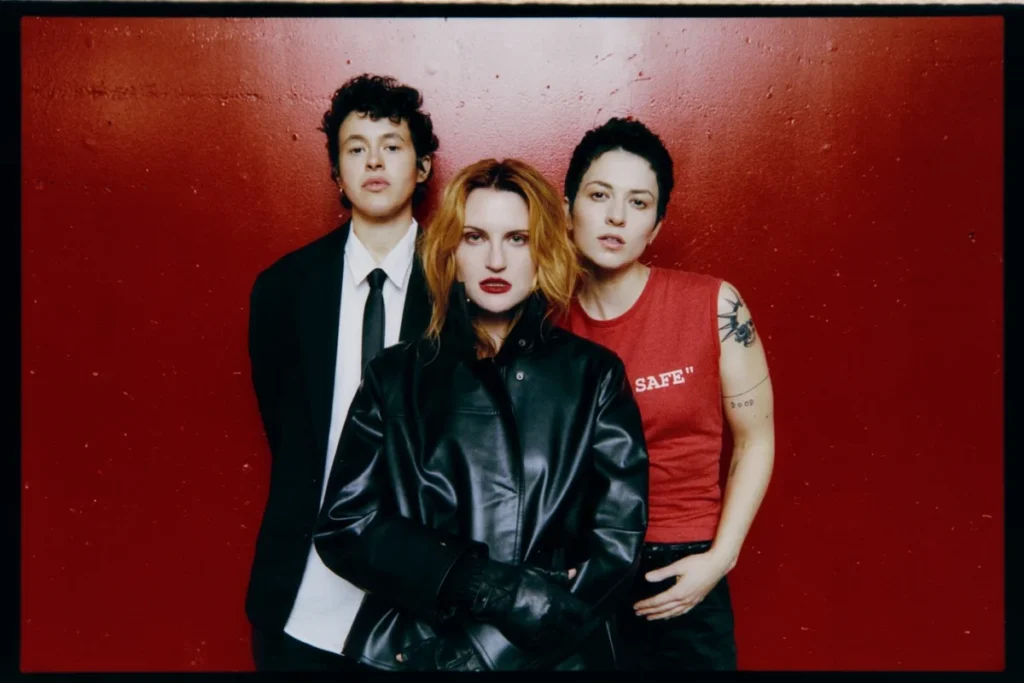



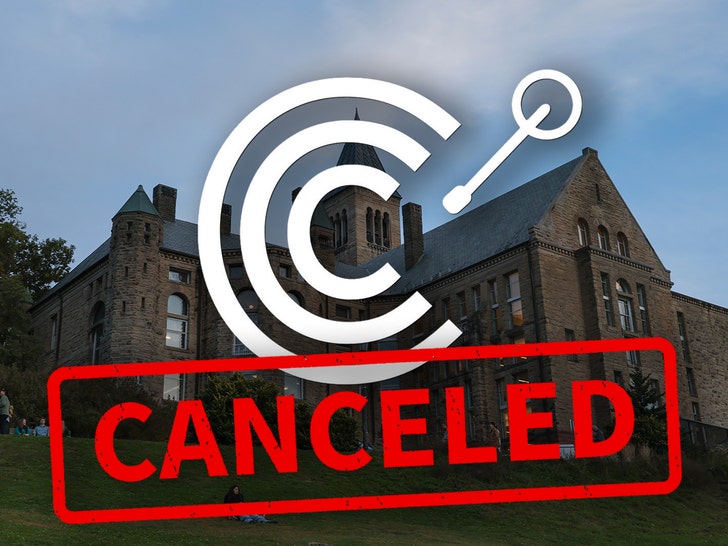
The atmosphere at Cornell University has shifted dramatically from the traditional excitement of autumn festivities to an environment defined by student activism, institutional scrutiny, and demands for accountability. The Cornell Concerts Commission announced the complete cancellation of its highly anticipated Homecoming Concert, which was scheduled to feature the indie-pop duo Between Friends at Barton Hall on October 17. This decision is not merely a scheduling adjustment; it represents a powerful act of solidarity by the student body with an alleged survivor of sexual violence known publicly as Jane Doe, whose case has ignited a campus-wide crisis and drawn intense public scrutiny toward the university administration.
The cancellation underscores a deepening rift between Cornell students and the university’s leadership regarding how allegations of sexual assault are managed, investigated, and addressed. As the Tompkins District Attorney reopens the investigation into the alleged 2024 incident, the student-led cancellation of one of the semester’s premier social events highlights a growing intolerance for institutional apathy in the face of serious criminal allegations.
The Catalyst: A Cancelled Tradition and Student Solidarity
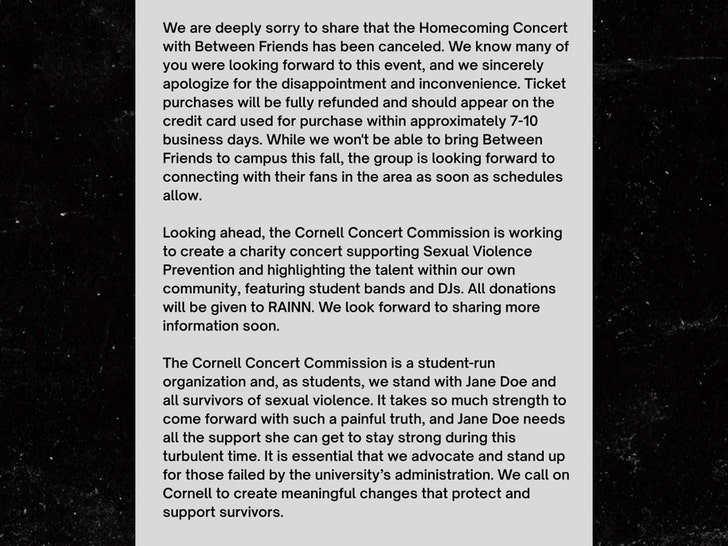
Originally billed as a celebration of school spirit and community engagement, the October 17 homecoming concert fell victim to a climate of moral urgency on campus. The Cornell Concerts Commission, operating entirely as a student-run organization, released a definitive statement on social media explaining the rationale behind pulling the plug on the event.
"The Cornell Concerts Commission is a student-run organization and, as students, we stand with Jane Doe and all survivors of sexual violence," the group stated, explicitly tying the cancellation to the ongoing campus scandal. The commission expressed regret to fans who had anticipated performances by Between Friends, noting that the indie-pop group hopes to reschedule a connection with local fans at a later, more appropriate time.
Rather than scrubbing the date entirely from the cultural calendar, the commission pivoted the evening into an initiative rooted in advocacy. Organizers announced plans to curate a grassroots charity concert highlighting local performers, including student bands and campus DJs. Crucially, all proceeds generated from the alternative event will be directly channeled to the Rape, Abuse & Incest National Network (RAINN), transforming a night originally designated for commercial entertainment into a collective platform for survivor support and fundraising.
Background Context: The 2024 Chi Phi Fraternity House Allegations
The roots of the current crisis trace back to an alleged gang rape that occurred in 2024 at the university’s Chi Phi fraternity house. The allegations, which have steadily gained momentum over recent months, center on an assault reported by the student identified in legal and public discourse as Jane Doe.
For months, the case simmered amid growing frustrations among the student body regarding the adequacy of the university’s Title IX response mechanisms, disciplinary transparency, and overall protection of vulnerable students. Critics argue that the administration’s historical handling of Greek life misconduct has been sluggish, opaque, and overly protective of institutional reputation at the expense of student safety.
The situation escalated exponentially when investigative reporting brought to light direct communications involving the accused individuals, providing the public and the university community with raw, unfiltered insight into the aftermath of the alleged assault. These disclosures transformed an abstract campus controversy into a deeply personal and visceral issue for thousands of students enrolled at the Ivy League institution.
Chronology of Disclosures: Text Messages Fuel Outrage
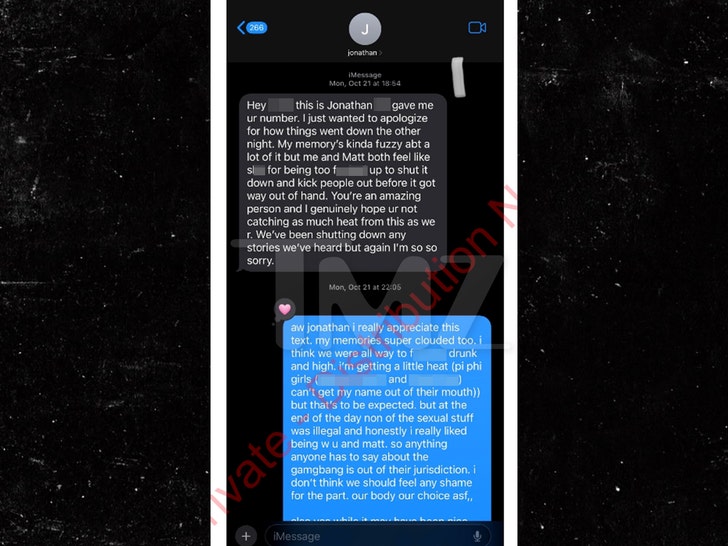
The public discourse surrounding the Cornell sexual assault scandal shifted fundamentally following the publication of incriminating text message exchanges obtained and reported by media outlets. These digital communications provided a rare window into the post-incident environment, capturing the reactions and statements of those accused.
In one primary text chain examined by investigators and journalists, accused student Jonathan Newell communicated directly with Jane Doe days after the alleged incident. In the messages, Newell offered an apology to Jane, writing, "You’re an amazing person and I genuinely hope ur not catching as much heat from this as we r. We’ve been shutting down any stories we’ve heard but again I’m so so sorry." The acknowledgment of managing rumors and attempting to suppress narratives added substantial weight to the allegations of institutional and social cover-up.
In a separate communication thread, another accused former fraternity member, Matthew Ingalls, attempted to console Jane after she reported suffering from a urinary tract infection (UTI), a common medical consequence following sexual trauma. When discussing the swirling campus rumors regarding the event, Ingalls dismissed the chatter by writing, "Stupid bitches like to yap, and the fact they’re doing it shows that they’re jealous of you for any number of reasons."
These revelations severely undermined the credibility of the accused individuals and catalyzed immediate anger across the Cornell campus, cementing student resolve to amplify Jane Doe’s claims and demand systemic institutional reform.
Legal Developments and District Attorney Intervention
While campus activism and social media campaigns have driven the cultural conversation, formal legal mechanisms have simultaneously restarted. Recognizing the severity of the allegations and the mounting public pressure, the Tompkins District Attorney officially reopened the investigation into Jane Doe’s case.
The decision by prosecutors to take a fresh look at the evidence represents a critical turning point. Institutional internal reviews and Title IX administrative processes have frequently faced criticism for lacking the subpoena power, evidentiary standards, and punitive authority of the criminal justice system. With the District Attorney’s office actively probing the 2024 incident at the Chi Phi house, the legal exposure for the accused individuals has intensified significantly, moving the matter from the realm of university policy into the domain of felony criminal law.
Legal analysts note that the newly surfaced text messages, alongside potential medical documentation and witness testimony, could serve as vital components in the reopened investigation. Prosecutors now possess tangible digital footprints that may corroborate the timeline of events and establish the mindset of the accused parties immediately following the alleged assault.
Institutional Implications and the Broader Campus Climate
The convergence of a cancelled homecoming concert, leaked communications, student-led boycotts, and a reopened criminal investigation places Cornell University under an intense national spotlight. As one of the nation’s premier Ivy League institutions, Cornell now faces severe reputational damage and urgent questions regarding its oversight of Greek life organizations.
Fraternities and sororities have long been focal points for debates surrounding campus safety, alcohol consumption, and sexual misconduct. The Chi Phi house allegations, combined with the administration’s perceived initial inaction, have prompted calls from alumni, faculty, and student coalitions for a complete overhaul of the university’s Greek life framework. Proposals range from stricter monitoring and mandatory consent education to outright suspensions and derecognition of chapters implicated in severe misconduct.
Furthermore, the willingness of the Cornell Concerts Commission to forfeit a major campus event demonstrates a generational shift in student activism. Today’s university students are increasingly utilizing their economic and cultural leverage to force institutional transparency. By rejecting superficial campus celebrations in favor of solidarity and charitable fundraising, the student body has established a clear boundary: normalcy cannot resume while accountability remains unfulfilled.
Moving Forward: What Lies Ahead for Cornell
As October 17 approaches without the scheduled Between Friends performance, the focus on Cornell University remains anchored on the dual tracks of legal accountability and administrative reform.
The Tompkins District Attorney’s investigation will continue to gather momentum, and the findings could result in formal criminal charges, permanently altering the lives of those involved. Concurrently, the Cornell administration faces mounting pressure to release comprehensive updates regarding its internal disciplinary reviews, safety protocols, and measures implemented to support survivors.
For the student body, the cancellation of the Homecoming Concert is viewed not as an endpoint, but as a symbolic milestone in an ongoing battle for justice. As Jane Doe continues to receive visible, vocal backing from her peers, the events at Cornell University serve as a stark reminder of the complexities, responsibilities, and moral imperatives facing higher education institutions in the modern era.