

The Genesis of an Ambitious Adaptation
The journey to bring Wildwood to the screen began well before the novel’s 2011 publication. Travis Knight, President and CEO of LAIKA, secured the rights to the manuscript years prior, recognizing the narrative’s potential for the studio’s signature stop-motion aesthetic. However, the technical demands of Meloy’s world—a sprawling, hidden civilization within the Impassable Wilderness of Portland—required a level of experience and infrastructure the studio was still developing.
The production timeline was defined by a patient, iterative approach. Over the sixteen years following the acquisition of the rights, LAIKA released acclaimed titles such as Coraline, Paranorman, The Boxtrolls, Kubo and the Two Strings, and Missing Link. Each project served as a technical laboratory, allowing the studio to invent new rigging, facial replacement technologies, and animation techniques. Pre-production for Wildwood commenced in early 2020, only to be complicated by the onset of the global pandemic. Despite these constraints, production pivoted to a remote-collaborative model, with full-scale physical animation commencing in 2021.
Technical Scope and Production Data
Wildwood establishes a new technical benchmark for the stop-motion medium. The production statistics underscore the sheer logistical weight of the project:
- Total Production Duration: 231 weeks, exceeding 1,155 days of active production.
- Scale of Output: 2,804 individual shots, resulting in a 131-minute runtime, the longest in the history of stop-motion animation.
- Puppetry and Assets: 233 handcrafted puppets were utilized, featuring over 142,000 unique 3D-printed replacement faces.
- Set Design: 132 practical sets were constructed, ranging from the domestic interiors of Portland to the intricate, cavernous layers of the Impassable Wilderness.
- Animation Intensity: A team of 49 animators worked to maintain a consistent frame rate of 24 frames per second, a standard that necessitates extraordinary precision.
The film’s visual fidelity is further bolstered by a strategic integration of live-action cinematography techniques, led by six-time Oscar nominee Caleb Deschanel. Deschanel’s involvement introduced a nuanced approach to lighting and depth of field, which, when combined with the visual effects work of Wētā FX, creates a seamless environment where practical miniatures and digital extensions are indistinguishable.
Narrative Premise and Thematic Depth
Set in a version of Portland that sits adjacent to a magical, perilous realm, the story follows Prue McKeel (Peyton Elizabeth Lee) as she embarks on a rescue mission to recover her kidnapped brother, Mac. Joined by her classmate Curtis Mehlberg (Jacob Tremblay), Prue enters the Impassable Wilderness—a region governed by talking animals, political factions, and ancient, unresolved conflicts.
The primary antagonist, the Dowager Governess Alexandra (Carey Mulligan), provides the narrative’s emotional anchor. Rather than a traditional villain, Alexandra is portrayed through the lens of profound grief; her actions are driven by a desperate desire to resurrect her deceased son, reflecting the film’s overarching thesis on the psychological cost of refusing to accept loss. This characterization serves as a dark foil to Prue’s own development, as the teenager navigates the boundary between the idealism of childhood and the harsh realities of adult responsibility.
Character Archetypes and Performance Dynamics
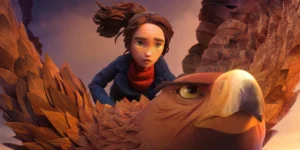
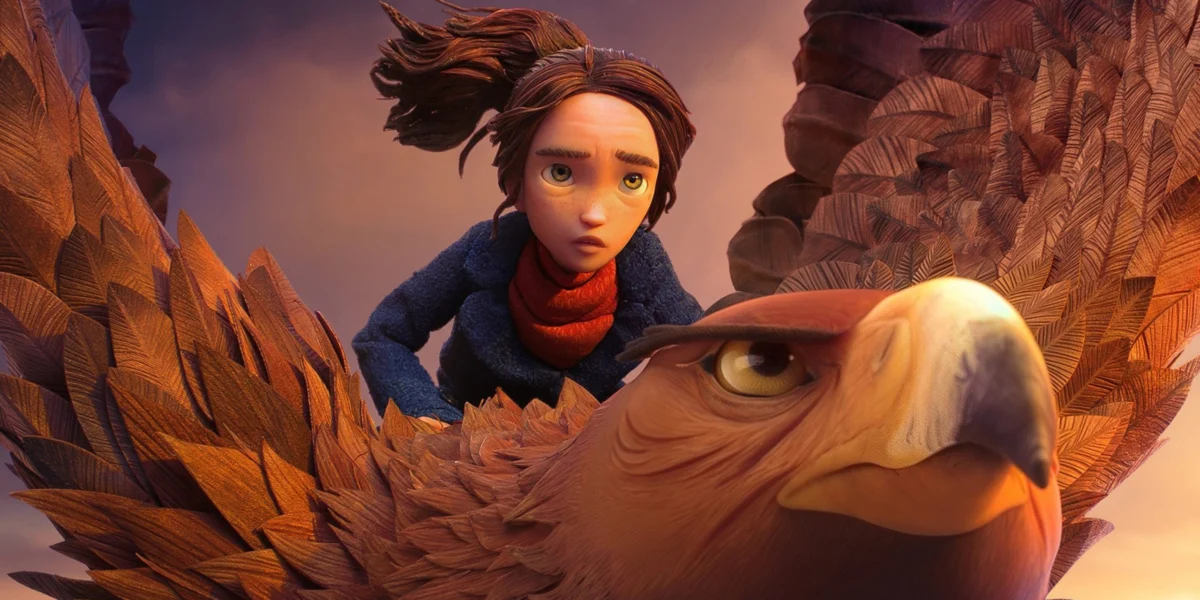
The casting of Wildwood reflects a deliberate effort to ground fantasy archetypes in naturalistic, human performances. Mahershala Ali, voicing the Bandit King Brendan, provides a stoic, compassionate counterweight to the militaristic authoritarianism represented by Tom Waits’ character, Maksim. Angela Bassett’s performance as The General, an eagle with a 64-inch wingspan, required the studio to innovate new structural supports for its largest puppet to date, allowing for complex, fluid movement during flight sequences.
The character of Curtis Mehlberg serves as a subversion of the typical fantasy sidekick. Initially an observer of adventure, his evolution emphasizes that heroism is defined by empathy and resilience rather than physical combat prowess. This focus on the "heroism of kindness" aligns with the film’s broader objective to engage both younger audiences and adults through layered character arcs.
The Impact of the Climax and Technical Execution
The film’s climax, a 12-minute sequence consisting of 411 shots, stands as the most significant battle scene in the history of stop-motion animation. The sequence manages a high volume of moving parts—hundreds of Bandits and thousands of coyotes—without sacrificing visual clarity or narrative coherence.
The integration of sound design, which must be constructed entirely in post-production for stop-motion, adds another layer of complexity. The sound team was tasked with creating a bespoke auditory landscape that differentiates the mechanical, uniform movements of the coyote army from the organic, individual movements of the protagonists. The result is a sonic environment that emphasizes the physical weight and stakes of every interaction, from a rustle of leaves to large-scale explosions.
Broader Implications for the Animation Industry
Wildwood occupies a unique position in the contemporary animation landscape. By maintaining a PG-13 rating, the film addresses mature themes—including death, loss, and the political implications of power—that are often sanitized in the medium. The film’s critical and technical reception suggests a shifting landscape where stop-motion is increasingly viewed not as a niche genre, but as a viable format for epic, high-stakes storytelling comparable to live-action blockbusters.
The success of this production has significant implications for LAIKA’s future projects. By successfully scaling the production of complex, long-form narratives, the studio has demonstrated that the traditional limitations of stop-motion—specifically regarding set size and character count—can be overcome through a combination of proprietary technology and traditional craftsmanship.
Conclusion
As a work of art, Wildwood functions as a synthesis of twenty years of industrial learning. It is an exploration of the human condition, framed within a meticulously constructed magical world. Through its dedication to practical craft and its willingness to tackle complex emotional narratives, the film serves as a definitive case study in the longevity and relevance of stop-motion animation. The collaborative effort between Travis Knight, Chris Butler, and the wider LAIKA team has produced a work that does not merely entertain, but challenges the audience to consider the nature of memory, the weight of grief, and the quiet courage required to navigate the transition into adulthood. The film stands as a testament to the belief that even in a digital age, the labor of the human hand remains a powerful tool for visual storytelling.