

The television industry faces one of its most politically charged and logistically complex awards seasons in recent memory, as the Television Academy prepares for the upcoming Primetime Emmy Awards ceremony. At the center of the controversy is a pivotal rule change regarding the variety series categories, which has merged previously distinct segments into a single, highly competitive battleground. This consolidation sets up an unprecedented showdown between powerhouse late-night franchises, satirical news juggernauts, and venerable sketch institutions.
Against a backdrop of shifting corporate ownership, regulatory pressure, and high-profile cancellations, the 2026 Emmy race has transcended traditional entertainment industry rivalry. For television executives, creators, and politically engaged Academy voters, the September 14 ceremony serves as both a celebration of artistic achievement and an unintentional referendum on the state of free speech and political satire in modern media.
A History of Flux: The Evolution of the Variety Category
To understand the weight of this year’s competition, one must examine the erratic history of the Primetime Emmy Award for Outstanding Variety Series. Established in 1951, the category has undergone numerous structural revisions to accommodate the shifting landscape of television comedy and entertainment.
In the early 1970s, the Television Academy recognized that comparing traditional late-night talk programming, such as The Tonight Show Starring Johnny Carson, against elaborate variety and sketch vehicles like Rowan & Martin’s Laugh-In was an apples-to-oranges endeavor. The category was briefly bifurcated before returning to a unified structure that persisted for decades. Throughout the 1990s and 2000s, late-night talk shows increasingly crowded out musical revues and sketch troupes. Jon Stewart’s era-defining run on Comedy Central’s The Daily Show rewrote the record books with 10 consecutive wins, cementing a golden age for politically charged late-night commentary.
By 2015, the Academy attempted to restore parity by splitting the field once more into Outstanding Variety Talk Series and Outstanding Variety Sketch Series. This division allowed specialized sketch programs like Inside Amy Schumer and Key & Peele to claim victories before Saturday Night Live embarked on a dominant six-year winning streak. Simultaneously, HBO’s Last Week Tonight with John Oliver amassed a staggering seven consecutive wins in the variety talk category.
A subsequent rules adjustment moved John Oliver’s program into the scripted variety sector, where it continued its winning ways. However, the Television Academy’s most recent regulatory pivot has reversed course, merging the variety talk and sketch fields back into a single, combined category. This unification places John Oliver, Stephen Colbert, Jimmy Kimmel, Saturday Night Live, and The Daily Show into direct competition for the first time in over a decade.
Corporate Realignments and the End of an Era for The Late Show
The convergence of these institutional heavyweights coincides with an exceptionally turbulent period for late-night television, marked by sudden cancellations, corporate restructuring, and direct friction with federal regulators and political figures.
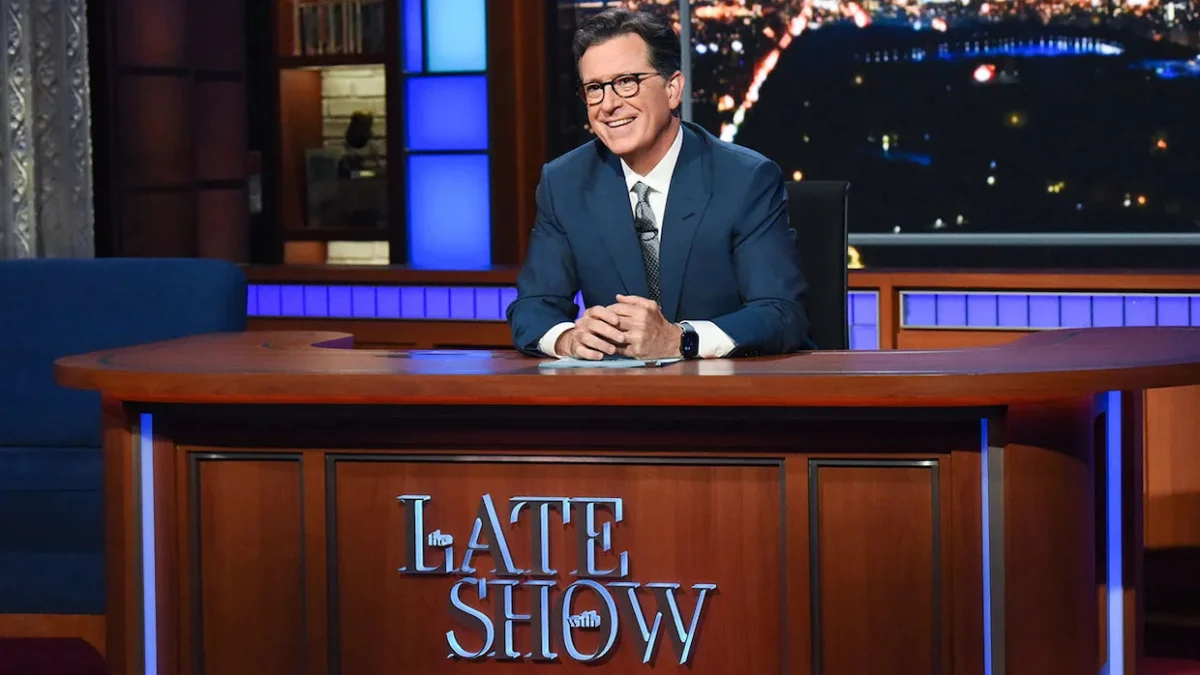
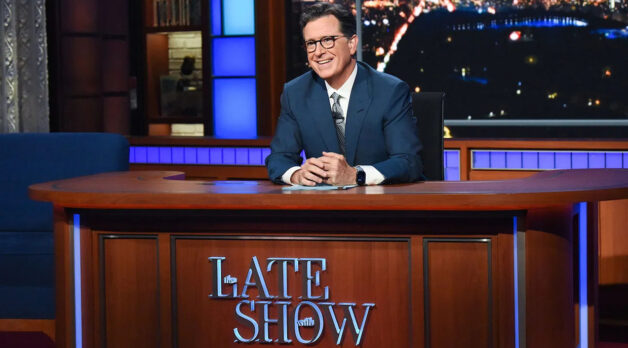
The most seismic industry development arrived on May 21, when CBS brought down the curtain on The Late Show with Stephen Colbert after an 11-season run. The cancellation terminated a 33-year network institution that had occupied the historic Ed Sullivan Theater. The decision followed parent company Paramount’s acquisition by Skydance Media, led by David Ellison.
While network leadership attributed the cancellation to financial realities—citing structural losses exceeding $40 million annually—media analysts and industry critics questioned the timing and motivations behind the move. Colbert’s tenure had been defined by sharp, sustained critiques of the Trump administration, leading skeptics to view the cancellation through the lens of political pressure and the interpersonal dynamics between the new corporate ownership and Washington.
Despite the abrupt termination, Colbert’s final season achieved record engagement and critical acclaim. Last September, The Late Show secured its first Emmy victory in the talk series category, providing a poignant milestone for the 11-time Emmy-winning host. As voting blocks consider their ballots for the upcoming ceremony, industry observers suggest that Colbert’s final season represents a powerful sentimental and symbolic choice for Academy members.
Regulatory Pressure and the Temporary Suspension of Jimmy Kimmel Live!
Parallel to the upheaval at CBS, ABC’s Jimmy Kimmel Live! became the epicenter of a First Amendment crisis that drew intense national scrutiny. On September 17, network executives briefly pulled the program from the airwaves amid mounting pressure from the Trump administration and Federal Communications Commission (FCC) Chairman Brendan Carr.
The suspension followed a monologue in which Kimmel made remarks regarding conservative media figure Charlie Kirk. With powerful broadcast groups, including Nexstar Media Group and Sinclair Broadcast Group, threatening to preempt the program across their affiliate stations, the future of the long-running late-night staple appeared precarious.
However, the suspension triggered an immediate and forceful public mobilization. Grassroots backlash, social media campaigns, and widespread consumer boycotts compelled ABC to reverse its position within days. Kimmel returned to the air on September 23 to historic ratings, drawing 6.26 million television viewers—a series record—while his return monologue amassed over 26 million views across digital platforms.
Having been nominated in the variety category for 12 consecutive years without securing a win, Jimmy Kimmel Live! enters the current race with heightened visibility, bolstered by its defense of creative autonomy under direct government pressure.
The Contenders: Analyzing the 2026 Nominees
With the variety categories consolidated, handicapping the race requires evaluating both critical momentum and broader cultural context.
-
The Late Show with Stephen Colbert (CBS): Positioned as both a career retrospective for its host and a symbolic statement against corporate and political censorship, Colbert’s program holds considerable emotional leverage with voters. A victory would serve as a definitive capstone to a legendary broadcasting career.
-
Jimmy Kimmel Live! (ABC): Having navigated an unprecedented suspension and subsequent ratings triumph, Kimmel’s show embodies the resilience of broadcast late-night under duress. While historically shut out of the top category win, the show’s defense of free expression elevates its narrative profile.
-
Last Week Tonight with John Oliver (HBO): Having dominated the talk series category for years before shifting formats, Oliver’s meticulously researched weekly satire remains a critical darling. Its return to the main variety field reintroduces a formidable, highly decorated competitor that consistently appeals to voting demographics within the Academy.
-
Saturday Night Live (NBC): Riding the momentum of its landmark 50th-anniversary celebration, SNL remains an institutional anchor. Despite the departure of fan-favorite cast member Bowen Yang and structural shifts in its 51st season—including the expansion of the franchise via the London-based SNL UK—Lorne Michaels’ sketch empire continues to pivot effectively toward the absurd, insulating itself somewhat from the harsher partisan winds buffeting its late-night peers.
-
The Daily Show (Comedy Central): Following its transition to a hybrid model featuring Jon Stewart anchoring Monday broadcasts alongside a rotating roster of guest hosts during the week, the program continues the satirical lineage that defined a generation of political comedy. Having secured nominations in its multi-host configuration previously, it remains a primary contender for the fifth slot.
Broader Implications for Television and Politics
The convergence of these programs in a single Emmy category highlights the intersection of entertainment, corporate media consolidation, and political discourse. The decision of Academy voters will be scrutinized not merely as an assessment of comedic craft, but as an indicator of how the creative community perceives the current sociopolitical climate.
For Hollywood trade groups and liberal-leaning industry professionals, the ballot provides a tangible mechanism to signal solidarity with artists who have faced direct pressure from executive authorities. Conversely, the outcome may intensify ongoing debates regarding the appropriate boundaries of political commentary on publicly licensed broadcast airwaves.
As the September 14 ceremony approaches, the stakes extend far beyond the gold statuettes. Regardless of which production emerges victorious, the surrounding discourse virtually guarantees that the evening will reverberate well beyond the auditorium, cementing this Emmy cycle as one of the most consequential in television history.