

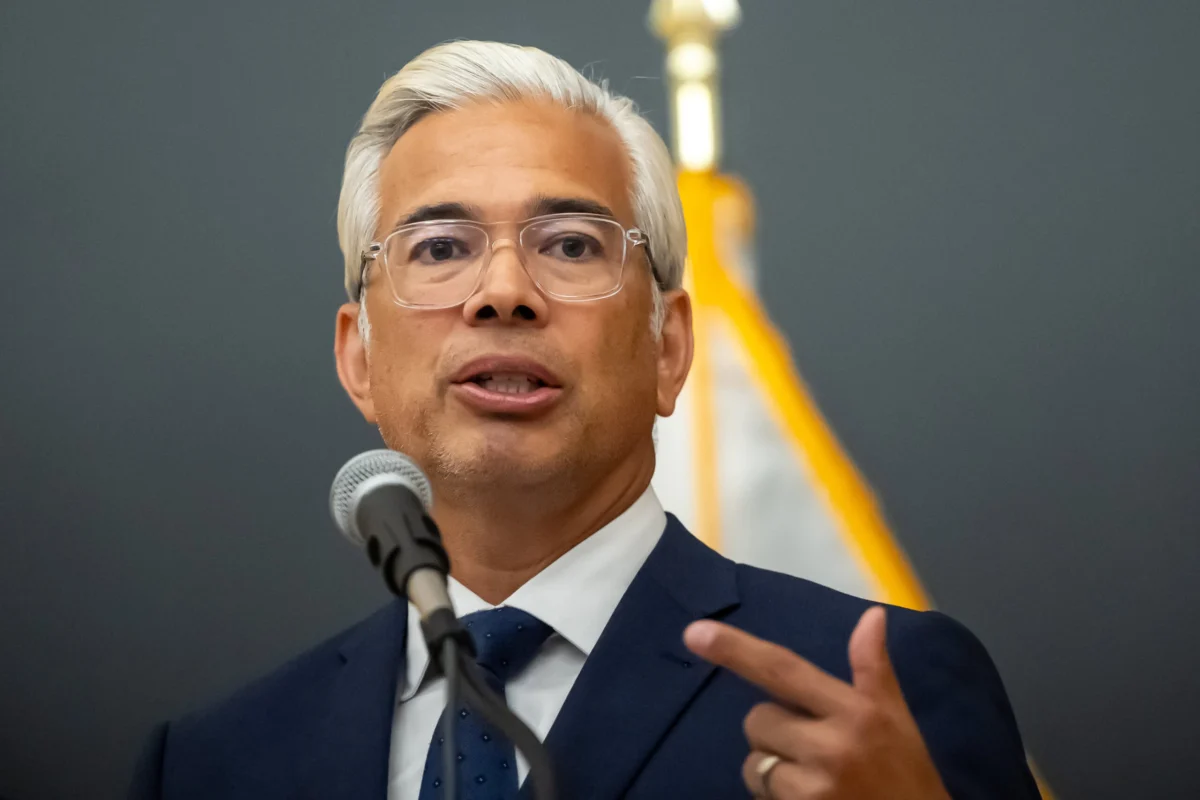
The landscape of American media faces a pivotal legal reckoning as California Attorney General Rob Bonta signaled on Thursday that any potential settlement regarding the proposed acquisition of Warner Bros. Discovery by Paramount Skydance will require significant structural concessions. Speaking to CNBC’s David Faber, Bonta emphasized that the coalition of 12 states currently suing to block the merger remains steadfast in its focus on the anticompetitive implications of the deal, specifically regarding market concentration in film and television production.
The lawsuit, which was filed in July 2026, represents a significant hurdle for Paramount CEO David Ellison, who has staked the future of the company on this massive consolidation. As the March 2027 trial date approaches, the tension between state regulators and the media conglomerate has intensified, centering on whether the proposed entity would violate the Clayton Antitrust Act, a cornerstone of American competition law that has been in effect for over a century.
The Scope of the Antitrust Challenge
The legal complaint lodged by Bonta and his counterparts—including attorneys general from Arizona, Colorado, Connecticut, Massachusetts, Minnesota, Nevada, New Jersey, New Mexico, New York, Oregon, and Washington—targets the sheer scale of the combined entity. According to the filing, the merger would grant the new company control over nearly one-third of all film production and approximately one-third of all basic cable television programming in the United States.
Bonta expressed frustration with Paramount’s attempts to broaden the narrative of the dispute, suggesting that the company is trying to distract from the core legal issues. "They want to talk about the streaming market, which we don’t allege in our complaint," Bonta stated. "They want to talk about CNN, which is not a focus of our complaint. They want to talk about the foreign regulators. We want to talk about the three markets that we set forth in our complaint, where we think there’s antitrust violation."
The attorney general’s insistence on "robust structural remedies" suggests that minor divestitures or behavioral promises will likely be insufficient to satisfy the states. In antitrust litigation, structural remedies typically involve the forced sale of business units or assets to ensure that competition remains viable in the market, as opposed to behavioral remedies, which dictate how a company must conduct its business operations.
Chronology of the Proposed Mega-Merger
The path to this legal impasse has been marked by ambitious corporate maneuvering and mounting regulatory scrutiny.
- Early 2026: Paramount Skydance initiates discussions to acquire Warner Bros. Discovery, aiming to create a media juggernaut capable of competing with global tech giants and established streaming leaders.
- July 2026: A coalition of 12 state attorneys general files a formal lawsuit to block the transaction, citing potential violations of Section 7 of the Clayton Act.
- July 24, 2026: Facing pressure from regulators, Paramount agrees to delay the acquisition until as late as June 2027, providing more time for litigation and potential settlement discussions.
- August 2026: During a quarterly earnings call, CEO David Ellison publicly reiterates his confidence that the deal will close, despite the ongoing legal headwinds.
- March 2027 (Scheduled): A trial is set to begin, which will determine whether the merger can proceed under current terms or if the states will succeed in their request for a permanent injunction.
The Legal Standard: Clayton Act Section 7
At the heart of the disagreement is the application of the Clayton Antitrust Act. Bonta characterized the case as a "meat-and-potatoes" antitrust issue, rejecting the argument that the decline of traditional pay-TV subscribers—a trend driven by the rise of streaming—renders market concentration irrelevant.
"Whether the market is shrinking or growing is really irrelevant," Bonta remarked. The legal principle at play is that a merger should not be allowed if its effect "may be substantially to lessen competition, or to tend to create a monopoly." By controlling roughly 33% of the film and basic cable markets, the merged Paramount-WBD entity would create what Bonta described as a "presumptively illegal market concentration."
The defense, led by Paramount’s trial counsel Jeffrey Kessler, argues that the antitrust complaint is a fundamental misunderstanding of the modern entertainment ecosystem. Paramount maintains that the current media environment is hyper-competitive, with traditional studios facing existential pressure from tech-first platforms like Netflix, Amazon, and Apple. From Paramount’s perspective, the merger is not a move to monopolize, but rather a necessary step to achieve the scale required to survive in an era of rapidly changing consumer habits.
Implications for the Media Industry
If the merger proceeds in its current form, it would consolidate an immense portfolio of intellectual property and distribution channels. The combined company would house Warner Bros. and Paramount Pictures, alongside CBS, MTV, BET, CNN, and the Discovery network, as well as the streaming platforms Paramount+ and HBO Max.
The concentration of such diverse assets under a single corporate umbrella has raised alarms about the potential for price hikes for cable providers and, by extension, consumers. Furthermore, critics of the deal argue that such a consolidation would reduce the number of major studios greenlighting independent or mid-budget films, thereby limiting the diversity of creative content available to the public.
For the entertainment industry, the case serves as a bellwether for how legacy media companies will be treated by regulators in the future. As these companies struggle to pivot toward sustainable streaming business models, the temptation to merge for the sake of cost-cutting and library expansion is high. However, Bonta’s comments suggest that state regulators are increasingly skeptical of "synergy-driven" mergers that may come at the cost of market competition.
Prospects for a Settlement
While the trial remains the primary focus, the door for negotiation has not been closed. Bonta confirmed that his office is willing to engage in good-faith discussions, noting that he would "prefer to resolve cases in the boardroom instead of the courtroom." However, he made it clear that any settlement must address the specific concerns laid out in the states’ complaint.
"If Ellison and Paramount want to come to the table in good faith and talk, we want to talk, too," Bonta stated.
The strategy for Paramount remains aggressive. With lead counsel Jeffrey Kessler previously suggesting the company would be willing to take the matter to the Supreme Court if necessary, the legal battle could extend well beyond the March trial. For now, the industry watches closely to see if the boardroom can produce a resolution before the courtroom process forces a permanent and perhaps more restrictive outcome.
As the deadline for the merger approaches in mid-2027, the coming months will likely be defined by behind-the-scenes negotiations and the rigorous preparation of evidence by both the coalition of states and the legal team at Paramount. The resolution of this case will not only determine the fate of one of the largest media deals in recent history but will also set a significant legal precedent for future consolidation in the content-creation sector.