The long-standing fascination between Wall Street and the streaming industry has entered a new, more disciplined chapter. For over a decade, the relationship was defined by a singular obsession with subscriber acquisition, as investors rewarded media companies for expanding their global footprints at almost any cost. This era of "growth at all costs" was fueled by the mass exodus of consumers from traditional cable television bundles—a phenomenon known as cord-cutting—in favor of on-demand, direct-to-consumer platforms. However, as the market matures and the economic landscape shifts, the metrics of success have fundamentally changed. Today, the primary focus for analysts and investors is no longer just how many people are watching, but how much profit each viewer generates.
To satisfy these evolving expectations, the industry’s major players have implemented a series of aggressive strategic pivots. These include significant price hikes, rigorous crackdowns on password sharing, and the rapid expansion of advertising-supported subscription tiers. Furthermore, the pressure to achieve scale has ignited a new wave of consolidation rumors and activities, such as Skydance’s pursuit of Paramount Global and ongoing discussions regarding Warner Bros. Discovery’s library of high-value assets. While streaming continues to be the primary engine driving media stock valuations, particularly during quarterly earnings cycles, a clear divide has emerged between the industry leader, Netflix, and the legacy media companies still struggling to find their footing in a post-linear world.
The Financial Realignment of the Streaming Sector
The shift in investor sentiment is rooted in the harsh reality of the bottom line. For years, legacy media companies like Disney, Warner Bros. Discovery, and Paramount operated their streaming services at a loss, viewing them as necessary investments to secure a future beyond declining linear television networks. However, the patience of the public markets has worn thin. Robert Fishman, a senior research analyst at MoffettNathanson, highlighted this shift in a recent research note, questioning whether streaming is fundamentally a "good business." His conclusion was nuanced: the business model is viable, but only for those services that possess sufficient scale to offset the massive costs of content production and technology infrastructure.
The financial data underscores this disparity. Netflix, which transitioned from a DVD-by-mail service to a global streaming powerhouse, reported a robust operating margin of 29.5% in 2025. In contrast, legacy competitors are still working toward double-digit profitability. The Walt Disney Company, for instance, has guided investors toward a 10% operating margin for its direct-to-consumer business by the 2026 fiscal year. While Disney has shown steady progress toward profitability, and platforms like Comcast’s Peacock are successfully narrowing their losses, the gap between Netflix and the rest of the field remains significant.
Doug Creutz, a senior research analyst at Cowen, noted that subscriber numbers are no longer the primary headline of earnings reports. "Now it’s all about profitability," Creutz stated. "That’s the metric by which these businesses are being judged. It’s: can you get to 10% operating profit? Can you get 15%? Can you get 20%? Can you get to where Netflix is?" This benchmark sets a high bar for companies that are simultaneously managing the decline of their once-lucrative linear television and theatrical distribution divisions.
A Chronology of the Streaming Wars
To understand the current state of the industry, it is essential to look at the timeline of its evolution:
- 2010–2015: The Disruptive Inception. Netflix begins its transition into original content with "House of Cards," proving that streaming platforms could compete with premium cable networks like HBO. Cord-cutting begins to accelerate as consumers seek lower-cost alternatives to the $100+ monthly cable bill.
- 2019–2020: The Launch of the Titans. The "Streaming Wars" officially commence with the launch of Disney+ and Apple TV+, followed shortly by HBO Max (now Max) and Peacock. The COVID-19 pandemic provides an artificial boost to subscriber numbers as homebound consumers seek entertainment.
- 2022: The Great Correction. In April 2022, Netflix reports its first quarterly subscriber loss in over a decade. The news sends shockwaves through the industry, leading to a massive sell-off in media stocks. Wall Street realizes that subscriber growth has a ceiling and begins demanding a path to profitability.
- 2023–2024: The Implementation of Austerity. Streamers begin canceling underperforming shows, removing content from libraries to claim tax write-offs, and introducing ad-supported tiers. Netflix launches its password-sharing crackdown, which proves surprisingly successful at converting "borrowers" into paid subscribers.
- 2025–2026: The Era of Efficiency. The industry enters a phase of consolidation and "the great rebundling." Platforms begin offering discounted bundles (e.g., Disney+, Hulu, and Max) to reduce churn and increase the average revenue per user (ARPU).
The Netflix Standard and the Scale Advantage
Netflix remains the uncontested leader in the streaming space, largely due to its first-mover advantage and its status as a pure-play technology company. By the start of 2026, Netflix reached a milestone of 325 million global paid customers. This scale allows the company to spread its multi-billion-dollar content budget over a much larger user base than its competitors.
Alicia Reese, senior vice president of equity research at Wedbush, points out that Netflix does not carry the "baggage" of traditional media. "They don’t have the decline of legacy media to offset," Reese noted. "They don’t have theatrical to worry about." This agility has allowed Netflix to experiment with new revenue streams, including merchandising, live events, and gaming, further diversifying its business model.
However, even the industry giant faces challenges. The landscape for viewership is more fragmented than ever, with Netflix competing not just with Disney or Max, but with social media platforms like TikTok and YouTube, as well as the massive gaming industry. In response, Netflix has leaned heavily into its ad-supported tier, which was introduced in late 2022. By 2025, the company’s advertising revenue exceeded $1.5 billion, and that figure is expected to double by the end of 2026.
The Pricing Ceiling and Consumer Pushback
As streaming services strive for profitability, the cost to the consumer has risen dramatically. Over the past 24 months, nearly every major streaming service has increased its monthly subscription fees. For many consumers, the cumulative cost of maintaining several ad-free streaming subscriptions now rivals the cost of the cable bundles they originally fled.
Industry analysts are closely watching for the "pricing ceiling"—the point at which consumers begin to cancel services in significant numbers due to cost. To mitigate this, streamers are increasingly steering customers toward ad-supported plans, which often generate more total revenue per user through a combination of a lower subscription fee and high-value ad inventory.
Currently, premium ad-free tiers for services like Max and Netflix range from $15.49 to over $20.00 per month, while ad-supported versions are typically priced between $7.99 and $9.99. Matthew Condon, an analyst at Citizens, suggested that despite recent hikes, Netflix still has "pricing runway" because its revenue per streaming hour remains low compared to its peers. Nevertheless, the trend toward bundling—where multiple services are offered for a single, discounted price—suggests that companies are aware of consumer fatigue.
Advertising: The New Frontier for Digital Growth
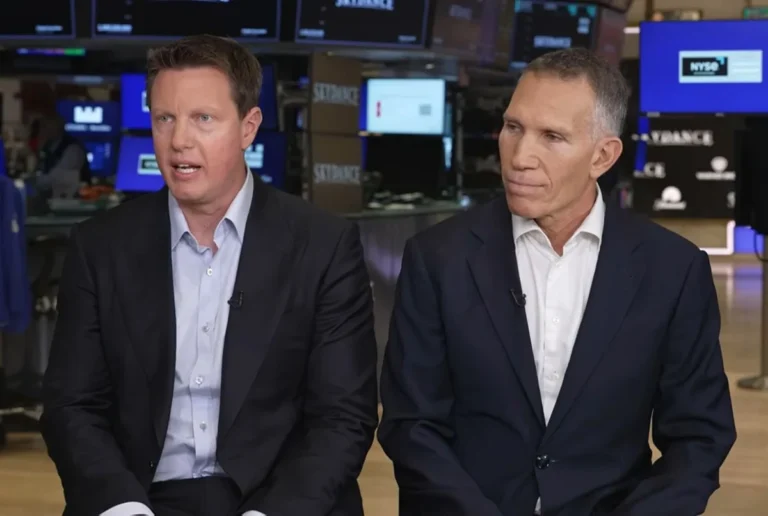
Advertising, once seen as anathema to the premium streaming experience, has become its most vital growth engine. Netflix co-CEO Greg Peters recently emphasized that the opportunity in advertising is "massive." While the company was late to the ad game, its ability to target specific demographics with precision has made it an attractive partner for global brands.
Legacy media companies had a head start in this area. Hulu has operated a successful ad-supported model for over a decade, and services like Peacock and Paramount+ were built with advertising as a core component. The challenge for these companies is that while streaming ad revenue is growing, it has not yet fully replaced the massive advertising dollars that have disappeared from linear television. As tech giants like Google and Meta continue to dominate the digital ad market, streamers are in a fierce competition to prove that their high-quality video environments offer a better return on investment for advertisers.
Future Implications and the Path Forward
The transition from a growth-oriented market to a profit-oriented one marks the "coming of age" for the streaming industry. For legacy media, the next two years will be a period of survival and restructuring. The success of Disney’s efforts to reach a 10% margin will be a bellwether for the rest of the industry. If traditional media giants cannot achieve sustainable profitability in streaming, further consolidation is inevitable.
For consumers, the era of "cheap" premium content is over. The future of streaming will likely be characterized by more advertisements, more bundles, and higher prices for ad-free experiences. However, the intense competition for profitability may also lead to a more curated and higher-quality content landscape, as platforms can no longer afford to greenlight projects that do not have a clear path to engaging a broad audience.
As Wall Street continues to scrutinize operating margins and ARPU, the "love affair" with streaming remains, but it is now a relationship built on financial discipline rather than speculative potential. The question remains whether any legacy player can truly replicate the high-margin success of Netflix, or if the market will ultimately consolidate into a few dominant survivors.