


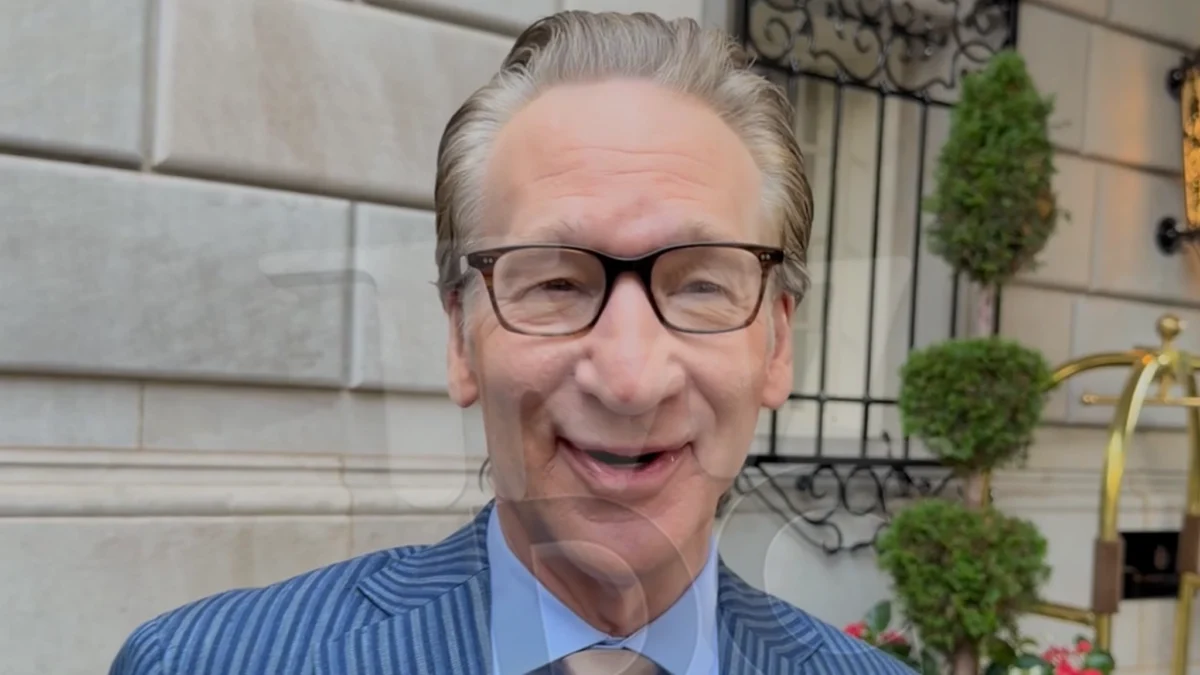
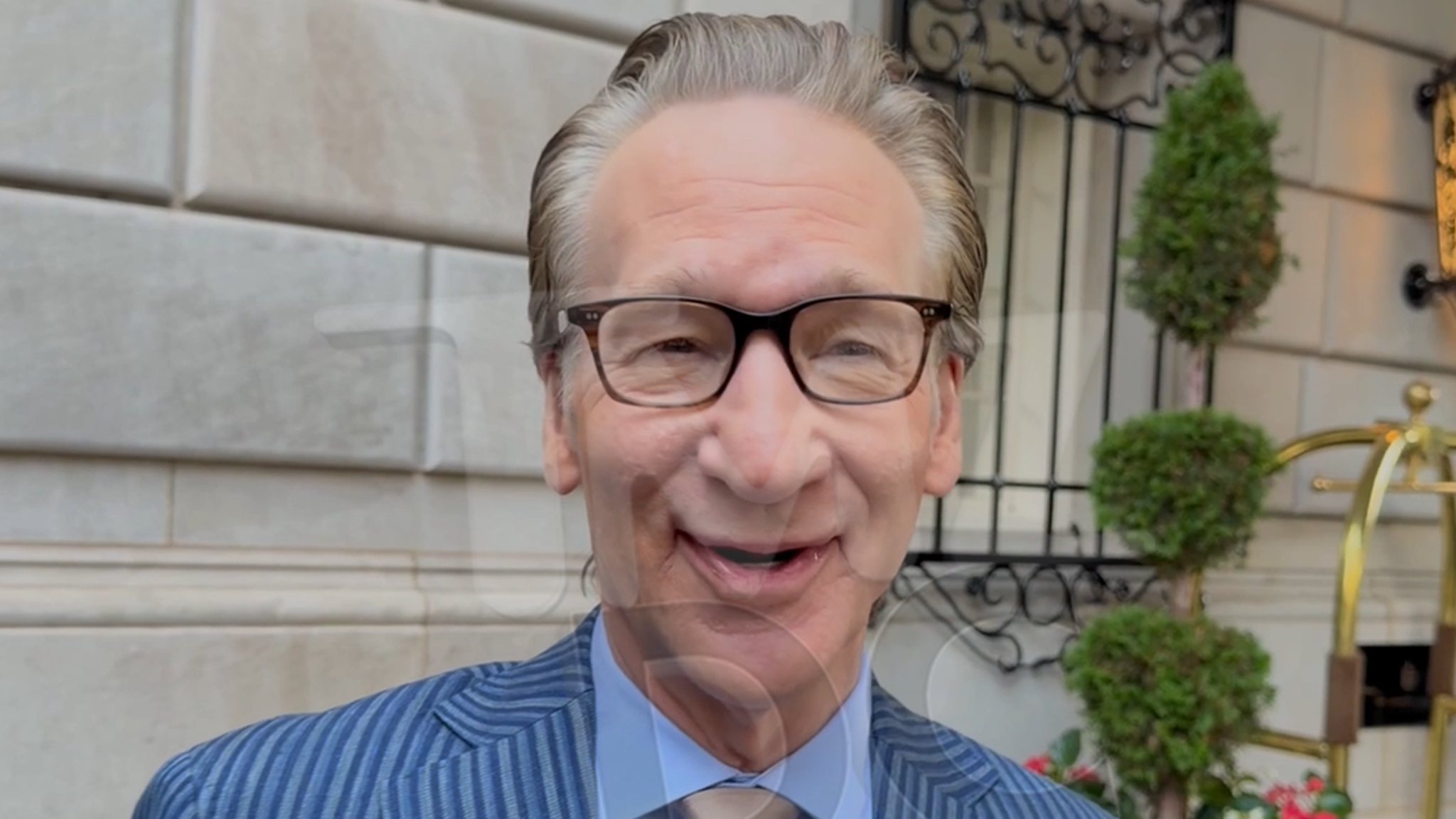
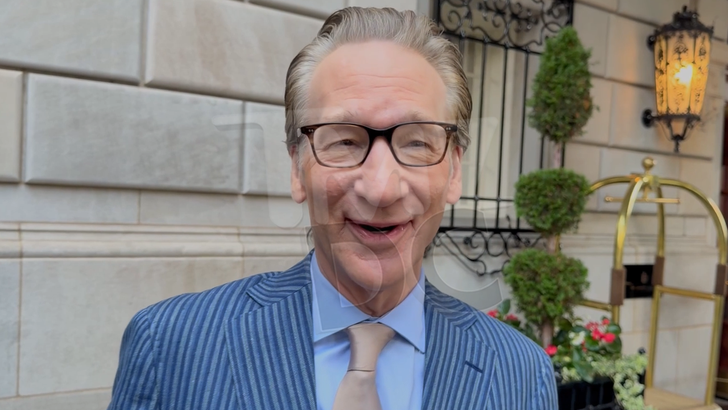
On Sunday, June 28, 2026, acclaimed political satirist Bill Maher stood at the precipice of one of American comedy’s highest honors, the Mark Twain Prize for American Humor, yet his primary concern ahead of the prestigious ceremony at the Kennedy Center was not the political undercurrents swirling around the event or the gravitas of his acceptance speech. Instead, the veteran comedian found himself fixated on a far more immediate and relatable dilemma: his brand-new shoes.
Approached by Jacob from TMZ moments before the gala, Maher offered a characteristic blend of self-deprecating humor and candid observation. While the broader public and media were keenly attuned to the political nuances associated with the Kennedy Center and its recent controversies, Maher’s attention was firmly anchored to his footwear, expressing a humorous anxiety about the possibility of a stumble that might send him sprawling face-first onto the stage. This seemingly trivial concern provided a revealing glimpse into the comedian’s persona, juxtaposing the immense weight of the honor with a profoundly human, almost slapstick, fear of public embarrassment. His running commentary on his shoes, filled with his signature wit, served as an impromptu comedic prelude to an evening dedicated to celebrating his extensive contributions to American humor.
The Mark Twain Prize: A Legacy of Laughter and Critique
The Mark Twain Prize for American Humor, established in 1998 by the John F. Kennedy Center for the Performing Arts, stands as the nation’s premier recognition for individuals who have made an outstanding impact on American society through humor. Named after Samuel Langhorne Clemens, better known as Mark Twain, the 19th-century novelist and humorist celebrated for his incisive social commentary, the award seeks to honor those who embody Twain’s spirit of satirical observation and profound wit. Recipients are selected for their ability to use humor not merely for entertainment but as a powerful tool for social critique, reflection, and cultural dialogue.
Past recipients form a pantheon of comedic legends, including Richard Pryor (the inaugural honoree in 1998), Whoopi Goldberg, Bob Newhart, George Carlin, Steve Martin, Ellen DeGeneres, Dave Chappelle, and Jon Stewart. Each of these artists, in their unique way, has pushed the boundaries of comedy, challenging societal norms and sparking important conversations. The selection of Bill Maher for the 2026 prize underscores his enduring relevance and the significant role he has played in shaping political discourse through comedy over several decades. The ceremony typically involves a star-studded lineup of fellow comedians, actors, and public figures offering heartfelt tributes and comedic roasts, culminating in the honoree’s acceptance speech. It is broadcast nationally, bringing the celebration of American humor to a wide audience.
Bill Maher’s Unfiltered Legacy in American Comedy
Bill Maher’s career spans over four decades, marked by an unwavering commitment to political satire and an often-controversial, always-unfiltered perspective. Born in New York City, Maher began his career in stand-up comedy, honing a sharp, intellectual style that quickly set him apart. His early television breakthrough came with "Politically Incorrect," a late-night talk show that premiered on Comedy Central in 1993 before moving to ABC in 1997. The show was revolutionary for its time, featuring a rotating panel of guests from diverse backgrounds – politicians, journalists, celebrities, and academics – engaging in lively, often contentious, debates on current events. Maher’s role as moderator was to instigate, provoke, and often deliver the punchline, solidifying his reputation as a fearless commentator unafraid to challenge conventional wisdom from any side of the political spectrum.
Following the cancellation of "Politically Incorrect" in 2002, Maher swiftly transitioned to HBO with "Real Time with Bill Maher" in 2003. This platform allowed him even greater freedom, operating without the constraints of network television censorship. "Real Time" quickly became a staple for viewers seeking incisive political analysis, often delivered with a biting wit. The show maintains a similar panel discussion format, augmented by one-on-one interviews with prominent figures and Maher’s signature "New Rules" segment, a satirical monologue that dissects absurdities in politics and culture. Throughout his career, Maher has consistently positioned himself as a contrarian, a "liberal who criticizes liberals," and a voice of reason in an increasingly polarized world, even if his definitions of "reason" often spark their own debates. His dedication to challenging hypocrisy, whether from the left or the right, has earned him both fervent admirers and staunch critics, making him a perennial figure in the national conversation. His body of work, including several stand-up specials and documentary films like "Religulous," firmly establishes him as a critical voice in American political and social commentary.
The Kennedy Center’s Political Tempest: The Trump Chairmanship
The context surrounding the 2026 Mark Twain Prize ceremony was undeniably colored by recent, highly publicized controversies involving the Kennedy Center and former President Donald Trump. As TMZ reported, the venue had been at the center of headlines for months leading up to the event, specifically concerning Trump’s brief, and largely contentious, tenure as chairman of the Kennedy Center Board of Trustees.
Presidential appointments to the Kennedy Center Board are a long-standing tradition, designed to ensure a connection between the nation’s highest office and its premier cultural institution. However, Trump’s appointment and subsequent actions ignited a firestorm of protest within the artistic community and beyond. The controversy reached its zenith when President Trump’s name was prominently displayed on the building as chairman, a move that was met with immediate and widespread backlash. Critics argued that such a visible association compromised the artistic integrity and political neutrality of the Kennedy Center, an institution meant to represent the breadth of American culture rather than a specific political ideology. Many artists, cultural figures, and even some board members expressed discomfort or outright condemnation, fearing that the institution’s independence and its ability to attract diverse talent would be undermined.
The timeline of this particular controversy unfolded over several months:
- Late 2025: President Trump assumes the chairmanship of the Kennedy Center Board of Trustees, an appointment that draws immediate scrutiny given his previous strained relationship with various cultural figures and institutions during his time in office.
- Early 2026: The decision to prominently display Trump’s name on the Kennedy Center building as chairman is implemented. This move, intended by some to signify presidential support, is instead widely perceived as an unprecedented politicization of the non-partisan cultural landmark.
- February – May 2026: A wave of criticism erupts from artists, advocacy groups, and former Kennedy Center honorees. Petitions circulate, and public statements decrying the politicization are issued. There are reports of potential boycotts and concerns raised about the center’s funding and reputation.
- June 2026: Following intense public pressure and internal deliberations, the Kennedy Center administration, or possibly President Trump himself, makes the decision to remove his name from the prominent signage. While the legal specifics of his chairmanship might have remained, the public-facing symbol of his association was withdrawn, signaling an attempt to de-escalate the controversy and reaffirm the center’s commitment to artistic impartiality.
It was against this backdrop of cultural tension and political maneuvering that Bill Maher arrived to accept his honor. The question posed to him about whether he had spoken to President Trump ahead of the ceremony was therefore not merely journalistic curiosity but a pointed inquiry into how Maher, a figure known for his political commentary, navigated this fraught environment. Maher’s response, though not detailed in the original report beyond its "short, confident" nature, likely reflected his pragmatic and often cynical view of political theater, perhaps even a subtle jab at the absurdity of the situation. His choice to focus on the immediate, tangible concern of not falling, rather than engaging deeply with the political drama, could be seen as a comedic deflection, a way to underscore the sometimes-ridiculous nature of public life and the media’s obsession with political spectacle.
The Comedian’s Footing: A Metaphor for Navigating High Stakes
Maher’s fixation on his new shoes, and his running commentary about the potential for a mishap, serves as more than just a humorous anecdote; it offers a compelling metaphor for the comedian’s approach to his craft and his public life. Here was a man about to receive one of comedy’s highest accolades, surrounded by the weight of cultural expectation and political controversy, yet his most vocal concern was maintaining his physical equilibrium. This unexpected focus on the mundane underscored a deeper truth about the nature of performance and public speaking: the vulnerability inherent in stepping into the spotlight.
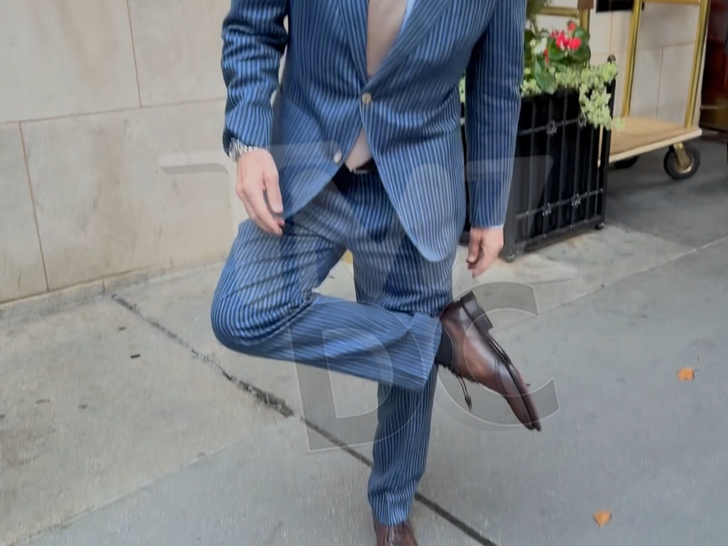
For a comedian whose career is built on sharp observations and intellectual agility, the fear of a physical misstep—of literally falling flat—is a potent comedic device. It humanizes Maher, connecting him to the universal anxieties of public performance. Furthermore, it subtly highlights his comedic philosophy: even in the most serious or prestigious moments, there is always room for a laugh, often at one’s own expense. His ability to crack jokes while fielding questions about the honor, only to quickly pivot back to his footing, demonstrated his mastery of comedic timing and his capacity to find humor in any situation, including his own potential clumsiness. This self-deprecating style is a hallmark of many great comedians, allowing them to disarm audiences and establish a relatable persona, even when discussing complex or controversial topics.
Broader Implications: Humor as a Cultural Barometer
Bill Maher’s receipt of the Mark Twain Prize, particularly amidst the political backdrop of the Kennedy Center’s recent controversies, underscores several broader implications about the role of humor in contemporary American society. First, it reaffirms the enduring power of political satire as a vital form of social commentary. In an era often characterized by deep divisions and echo chambers, comedians like Maher serve as crucial voices, challenging narratives, exposing hypocrisy, and often forcing uncomfortable truths into public discourse. The award itself, named after a figure famous for using humor to critique society, implicitly acknowledges this function.
Second, the event highlights the increasing intersection, and often collision, of culture and politics. The Kennedy Center, as a national institution, is inherently tied to the machinery of government through its funding and board appointments. However, its mission to celebrate artistic achievement often clashes with the partisan nature of political office. Maher’s acceptance of an award from an institution recently embroiled in political debate demonstrates the delicate balance cultural organizations must strike. It also speaks to the resilience of the arts to transcend, or at least navigate, political turbulence. The public outcry over Trump’s chairmanship and the subsequent removal of his name suggests a collective societal desire to protect cultural institutions from overt political appropriation, reaffirming their role as independent arbiters of artistic merit.
Finally, Maher’s personal demeanor—his confident dismissal of critics and his focus on the practicalities of the evening—serves as a reminder of the seasoned performer’s resilience. For decades, Maher has weathered criticism from all political sides, maintaining his unique voice. His casual retort to critics, though brief, signals a long-standing understanding that in the realm of political comedy, controversy is often part of the territory, and maintaining one’s conviction is paramount. The jokes may indeed bring the house down, but as Maher humorously implied, the real challenge for the comedian is to ensure he remains upright, both physically and metaphorically, in the face of scrutiny and high expectations. His recognition with the Mark Twain Prize solidifies his place not just as a comedian, but as a significant cultural commentator whose work will continue to provoke thought and laughter for years to come.