

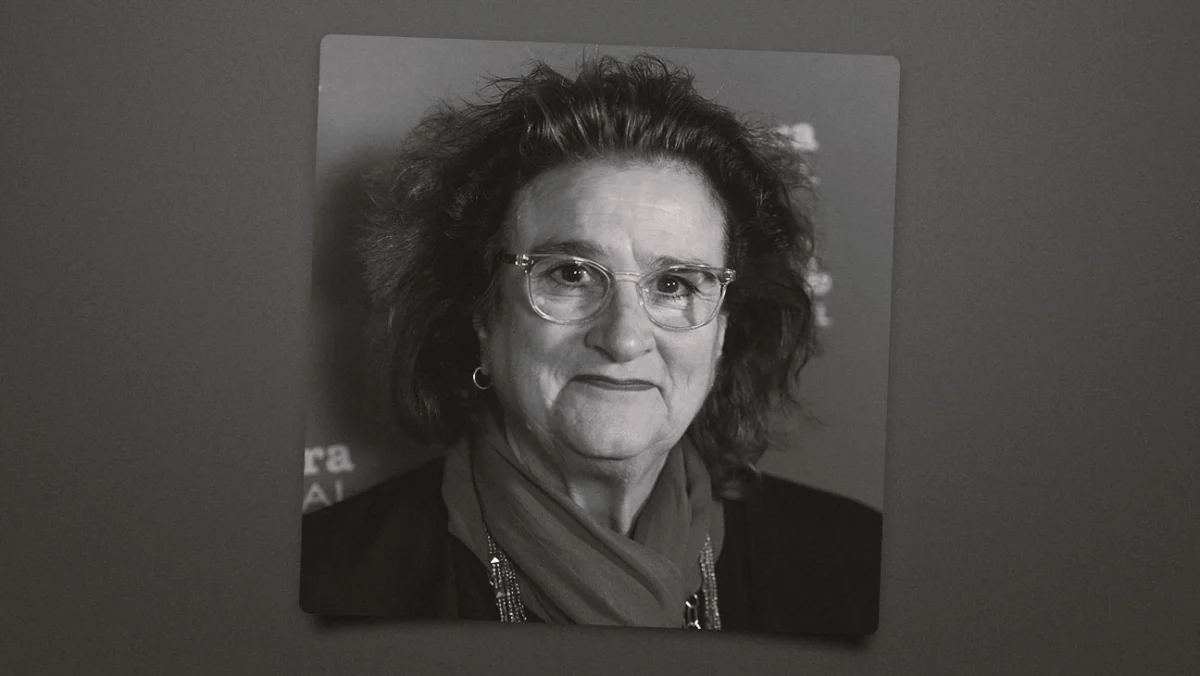
Barbara Ling, the acclaimed production designer whose unparalleled ability to transport audiences through time and space earned her an Academy Award for meticulously re-creating 1969 Los Angeles in Quentin Tarantino’s critically celebrated film Once Upon a Time in Hollywood, has passed away. Ling, a titan in her field who shaped the visual landscapes of over four decades of cinema, died on Thursday in Santa Barbara following a courageous battle with cancer. She was 73 years old. Her passing was announced by a spokesperson for WME, her agency, leaving a profound void in the film industry.
A Legacy Etched in Time: The Once Upon a Time in Hollywood Triumph
Ling’s most celebrated achievement came in 2020, when she shared the Oscar for Best Production Design with set decorator Nancy Haigh for their transformative work on Once Upon a Time in Hollywood. Their collaboration breathed vivid, authentic life into Tarantino’s nostalgic ode to a bygone era of Tinseltown. The film, released in 2019, was not merely a backdrop for its star-studded cast, but a character in itself, meticulously constructed to evoke the sights, sounds, and even the tactile sensation of Los Angeles at the cusp of a cultural revolution.
Tarantino’s vision for the film was uncompromisingly clear, as Ling recounted in a 2019 interview: “His main thing from the moment we sat down was, ‘I want this to be real. I want to see. I want to smell and I feel that Hollywood. I don’t want to do green screen over here or have the digital interpretation. Let’s really change the billboards, and let’s put the real facades back on.’” This directive, a refreshing challenge in an age dominated by digital effects, became the guiding principle for Ling and her team.
The task of resurrecting 1969 Hollywood Boulevard was an immense undertaking, demanding not just artistic flair but also significant logistical and engineering prowess. Ling elaborated on the intricate process: “That is, to me, very exciting. It’s something we don’t do much of anymore. I knew that what he wanted was to encompass himself and the actors into an environment that you could feel is real. You’re not just staring at something that’s a piece of green screen where we piece together later. That was the starting ground of this.” Her team had to identify existing structures capable of supporting the elaborate period dressing. This involved a complex interplay of design and engineering, particularly when reinstating iconic elements like the Pussycat Theater marquee. “To build those marquees, it’s added weight. These are old and fragile buildings that we were working with. We had to also work with engineers to make sure we weren’t going to pull the facade off once we rebuilt the old signs. It was laborious but well worth it.”
The culmination of these efforts was nothing short of cinematic magic. Ling vividly recalled the transformative power of their work: “The night of the first shoot when all the neon lit up and the period cars came out and [Arianne Phillips’] costumes were out there, you absolutely believed you were in 1969 because everything was real. It was a movie filming a real street. We pretty much carried that theme through Westwood [to re-create the Bruin Theater] and everywhere we shot.” This commitment to practical, tangible set design not only distinguished Once Upon a Time in Hollywood but also served as a powerful testament to the immersive potential of authentic environments in storytelling. The film went on to garner ten Academy Award nominations, winning two, including Ling’s well-deserved recognition for her meticulous craft. Her collaboration with Nancy Haigh was not new, as the two had previously worked together on the 1988 film Checking Out, laying the groundwork for their Oscar-winning synergy.
A Versatile Visionary: Spanning Genres and Decades
Born in August 1952, Barbara Claire Ling’s journey into the visual arts began far from the silver screen. She cultivated her foundational skills in the vibrant world of live theater, where she designed sets and lighting for an impressive portfolio of over 200 theater, opera, and musical productions. This extensive experience in creating immersive, temporary environments for live performances honed her keen eye for detail and understanding of how visual elements impact audience experience. Among her early notable works was the 1981 HBO special The Pee-wee Herman Show, taped at the iconic Roxy in West Hollywood, demonstrating her versatility even in early stages of her career.
Ling made a pivotal leap to filmmaking when the visionary musician and artist David Byrne personally enlisted her to design his directorial debut, the quirky and critically acclaimed True Stories (1986). This collaboration marked the beginning of a prolific and diverse film career that showcased her remarkable ability to adapt her artistic vision across vastly different genres and stylistic demands.
Throughout her career, Ling demonstrated a rare talent for both period authenticity and contemporary realism, alongside a flair for stylized fantasy. Her filmography stands as a testament to this versatility:
- Period Authenticity: Beyond Once Upon a Time in Hollywood, Ling crafted the historical settings for Oliver Stone’s intense biopic The Doors (1991), meticulously re-creating the tumultuous late 1960s rock scene. She also brought the American South of the 1920s and beyond to life in Jon Avnet’s beloved drama Fried Green Tomatoes (1991), a film on which she also served as an associate producer. Her work on these films required extensive historical research and a delicate touch to ensure that every prop, every architectural detail, felt genuinely rooted in its era.
- Contemporary Realism: Ling proved equally adept at portraying modern urban landscapes, notably for the gritty 1993 thriller Falling Down, starring Michael Douglas. As a Los Angeles native, her intimate knowledge of her hometown allowed her to tool around its streets, capturing its contemporary essence with an authentic eye. She also contributed to films like Less Than Zero (1987) and Sydney Pollack’s Random Hearts (1999), demonstrating her comfort with nuanced contemporary narratives.
- Stylized Fantasy: A significant pivot in her career saw Ling reteam with director Joel Schumacher to construct the fantastical, gothic metropolis of Gotham City for the blockbuster superhero films Batman Forever (1995) and Batman & Robin (1997). These projects demanded a completely different creative muscle, allowing her to lean into grand, theatrical designs and hyper-stylized aesthetics, shaping the distinct visual identity of Schumacher’s take on the iconic comic book universe. The vibrant, almost neon-infused Gotham of Batman Forever contrasted sharply with previous interpretations, showcasing Ling’s ability to interpret and build unique fictional worlds from the ground up.
Her extensive list of credits further included Heaven (1987), V.I. Warshawski (1991), and With Honors (1994), each film benefiting from her distinct visual storytelling. Ling also forged a strong creative partnership with director Scott Hicks, serving as production designer on multiple projects: the supernatural drama Hearts in Atlantis (2001), the romantic comedy No Reservations (2007), the adaptation of Nicholas Sparks’ novel The Lucky One (2012), and the fantasy film Fallen (2016). These collaborations highlighted her ability to consistently deliver a compelling visual language that supported a director’s overarching vision across diverse narrative themes.
Even in her later years, Ling remained an active and sought-after talent. Most recently, she lent her expertise to Marc Forster’s poignant 2022 film A Man Called Otto, starring Tom Hanks, bringing warmth and character to its suburban settings. Her final project was the highly anticipated blockbuster biopic Michael (2026), directed by Antoine Fuqua, a testament to her enduring relevance and the high regard in which she was held by the industry.
The Art of Production Design: Beyond Aesthetics
Barbara Ling’s career exemplifies the profound impact of a production designer on cinematic storytelling. The role of a production designer extends far beyond mere set decoration; it encompasses the complete visual environment of a film. This includes the conception and execution of sets, locations, costumes, props, and even special effects, all working in concert to translate a director’s vision into a tangible, immersive world. Ling’s genius lay in her ability to synthesize historical research, architectural understanding, and artistic intuition to craft environments that felt not just believable, but alive.
For a film like Once Upon a Time in Hollywood, her work was critical to the very fabric of the narrative. The meticulously recreated streets and storefronts were not simply backdrops; they were integral to establishing the film’s tone, character psychology, and thematic depth. The vibrant, sun-drenched, yet subtly unsettling Los Angeles of 1969, as rendered by Ling, provided the perfect stage for Tarantino’s exploration of nostalgia, change, and the dark underbelly of Hollywood. Her approach, favoring practical sets over green screen, underscored a belief in the power of physical space to anchor performances and immerse audiences more deeply. This dedication to craft involved countless hours of research, sketching, planning, and on-site supervision, transforming empty lots and modern streets into bustling period scenes.
A Plea for Preservation: Ling’s Advocacy for Los Angeles
Beyond her individual film achievements, Barbara Ling was also a passionate advocate for urban preservation, particularly in her beloved hometown of Los Angeles. After receiving her Oscar for Once Upon a Time in Hollywood, she used her platform to express a poignant concern to reporters backstage, lamenting that “L.A. is not a preservation city, never has been.” Her observation highlighted a broader issue of rapid, often unchecked, urban development that erases historical landmarks and distinctive architectural styles.
Ling spoke candidly about the accelerating pace of change: “Now there’s been a nonstop movement of apartment building and glass towers. … What we did will be impossible to do next year. It’s unfortunate. We hope this will bring some nostalgia back and stop things from being torn down.” Her comments served as a critical, albeit bittersweet, reflection on the future of filmmaking in a city constantly reinventing itself. The very authenticity she painstakingly created for Once Upon a Time in Hollywood was, in her view, becoming increasingly difficult, if not impossible, to achieve due to the relentless march of modernization.
Her advocacy for preservation underscored the cultural and historical value of maintaining architectural heritage, not just for aesthetic reasons, but for the very soul of a city and its capacity to inspire future generations of artists. Ling’s work was a form of temporary preservation, a fleeting glimpse into a past that was rapidly disappearing. Her hope was that such cinematic evocations might spark a broader public and governmental initiative to protect the tangible remnants of history, ensuring that the unique character of places like Los Angeles remains for future artists to draw upon.
Industry Reactions and Enduring Legacy
The passing of Barbara Ling marks a significant loss for the film community. While specific reactions from industry figures are still emerging, her extensive career and profound impact on cinematic aesthetics assure her place as one of the most respected and influential production designers of her generation. Her colleagues and collaborators will undoubtedly remember her not only for her extraordinary talent but also for her dedication, her collaborative spirit, and her unwavering commitment to the authenticity of her craft.
Ling’s legacy will endure through the indelible images she helped create on screen. Her work set a benchmark for immersive world-building, demonstrating that the visual environment is not merely a backdrop but an active participant in storytelling. In an era increasingly reliant on digital manipulation, Ling’s preference for practical, real-world construction served as a powerful reminder of the artistry and tactile beauty achievable through traditional filmmaking methods. Her influence will continue to inspire aspiring production designers and remind audiences of the profound artistry that goes into shaping the worlds they experience in cinema.
Barbara Ling is survived by her wife, Lindsay, and their two sons, Clay and Will. Her life was a testament to the power of vision, dedication, and the transformative magic of filmmaking. She leaves behind a rich tapestry of cinematic worlds, each a vibrant reflection of her extraordinary talent and unwavering commitment to her art.