
The landscape of American media advertising reached a significant turning point during the May 2026 "upfront" presentations in New York City, as the traditional boundaries between Hollywood studio productions and independent creator content effectively dissolved. For decades, the upfronts served as a glamorous showcase where major networks like ABC, CBS, and NBC pitched their fall lineups to Madison Avenue executives. However, the 2026 cycle demonstrated a seismic shift in priority. While live sports—specifically the NFL—and big-budget scripted dramas remained fixtures, the most aggressive pitches revolved around "creator-led" content. This category, once relegated to the fringes of the digital "newfronts," has now moved into the heart of the primary media presentations, driven by a massive influx of advertiser capital and a desperate need to capture younger demographics that have largely abandoned linear television.
The financial scale of this shift is documented in the latest findings from the Interactive Advertising Bureau (IAB). According to the organization’s recent report, advertiser spending on creator-led content reached $37 billion in 2025. Projections for 2026 indicate a 19% increase, with total spending expected to hit $44 billion. This surge reflects a broader reallocation of marketing budgets as brands seek the high engagement levels and "parasocial" trust inherent in the relationship between creators and their audiences. As Brian Albert, managing director of YouTube Solutions, noted during the Brandcast event at Lincoln Center, these creators have evolved into the primary storytellers and tastemakers for a generation that views YouTube and social platforms as their primary entertainment hubs.
The Convergence of Studio and Social Media
The 2026 upfronts highlighted a strategic merger between legacy media infrastructure and digital-first talent. Industry analysts point out that the distinction between a "TV star" and a "creator" is becoming increasingly irrelevant to both viewers and advertisers. Julie Clark, senior vice president of media and entertainment at TransUnion and a veteran of the advertising industry, observed that the content landscape has undergone a dramatic transformation. She noted that the rise of long-form video podcasts and high-production tutorials has forced a reimagining of how upfronts are activated. The industry is no longer selling "shows" in the traditional sense; it is selling "communities" and "influence."
This convergence was visible across the presentations of several media giants. Warner Bros. Discovery (WBD), Fox Corp., and Amazon’s Prime Video all integrated digital creators into their mainstage pitches. The economic logic behind this is multifaceted. While media companies continue to pay billions for live sports rights—which command the highest ad rates—creator content offers a more cost-effective way to generate high-volume, ad-supported inventory. Executives have noted that streaming-only or creator-led campaigns often provide a higher return on investment because they can be more precisely targeted and integrated into the lifestyle of the viewer.
Chronology of a Shifting Media Week
The week of presentations began with Fox Corp., which used its Monday showcase to bridge the gap between traditional sports legends and the new era of digital talent. NFL icon Tom Brady shared the stage with celebrity chef Gordon Ramsay to promote "Fox Creator Studios." This new division is specifically designed to develop digital-first formats, particularly in the culinary space, leveraging the existing fame of Fox’s TV roster to build social-media-native intellectual property.
By Wednesday, the focus shifted to Warner Bros. Discovery and YouTube. WBD’s presentation emphasized the expansion of its lifestyle brands, such as The Food Network and HGTV, into the digital realm. Karen Bronzo, WBD’s chief global marketing officer for U.S. networks and news, highlighted a new partnership with YouTube original creators, including chef Esther Choi. Bronzo’s strategy involves using online personalities to expand the reach of traditional networks, allowing marketers to tap into fanbases that are often more attentive and loyal than general TV audiences.
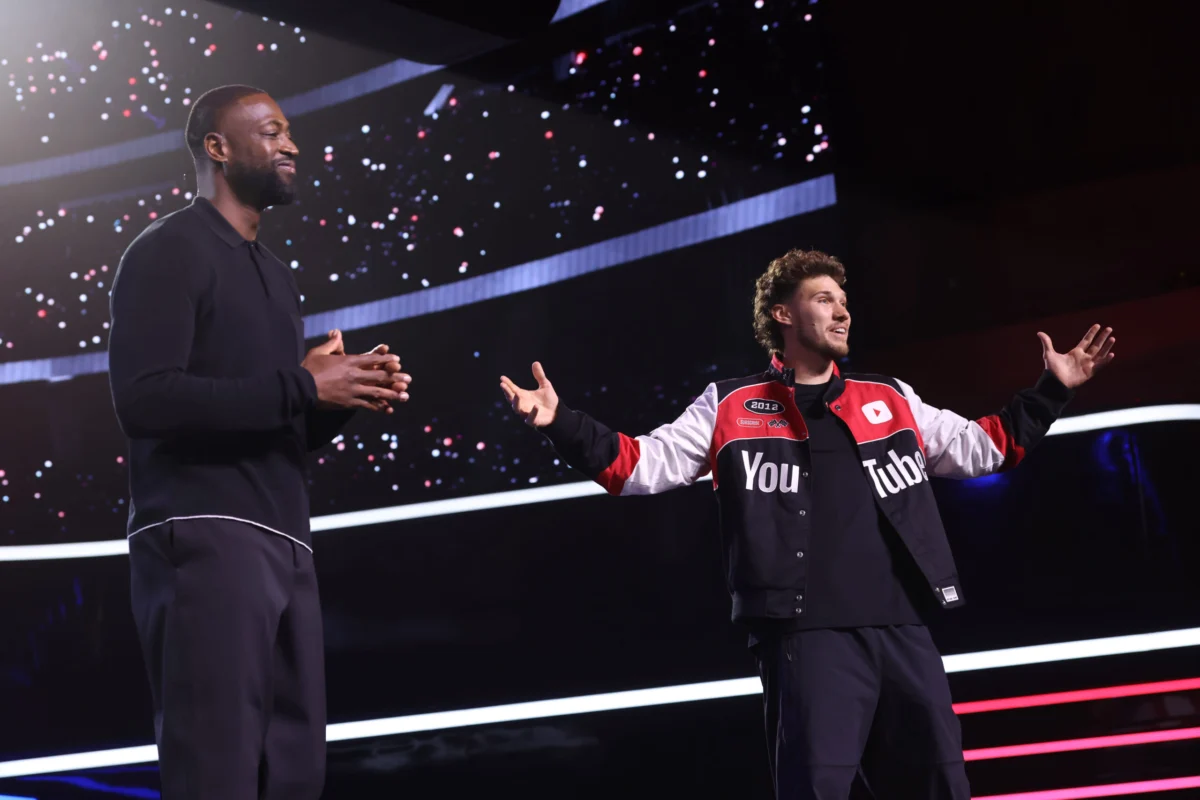
The same day, YouTube held its "Brandcast" event, which served as a definitive statement of the platform’s dominance in the streaming era. Featuring high-profile personalities like comedian Trevor Noah, podcast host Alex Cooper, and sports creator Jesse "Jesser" Riedel, YouTube positioned itself not as a social media site, but as the largest television network in the world. This claim is backed by data from Nielsen’s monthly "The Gauge" report, which monitors television screen usage. As of February 2026, YouTube accounted for 12.7% of all streaming viewership on television sets, significantly outperforming Netflix, which held an 8.4% share.

Data-Driven Demand and Younger Demographics
The pivot toward creators is largely a response to the "Gen Z problem" facing traditional broadcasters. Younger consumers are notoriously difficult to reach through standard 30-second television spots. They consume content on demand, often on mobile devices or through free ad-supported streaming television (FAST) services. Fox-owned Tubi has become a primary vehicle for capturing this audience. By inking deals with YouTube stars like Jesser to create exclusive series, Tubi is successfully migrating social media followings to its platform.
Tubi’s strategy represents a broader industry trend: providing a "pathway to Hollywood" for digital talent. By offering creators the resources of a traditional studio and the reach of a major streaming platform, media companies are securing a pipeline of content that feels authentic to younger viewers but carries the professional sheen required by top-tier advertisers. The success of this model is evident in Tubi’s growth; the platform has become a cornerstone of Fox’s digital strategy, focusing on high-growth areas like soccer and unscripted entertainment that resonate with diverse, tech-savvy populations.
The Evolution of Video Podcasting
Another significant element of the 2026 presentations was the maturation of video podcasting as a premium advertising vehicle. What was considered a niche experiment in 2024 has become a central pillar of the content ecosystem. Amazon’s Wondery division underscored this by showcasing its multiyear deal with Oprah Winfrey. The agreement, which includes "The Oprah Podcast" in both audio and video formats, as well as access to her extensive library of past content, illustrates the high value placed on "360-degree" content.
Angie More, head of creator advertising partnerships at Amazon, explained that the podcasting landscape has shifted toward a multi-format approach. Audiences may consume a short clip on a social platform, a mid-form segment on a mobile app, and then sit down to watch the full long-form video on a smart TV. This "omnichannel" presence allows creators to meet their audience wherever they are, providing advertisers with multiple touchpoints within a single content ecosystem.
Market Implications and Future Outlook
The integration of creator content into the upfronts has profound implications for the future of media buying. First, it signals the end of the "siloed" approach to marketing, where digital and television budgets were managed by separate teams. In 2026, the two have become inextricably linked. Media agencies are now looking for packages that combine the massive reach of a live NFL broadcast with the targeted, high-engagement influence of a creator-led social campaign.
Second, the rise of creator content is forcing a re-evaluation of production standards and costs. While a scripted drama can cost millions of dollars per episode, creator-led content can often be produced at a fraction of the cost while generating comparable, if not superior, engagement metrics. This shift in economics is particularly attractive to media companies struggling with the high costs of the "streaming wars" and the decline of traditional cable revenue.
Finally, the 2026 upfronts suggest that the role of the "media company" is being redefined. Firms like WBD, Fox, and Amazon are no longer just broadcasters; they are talent incubators and distribution platforms for a diverse array of voices. The "one-to-one" relationship that creators foster with their fans—described by WBD’s Karen Bronzo as a deeply personal connection—is now the most valuable currency in the advertising world.
As the industry moves toward the 2027 planning cycle, the trajectory is clear. The $44 billion projected for creator content this year is likely a floor rather than a ceiling. With YouTube maintaining its lead in living room viewership and legacy networks doubling down on digital-first talent, the "creator economy" has officially graduated from a secondary market to the primary engine of the global media and advertising industry. The 2026 upfronts will be remembered as the moment the curtain finally fell on the distinction between the "influencer" and the "superstar."