


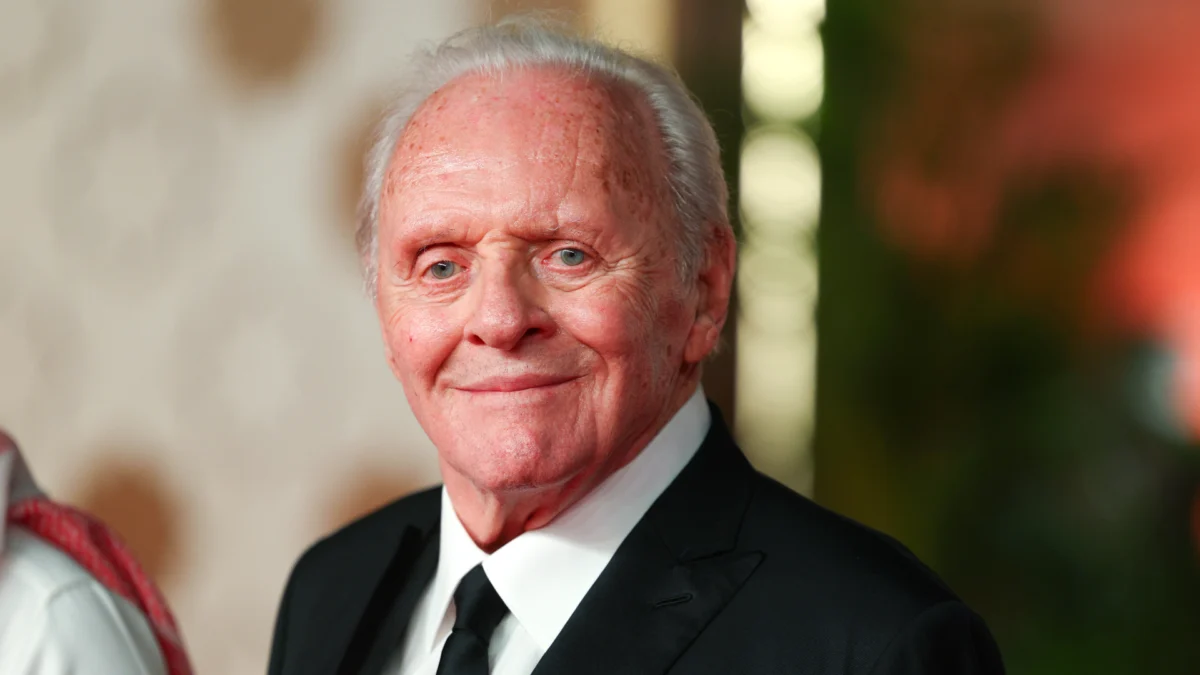
A Lifetime of Unheard Melodies: The Genesis of ‘Life Is a Dream’
For many, Sir Anthony Hopkins is synonymous with the chilling intellect of Hannibal Lecter in "The Silence of the Lambs," the poignant vulnerability of an aging man grappling with dementia in "The Father," or the myriad complex characters he has brought to life on stage and screen. Yet, beneath the surface of his acting prowess lies a deep, enduring passion for music—a passion that, by his own admission, predates his foray into acting. "Music was my first desire, my first wish," Hopkins has stated, revealing a lifelong commitment to composition that has, until now, largely remained a private pursuit.
His musical journey began in childhood, a testament to an innate artistic sensibility. Born in Margam, South Wales, in 1937, Hopkins showed an early aptitude for the piano, beginning lessons at the tender age of four. By his own account, he was performing works by classical titans such as Beethoven and Chopin just a few years later. As a teenager, his creative impulses extended to composing, crafting musical pieces for local theatrical productions. This early immersion in music established a foundational love that would persist even as his career path veered decisively towards acting, leading him to the Royal Welsh College of Music & Drama and subsequently the Royal Academy of Dramatic Art. Despite the demanding trajectory of his acting career, which saw him rise to international stardom, the piano remained a constant companion, a private sanctuary where melodies and harmonies would continuously coalesce over the decades. The compositions featured on "Life Is a Dream" are not new creations but rather a carefully curated selection from this vast, personal archive, with some pieces having "lived with me for decades," as Hopkins noted, a testament to their enduring resonance within his creative spirit. This album represents the culmination of a deeply personal, almost clandestine, musical odyssey spanning more than half a century.
From Screen Icon to Classical Composer: A Parallel Artistic Journey
Sir Anthony Hopkins’ acting career is nothing short of legendary. His ability to inhabit characters with unparalleled intensity, vulnerability, and intellectual depth has earned him two Academy Awards for Best Actor – first for his unforgettable portrayal of Dr. Hannibal Lecter in "The Silence of the Lambs" (1991), a role that redefined the cinematic antagonist, and a second, historic win for "The Father" (2020), making him the oldest recipient of the award in that category. His filmography boasts an array of critically acclaimed performances in films such as "Remains of the Day," "Nixon," "Amistad," and the HBO series "Westworld," among many others. His distinctive voice, commanding presence, and meticulous approach to character development have cemented his status as one of the greatest actors of his generation.
This formidable public persona as a screen titan stands in fascinating contrast to his private life as a composer. While his acting career has been a public spectacle of transformation and dramatic artistry, his musical endeavors have been a more introspective, personal dialogue between himself and his instrument. This duality underscores a broader phenomenon of multi-talented artists who refuse to be confined to a single medium. Historically, many actors have dabbled in music, from Frank Sinatra to Barbra Streisand, who achieved significant musical success parallel to their acting careers. More recently, figures like Jared Leto (30 Seconds to Mars), Russell Crowe (formerly with 30 Odd Foot of Grunts), and even Scarlett Johansson have ventured into the music industry, with varying degrees of critical and commercial reception. What distinguishes Hopkins’ venture is not just its classical nature, but the sheer longevity of his commitment to composing before its public unveiling, and the gravitas lent by his iconic status and advanced age. His decision to release a classical album now speaks volumes about the enduring power of artistic passion and the desire to share a lifetime of deeply felt creations.
Decca Classics: A Prestigious Platform for a Unique Debut
The decision by Decca Classics to sign Sir Anthony Hopkins for his debut album is a significant endorsement of his musical talent and the inherent artistic merit of his compositions. Decca Classics, a division of Universal Music Group, is one of the world’s most venerable and respected classical music labels, with a storied history dating back to 1929. Known for its exceptional roster of artists, pioneering recording techniques, and a catalogue that includes some of the most iconic classical recordings ever made, Decca has been home to legendary musicians such as Luciano Pavarotti, Joan Sutherland, Vladimir Ashkenazy, and more contemporary stars like Lang Lang, Renée Fleming, and Cecilia Bartoli.
For Hopkins, signing with Decca represents a profound validation of his lifelong musical pursuit. "Signing with Decca is the honor of a lifetime," he remarked, underscoring the weight and prestige associated with the label. This partnership not only provides a global platform for his compositions but also lends an immediate credibility within the classical music world that might otherwise be challenging for an artist primarily known for another discipline. Decca’s discerning A&R team likely recognized the unique narrative behind Hopkins’ music – a global icon sharing a hidden facet of his genius – combined with the intrinsic beauty and craftsmanship of his work. The label’s commitment to the project, involving collaborations with a top-tier orchestra and conductor, further solidifies its belief in the album’s artistic integrity and potential cultural impact.
The Collaborative Brilliance: Dudamel, Philharmonia, and Soloists
The success of a classical album often hinges on the caliber of its collaborators, and "Life Is a Dream" boasts an exceptional roster. The album features the Philharmonia Orchestra, one of the United Kingdom’s most distinguished orchestras, renowned for its rich sound, versatility, and extensive recording history. Established in 1945, the Philharmonia has worked with many of the 20th and 21st centuries’ greatest conductors and soloists, consistently delivering performances of the highest artistic standard. Their involvement ensures a professional, nuanced, and powerful rendition of Hopkins’ compositions.
At the helm of the Philharmonia is Gustavo Dudamel, whose participation elevates the project to an even higher plane. Dudamel, the charismatic Venezuelan conductor, is celebrated globally for his electrifying performances and dynamic interpretations. As the Music Director of the Los Angeles Philharmonic and the Opéra National de Paris, his reputation precedes him as one of the most exciting and influential conductors of his generation. His background with Venezuela’s El Sistema program, which provides musical education to underprivileged youth, further burnishes his image as a visionary artist with a profound commitment to music’s transformative power.
Dudamel’s effusive praise for Hopkins speaks volumes about the quality of the actor’s compositions. He described Hopkins as a "rare artist," whose "creative voice transcends any single medium." Dudamel noted, "The same depth of imagination, humanity, and emotional truth that has defined his extraordinary work on stage and screen is present in his music. Listening to his composition, I am struck by its beauty, craftsmanship, and the unmistakable sense of wonder that animates it." He further elaborated that Hopkins "approaches music with the heart of a storyteller and the instincts of a poet, creating sound worlds that are both deeply personal and universally resonant." Such commendation from a conductor of Dudamel’s stature is a powerful testament to Hopkins’ musical talent, suggesting that this is far more than a celebrity vanity project.
The album also features virtuoso soloists: cellist Gregorio Nieto and classical pianist Sergio Tiempo. Hopkins expressed his "deepest gratitude and respect" to Dudamel, whose "artistry is an integral part of this musical journey," and acknowledged the soloists, stating, "It has been a true privilege to collaborate with the distinguished Philharmonia Orchestra and the virtuoso soloists." Their contributions undoubtedly add layers of texture and emotional depth to Hopkins’ compositions, ensuring a rich and compelling listening experience.
"Bracken Road" and Thematic Inspirations
The album’s first single, "Bracken Road," offers a poignant glimpse into the deeply personal nature of Hopkins’ compositions. Inspired by his childhood memories of Margam in South Wales, the piece evokes imagery of "the streets, meadows, farmland, and mountains around his family home in the 1940s." This direct connection to his formative years highlights how music serves as a vessel for memory and emotion, allowing Hopkins to revisit and express the landscapes and experiences that shaped him. The composition’s title itself suggests a path through nature, perhaps symbolizing a journey through time and memory.
The album’s broader thematic inspirations are equally diverse and intimate. Another piece, "My Fatherland," is directly inspired by traditional Welsh melodies, showcasing Hopkins’ pride in his heritage and his ability to weave cultural influences into his classical framework. Other compositions draw inspiration from cinema, reflecting his primary artistic medium, as well as deeply personal relationships, with pieces dedicated to his wife and his niece. This blend of autobiography, cultural homage, and artistic influence promises an album that is rich in narrative and emotional resonance, inviting listeners to connect with Hopkins’ personal world through the universal language of music.
Previous Forays into the Musical Realm: "And the Waltz Goes On"
While "Life Is a Dream" is being hailed as Sir Anthony Hopkins’ "debut album," it is important to clarify that this is his debut classical album of his own compositions released by a major classical label. His previous ventures into music have indeed garnered recognition. Most notably, in 2012, Hopkins achieved significant musical acclaim when he won a Classic Brit Award for Album of the Year for "And the Waltz Goes On." This success stemmed from his composition of the title waltz, which was recorded by the renowned Dutch violinist and conductor André Rieu and his Johann Strauss Orchestra.
This earlier triumph provided a critical precursor to his current venture, demonstrating that Hopkins’ musical talents were not merely a private hobby but possessed the quality to captivate a broader audience and earn industry recognition. The Classic Brit Award served as an early public validation, perhaps even planting the seeds for the eventual release of a full album of his original works. The distinction lies in "Life Is a Dream" being a comprehensive collection of his self-composed classical pieces, meticulously produced and presented on a prestigious classical label, rather than a single composition featured on another artist’s album. This new album represents a complete artistic statement from Hopkins as a composer, offering a deeper and more expansive insight into his musical mind.
Broader Implications: Legacy, Crossover Appeal, and Age Defiance
The release of "Life Is a Dream" carries significant implications across various cultural and artistic spheres. For Sir Anthony Hopkins, it irrevocably enriches an already monumental legacy. It showcases him not merely as an actor of unparalleled talent, but as a multi-faceted artist whose creative impulse extends far beyond the confines of a script. This album positions him as a genuine polymath, a testament to a lifelong dedication to various forms of artistic expression. It redefines his public persona, revealing a depth and breadth of talent that few performers achieve.
For the classical music industry, this album represents a valuable crossover moment. The sheer global recognition of Sir Anthony Hopkins will undoubtedly draw an audience to classical music that might not typically engage with the genre. His star power has the potential to introduce new listeners to the Philharmonia Orchestra, Gustavo Dudamel, and indeed, to the beauty and complexity of contemporary classical composition. This kind of celebrity endorsement, when coupled with genuine artistic merit, can invigorate interest in classical music, demonstrating its continued relevance and accessibility to a wider demographic. In an era where classical music often struggles for mainstream attention, a release of this magnitude featuring a globally beloved figure can serve as a powerful catalyst.
Furthermore, Hopkins’ achievement is a profound statement against ageism in the arts and society at large. At 88, his decision to release a debut album, composed over a lifetime, is an inspiring example of lifelong learning, creativity, and ambition. It defies the notion that artistic innovation diminishes with age, instead celebrating the wisdom, experience, and refined sensibilities that only decades of life can bestow. It sends a powerful message that passion, talent, and the desire to create know no chronological bounds. This act of artistic courage serves as a beacon for aspiring artists of all ages, proving that it is never too late to pursue a deeply held dream and share one’s unique voice with the world.
The Enduring Power of Artistic Passion
In an era often dominated by fleeting trends and instant gratification, Sir Anthony Hopkins’ "Life Is a Dream" stands as a powerful reminder of the enduring nature of artistic passion and the profound rewards of a lifelong creative pursuit. It is a deeply personal offering from an artist who has spent decades honing his craft, both on screen and in solitude at the piano. This album is more than just a collection of melodies; it is an intimate autobiography expressed through sound, a testament to the idea that true artistry knows no single medium or timeline. As listeners embark on this musical journey with Hopkins, they are invited not just to hear his compositions, but to witness the unveiling of a hidden facet of a true master, whose life itself has been a magnificent, unfolding dream.