
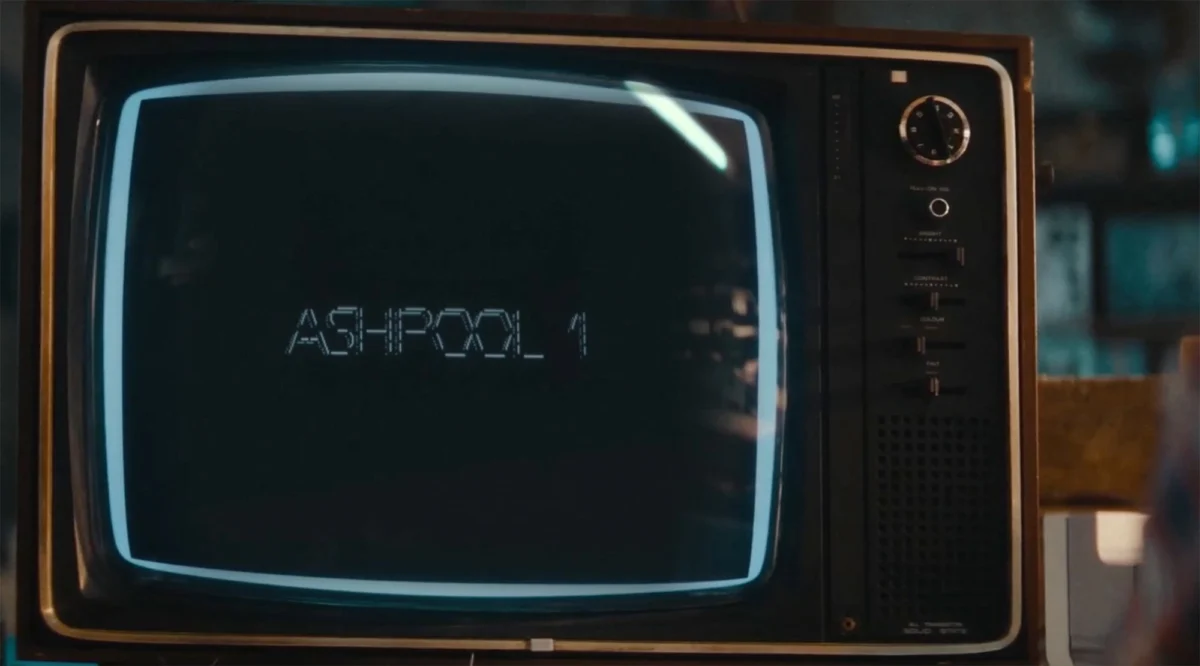
Apple TV+ has ignited fervent anticipation among science fiction enthusiasts with the release of a cryptic 20-second teaser for its upcoming series adaptation of William Gibson’s seminal novel, Neuromancer. The brief video, disseminated across the streaming platform’s social media channels this week, offers a tantalizing glimpse into the aesthetic and thematic underpinnings of the long-awaited project, strongly suggesting that a full-length trailer is on the immediate horizon. Posted on July 1, 2026, the teaser’s timing coincides with a significant milestone, as the accompanying text notes: "42 years ago, William Gibson introduced the world to Neuromancer. Now, the next chapter is loading." This strategic release not only commemorates the enduring legacy of the source material but also primes audiences for a contemporary reinterpretation of its dystopian vision.
The teaser itself is meticulously crafted to evoke the novel’s iconic opening line: "The sky above the port was the color of television, tuned to a dead channel." The visual content focuses on an old-school computer, identified as an "Ashpool 1," booting up. This digital artifact, reminiscent of the rudimentary yet revolutionary Apple I computer from 1976, displays the aforementioned quote as it powers on. For many younger viewers, the concept of a "television tuned to a dead channel" might be an anachronism, a relic of an analog past where static and white noise were common phenomena. However, within the context of Neuromancer, this phrase is pregnant with meaning, symbolizing the pervasive, yet often meaningless, information overload that characterized Gibson’s vision of the future. It’s a powerful metaphor for a world saturated with data, much of it fragmented, distorted, or simply void of coherent signal, mirroring the protagonist’s own disaffected existence. The "Ashpool 1" computer is a direct reference to the Tessier-Ashpool (T-A) family corporation, a formidable, secretive, and immensely wealthy dynasty at the heart of the novel’s intricate plot, hinting at their foundational role in the series’ narrative.
The Genesis of Cyberpunk: William Gibson’s Enduring Legacy
William Gibson’s Neuromancer, published in 1984, did not merely introduce a story; it birthed a genre. Often credited with popularizing the term "cyberspace" and defining the aesthetics of cyberpunk, the novel envisioned a future where advanced technology, artificial intelligence, and global computer networks intertwined with societal decay, corporate dominance, and a gritty, low-life existence. The book’s profound impact stems from its prescient exploration of themes such as virtual reality, genetic engineering, ubiquitous computing, and the blurred lines between human and machine consciousness. Gibson’s narrative style, characterized by its dense prose, neon-noir atmosphere, and intricate world-building, captivated readers and inspired countless authors, filmmakers, game developers, and artists across various mediums.
Prior to Neuromancer, elements of what would become cyberpunk existed in works by authors like Philip K. Dick and Alfred Bester. However, Gibson crystallized these disparate threads into a cohesive, influential vision. His work, alongside that of contemporaries like Bruce Sterling and Rudy Rucker, established the core tenets of cyberpunk: high tech and low life; powerful, often malevolent, corporations; hackers and rebels fighting against systemic control; and a sense of existential dread coupled with technological wonder. Neuromancer won the Nebula Award, the Philip K. Dick Award, and the Hugo Award, becoming the first novel to achieve science fiction’s "triple crown," cementing its status as a literary landmark.

The novel’s depiction of cyberspace, a "consensual hallucination" of data, revolutionized how both writers and the public conceived of interconnected digital realms, long before the widespread adoption of the internet. It provided a conceptual framework that influenced the development of actual online environments and user interfaces, showcasing Gibson’s uncanny ability to predict technological and cultural shifts.
A Long and Challenging Road to Adaptation
The journey of Neuromancer from page to screen has been famously protracted and fraught with challenges. For decades, the novel was considered unfilmable by many, primarily due to its complex narrative structure, its deeply internalized protagonist, and the sheer ambition required to visually translate Gibson’s abstract and often hallucinatory descriptions of cyberspace. Directors like Chris Cunningham, who famously created iconic music videos, and Vincenzo Natali, known for his work on Cube and Splice, were attached to various attempts at adaptation over the years, each ultimately failing to secure the necessary backing or overcome the inherent difficulties.
The core challenge lies in rendering a world that is both hyper-realistic in its grime and hyper-fantastical in its digital dimensions, without sacrificing the philosophical depth that underpins the action. The intricate layers of corporate espionage, artificial intelligence sentience, and profound human-machine interface require not just significant financial investment but also a visionary creative team capable of respecting the source material while making it accessible to a broad audience. The technological advancements in visual effects and CGI in recent years, however, have made such an endeavor more feasible than ever before, perhaps explaining why Apple TV+ feels confident in tackling the project now.
Apple TV+’s Strategic Investment in Sci-Fi
Apple TV+ has strategically positioned itself as a major player in the high-concept science fiction genre, investing heavily in visually ambitious and intellectually stimulating adaptations. Series such as Foundation, based on Isaac Asimov’s monumental saga, and Silo, a dystopian mystery, demonstrate Apple’s commitment to prestige sci-fi. These productions are characterized by their cinematic quality, robust budgets, and a willingness to explore complex themes, aligning perfectly with the demands of Neuromancer.
The decision to adapt Neuromancer fits seamlessly into Apple’s strategy of attracting subscribers through critically acclaimed, high-production-value content that stands out in a crowded streaming landscape. By taking on a property with such a revered status, Apple TV+ not only aims to draw in existing fans of the novel but also to introduce a new generation to a foundational text of modern science fiction. The platform’s significant financial resources and its reputation for creative freedom likely played a crucial role in finally bringing this long-gestating project to fruition. The investment underscores the perceived potential for Neuromancer to be a landmark series, akin to Game of Thrones for fantasy or The Expanse for space opera.

The Creative Team and Stellar Cast
The announced creative team and ensemble cast for the Neuromancer series reflect the high ambitions of the project. The series is created by writers Graham Roland and J.D. Dillard, with Roland serving as showrunner and Dillard directing the pilot. Graham Roland brings a wealth of experience from complex narrative television, having written for critically acclaimed series like "Fringe" and served as a co-creator and executive producer on "Jack Ryan" and "Dark Winds." His background suggests a capability to navigate intricate plots and character arcs. J.D. Dillard, known for directing films such as Sleight, Sweetheart, and Devotion, offers a distinct visual style and a knack for compelling storytelling, promising a directorial vision that can handle both the grittiness and the spectacle inherent in Gibson’s world.
The executive producer team is equally impressive, including industry heavyweights David Ellison, Dana Goldberg, and Matt Thunell from Skydance Television, alongside Anonymous Content and DreamCrew Entertainment. Notably, Drake and Adel "Future" Nur are also executive producers, indicating a cross-cultural appeal and potential for innovative marketing. Crucially, William Gibson himself is listed as an executive producer, a detail that reassures fans that the adaptation will likely remain true to the spirit and integrity of his original work.
The cast assembled for Neuromancer is a blend of rising stars and established talents. Callum Turner leads as Case, the damaged, top-rung super-hacker whose nervous system has been crippled, effectively cutting him off from cyberspace – his lifeblood. Turner has demonstrated range in projects like Masters of the Air and Fantastic Beasts, suggesting he can embody Case’s blend of cynicism, desperation, and latent brilliance. Briana Middleton, known for her roles in The Tender Bar and Sharper, takes on the role of Molly Millions, the enigmatic "razor girl" assassin with mirrored eyes, a character renowned for her lethal efficiency and moral ambiguity. The dynamic between Case and Molly is central to the novel, and their casting is paramount to the series’ success.
The supporting cast further elevates expectations:
- Joseph Lee as Hideo, a character whose significance is deeply tied to the Tessier-Ashpool narrative.
- Mark Strong as Armitage, a mysterious and manipulative figure who enlists Case and Molly for a high-stakes heist. Strong’s extensive career in thrillers and sci-fi (e.g., Kingsman, Shazam!) makes him an ideal choice for a character of such gravitas.
- Clémence Poésy, known for her roles in In Bruges and Tenet, adding another layer of international talent.
- Peter Sarsgaard, an actor celebrated for his intense and nuanced performances in films like Jarhead and An Education.
- Emma Laird, a rising star from Mayor of Kingstown.
- Max Irons and Dane DeHaan, both established actors with experience in complex narratives and genre projects.
This formidable ensemble suggests a commitment to strong character portrayal, crucial for a story that, despite its technological backdrop, is fundamentally about human (and post-human) struggles and relationships.

Building Anticipation: The Marketing Chronology
The recent "Ashpool 1" teaser is not the first instance of Apple TV+ subtly building hype for Neuromancer. Last year, a brief teaser video focusing on "The Chatsubo bar" was released. The Chatsubo, an expatriate bar in the dystopian Chiba City, is a pivotal location in the novel, serving as Case’s initial haunt and a nexus for the various unsavory characters he encounters. The quote accompanying that teaser, "The Chatsubo was a bar for professional expatriates; you could drink there for a week and never hear two words in Japanese," perfectly captured the atmosphere of cultural dislocation and criminal underworld activity.
These cryptic, lore-heavy teasers represent a sophisticated marketing strategy. Instead of revealing too much too soon, Apple TV+ is drip-feeding fans with highly specific references, demonstrating an intimate understanding of the source material. This approach not only rewards long-time devotees of Gibson’s work but also piques the curiosity of newcomers, prompting them to delve into the novel’s universe even before the series premieres. It’s a carefully orchestrated campaign designed to build sustained excitement, culminating in what is expected to be a groundbreaking full trailer.
Implications and Broader Impact
The successful adaptation of Neuromancer by Apple TV+ could have significant implications for the science fiction genre and the streaming industry. If the series lives up to the immense expectations, it could solidify Apple’s position as the premier destination for high-quality, thought-provoking sci-fi content. More broadly, it could inspire a new wave of adaptations of classic, previously deemed "unfilmable," science fiction novels, proving that with sufficient resources and creative vision, even the most complex literary works can be translated effectively to the screen.
Furthermore, a well-executed Neuromancer could re-invigorate interest in the cyberpunk genre, potentially sparking new discussions about its relevance in an era increasingly defined by AI, virtual realities, and corporate surveillance—themes that Gibson explored decades ago. The series offers a chance to examine these enduring questions through a contemporary lens, allowing audiences to reflect on how much of Gibson’s dystopian future has already become our present.
The stakes are undoubtedly high. Fans of the novel carry a deep reverence for its originality and influence, and any deviation or misinterpretation could be met with strong criticism. However, the involvement of William Gibson, the caliber of the creative team, and the robust cast suggest a project that is being approached with the seriousness and respect it deserves. The recent teaser, with its evocative imagery and powerful quote, serves as a potent reminder that the "next chapter is loading," not just for Case and Molly, but for the legacy of cyberpunk itself. Audiences worldwide will be keenly watching for the official trailer, eager for a comprehensive look at how this seminal work will finally materialize on screen, sometime in 2026.