The Walt Disney Company has formally escalated its legal and regulatory confrontation with the Federal Communications Commission (FCC) by filing broadcast license renewal applications for eight of its ABC-owned stations under protest. The move, announced in a series of regulatory filings on Thursday, marks a significant flashpoint in a burgeoning conflict over corporate governance, diversity initiatives, and the extent of federal oversight in the media sector. Disney’s legal counsel characterized the FCC’s demand for early renewals as an "unlawful, arbitrary, and unconstitutional order," setting the stage for a high-stakes battle that could redefine the relationship between the federal government and private media conglomerates.
The dispute centers on the FCC’s decision in late April 2026 to accelerate the license renewal process for Disney’s broadcast portfolio by several years. Under standard regulatory cycles, the licenses for these eight stations—which include major market anchors in New York, Los Angeles, and Chicago—were not scheduled to expire until the window between 2028 and 2031. However, the commission, led by Chair Brendan Carr, invoked its investigative authority to move the deadline forward to May 2026, citing a need for immediate scrutiny of the company’s internal Diversity, Equity, and Inclusion (DEI) policies.
The Core of the Dispute: DEI and Regulatory Oversight
The FCC’s investigation into Disney began in March 2025, following allegations that the company’s DEI practices might violate the Communications Act of 1934 and the agency’s long-standing prohibitions against unlawful discrimination. The agency has focused on whether Disney’s hiring and promotion frameworks constitute "invidious forms of discrimination" that could disqualify a licensee from holding a broadcast permit, which is legally considered a public trust.
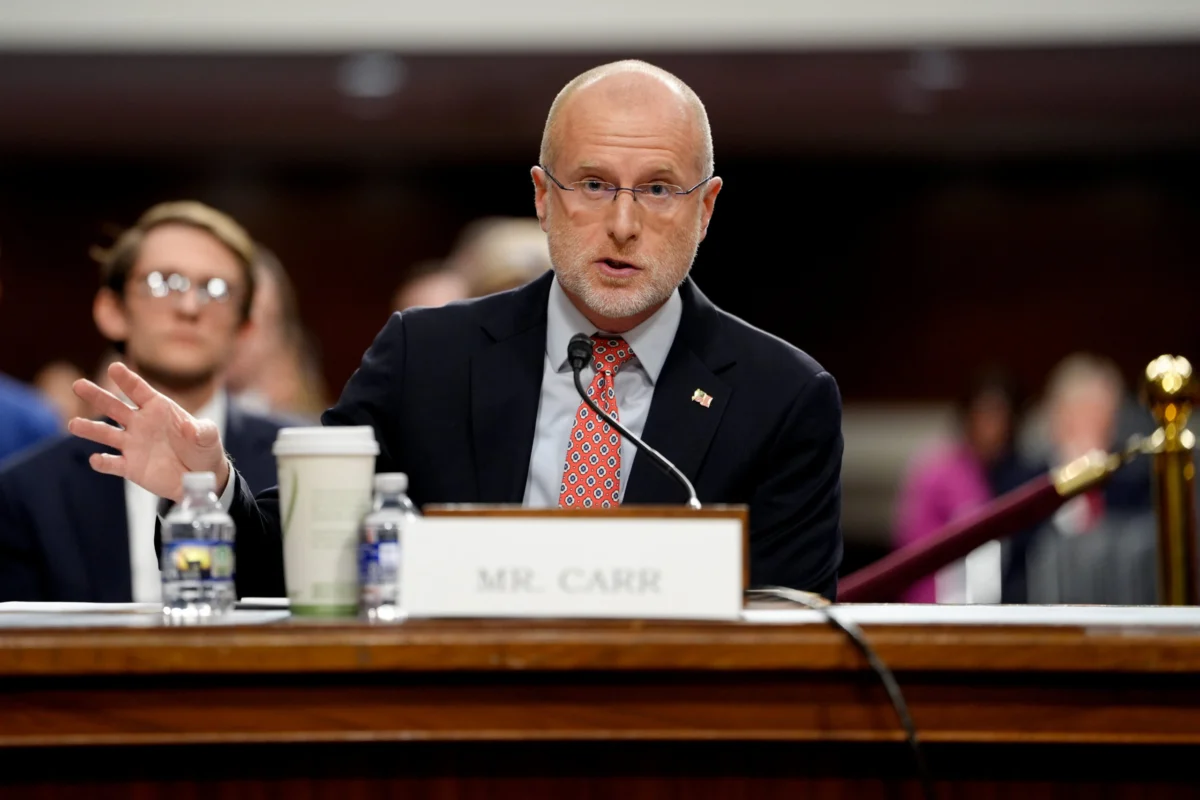
In a recent interview on CNBC’s "Squawk on the Street," FCC Chair Brendan Carr defended the agency’s aggressive posture. He asserted that the decision to pull up the renewal deadline was a direct result of Disney’s perceived lack of cooperation with the ongoing investigation. Carr stated that the company’s previous responses to agency inquiries were "disingenuous" and "nonresponsive," necessitating a more formal and public review process.
"We have been signaling for a long time that we want Disney to take seriously our investigation," Carr said. "We provided them notice that we thought their responses were incomplete… we thought it was important to take this next step to make sure they’re being fully responsive to our proceedings."
Disney, conversely, maintains that its DEI efforts are both legal and common within the corporate landscape and argues that the FCC is exceeding its statutory authority. The company’s Thursday filing argued that the FCC has not utilized such an "early renewal" mechanism in more than five decades, suggesting the move is a targeted punitive measure rather than a standard regulatory procedure.
A Break from Decades of Precedent
The use of the early renewal process is a rare administrative maneuver. Historically, the FCC has allowed licenses to run their full eight-year terms unless there is a clear and present violation of public safety or technical standards. By forcing Disney to apply for renewals years ahead of schedule, the FCC has opened a "petition to deny" window. This allows third-party groups, political organizations, and members of the public to file formal objections against Disney’s ownership of the stations.
The eight stations currently under the microscope represent the backbone of the ABC television network’s local reach:
- WABC-TV (New York, NY): The most-watched local station in the United States.
- KABC-TV (Los Angeles, CA): A critical hub for West Coast broadcasting.
- WLS-TV (Chicago, IL): A dominant player in the Midwest market.
- WPVI-TV (Philadelphia, PA): Known for its high-rated local news programming.
- KGO-TV (San Francisco, CA): A key Bay Area asset.
- KTRK-TV (Houston, TX): A vital link to the Southern market.
- WTVD (Raleigh-Durham, NC): A growing market anchor.
- KFSN-TV (Fresno, CA): A regional powerhouse in California’s Central Valley.
Industry analysts estimate that these stations contribute significantly to Disney’s linear television revenue, which, despite the rise of streaming, remains a vital source of cash flow for the parent company. A loss of any of these licenses would be catastrophic for the ABC network’s distribution model.
The Political Dimension: First Amendment vs. Regulatory Enforcement
Critics of the FCC’s current direction argue that the investigation is politically motivated. The timing of the early renewal order followed a period of heightened tension between the Trump administration and Disney. In early 2026, President Donald Trump publicly criticized ABC and its late-night host Jimmy Kimmel following a series of monologues that were sharply critical of the administration.
This sequence of events has led some, including sitting FCC Commissioner Anna Gomez, to suggest that the agency is being used as a tool for political retribution. In a statement posted to social media, Gomez expressed concern that the scrutiny of Disney appeared to be "politically motivated," echoing Disney’s own claims that the FCC’s actions are "plainly incompatible with the First Amendment."
Disney’s legal team argued in the filings that the FCC’s investigation into DEI practices is a "pretext" for content-based discrimination. Under the First Amendment, the government is generally prohibited from using its regulatory power to punish media entities for the viewpoints expressed by their employees or on their airwaves. Disney contends that by targeting its licenses—the very lifeblood of its broadcast business—the FCC is attempting to exert a "chilling effect" on the network’s editorial independence.
Chair Carr has flatly rejected these accusations. He insists that the investigation is focused strictly on employment law and the "character qualifications" required of a broadcast licensee. "I understand Disney wants to make this about a lot of other things, and their PR machine has been in high gear, but we’ve been very clear about what this is: concerns about invidious forms of DEI discrimination," Carr told CNBC.
Chronology of the Dispute
To understand the current impasse, it is necessary to look at the timeline of events leading to the May 2026 filings:
- March 2025: The FCC officially opens an investigation into the media industry’s DEI practices, with Disney as a primary focus. The agency cites the Communications Act’s "public interest" standard as the basis for the inquiry.
- December 2025: During an oversight hearing in Washington, D.C., Commissioner Brendan Carr signals that the agency is unsatisfied with the transparency of major media companies regarding their hiring quotas and diversity targets.
- February 2026: ABC faces renewed political pressure from the executive branch following controversial segments on "Jimmy Kimmel Live!"
- April 28, 2026: The FCC issues an unprecedented order requiring Disney to file for early renewal of its eight broadcast licenses, effective immediately.
- May 14, 2026: Disney files the applications "under protest," including a blistering legal rebuttal of the FCC’s authority.
- May 15, 2026: Chair Brendan Carr confirms the FCC will issue a public notice, beginning the cycle for public petitions to deny the renewals.
Legal Arguments and Potential Implications
The legal battle is expected to hinge on the interpretation of "public interest" and the FCC’s authority to regulate internal corporate policies. Traditionally, the FCC’s "Equal Employment Opportunity" (EEO) rules have focused on ensuring that broadcasters provide wide outreach for job vacancies. However, the current FCC leadership appears to be testing a broader interpretation: that specific DEI programs may themselves constitute a form of discrimination that violates the "good character" requirement for licensees.
Disney’s defense rests on three primary pillars:
- Administrative Procedure: The company argues the FCC failed to provide a "reasoned explanation" for departing from 50 years of precedent regarding license renewal cycles.
- Statutory Authority: Disney claims the Communications Act does not grant the FCC the power to police internal corporate diversity initiatives that are otherwise compliant with federal labor laws.
- Constitutional Protection: The company asserts that the investigation is a retaliatory strike against its First Amendment-protected speech.
If the FCC were to eventually deny the license renewals, the case would almost certainly move to the U.S. Court of Appeals for the D.C. Circuit and potentially the Supreme Court. Such a scenario would represent the most significant challenge to the FCC’s licensing authority since the "Fairness Doctrine" era.
Industry Reaction and Future Outlook
The broader media industry is watching the Disney case with high levels of concern. If the FCC successfully uses the license renewal process to force changes in a company’s internal DEI policies, it could set a precedent for other major broadcasters like Paramount Global (CBS) and Comcast (NBCUniversal).
Trade groups representing broadcasters have remained largely cautious, though some have issued warnings about the "weaponization" of the regulatory process. The outcome of this dispute will likely determine the limits of the FCC’s power in the modern era, particularly regarding how the government can influence the internal social and cultural policies of the nation’s largest media entities.
As the "petition to deny" period opens, the FCC will become a battlefield for advocacy groups from both sides of the political spectrum. Disney has indicated it will "vigorously defend" its licenses and its right to operate without what it deems "unconstitutional government interference." For now, the eight ABC stations continue to operate, but their long-term future remains tethered to a complex web of legal filings and political maneuvering in the nation’s capital.