


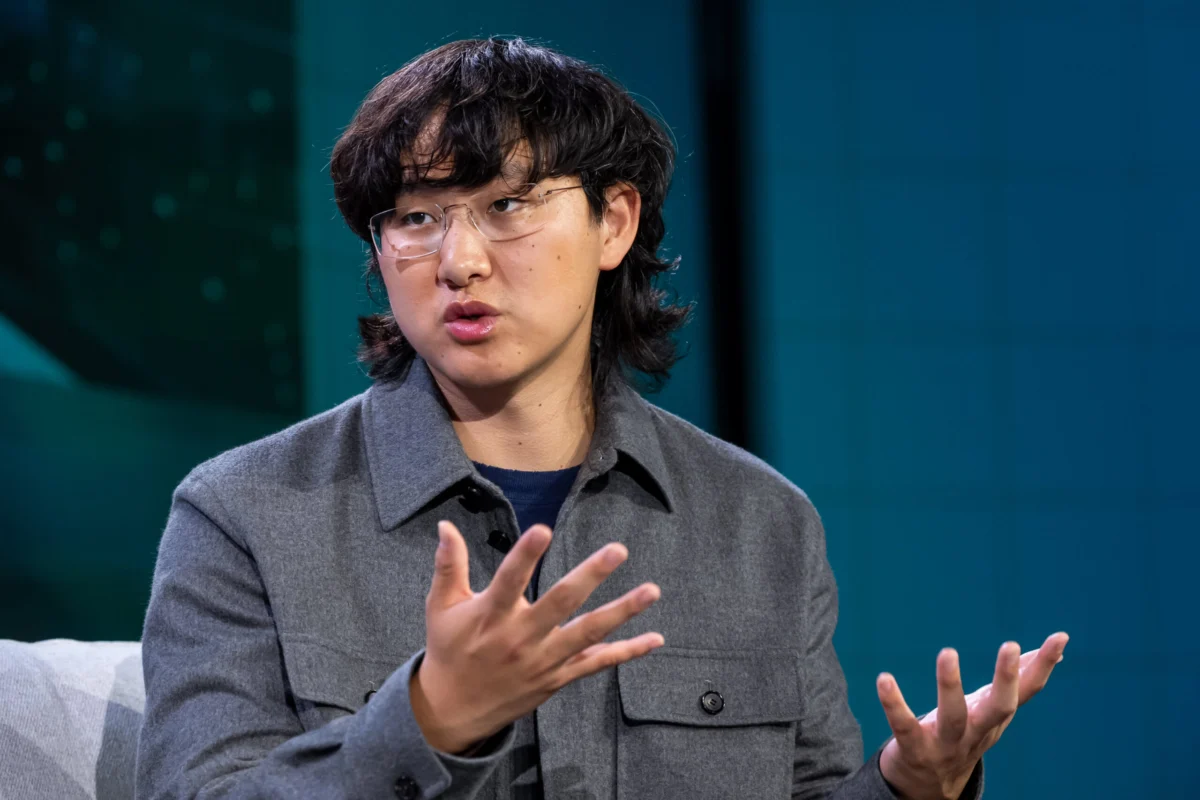
The centerpiece of Wang’s first year at the helm of Meta Superintelligence Labs (MSL) was the April debut of Muse Spark, a proprietary foundation model that signaled a fundamental shift in Mark Zuckerberg’s artificial intelligence strategy. For years, Meta had positioned itself as the champion of "open-weight" AI through its Llama family of models, providing the broader tech community with free access to sophisticated tools. However, the release of Muse Spark marked Meta’s definitive pivot toward the proprietary "walled garden" model favored by its primary rivals. This transition was born out of a perceived strategic necessity after the Llama 4 release in early 2025 failed to gain the expected traction, forcing Zuckerberg to reconsider his approach to the "frontier model" market.
The $14 Billion Strategic Pivot
The genesis of Meta’s current AI trajectory can be traced back to June 2025, when Zuckerberg authorized a $14.3 billion investment to secure roughly 50% of Scale AI, a move primarily designed to bring Alexandr Wang into the Meta fold. Wang, a wunderkind in the data labeling and AI infrastructure space, was tasked with a "strategic rebuild" of Meta’s AI capabilities. This initiative led to the creation of Meta Superintelligence Labs, an internal division focused on developing high-end, proprietary intelligence that could compete directly with GPT-4 and its successors.
Before the Wang era, Meta’s AI strategy was largely decentralized and focused on enhancing its core advertising business. While AI-driven algorithms were already contributing significantly to Meta’s $200 billion annual ad revenue, the company lacked a "sizzle" product—a consumer-facing AI that captured the public imagination in the same way ChatGPT had for OpenAI. The acquisition of Wang was seen as a bold attempt to buy leadership and technical velocity in a market where Meta was increasingly viewed as a laggard.
The resulting Muse Spark model was designed not just for performance, but for deep integration. Unlike previous models that were released primarily for external developers to build upon, Muse Spark was engineered to power Meta’s internal ecosystem. This includes the core Facebook and Instagram apps, the standalone Meta AI web interface, and the increasingly popular Ray-Ban Meta smart glasses. Analysts suggest that this focus on vertical integration is Meta’s best chance at carving out a unique niche, even if it lags behind in raw model benchmarks compared to industry leaders.
Financial Performance and Wall Street Skepticism
Despite the technical milestones achieved under Wang’s leadership, Wall Street remains cautious. In the most recent fiscal quarter, Meta reported a robust 33% revenue growth—the company’s fastest expansion rate since 2021. However, this financial success has not translated into stock market confidence. Over the past 12 months, Meta’s shares have declined by 18%, making it one of the worst-performing megacap technology stocks.

The primary concern for investors is the lack of a clear monetization path for AI that exists independently of the advertising business. Ralph Schackart, an analyst at William Blair, notes that while AI has undeniably bolstered Meta’s advertising efficiency, the market is looking for "proof points of both adoption and commercialization" for AI-first products. To address this, Meta recently introduced subscription tiers for its AI services, with the entry-level plan starting at $7.99 per month. This move represents a significant cultural shift for a company that has historically relied on ads for 98% of its total revenue.
The skepticism is further fueled by the memory of the "Metaverse" era. Zuckerberg’s pivot to virtual reality and the Metaverse has resulted in cumulative losses exceeding $80 billion since 2020. For many investors, the massive spending on AI—including the $14 billion Scale AI deal and billions more on Nvidia H100 and B200 GPUs—feels like a repeat of the high-stakes, low-return gambling that characterized Reality Labs. Howard Yu, a professor at the International Institute for Management Development, suggests that Zuckerberg is "running out of space for his credibility to last," as the goodwill earned from his social media dominance is being eroded by expensive, speculative pivots.
The Developer Crisis and the Open-Source Fallout
One of the most significant casualties of the Wang era has been Meta’s relationship with the developer community. By moving away from the open-weight Llama models toward the proprietary Muse Spark, Meta has alienated the very people who were previously its biggest advocates. The AI community, which once viewed Meta as the "good actor" providing free alternatives to the closed systems of OpenAI and Google, now largely views the company with indifference or outright hostility.
Rob May, CEO of Neurometric, characterizes the current sentiment as a "yawn," noting that the AI community largely ignores Meta’s latest developments because they are no longer accessible for external innovation. May points out that while he previously had regular communication with Meta regarding Llama-related projects, his inquiries now go unanswered. This shift suggests that Meta has transitioned from an ecosystem builder to a closed-product company.
The lack of developer trust could have long-term consequences. Historically, the most successful technology platforms—from Windows to Android—have thrived by fostering robust third-party developer ecosystems. Krish Subramanian, CEO of KOI AI, warns that if Meta continues to focus exclusively on a "walled-garden" approach, it may never become a dominant player in the broader AI platform economy. He compares the situation to Microsoft’s early struggles with Azure, noting that it took years for the software giant to regain the trust of open-source coders.
Internal Dynamics and Organizational Friction
Inside Meta’s Menlo Park headquarters, the transition to the Wang-led AI era has not been without internal friction. The company has undergone several rounds of layoffs over the past year, including a significant cut in May that saw 8,000 employees lose their jobs. These cuts have impacted various departments, including trust and safety teams, leading to concerns about the long-term safety and ethical oversight of Meta’s AI development.

Furthermore, there are reports of tension at the executive level. While Alexandr Wang and Nat Friedman (the former GitHub CEO who also joined Meta’s AI leadership) have delivered on the Muse Spark launch, they are under immense pressure to prove the financial viability of their division. Sources familiar with the internal dynamics suggest that Andrew "Boz" Bosworth, Meta’s longtime Chief Technology Officer and a close confidant of Zuckerberg, remains a powerful figure who could be tapped to take a more direct role in AI if the newcomers fail to meet aggressive revenue targets.
Wang has dismissed reports of internal conflict, characterizing Muse Spark as merely an "appetizer" for more powerful, larger models currently in development. However, the rapid cadence of releases from competitors means that Meta cannot afford a slow build. The AI industry moves at a pace where a six-month delay can result in technical obsolescence.
Looking Ahead: Efficiency as a Differentiator
As Meta moves into the second year of the Wang era, some experts believe the company’s path to victory lies in computational efficiency rather than raw power. Andrew Moore, former Google Cloud AI chief and current CEO of Lovelace, suggests that if Meta can produce proprietary models that are significantly more efficient and less expensive to run than those of OpenAI or Google, they could win over enterprise developers who are wary of the skyrocketing costs of foundation models.
Meta’s focus on training techniques that prioritize low latency and reduced computational overhead could be a major differentiator. If Muse Spark and its successors can provide "good enough" intelligence at a fraction of the cost or energy consumption of its rivals, Meta could dominate the market for edge-device AI, such as smart glasses and mobile integrations.
The ultimate success of Meta’s AI strategy rests on Mark Zuckerberg’s ability to articulate a vision that justifies the tens of billions of dollars in capital expenditure. While Alexandr Wang has brought the technical expertise and a "frontier" model to the table, the burden of commercialization and market confidence remains with the CEO. The coming year will determine whether Muse Spark was the beginning of a genuine AI renaissance for Meta, or another expensive chapter in the company’s search for its next great act beyond social media advertising.