
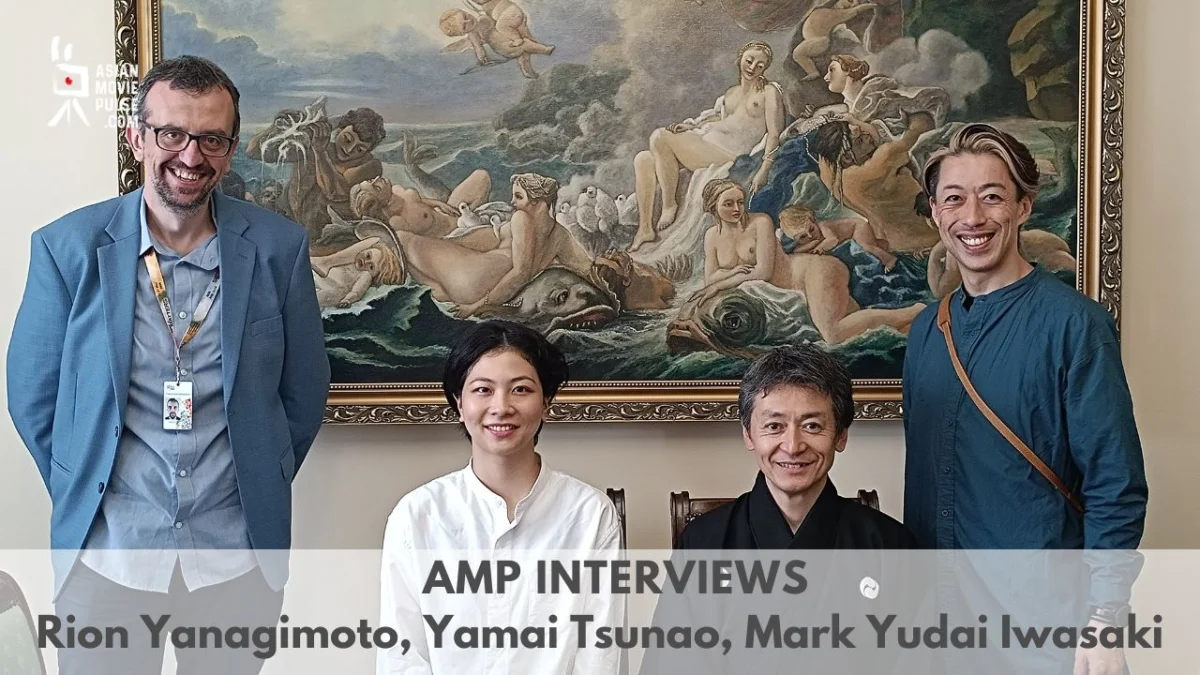
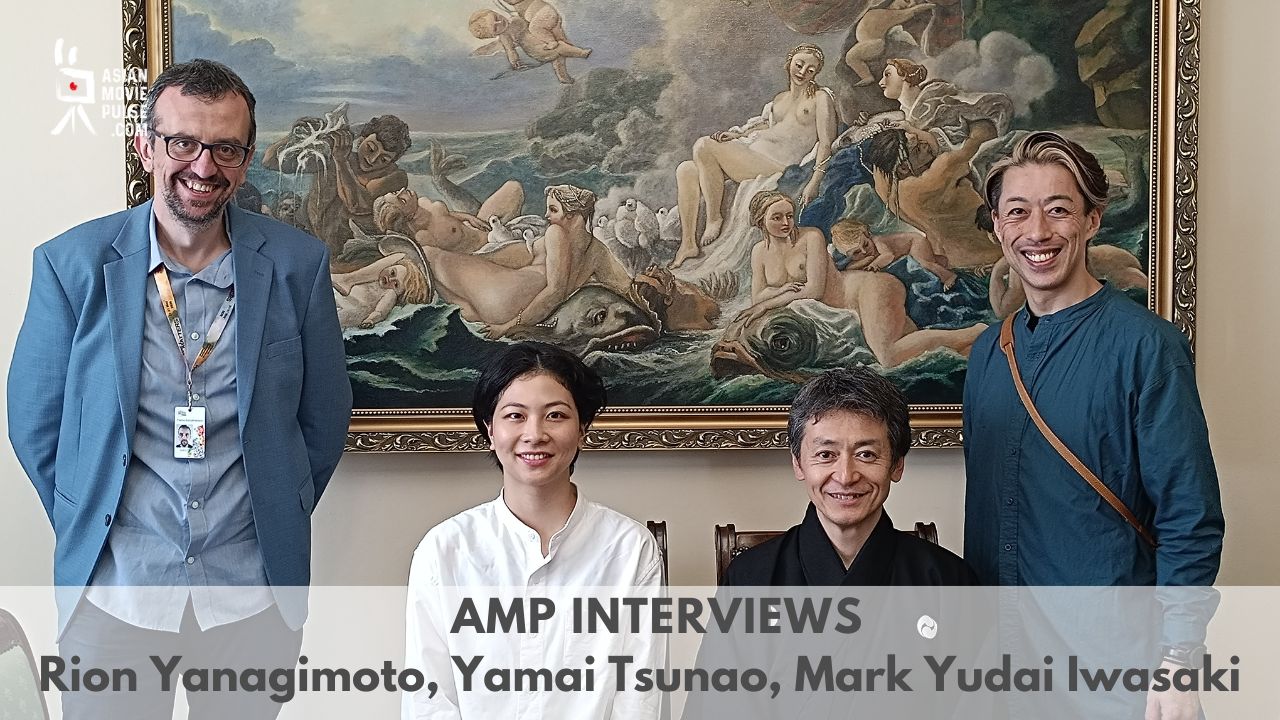
The Craiova International Shakespeare Festival, a prestigious global gathering celebrating the enduring legacy of the Bard, has this year been illuminated by a truly unique production: "Titus Andronicus: Reborn." This Japanese reimagining of Shakespeare’s notoriously violent tragedy, presented by the KAKUSHINHAN theatre company, has sparked profound conversations about cultural synthesis, the embodiment of theatrical violence, and the precarious state of performing arts in Japan. The festival provided a crucial platform for an exclusive interview with key members of the production: Yamai Tsunao, a distinguished Kokuho who embodies the titular role of Titus Andronicus; Mark Yudai Iwasaki, who portrays Bassianus and skillfully served as the production’s translator; and Rion Yanagimoto, the actress taking on the significant male role of Lucius. Their insights offer a deep dive into the artistic and philosophical underpinnings of this ambitious undertaking.
The genesis of "Titus Andronicus: Reborn" lies in a bold artistic vision to bridge the seemingly disparate worlds of Elizabethan drama and traditional Japanese Noh theatre. This convergence is not merely a stylistic choice but a fundamental exploration of dramatic expression. The production’s presence at the Craiova Shakespeare International Festival, an event that has consistently championed innovative interpretations of Shakespeare since its inception in 2008, underscores its significance in the international theatrical landscape. The festival, held annually in Craiova, Romania, has a history of drawing acclaimed theatre companies from around the globe, fostering a vital exchange of artistic ideas and cultural perspectives. This year’s festival, spanning from [Insert hypothetical festival dates, e.g., May 15th to May 30th, 2026], has positioned "Titus Andronicus: Reborn" as a centerpiece, highlighting its potential to redefine audience engagement with Shakespearean narratives.
A Pivotal Encounter: Noh and Shakespearean Rhythms
For Yamai Tsunao, the role of Titus Andronicus is imbued with a profound personal history. As a descendant of a long lineage of Noh performers, his first stage appearance dates back to the tender age of five, and his life has been intrinsically woven into the fabric of this classical Japanese art form. This deep immersion, however, presented a significant artistic challenge when transitioning to the demanding rhythms of Shakespeare. "The tempo of Noh and the tempo of Shakespeare are radically different," Tsunao explained, highlighting the inherent contrast between Noh’s deliberate, meditative pace and Shakespeare’s urgent, dynamic vocal delivery. Director Ryunosuke Kimura, recognizing Tsunao’s unique artistic heritage, specifically tasked him with navigating these contrasting registers. The directive was for Tsunao to initially adopt a more Shakespearean mode of speech, gradually evolving towards the more stylized and emotionally resonant expressions characteristic of Noh by the play’s conclusion.
The casting of Tsunao as Titus was strategically deliberate, rooted in the archetypal figures he has spent a lifetime portraying within the Noh tradition. Noh theatre frequently features characters of immense stature – gods, shoguns, kings, and other elevated beings. This gravitas, according to the production’s thematic logic, made him an ideal candidate to embody the tragic Roman general. Tsunao also found a resonant personal connection with Titus, particularly through the character’s unwavering loyalty to Rome and his deep-seated responsibility towards tradition. This resonated with Tsunao’s own commitment to preserving and propagating the art of Noh, a form he views as a sacred trust to be passed down through generations.
Bridging Worlds: Bassianus and the Universal Language of Emotion
Mark Yudai Iwasaki, portraying Bassianus and facilitating the vital cross-cultural dialogue as translator, approached the production from a similarly internationalist perspective. For Iwasaki, Shakespeare’s enduring power lies in his ability to articulate universal human emotions and experiences that transcend the confines of culture and time. Presenting such a seminal work through the lens of Japanese actors to a global audience, he noted, served as both a rigorous test and a profound opportunity. It allowed for an exchange of sentiments that might otherwise remain unspoken, fostering a deeper understanding between performer and spectator.
Iwasaki underscored the critical importance of the text itself. He elaborated that the central challenge lies in recontextualizing Shakespeare’s eloquent prose, making it accessible and relatable to contemporary bodies and sensibilities. This process, he believes, enables the audience to witness the emergent magic that arises from the interplay between the actor, the written word, and the performance space. The act of translation, in this context, extends beyond linguistic conversion to encompass a deeper cultural and performative resonance.
A Question of Transformation: Lucius and Gendered Performance
Rion Yanagimoto’s portrayal of Lucius introduces another compelling layer to the production’s exploration of transformation. As an actress embodying a traditionally male role, Yanagimoto stated that the mental aspect of the character felt surprisingly natural. However, she candidly acknowledged the physical challenge of using her own body to suggest a different gender identity. Her approach eschewed simplistic vocal manipulation or overt mimicry of masculine traits. Instead, she focused on embodying the core qualities of leadership, strength, and the inherent authority required to guide and inspire others. The inherent distance between her own identity and Lucius’s gender, status, and social standing, she found, was precisely what made the challenge so exhilarating.
The Challenge of Violence: A Theatrical Examination
The pervasive theme of violence in "Titus Andronicus" naturally became a focal point of the discussion. Yamai Tsunao drew a direct parallel to the principles of Noh theatre, where the preservation of community harmony and the pursuit of peace are paramount. From this perspective, he suggested that violence is something that can, and indeed should, be actively resisted. His participation in this production, he posited, was driven by a desire to use theatre as a tool to combat violence.
Yanagimoto, speaking from Lucius’s perspective, offered a more nuanced view, acknowledging the overwhelming nature of violence when one is its direct victim. In such dire circumstances, she observed, the space for prayer or rational thought can be utterly consumed by raw anger and hatred. Yet, she found a glimmer of hope in the transformative power of performance, suggesting that theatre might, in fact, create a pathway for reclaiming that lost space for healing and reflection.
Iwasaki further elaborated on the role of imagination as a crucial countermeasure against violence. He argued that individuals trapped in violent situations often lose the capacity to envision the suffering they inflict or endure. Theatre, by artfully recreating these scenarios from a safe, observational distance, allows spectators to confront the devastating potential of violence, thereby prompting introspection and potentially averting real-world perpetrations. This, for him, is a fundamental justification for the continued necessity of artistic expression.
Violence as Spectacle: The Paradox of Consumption
One of the most compelling aspects of the interview delved into the inherent paradox of violence as entertainment. Tsunao pointed out that Noh itself often depicts wars, battles, profound suffering, and the lingering spirits of those who endured agonizing lives. However, he emphasized that the artistic transformation of these tragic narratives into performance allows audiences to engage with, reflect upon, and potentially alleviate the weight of such suffering.
Yanagimoto specifically referenced the second act of "Titus Andronicus: Reborn," where Lavinia’s brutal assault and mutilation are depicted through stylized, almost dance-like movements and symbolic gestures, including a golf scene. While the audience might find aesthetic pleasure in the form of the scene, Yanagimoto argued, this very engagement implicates them in the consumption of violence. She suggested that this theatrical structure serves as a potent critique of how individuals in the real world can inadvertently participate in or normalize violence through entertainment, often without conscious awareness.
The Emotional Crucible: Most Difficult and Cherished Moments
The most emotionally taxing scenes for the three performers offered a poignant glimpse into the profound impact of the production on their personal and artistic sensibilities. Iwasaki identified the third act as particularly challenging. This act, following Lavinia’s mutilation and the capture of Titus’s sons, culminates in Titus’s desperate plea for their lives and Marcus’s return with the ravaged Lavinia. Though Bassianus is not central to this moment, Iwasaki confessed that simply existing within the same performance space, bearing witness to such profound suffering, rendered it both the most difficult and one of his most cherished moments.
Tsunao echoed this sentiment, selecting the same scene as the most arduous. The visceral image of Lavinia, dismembered and silenced, became physically and emotionally unbearable. Given that Fuka Haruna, the actress portraying Lavinia, is close in age to his own son, Tsunao admitted to imagining his own child in such a horrific state, amplifying the scene’s devastating emotional impact.
However, Tsunao also found this sequence profoundly fascinating due to its subsequent developments. At the zenith of Titus’s grief and rage, he undergoes a metamorphosis into a demonic figure. In Noh tradition, characters frequently transform into demons when overwhelmed by extreme anger and sorrow, but the actual process of transformation is rarely depicted. "Titus Andronicus: Reborn," by staging this transformation directly, presented Tsunao with a uniquely compelling dramatic arc.
Yanagimoto pinpointed the scene between Lucius and Aaron in Act Five as her most difficult. Each time Aaron confesses the atrocities he has committed, Lucius is assailed by vivid flashbacks of past violence. What begins as righteous anger gradually morphs into a state akin to Post-Traumatic Stress Disorder, as the weight of past trauma overwhelms him. Her favorite scene, conversely, is Lavinia’s resourceful act of using a stick to write the names of her tormentors, Chiron and Demetrius, after being deprived of her hands and tongue. This moment, she felt, powerfully illustrates how an individual stripped of conventional communication can find an extraordinary new way to speak and reclaim agency.
The State of Theatre in Japan: A Call for Support
The conversation naturally extended to the broader landscape of theatre in Japan. Both Tsunao and Yanagimoto expressed palpable concern regarding a perceived decline in government and societal support for the arts. Their experience in Romania, where they felt theatre and artists were accorded a profound level of respect, starkly highlighted this contrast. Yanagimoto pointed to the festival’s decision to select their company for the opening night, despite KAKUSHINHAN not being a globally recognized entity, as evidence of a genuine belief in the intrinsic value and impact of theatre.
Iwasaki broadened the scope of this issue, arguing that challenges such as digitalization, economic pressures, and the erosion of younger audiences are not isolated to Japan but represent global trends. He candidly admitted that achieving financial stability as a theatre actor in Japan is exceedingly difficult, with only a select few managing to sustain a consistent livelihood. This economic precariousness poses a significant threat to the vitality and sustainability of theatrical arts.
Future Horizons: International Reach and Artistic Innovation
Looking towards the future, all three artists expressed a shared hope that "Titus Andronicus: Reborn" would embark on an extensive international tour. Tsunao and Yanagimoto envision the production as a catalyst for opening new avenues for Japanese theatre on the global stage. Iwasaki further suggested that the innovative performance style cultivated through this project could be adeptly applied to other dramatic works, potentially even comedies, involving the same core ensemble and collaborating Noh actors.
The interview concluded on a surprisingly lighthearted note. Iwasaki revealed that the notoriously gruesome final scene, involving cannibalism, was executed using cinnamon rolls generously provided by the production’s sponsor, Oizumi Kojo, also known as Oizumi Factory. This detail, while seemingly trivial, adds a touch of human ingenuity and pragmatic resourcefulness to the intense artistic endeavor.
Ultimately, the insights shared by Mark Yudai Iwasaki, Yamai Tsunao, and Rion Yanagimoto reveal "Titus Andronicus: Reborn" as far more than a mere Japanese adaptation of Shakespeare. It stands as a testament to the power of cultural translation, the transformative potential of physical performance, the enduring resonance of historical memory, and an unwavering belief in theatre’s capacity to serve as a vital space for the critical examination of violence, rather than its passive consumption. The production’s success at the Craiova International Shakespeare Festival serves as a powerful indicator of its potential to resonate with audiences worldwide, sparking dialogue and fostering a deeper appreciation for the universal truths embedded within dramatic art.