The 79th Cannes Film Festival has been marked by the highly anticipated return of Polish auteur Paweł Pawlikowski, whose latest cinematic offering, Fatherland, has premiered to significant critical acclaim. After a seven-year hiatus since his last feature, Pawlikowski, widely recognized as one of Poland’s most distinguished contemporary filmmakers, presents a concise yet profoundly impactful drama that masterfully concludes his unofficial black-and-white trilogy. The film, a potent exploration of historical trauma and national identity, places itself firmly within the current global discourse surrounding societal fragmentation and moral reckoning, earning a provisional rating of 4 out of 5 from early reviewers like Tamara Khodova.
Pawlikowski’s Return: Capping a Thematic Trilogy
Pawlikowski’s journey into the intricate landscapes of European history and personal memory began with the Oscar-winning Ida (2013). This haunting narrative followed a young Polish nun’s discovery of her Jewish heritage and her family’s tragic fate during the Holocaust, earning widespread international praise for its stark beauty and profound emotional resonance. Ida secured the Academy Award for Best Foreign Language Film, a testament to its universal appeal and the director’s unique vision. He continued this thematic exploration with Cold War (2018), which also debuted at the Cannes Film Festival. Cold War, a passionate and doomed romance set against the backdrop of post-war communist Poland and Cold War Europe, further cemented Pawlikowski’s reputation for crafting visually arresting and emotionally charged stories steeped in historical context. It garnered him the Best Director award at Cannes, underscoring his distinctive aesthetic and narrative prowess.
Now, with Fatherland, Pawlikowski once again immerses his audience in the ashes of mid-century Europe, this time focusing on a pivotal moment in Germany’s post-war reconstruction. The film, a wonderfully restrained and politically charged narrative, brings his study of historical trauma to a poignant close. The consistency in his use of black-and-white cinematography across these three films is not merely an aesthetic choice but a deliberate narrative tool, evoking a sense of historical distance while simultaneously heightening the emotional immediacy and moral ambiguities inherent in his characters’ struggles. This stylistic signature has become synonymous with his exploration of memory, guilt, and identity, allowing him to strip away superficiality and focus on the raw essence of human experience.
The Historical Canvas: Germany in 1949
Fatherland is set in 1949, a year of immense historical significance for Germany, still reeling from the devastation of World War II and already becoming a crucial battleground in the nascent Cold War. The nation found itself newly partitioned, with the Western Allies establishing the Federal Republic of Germany (West Germany) and the Soviet Union creating the German Democratic Republic (East Germany) later that year. This division fundamentally reshaped the geopolitical landscape of Europe for decades.
Against this tumultuous backdrop, the film centers on Nobel laureate Thomas Mann (portrayed with gravitas by Hanns Zischler) as he embarks on a symbolic and deeply personal journey. Mann is invited to receive the prestigious Goethe Prize, an honor bestowed in both American-occupied Frankfurt and Soviet-controlled Weimar. This dual invitation forces Mann to confront the fractured reality of his homeland, a land he had not seen in 16 years. Having fled the Nazi regime in 1933, his return from exile in the United States is laden with profound emotional and political weight, representing not just a literary recognition but a poignant attempt to reconnect with a nation irrevocably altered.
The Goethe Prize itself, a significant cultural accolade, becomes a prism through which the film examines the competing ideological narratives of the emerging German states. In Frankfurt, the award might be presented as a celebration of democratic renewal and intellectual freedom, aligning with Western values. In Weimar, historically rich but now under Soviet influence, it could be framed as an endorsement of socialist ideals and a break from the capitalist past. Mann, a towering figure of German literature and a vocal critic of Nazism, inadvertently becomes a pawn in this ideological chess match.
The Mann Family: A Microcosm of Germany’s Division
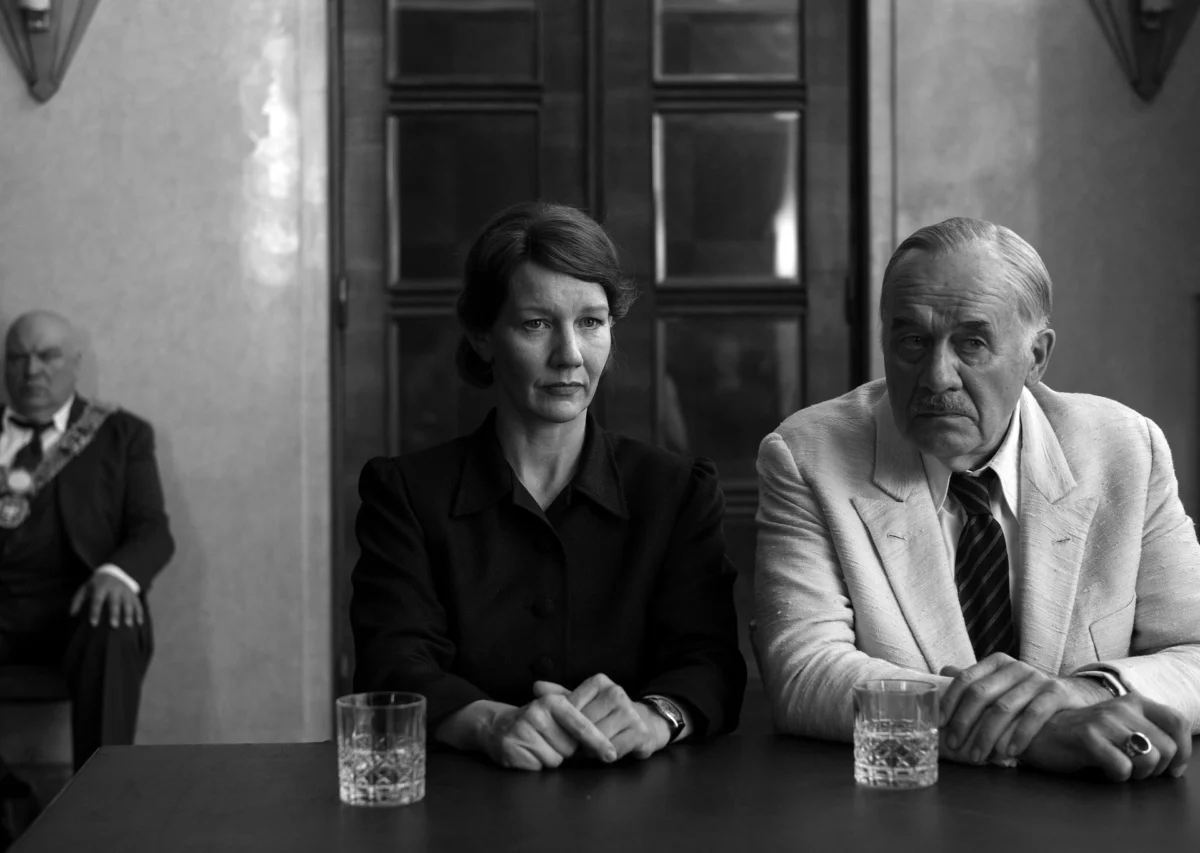
The film delves into the complex dynamics of the Mann family, particularly the relationship between Thomas Mann and his children, which serves as a potent microcosm of the broader societal divisions and moral dilemmas facing post-war Germany. Accompanying Mann as his personal assistant is his daughter, Erika (a nuanced performance by Sandra Hüller), a formidable intellectual and political activist in her own right.
The narrative subtly introduces Erika’s efforts to persuade her brother, Klaus (August Diehl, in a brief but pivotal role), to join their trip. The on-screen dynamic between Erika and Klaus draws from their fascinating and often turbulent real-life history. Both highly intellectual and unconventional, the siblings famously entered into reciprocal "lavender marriages" – marrying each other’s same-sex lovers to provide cover in a less tolerant era. Erika’s husband, Gustaf Gründgens, a celebrated actor and Klaus’s former partner, chose to remain in Nazi Germany, where he rose to become a star of the Third Reich’s cultural scene. Klaus Mann, who had fled Germany in 1933, channeled his profound sense of betrayal and disgust into his thinly veiled novel Mephisto. This novel, a scathing indictment of Gründgens’ opportunistic collaboration with the Nazi regime, became a cultural touchstone and remained controversially banned for decades, highlighting the deep scars left by the choices made during the war.
Despite his limited screen time, August Diehl’s portrayal of Klaus Mann functions as a crucial moral compass within the film, providing a stark contrast to his aging father’s more intellectual and detached confrontation with Germany’s past. Pawlikowski subtly juxtaposes the fates of two exiles who chose vastly different paths to grapple with their homeland’s darkest hour. While Thomas Mann formally condemned the Nazis in 1936 from abroad and sustained his illustrious literary career in exile, Klaus took a more visceral and direct route. He enlisted in the American army, serving on the front lines and confronting the brutal realities of the concentration camps firsthand. This distinction underscores a central theme of Fatherland: the chasm between those who fought the regime from afar through words and those who bore witness to its atrocities on the ground, or even those who chose to remain and, by varying degrees, compromise.

Societies in Freefall: Pawlikowski’s Enduring Fascination
Pawlikowski’s enduring fascination with societies in "freefall" – liminal spaces where old rules have dissolved and new ones have yet to solidify – finds its ultimate canvas in post-war Germany. The nation, traumatized and fractured, provides a fertile ground for his outsider’s perspective. Thomas Mann arrives yearning to reconnect with his readers, to speak to them in his mother tongue, and to champion his ideal of a "Good Germany" – a Germany that could transcend its recent horrific past and embrace its humanistic traditions.
However, the homeland he remembers, the cultural and intellectual Germany he idealized, is gone. Carved up by the competing agendas of the United States and the Soviet Union, the nation is now driven by pragmatic political imperatives rather than Mann’s lofty idealism. His stature as a revered author is exploited; he is reduced to a political pawn, paraded around by both sides to lend legitimacy to their rival regimes. The bitter irony is further compounded by the reactions of the very readers he came to embrace. Many flood him with venomous letters, outraged by his willingness to set foot in the Soviet-controlled German Democratic Republic, viewing his presence there as a betrayal. This public condemnation highlights the deep-seated resentments and ideological divisions that plagued post-war German society, demonstrating that even a figure of Mann’s intellectual magnitude could not bridge the chasm of public opinion.
Minimalism and Symbolic Storytelling
Fatherland sees Pawlikowski at his most minimalist, a stylistic choice that amplifies the film’s profound impact. By confining much of the action to the formal, often austere, halls of a broken country, he frames a deceptively simple story that is quietly teeming with buried secrets, unspoken traumas, and moral complexities. The stark black-and-white cinematography, consistent with his previous works, serves to heighten the sense of historical remove while simultaneously focusing the viewer’s attention on the ethical dilemmas and emotional states of the characters.
The stark divide between the two emerging German states is cleverly mapped out through the music Mann encounters during his journey. While in the West, Pawlikowski regular Joanna Kulig, known for her captivating performance in Cold War, sings playful cabaret tunes. These performances, seemingly lighthearted, carry an underlying current, perhaps serving as a collective attempt to drown out the nation’s immense guilt and suppress the uncomfortable truths of the recent past. Over in the East, a children’s choir belts out utopian anthems about a future where no mother weeps for a fallen son. These songs, while idealistic, carry an ominous tone, hinting at the enforced optimism and ideological indoctrination characteristic of Soviet-bloc nations, where individual grief was often subsumed by collective, state-sanctioned narratives.
Ultimately, Mann emerges not as a monument to a new Germany, but as a tragic relic of a bygone era. As an émigré who has lived across several borders himself, Pawlikowski excels at capturing that devastating, hollow ache of displacement familiar to any exile or immigrant. Mann feels like an alien in every room he enters, realizing that his true "fatherland" now exists solely in his memory, a ghost of what once was. He might yearn to step onto a pedestal, to be seen as a unifying figure, but reality constantly intrudes. This intrusion comes in various forms: from the unexpected appearance of Richard Wagner’s grandchildren, reminders of a controversial cultural legacy deeply entwined with German nationalism, to the chilling discovery of a Soviet political prison operating out of Buchenwald, a former Nazi concentration camp, revealing the terrifying continuity of state-sponsored brutality under a new ideological guise. These moments serve as stark reminders that the past, however recent, is not easily shed and that new forms of oppression can emerge from the ashes of the old.
A Mirror to the Present: Contemporary Resonance and Broader Implications
Ultimately, Fatherland serves as a remarkably piercing commentary on the very notion of "homeland" and national identity. It meticulously dissects the painful chasm between those who fled and those who stayed, capturing a society stripped of its moral compass and struggling to define itself in the wake of unimaginable catastrophe. The film’s resonance with the present day is perhaps its most striking achievement. Pawlikowski’s post-war setting feels less like a history lesson and more like a mirror held up to ourselves, reflecting the contemporary anxieties and divisions that plague societies globally.
Today’s world, much like Germany in 1949, often feels fractured. Some revel in the ruins of established norms, embracing nihilism or radical change. Others blindly engineer utopian futures, convinced their ideological purity will pave the way to a better tomorrow. A few, like Mann, sit in bombed-out churches, metaphorically mourning a lost era, a perceived golden age of values and civility. Yet, Pawlikowski argues, they are all bound together by threads far stronger than they realize – shared history, collective trauma, and the enduring human quest for meaning and belonging.
This thematic urgency places Fatherland in conversation with other recent cinematic works that use historical settings to interrogate contemporary issues. Much like Jonathan Glazer did with The Zone of Interest (2023), which explored the banality of evil adjacent to Auschwitz, Pawlikowski employs the trappings of the past to ask urgent questions of a modern audience. Both directors utilize historical distance to create a space for reflection, prompting viewers to confront their own ethical positions and societal responsibilities. In Fatherland, the questions revolve around moral compromise, national responsibility, the nature of exile, and the elusive definition of "home" in a world constantly reshaped by political forces and human choices.
The initial reception at Cannes suggests that Fatherland is not merely a critical success but a film that sparks necessary dialogue. Its subtle yet profound exploration of Germany’s post-war identity offers insights into how nations grapple with collective guilt and redefine their narratives. For Pawlikowski, this film solidifies his position as a master filmmaker capable of distilling complex historical moments into universal human dramas, compelling audiences to look inward and consider the implications of the past on the present. As societies worldwide stand, once again, at various historic crossroads, grappling with issues of national identity, migration, and ideological conflict, Fatherland arrives as a timely and indispensable cinematic reflection, inviting introspection and demanding a reckoning with the echoes of history.