The much-anticipated adult animated romantic comedy series, Mating Season, is set to premiere on Netflix on May 22, 2026. Hailing from the creative minds behind the successful animated shows Big Mouth and Human Resources, this new 10-episode series delves into the complex and often hilarious world of animal relationships, exploring themes of love, sex, and the universal drive to find a partner and continue the species. Each 30-minute episode promises to be a provocative and insightful look at the romantic entanglements of a diverse cast of animated forest creatures.
A Unique Approach to Love and Relationships

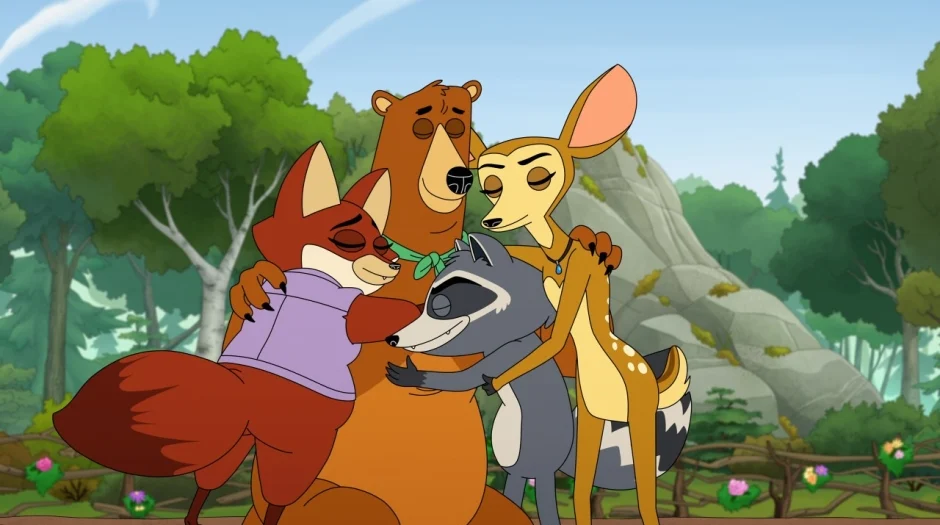
Mating Season distinguishes itself by using the animal kingdom as a lens through which to examine human emotional and sexual experiences. The series features a compelling ensemble of characters, each grappling with distinct romantic challenges. These include a raccoon burdened by familial trauma, a bear with an unusual romantic aspiration to date a horse, a deer struggling to move on from a past wolf relationship, and a red fox navigating the complexities of the lesbian dating scene. This unconventional premise, as noted by the creators, is designed to leverage the expressive capabilities of animation to explore sensitive topics in a way that is both humorous and thought-provoking, with early reactions suggesting a blend of sharp wit and surprising emotional depth.
The genesis of Mating Season stems from the creators’ desire to move beyond the adolescent anxieties explored in Big Mouth and delve into the adult pursuit of lasting partnership. Mark Levin, one of the executive producers, explained the core motivation: "We love to explore the world, the way we live now, and human dynamics, and figure out fun ways to do it in a way that makes animation essential to the stories we’re telling. So instead of just doing a Friends-type show or Sex and the City… we want to take advantage of the opportunities afforded by animation to create these animal worlds and find different ways to portray relationships and sex."
Jennifer Flackett, another executive producer, elaborated on the creative decision to use animals: "We always felt on Big Mouth that, if you were portraying sex with humans, you really needed to go to metaphor. So, there was a train, or there was figure skating. But sex with animals is funny and not upsetting. And Big Mouth was really about one time of life, from age 13 to 15. We were very interested in exploring the next phase of life, that time when you’re looking for your person. We actually tried a couple of ways to think about it with humans, but with all those ideas there was just no need for it to be animated."

The idea for Mating Season solidified when the team revisited an earlier concept: "Then we remembered this idea we had for a movie about the mating habits of animals. We were like, ‘Well, that totally does both things.’ We could talk about a copulatory tie and relate it to the human world with people who are afraid of commitment. All the pieces lined up, and we never looked back." This strategic choice allows the show to tackle themes of commitment, desire, and connection with a unique allegorical framework, appealing to a mature audience seeking nuanced storytelling.
A Deep Dive into the Creative Process
The development of Mating Season involved a meticulous process of weaving together biological facts about animal behavior with relatable human emotional narratives. The show’s creators, including executive producers Mark Levin, Jennifer Flackett, Andrew Goldberg, and Nick Kroll, along with supervising director Anthony Lioli, have spoken about the intricate balance required to achieve this blend.

Andrew Goldberg highlighted the role of ongoing research in their creative process: "We have a whiteboard in our office where one of our PAs gives us an animal fact a day. And some of them are fantastic. We’re like, ‘We’ve got to save these and put a compendium out or something.’" This commitment to incorporating accurate, albeit often surprising, animal behaviors into the narrative adds a layer of educational intrigue to the series, as noted by early viewers who found themselves learning more about the animal kingdom than anticipated.
The writing process, while benefiting from the team’s extensive experience in comedy, still presents its challenges. "We still have hard days. And we have easy days," Mark Levin stated. Jennifer Flackett added, "We had our eight seasons of Big Mouth and two seasons of Human Resources. So, by the time we got to Mating Season, the train just worked. But when those things come together, that’s still the best, right? Like with The Fox and the Hound and with Fawn and her wolf boyfriend, who doesn’t want to be tamed." The integration of specific animal traits with narrative arcs is crucial. Andrew Goldberg emphasized the need to "find the right animal with the right problem," hinting at the depth of character development and the often-unforeseen connections that emerge.
Animation as an Essential Storytelling Tool

The visual execution of Mating Season is a key component of its storytelling, with supervising director Anthony Lioli playing a pivotal role. The animation style, described as 2D, adult-oriented, and drawing inspiration from classic sitcoms, aims to create a world that is both familiar and fantastical. Lioli shared insights into the animation development: "I do have a lot of fan fiction myself. But it was an interesting journey coming up with the look. When we first started, many moons ago, the characters didn’t have things like kitchens. That came later, when we started exploring how they would cook or make dinner for a date. We looked at Gilligan’s Island a lot." This suggests a layered approach to world-building, gradually introducing elements that enhance the characters’ human-like experiences within their animal forms.
The visual scale and interaction between different animal species presented unique animation challenges. "It’s a little Gilligan’s Island, a little The Flintstones. And the scale of the characters varied a lot," Goldberg noted. The creators have embraced the inherent absurdity of interspecies relationships, pushing creative boundaries. Jennifer Flackett explained their philosophy: "We decided, on some level, there’s rules and there’s also no rules, because we can break them whenever we want."
This flexibility allowed for inventive visual solutions, such as a small raccoon character being able to interact with a much larger bear character. Anthony Lioli described a pivotal moment in the animation development: "When we did the presentation two years ago, we started experimenting with how Ray is a little raccoon and Josh is a giant bear. We needed to figure out how to get them both together in one shot and then somebody pitched the idea of Ray crawling up Josh and hanging out on his shoulder. So that created some new ideas with other animals and how to play with that scale and break some rules."

However, the pursuit of visual humor and narrative coherence sometimes requires careful adjustments. Lioli recounted a challenge: "Yeah, we had one scene initially where Ray and a galago were hooking up. We thought it would be a funny scale thing, but the problem was they had these big eyes and, especially animated, it looked very baby-ish. After we watched it, I was like, ‘I think we have a galago problem.’ It was disturbing. So, we changed the character from a galago to a possum. Then it was fine." This anecdote underscores the iterative nature of animation and the creators’ commitment to maintaining the show’s intended tone.
Memorable Visuals and Personal Inspirations
The series is packed with visually striking and often surreal moments, a hallmark of the creators’ previous work. When asked about the most memorable visuals, Anthony Lioli pointed to "the goat weed god illusion." Jennifer Flackett described these moments as "animation moments," where the team can "really go crazy with the visuals." She added, "And we still try to find moments like that in this one, even though the whole world is pretty crazy. Like the mycelium scene. We loved that one."

Andrew Goldberg shared a particularly vivid and humorous visual: "The visual that always sticks out for me is in Episode 4 when Dylan, Fawn’s boyfriend, is peeing all over the place to mark his territory in the apartment and Fawn has that Bambi moment of her slipping on the pee like Bambi on the ice." This callback to iconic Disney imagery, recontextualized for an adult audience, exemplifies the show’s blend of pop culture references and original humor. The creators confirmed that the Bambi reference was one of the earliest concepts pitched, highlighting its foundational role in the show’s comedic DNA.
Beyond fictional references, Mating Season also draws heavily from the personal lives of its creators. Andrew Goldberg spoke about the show’s roots in their shared experiences: "On Big Mouth, we all sat around and talked about the most embarrassing things that happened to us when we were kids. Now, we sit around and talk about the most embarrassing things that have happened to us as adults. To me, it was interesting to see how many people in the room had mommy issues and daddy issues. I guess there’s something about being a comedy writer where you can’t have two functioning parents." This self-deprecating humor and vulnerability are likely to resonate with viewers, providing a foundation of relatable emotional truth beneath the outlandish scenarios.
Jennifer Flackett found personal connection in character dynamics: "And Fawn trying to be Penelope’s wing-woman but then everyone ends up liking Fawn. That’s so relatable, having that hot friend. And I really related to Fawn and Dylan’s story, having a boyfriend who doesn’t want to adjust or change." These deeply personal inspirations suggest that while the show is set in the animal kingdom, its emotional core is firmly rooted in the human experience of relationships, insecurities, and the search for connection.

Surprising Discoveries and Future Potential
The research undertaken for Mating Season yielded some unexpected and entertaining insights into animal behavior, which directly informed the show’s storylines. Jennifer Flackett recounted a particularly revelatory moment: "At some point, while we were all working on Episode 9, we were watching a video about how all these frogs come together to spawn. And we knew we needed an episode where all the frogs have an orgy." This demonstrates how the show embraces the more primal and uninhibited aspects of animal reproduction, translating them into narrative opportunities.
Mark Levin found the exploration of animal mating systems particularly fruitful: "Learning about which animals were monogamous and which were polyamorous was interesting and definitely a gateway to figure out stories to tell." This understanding of diverse reproductive strategies provided a rich tapestry of potential plotlines and character motivations.

Perhaps one of the most bizarre and memorable discoveries for the team involved avian anatomy. Andrew Goldberg shared, "For me, it was learning about geese and their corkscrew genitals. That comes up in Episode 8." While the creators confirmed that this specific biological detail would not be explicitly depicted on screen, unlike in Big Mouth, the knowledge itself clearly sparked creative discussions. Anthony Lioli, when asked if he was disappointed by the lack of explicit animation of animal genitalia, humorously responded, "No, no. I’m an adult. I’m mature enough to accept it. Plus, there’s always the next season." This playful remark hints at the potential for future installments to continue pushing boundaries, building on the established foundation of irreverent humor and insightful exploration of relationships.
The series’ executive producers include Mark Levin, Jennifer Flackett, Andrew Goldberg, and Nick Kroll. Titmouse is the animation studio, with Chris Prynoski, Shannon Prynoski, Antonio Canobbio, and Ben Kalina serving as executive producers. Anthony Lioli is the supervising director. The voice cast features notable talent, including Nick Kroll, Zach Woods, June Diane Raphael, and Sabrina Jalees, lending their distinctive voices to the menagerie of characters.
With its unique premise, sharp writing, and visually inventive animation, Mating Season is poised to become a significant addition to Netflix’s adult animation library, offering a fresh and provocative perspective on the universal quest for love and companionship. The series’ premiere on May 22, 2026, is highly anticipated by fans of the creators’ previous work and by those seeking adult-oriented animation that tackles complex themes with humor and intelligence.