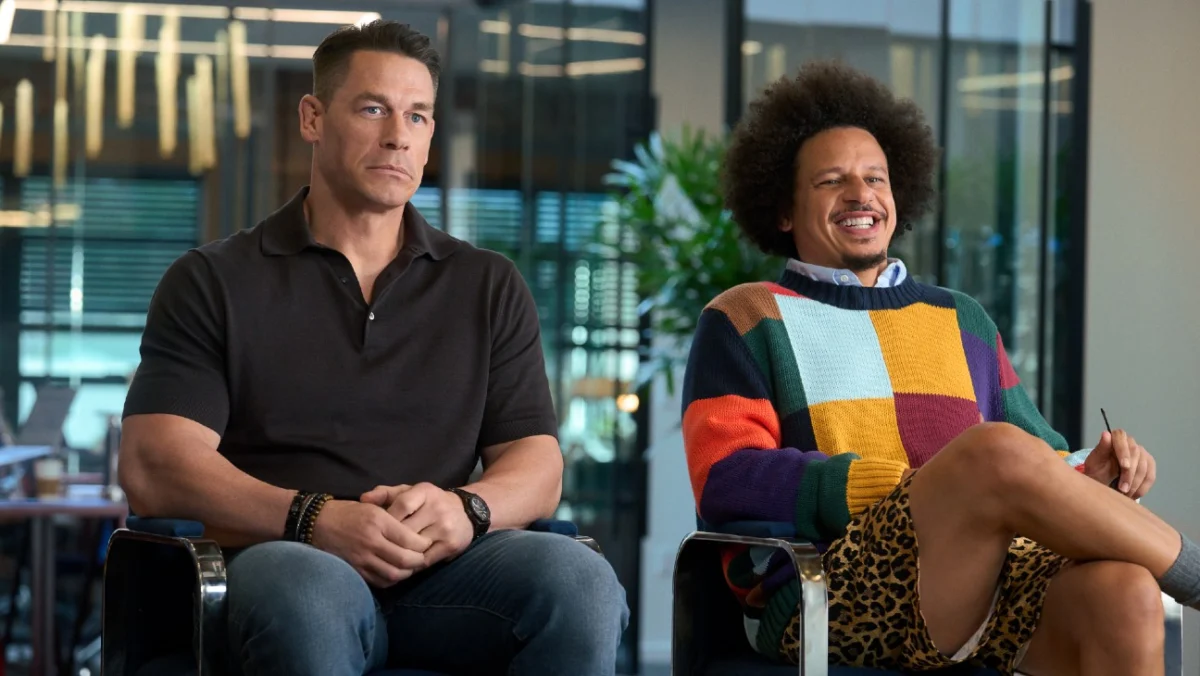
The streaming giant Netflix is poised to release its latest comedic feature, Little Brother, on June 26, presenting an intriguing pairing of multi-hyphenate star John Cena and unique comedic voice Eric André. Directed by Matt Spicer, known for his critically acclaimed dark comedy Ingrid Goes West, the film promises a fresh take on the "odd couple" dynamic, exploring the hilarious and often chaotic complexities of an unexpected familial bond. The recently unveiled trailer has already generated significant buzz, showcasing the undeniable, albeit initially contentious, chemistry between Cena’s meticulously organized real estate agent and André’s free-spirited, quasi-sibling character, setting the stage for a summer comedy event.
Unpacking the Premise: A Collision of Worlds
At its core, Little Brother centers on the character of a well-known real estate agent, portrayed by John Cena, whose life is a carefully constructed edifice of order and professional success. His world, however, is abruptly upended by the sudden reappearance of Eric André’s character, referred to as his "little brother," despite not being biologically related. This fundamental misunderstanding, or perhaps a deliberate blurring of familial lines, forms the bedrock of the film’s comedic conflict. The trailer succinctly captures Cena’s character’s exasperation, with him lamenting, "He’s not my actual brother," and expressing deep frustration over the timing of this unwelcome reunion: "The timing on this couldn’t be worse." This immediate tension establishes the central comedic premise: a clash between two diametrically opposed personalities forced into an awkward, pseudo-familial proximity.
The humor is further amplified by André’s character’s uninhibited and often inappropriate behavior, a hallmark of his distinctive comedic style. A notable moment from the trailer features André attempting to offer misguided marital advice to Cena’s on-screen wife, played by the versatile Michelle Monaghan. With a jarring attempt at support, André tells Monaghan, "Our man is hurting right now. You might want to think about eating that ass." This line, both shocking and uproariously out of place, perfectly encapsulates the kind of boundary-pushing comedy André brings to the table and highlights the significant discomfort it will undoubtedly cause Cena’s character, whose life appears to be governed by decorum and control. The ensuing narrative is expected to derive its humor from the escalating situations and misunderstandings that arise from this forced cohabitation, as Cena’s character struggles to maintain his pristine life amidst André’s anarchic influence, leading to a series of escalating comedic misfortunes and an eventual, perhaps reluctant, bond.
The Creative Minds Behind the Comedy
The directorial vision for Little Brother comes from Matt Spicer, whose previous work, particularly Ingrid Goes West (2017), showcased a keen eye for character-driven comedy with underlying themes of social commentary and psychological unease. Ingrid Goes West, starring Aubrey Plaza and Elizabeth Olsen, explored the dark side of social media obsession through a darkly humorous lens, earning critical praise for its sharp script and compelling performances. Spicer’s involvement suggests that Little Brother may offer more than just slapstick humor, potentially delving into the emotional complexities of chosen family, personal identity, and the disruption of carefully curated lives. His ability to balance humor with poignant character moments could elevate Little Brother beyond a typical buddy comedy, providing both laughter and a touch of genuine human connection.
The screenplay for Little Brother was penned by the writing duo Jarrad Paul and Andrew Mogel. Their collaborative history includes writing credits for films such as Yes Man (2008), a successful Jim Carrey vehicle, and the creation of the television series The Grinder (2015-2016), a critically acclaimed legal comedy starring Rob Lowe and Fred Savage. Paul and Mogel have demonstrated a knack for crafting scripts that blend situational comedy with character-specific humor, often focusing on themes of identity, perception, and interpersonal relationships. Their experience in developing comedic narratives, particularly those involving eccentric characters and unexpected partnerships, makes them well-suited to bring the dynamic between Cena and André to life. The combination of Spicer’s directorial sensibilities and Paul and Mogel’s comedic writing expertise bodes well for a film that is both genuinely funny and thoughtfully constructed, promising a narrative that feels both fresh and familiar.
Producing Little Brother are David Bernad for Middle Child Pictures, alongside Ruben Fleischer. Bernad’s recent credits include HBO’s critically acclaimed and Emmy-winning series The White Lotus, showcasing his involvement in projects that blend comedy with deeper social observations and character studies. Ruben Fleischer is a prominent director and producer known for his work on hit comedies and action films, including the zombie-comedy Zombieland (2009), the crime drama Gangster Squad (2013), and the blockbuster superhero film Venom (2018). His extensive experience in both comedic timing and large-scale productions brings a significant level of industry pedigree to the project. The involvement of such seasoned producers further underscores Netflix’s commitment to delivering high-quality original content, leveraging established talent to ensure both creative integrity and broad audience appeal in an increasingly competitive streaming market.
A Stellar Ensemble Cast
Beyond its two leading men, Little Brother boasts a robust supporting cast that adds considerable depth and comedic potential to the film. Michelle Monaghan, known for her versatile performances across genres, from action thrillers like the Mission: Impossible franchise to dramatic roles and comedies, is cast as Cena’s character’s wife. Her presence is crucial in grounding the narrative and reacting to the escalating chaos introduced by André’s character, providing a relatable perspective amidst the absurdity. Monaghan’s ability to portray both exasperation and underlying affection will be key to the film’s emotional resonance, offering a vital anchor for the audience.
Christopher Meloni, celebrated for his intense and often unpredictable performances in iconic series like Law & Order: Special Victims Unit and Oz, as well as his memorable comedic turn in Wet Hot American Summer, is also part of the ensemble. Meloni’s casting hints at another potential source of comedic friction or an unexpected alliance within the story, given his penchant for playing characters with a unique blend of gravitas and eccentricity. His inclusion suggests a potential for scene-stealing moments that could further enrich the film’s comedic tapestry and provide additional layers of unexpected humor.
The cast is rounded out by a host of talented comedians and actors, including Ego Nwodim, a standout cast member of Saturday Night Live, whose sketch comedy background will undoubtedly bring a sharp improvisational edge and contemporary comedic sensibility. Sherry Cola, known for her roles in films like Joy Ride and her burgeoning stand-up comedy career, adds another layer of modern comedic flair. Caleb Hearon, Ben Ahlers, Bryce Gheisar, and Pilot Bunch complete the ensemble, promising a dynamic and varied group of characters who will interact with and react to the central duo’s burgeoning "brotherly" relationship. This diverse and experienced supporting cast is a strong indicator of the film’s potential to deliver multifaceted humor and engaging character dynamics, ensuring a rich and entertaining viewing experience.
The Evolution of John Cena and Eric André
The casting of John Cena and Eric André as the central figures in Little Brother is a strategic move by Netflix, capitalizing on the distinct comedic personas and growing appeal of both actors. This pairing represents a calculated risk and a promising venture into a unique comedic territory.
John Cena’s Continued Ascent in Hollywood:
John Cena’s transition from a WWE wrestling icon to a bona fide Hollywood leading man has been one of the most remarkable career shifts in recent entertainment history. Initially recognized for his imposing physique and charismatic, albeit often serious, wrestling persona, Cena has meticulously cultivated a reputation for exceptional comedic timing and a willingness to embrace self-deprecating humor. His roles in films like Trainwreck (2015), where he showcased surprising vulnerability and comedic chops opposite Amy Schumer, and Blockers (2018), where he perfectly embodied the overprotective, yet ultimately well-meaning, father figure, cemented his status as a comedic force. Beyond comedy, Cena has also proven his versatility in action franchises such as Fast & Furious and superhero fare like The Suicide Squad and its critically acclaimed spin-off series Peacemaker.
Regarding Peacemaker, the first season of the HBO Max (now Max) series aired to widespread critical acclaim in early 2022, earning praise for its unique blend of dark humor, visceral action, and surprisingly deep character development, with Cena at its helm. While a second season has been officially ordered, it has not yet aired, indicating its status as a highly anticipated future project. Cena’s upcoming film slate is also diverse, including Coyote vs. Acme, a live-action/animated hybrid that has faced distribution challenges, and Matchbox: The Movie, an adaptation of the popular toy line. His involvement in Little Brother further solidifies his commitment to comedic roles that allow him to explore different facets of his performing range, moving beyond pure action and demonstrating his capacity for nuanced character work even within a comedic framework. His appeal spans multiple demographics, from wrestling fans to mainstream moviegoers, making him a valuable asset for a global platform like Netflix looking to attract a wide audience.
Eric André’s Distinctive Brand of Comedy:
Eric André, on the other hand, brings a wildly different, often surreal and anarchic, comedic sensibility to Little Brother. Best known as the creator and host of The Eric André Show, an Adult Swim series celebrated for its improvisational chaos, celebrity pranks, and deconstruction of the talk show format, André has carved out a unique niche in the comedy landscape. His humor often relies on absurdism, discomfort, and a willingness to push boundaries, challenging audience expectations and creating genuinely unpredictable moments. His performances are characterized by high energy, physical comedy, and a fearless approach to humor that can be both shocking and endearing. André’s ability to create an atmosphere of controlled pandemonium has earned him a devoted cult following.
While The Eric André Show has a dedicated cult following, Little Brother offers André a significant platform to reach a broader, more mainstream audience while still retaining elements of his signature style. His filmography includes popular voice roles in animated features like The Lion King (2019) and The Mitchells vs. the Machines (2021), as well as live-action appearances in comedies such as Bad Trip (2021), which utilized his prank-based humor in a narrative context. His forthcoming projects, Street Fighter and Animal Friends, further indicate his expanding presence in Hollywood. For Little Brother, André’s ability to generate spontaneous humor and play a character who relentlessly disrupts the status quo is precisely what makes him an ideal foil for Cena’s more structured persona. The dynamic between Cena’s straight man and André’s agent of chaos is the film’s central selling point, promising a comedic clash of titans that is both hilarious and surprisingly heartfelt.
The Art of On-Set Collaboration
The challenge of maintaining composure during filming, particularly in a comedy featuring Eric André, was candidly addressed by John Cena in a recent interview with Extra. Cena quipped about the editing process, stating, "They’re only going to show the seconds that I wasn’t laughing." This reveals the inherent difficulty, and indeed the joy, of working opposite André, whose improvisational nature and outrageous delivery are legendary. Cena further elaborated on their working relationship, expressing mutual admiration: "I honestly think we play off each other very well. He has an incredible sense of humor, and I’m a decent sounding board for that." This insight from Cena highlights the organic and collaborative nature of their comedic partnership. It suggests that the chemistry seen in the trailer is not merely scripted but born from genuine on-set interactions and a shared understanding of comedic timing and rhythm. Such a dynamic often translates into more authentic and engaging performances, allowing for moments of unscripted brilliance that can significantly enhance the final product and endear the characters to the audience. This behind-the-scenes camaraderie is often a strong indicator of a film’s potential to resonate with viewers, as genuine enjoyment among the cast can translate directly to the screen.
Netflix’s Strategic Play in the Comedy Arena
The acquisition and upcoming release of Little Brother by Netflix is indicative of the streaming giant’s ongoing strategy to invest heavily in original comedy content, particularly those featuring established stars with broad appeal. In an increasingly competitive streaming landscape, original films with recognizable names serve as a powerful draw for subscribers, helping to differentiate Netflix’s offerings from its rivals. Comedy, in particular, has proven to be a consistent performer for streaming platforms, offering escapism and entertainment that resonates with a wide global audience across various demographics.
Netflix has previously found success with buddy comedies and films that pair unlikely actors, leveraging their individual fan bases and creating unique on-screen dynamics. The combination of John Cena’s mainstream appeal and Eric André’s cult following presents a dual attraction that could draw in diverse viewership segments. For Netflix, a successful run for Little Brother would not only validate their investment in this specific project but also reinforce their position as a premier destination for high-quality, star-driven comedic features. It also demonstrates a willingness to experiment with different comedic styles, bringing André’s distinct brand to a larger platform while offering Cena another opportunity to showcase his versatility. This strategic approach aims to cater to existing subscribers while attracting new ones, solidifying Netflix’s market share in a crowded entertainment sector.
Broader Implications and Anticipation
The release of Little Brother on June 26 carries several broader implications for the careers of its stars and the landscape of streaming comedy. For John Cena, the film serves as another significant step in his post-WWE acting career, demonstrating his ability to lead a mainstream comedy and further diversifying his portfolio beyond action and superhero roles. A strong performance could open doors to more leading comedic roles, solidifying his status as a versatile and bankable star capable of delivering both physical comedy and character-driven performances.
For Eric André, Little Brother represents a potential breakout moment to expand his audience beyond the niche confines of The Eric André Show. While his unique brand of humor has a dedicated following, this film could introduce his comedic genius to a wider demographic, potentially leading to more mainstream film and television opportunities that allow him to blend his avant-garde style with more conventional narrative structures. It could cement his place as a sought-after comedic actor in broader commercial projects.
For Netflix, the success of Little Brother would underscore the value of pairing unexpected comedic talents and investing in director-driven comedies. It could influence future casting decisions, encouraging more adventurous combinations of actors from different comedic backgrounds. As streaming services continue to vie for subscriber attention, films like Little Brother are crucial in offering fresh, engaging content that appeals to a broad demographic while also pushing creative boundaries within the comedy genre. Industry observers will be keenly watching how this unique comedic partnership translates into audience engagement and critical reception, potentially setting a new benchmark for buddy comedies in the streaming era. The anticipation for June 26 is palpable, as audiences prepare to witness the chaotic, hilarious, and unexpectedly heartwarming journey of two very different "brothers" who are destined to challenge and ultimately change each other’s lives.