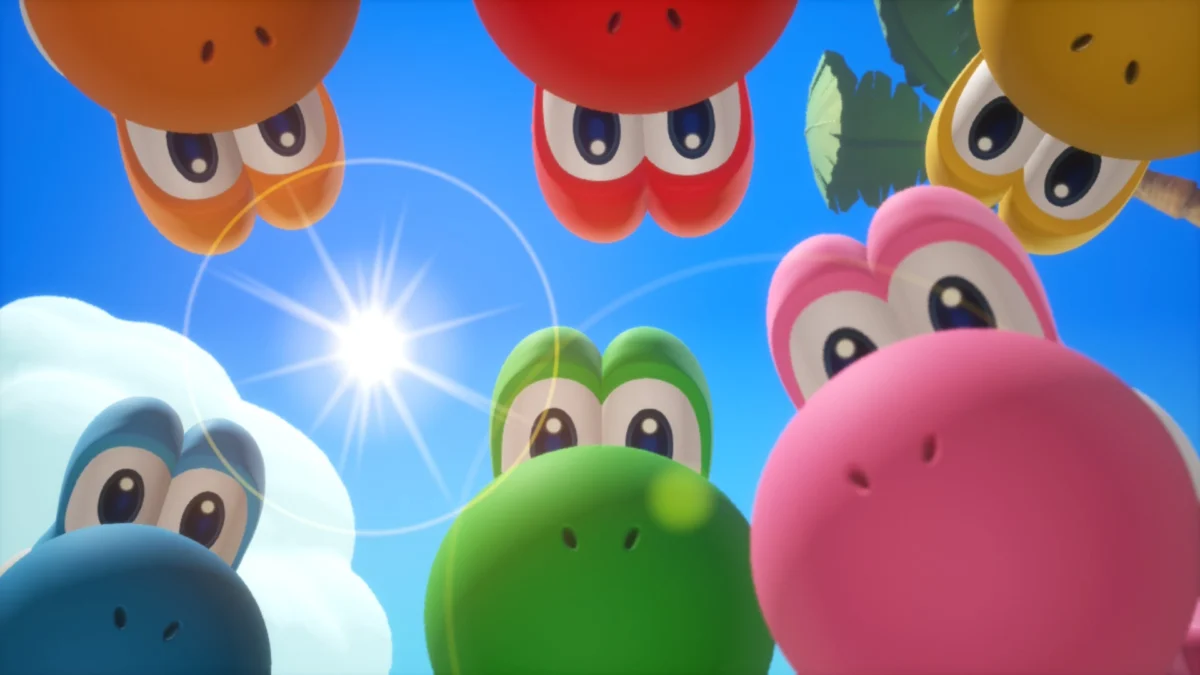
The release of Yoshi and the Mysterious Book marks a significant departure from the traditional linear structure that has defined the Yoshi sub-series for nearly three decades. Developed as a modern response to the aesthetic and mechanical foundations laid by the 1995 Super Nintendo Entertainment System (SNES) classic, Yoshi’s Island, this latest entry introduces a discovery-based gameplay loop that prioritizes environmental interaction over simple traversal. By pivoting away from the standard "A to B" platforming model, Nintendo has created a title that functions more as an interactive physics playground than a conventional obstacle course, signaling a new direction for the franchise’s design philosophy.
The Conceptual Framework of the Mysterious Book
At the core of Yoshi and the Mysterious Book is a meta-narrative conceit involving an anthropomorphic encyclopedia. Unlike previous titles where Yoshi navigates a physical map or a series of themed worlds, the player’s progress here is measured by the completion of a literal tome. Each "level" is presented as a double-page spread (DPS) within this living book, and the primary objective is to fill in blank pages by observing and interacting with the creatures that inhabit them.
This shift in objective changes the fundamental rhythm of the game. In a standard platformer, the player’s focus is on forward momentum and overcoming hazards. In Yoshi and the Mysterious Book, the player is encouraged to linger. The game world is divided into distinct ecosystems, such as Remote Isle, where players are tasked with documenting the behaviors of indigenous wildlife. For example, the "Goonie" birds—a staple of the series since the 16-bit era—are no longer just obstacles to be jumped over or consumed. Instead, they are subjects of study. Players must determine how these creatures react to various stimuli: what happens when they are hit with an egg, how they interact with fire, and where they choose to nest within the environment.
Mechanical Innovation and the Chemistry Set Philosophy
While the basic control scheme remains consistent with the series’ heritage—featuring the iconic flutter jump, the ground pound, and the ability to swallow enemies to produce eggs—the application of these moves has been recontextualized. The developers have described the game’s internal logic as a "chemistry set," where every object and creature possesses unique properties that can be combined or manipulated to reveal secrets.
This "try this with that" approach is supported by a sophisticated physics engine that emphasizes material properties. The game utilizes a concept often referred to in engineering as Young’s Modulus, which measures the elasticity and stiffness of materials. In the context of Yoshi and the Mysterious Book, this translates to a world where objects have tangible weight and flexibility. Some creatures may behave like chewing gum, stretching and snapping back to provide a trampoline-like effect, while others may act as adhesives, sticking to surfaces and altering the behavior of the environment.
The gameplay loop is further enriched by the "discovery" system. Rather than reaching a flagpole or a goal ring, a level concludes once the player has achieved a breakthrough in their understanding of a specific creature. These breakthroughs often involve solving environmental puzzles that require the use of carried items. Yoshi can carry objects on his back—ranging from flowers that sprout platforms to apples used to lure specific animals—recalling the "Baby Mario" mechanic of earlier titles but repurposing it for utility and puzzle-solving.
Visual Identity and Technical Execution
Visually, Yoshi and the Mysterious Book serves as a technical evolution of the papercraft aesthetic seen in Yoshi’s Woolly World (2015) and Yoshi’s Crafted World (2019). However, it leans more heavily into a "sketched" art style. Level boundaries are not hard lines but rather dithered edges that resemble pencil drawings or watercolor paintings. This artistic choice reinforces the "book" theme, making each level feel as though it is being drawn in real-time as the player explores.

The animation also employs a deliberate "frame-dropped" technique. By reducing the number of animation frames for Yoshi and the enemies, the developers have created a visual stutter that mimics the look of a hand-animated flickbook. This technical decision, combined with chunky 3D assets that retain a tactile, cardboard-like quality, bridges the gap between modern high-definition rendering and the nostalgic charm of 1990s 2D illustration.
A Chronological History of the Yoshi Franchise
To understand the significance of Yoshi and the Mysterious Book, one must look at the evolution of the IP since its inception. Yoshi first appeared as a mount in Super Mario World (1990), but the character’s solo career has been defined by experimental aesthetics and accessible difficulty.
- 1995: Super Mario World 2: Yoshi’s Island (SNES) – Introduced the hand-drawn "coloring book" aesthetic and the egg-throwing mechanic. It is widely considered one of the greatest platformers of all time.
- 1997: Yoshi’s Story (N64) – Experimented with a "pop-up book" style and a non-linear level selection based on eating fruit.
- 2004: Yoshi Topsy-Turvy (GBA) – Introduced motion-sensing technology to tilt the game world.
- 2015: Yoshi’s Woolly World (Wii U) – A collaboration with developer Good-Feel that utilized a yarn-based aesthetic, emphasizing soft-body physics.
- 2019: Yoshi’s Crafted World (Switch) – Expanded the craft-based visuals to include cardboard, plastic cups, and tape, introducing a "flip" mechanic to view levels from the reverse perspective.
- 2024: Yoshi and the Mysterious Book (Switch) – Shifts focus toward encyclopedia-style documentation and physics-based experimentation.
This timeline demonstrates a clear trajectory: while the core mechanics remain stable, the "world-building" and visual presentation are subject to constant reinvention. Yoshi and the Mysterious Book represents the culmination of this trend, blending the material-focused physics of the "Crafted" era with the discovery-based exploration of the series’ earliest experimental phases.
Market Positioning and Target Audience
Nintendo has traditionally positioned the Yoshi franchise as an entry point for younger gamers. Yoshi and the Mysterious Book continues this tradition by removing traditional "game over" states and high-stakes peril. However, the game’s depth lies in its "inscrutability"—the occasional difficulty spikes are not tests of reflexes, but tests of logic and observation.

Industry analysts suggest that this design philosophy is intended to capture a "co-play" demographic. By creating puzzles that require lateral thinking rather than frame-perfect jumps, the game encourages parents and children to solve problems together. This strategy aligns with Nintendo’s broader corporate mission to expand the gaming population by making titles that are "easy to pick up, but difficult to master" in terms of their systems rather than their controls.
Broader Implications for the Platforming Genre
The success of Yoshi and the Mysterious Book highlights a growing trend in the platforming genre: the move away from the "A to B" linear progression. In an era where open-world games like The Legend of Zelda: Tears of the Kingdom have popularized "emergent gameplay"—where players use a set of tools to solve problems in unintended ways—Yoshi and the Mysterious Book brings that same spirit of experimentation to the 2D platforming space.
By treating enemies as components of a "chemistry set" rather than mere obstacles, Nintendo is challenging the long-standing conventions of the genre. The game suggests that the future of platformers may not lie in more complex movement sets or higher difficulty, but in the richness of the environment and the depth of the interactions within it.
Official statements from Nintendo spokespersons have emphasized that the game was designed to be a "living playground." According to internal design documents, the goal was to create a sense of "wonder and revelation" that rewards curiosity. This is reflected in the game’s ecosystem; as players learn about one creature, they often unlock new ways to interact with others, creating a cascading effect of discoveries that makes the world feel interconnected and alive.

In conclusion, Yoshi and the Mysterious Book is more than a simple sequel; it is a sophisticated reimagining of what a Yoshi game can be. By focusing on the "material physics" of its world and the joy of scientific discovery within a digital space, it pays homage to the imaginative rigour of Yoshi’s Island while charting a new course for the franchise. It stands as a testament to Nintendo’s ability to innovate within its established IPs, proving that even a thirty-year-old dinosaur can still offer a few surprises.