In the intricate tapestry of contemporary cinema, Charline Bourgeois-Tacquet’s latest offering, "A Woman’s Life" (original French "Une vie de femme"), emerges as a profound character study, anchored by a masterful performance from Léa Drucker. The film, a 98-minute exploration of a middle-aged surgeon navigating the complex currents of her demanding career, personal responsibilities, and an unexpected romantic entanglement, delves into the perennial themes of ambition, identity, and the elusive pursuit of fulfillment.
The Central Figure: Dr. Gabrielle Dubois
At the heart of "A Woman’s Life" is Dr. Gabrielle Dubois, a woman whose existence is meticulously sculpted by her professional dedication. As a department head in a bustling hospital grappling with critical shortages in both nursing staff and essential supplies, Gabrielle’s days are a relentless cycle of high-stakes medical interventions and administrative challenges. Her personal life, while outwardly stable, is subtly strained. She shares her home with her husband, played by the seasoned Charles Berling, but their private moments are often overshadowed by the lingering presence of his adult children, a common dynamic in blended families or those experiencing prolonged parental support. Compounding these domestic pressures is the encroaching reality of her mother’s declining health due to Alzheimer’s disease, necessitating an impending move to a care facility. This confluence of professional and familial obligations leaves Gabrielle with precious little time for introspection or personal respite.
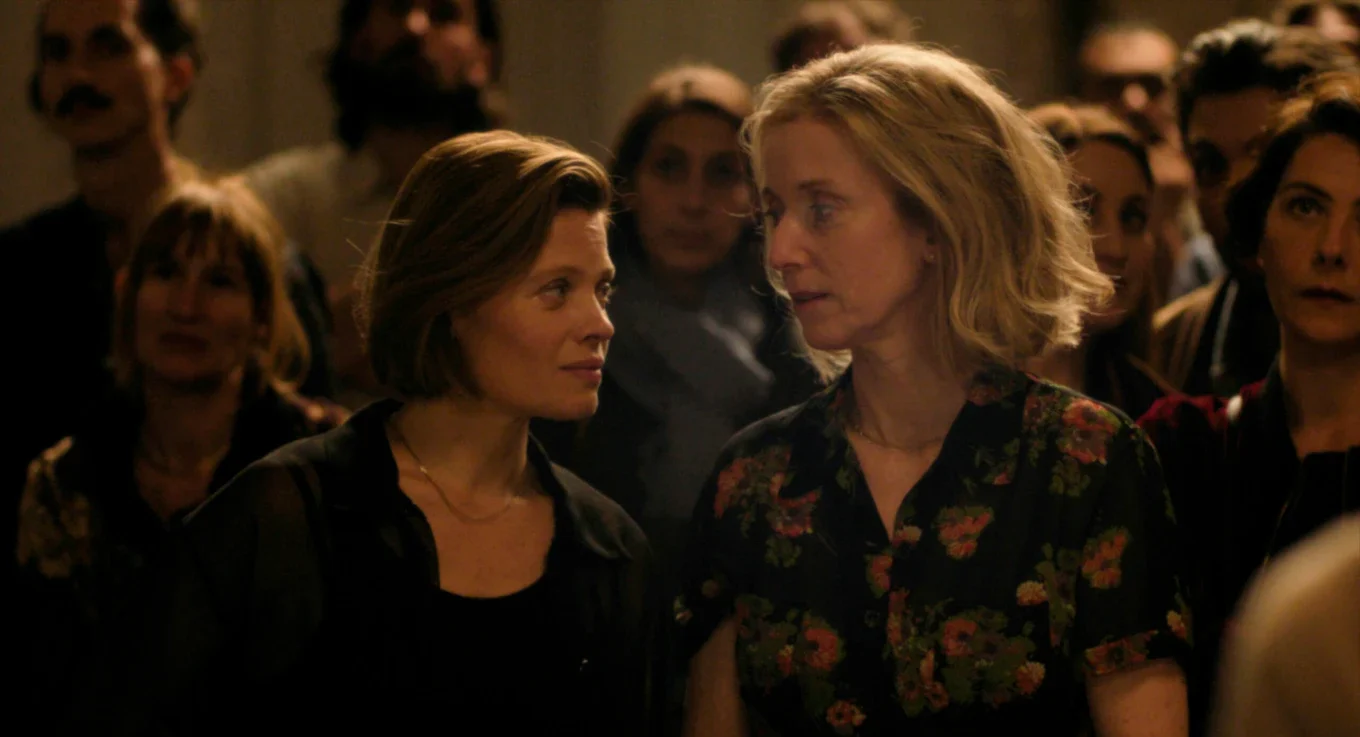
It is within this demanding milieu that the narrative takes a pivotal turn with the arrival of Frida, a writer portrayed by Mélanie Thierry. Frida is introduced as an observer, tasked with researching Gabrielle for an upcoming novel. Her presence, however, transcends mere journalistic inquiry; she becomes a catalyst, offering Gabrielle a glimpse into an alternative existence, one characterized by a perceived serenity and a different rhythm of life. Frida’s lifestyle, as described through Gabrielle’s eyes, appears to be a stark contrast to the high-octane, often overwhelming environment that defines Gabrielle’s daily reality. This juxtaposition ignites a quiet longing within Gabrielle, prompting a deep introspection about the choices she has made and the sacrifices inherent in her chosen path.
Thematic Resonance: The Modern Woman’s Dilemma
The title, "A Woman’s Life," while seemingly straightforward, encapsulates a multifaceted societal narrative that has long been presented to women: the expectation of "having it all." From an early age, societal conditioning often encourages women to temper their ambitions, to occupy less space, and to prioritize the needs of partnership and progeny above their individual aspirations. This ingrained tendency can lead many to self-sabotage their desires, rationalizing away the lives they truly yearn for. "A Woman’s Life" interrogates this pervasive cultural pressure through Gabrielle’s experiences, highlighting the exhausting tightrope walk between professional advancement and personal fulfillment.
The film artfully addresses the often-unspoken assumption that women who achieve significant professional success must have foregone the desire for motherhood. This bias is powerfully articulated in a pivotal monologue delivered by Drucker, where Gabrielle confronts a male colleague who presumes her career has come at the expense of starting a family. Gabrielle’s impassioned response, "We don’t all need to reproduce to be alive," serves as a potent declaration of autonomy and a rejection of traditionalist expectations. This scene is not merely a moment of catharsis but a crucial window into Gabrielle’s inner world, revealing the layers of her personal history that have shaped her choices.
Unpacking Gabrielle’s Past and Present
Further context for Gabrielle’s dedication to her professional life is unearthed through her personal history. The film reveals that she assumed significant caregiving responsibilities for her sister from a young age. This early exposure to the demands of dependency, as the film suggests, has instilled in her a profound weariness of being responsible for others, thereby steering her towards a career that, while demanding, offers a different kind of control and a sense of personal achievement. This background provides a compelling explanation for her choice to channel her energies into her medical career, a field where her expertise and dedication can yield tangible results and personal validation.
Léa Drucker’s performance is lauded for its nuance and depth. Whether engaged in a tense professional confrontation or conveying profound emotion through a fleeting glance, she consistently delivers "little revelatory moments" that invite the audience to contemplate Gabrielle’s inner life. Her gravitas acts as an anchor for the film’s otherwise breezy tone, imbuing scenes that might otherwise feel inconsequential with significant emotional weight. The film’s structure, divided into chapter headings, attempts to chart Gabrielle’s journey. While some transitions are fluid, others are critiqued for interrupting the narrative flow, making the 98-minute runtime feel extended.
The Influence of Frida and the Italian Sojourn
A significant shift in Gabrielle’s demeanor occurs when Frida invites her on a trip to the Italian Alps. This segment, marked by the chapter title "Encore," allows Drucker to showcase a different facet of Gabrielle’s personality, one that begins to mirror the more unhurried pace of Frida’s existence. This excursion functions as a much-needed reprieve for Gabrielle, offering a stark contrast to the frenetic pace of her usual circumstances and providing a refreshing narrative interlude.
The burgeoning relationship between Gabrielle and Frida is a central pillar of the film. Despite the relatively short duration of their interactions, Drucker and Thierry manage to convey a deep, palpable connection, fueled by exceptional on-screen chemistry. Their relationship bookends the narrative, underscoring its significance in Gabrielle’s life. A particularly memorable dinner scene in Torino, Italy, vividly illustrates the intensity of Gabrielle’s attraction to Frida. Thierry’s portrayal of Frida is imbued with a captivating "je ne sais quoi," lending her a magnetic screen presence that easily explains Gabrielle’s profound infatuation. The film explores how this passionate romance challenges Gabrielle’s established sense of security and comfort, posing the question of whether she would risk disrupting her meticulously constructed life for the intensity of profound love.
Artistic Choices and Critical Reception
Director and co-writer Charline Bourgeois-Tacquet, alongside co-writer Fanny Burdino, has crafted a film that, despite its structural critiques, leaves a lasting impression, largely due to Drucker’s commanding presence. While the film’s pacing and chapter divisions have drawn some criticism, the core of "A Woman’s Life" lies in its exploration of a complex female protagonist and her internal struggles. The film’s thematic exploration of women’s ambitions and societal expectations, particularly in the context of career and family, resonates deeply.
The film’s stylistic choices, such as the use of chapter headings, are a deliberate attempt to frame Gabrielle’s life narrative. Titles like "I Want It All" set a thematic tone, while others, like the amusingly titled chapter "No," highlight specific moments of connection and burgeoning romance between Gabrielle and Frida as they witness performance art. These moments, though brief, are charged with an undeniable chemistry, underscoring the transformative power of this new relationship.
The Enduring Power of Performance
Ultimately, "A Woman’s Life" is a testament to the power of a compelling central performance. Léa Drucker’s portrayal of Gabrielle is consistently praised for its ability to command scenes, foster authentic chemistry with her co-stars, and articulate the character’s internal conflict through a rich tapestry of everyday interactions. The film’s director, Bourgeois-Tacquet, wisely utilizes close-ups to capture the subtle emotional shifts on Drucker’s face, amplifying the film’s emotional core.
While the narrative arc might not culminate in the most conventionally dramatic or intricately constructed climax, the sheer force of Drucker’s performance ensures that the film’s emotional weight is carried effectively. Her ability to embody Gabrielle’s vulnerabilities, her professional drive, and her nascent romantic yearning is the film’s most significant asset. In this regard, Drucker’s tour de force performance echoes the impact of other standout turns in independent cinema, such as Rose Byrne in Mary Bronstein’s "If I Had Legs I’d Kick You," albeit with a more introspective and measured tone. Drucker’s exquisite work remains at the forefront, making any minor quibbles about narrative structure fade into insignificance, solidifying "A Woman’s Life" as a memorable cinematic exploration of a woman’s journey.
The film’s exploration of a middle-aged woman’s capacity for profound emotional change and romantic reawakening in the face of entrenched responsibilities offers a nuanced perspective often underrepresented in mainstream cinema. The careful portrayal of Gabrielle’s internal conflict, her grappling with societal expectations, and her burgeoning desire for a different kind of fulfillment, positions "A Woman’s Life" as a significant contribution to contemporary cinematic discourse on female identity and agency. The supporting cast, including Charles Berling, Laurent Capelluto, and Marie-Christine Barrault, provides solid anchors to Gabrielle’s world, allowing Drucker’s central performance to shine with even greater brilliance. The film, through its deliberate pacing and focus on character, invites audiences to reflect on their own lives, choices, and the multifaceted definition of a fulfilling existence.